
Omaima Nelson
Murderer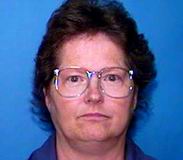 Bobbie Sue Terrell
Murderer · USA · 1984
Bobbie Sue Dudley Terrell was a Pinellas County nurse and worked as the night s…
12 victims
Bobbie Sue Terrell
Murderer · USA · 1984
Bobbie Sue Dudley Terrell was a Pinellas County nurse and worked as the night s…
12 victims
 Megan Huntsman
Murderer · USA · 1996
Megan Huntsman was 40 at sentencing. She was a mother of three children who wer…
6 victims
Megan Huntsman
Murderer · USA · 1996
Megan Huntsman was 40 at sentencing. She was a mother of three children who wer…
6 victims
 Angela Johnson
Murderer · USA · 1993
Angela Jane Johnson was convicted in federal court of aiding and abetting the m…
5 victims
Angela Johnson
Murderer · USA · 1993
Angela Jane Johnson was convicted in federal court of aiding and abetting the m…
5 victims
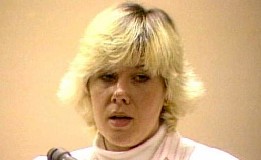 Catherine May Wood
Murderer · USA · 1987
Catherine May Wood was an American caregiver who worked at the Alpine Manor Nur…
5 victims
Catherine May Wood
Murderer · USA · 1987
Catherine May Wood was an American caregiver who worked at the Alpine Manor Nur…
5 victims
 Michele Kalina
Murderer · USA · 1996
Michele Kalina pleaded guilty to murder for one of five infants she initially w…
5 victims
Michele Kalina
Murderer · USA · 1996
Michele Kalina pleaded guilty to murder for one of five infants she initially w…
5 victims
 Amy Bishop
Murderer · USA · 1986
Amy Bishop — biology professor and perpetrator · James Anderson — Bishop’s husb…
4 victims
Amy Bishop
Murderer · USA · 1986
Amy Bishop — biology professor and perpetrator · James Anderson — Bishop’s husb…
4 victims
 Robert Wayne Harris
Mass murderer · USA · 1999
March 15, 2000 — Robert Wayne Harris masturbated in front of a female customer…
6 victims
Robert Wayne Harris
Mass murderer · USA · 1999
March 15, 2000 — Robert Wayne Harris masturbated in front of a female customer…
6 victims
 Jock Palfreeman
Murderer · Bulgaria · 2007
Jock Palfreeman was an Australian convicted of murder in Bulgaria. In December…
1 victim
Jock Palfreeman
Murderer · Bulgaria · 2007
Jock Palfreeman was an Australian convicted of murder in Bulgaria. In December…
1 victim
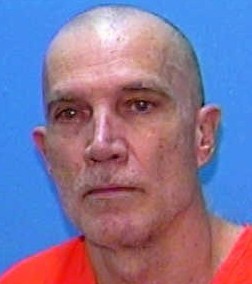 James Franklin Rose
Murderer · USA · 1976
James Franklin Rose was convicted of kidnapping (Count I) and first-degree murd…
1 victim
James Franklin Rose
Murderer · USA · 1976
James Franklin Rose was convicted of kidnapping (Count I) and first-degree murd…
1 victim
 Tina Brown
Murderer · USA · 2010
Tina Lasonya Brown was convicted of first-degree murder in the beating and burn…
1 victim
Tina Brown
Murderer · USA · 2010
Tina Lasonya Brown was convicted of first-degree murder in the beating and burn…
1 victim
 William MacDonald
Serial killer · Australia · 1961
William MacDonald was an Australian serial murderer who was dubbed the “Sydney…
5 victims
William MacDonald
Serial killer · Australia · 1961
William MacDonald was an Australian serial murderer who was dubbed the “Sydney…
5 victims
- Gender
- female
- Country
- USA
- Location
- Costa Mesa, Orange County, California, USA
- Date of birth
- 1968
- Age at first offence
- 23
- Characteristics
- domestic violence, rape, torture, mutilation
- Victim profile
- William Nelson, 56 (her husband)
- Method of murder
- Stabbing with scissors - Beating with a clothes iron
- Date(s) of murder
- November 28, 1991
- Years active
- 1991
- Date of arrest
- December 2, 1991
- Status
-
Life imprisonment
Sentenced to 28 years to life in prison on February 26, 1993
Case information
Defendant: Omaima Aree Nelson Also known as: Omaima Nelson Nationality/background: She was an Egyptian American and an Egyptian national who immigrated to the United States in 1986. Occupation: She was a part-time model and a former nanny.
Background
Omaima Aree Nelson was born and raised in Egypt and immigrated to the United States in 1986.
Omaima Nelson met her husband Bill (William E.) Nelson, a 56-year-old pilot, in October 1991 in Costa Mesa, California. The couple married within days of meeting. Their marriage lasted three weeks.
Omaima Nelson claimed that during the couple’s month-long union she suffered sexual abuse by her husband. She also testified that she was forced to undergo a circumcision as a child in Egypt and said the operation left her unable to enjoy sex.
Omaima Nelson testified that after meeting William Nelson she agreed to sex several times a day because she believed she was in love, and that she learned of her husband’s violent streak during their honeymoon visit to his family in the Midwest. She testified that William Nelson would become enraged if she refused requests for “kinky” sex involving bondage, and that he beat her. She testified that once he punished her by throwing her newfound kitten out of the car window, and that he screamed, “ 'I paid for you, I'm getting what I paid for,' ”.
Omaima Nelson testified and said she was sexually assaulting her during the 1991 Thanksgiving weekend. She also testified she stabbed her husband with scissors after grabbing them during the assault, then beat him with an iron and other objects until he died, and then began dismembering the body. She testified that after the killing she “freaked out,” fell into a trance-like state, and spent 12 hours hacking up the body to simplify disposal.
The offence
Killing and dismemberment of William E. Nelson
On Thanksgiving weekend 1991, police found parts of William E. Nelson’s dismembered body wrapped in newspaper and stuffed into a trash bag, and additional body parts were found inside his Costa Mesa apartment. Police found the remains inside an automobile parked outside his Costa Mesa apartment.
Omaima Nelson admitted cooking her husband’s head, boiling his hands to remove fingerprints, and mixing up body parts with leftover Thanksgiving Day turkey to hide the remains in a trash bin. She also admitted castrating Bill Nelson in revenge for his sexual assaults.
Prosecutors said William Nelson’s lower body and torso were skinned. Prosecutors said William Nelson’s hands were fried in oil and his head boiled and placed in the freezer. Prosecutors said she used a garbage disposal to get rid of the chopped-up body parts, and that neighbors reported the garbage disposal ran continuously for the next two days and heard constant chopping sounds.
Investigators found William Nelson’s body parts stuffed in garbage bags and mixed with leftover Thanksgiving turkey. Some parts were never found. One prosecutor stated that “We're missing about 130 pounds of Bill. You know where he might have gone?” and Omaima Nelson replied, “No, he was all there.”
Prosecutors said Omaima Nelson enlisted the help of two ex-boyfriends to remove William Nelson’s teeth so his remains could not be identified.
Omaima Nelson described her actions as self-defense, saying she killed him to stop him from attempting to rape her.
Assault in an unrelated case: Robert Hannson
Omaima Nelson was also convicted in a separate, simultaneous case involving Robert Hannson, a former boyfriend.
Prosecutors said Omaima Nelson tied up Robert Hannson and demanded money from him at gunpoint in November 1990 in Huntington Beach. The jury acquitted her of false imprisonment and attempted robbery, but the jury convicted her of assaulting Robert Hannson with a gun.
During sentencing reporting, it was stated that the assault conviction involved the use of a gun, and that this determination would add as much as six years to her sentence.
Investigation
Police investigating a tip found remains of William E. Nelson, 56, inside an automobile parked outside his Costa Mesa apartment. The body had been hacked apart, and the pieces were wrapped in newspaper and stuffed into a trash bag. More body parts were found inside Nelson’s apartment.
Neighbors reported hearing the garbage disposal go on for a long time and constant chopping sounds throughout one night and into the next morning.
Omaima Nelson was arrested on suspicion of murder after seeking a friend’s help in disposing of William Nelson’s body parts; the friend agreed but called police instead.
Prosecutors said William Nelson’s ankles had deep bruised rings, which they presented as evidence he might have been in bondage during sexual acts with the defendant the night he was killed.
During the trial, prosecutors presented graphic photographs showing the remains of the victim as pieced together by pathologists.
Arrest
Omaima Nelson was arrested on December 2, 1991.
Trial
Commencement and legal positions
Omaima Nelson’s trial began on December 1, 1992.
During opening and motions, Deputy Public Defender Thomas G. Mooney said he would introduce evidence that Omaima Nelson was a long-suffering victim of battered woman syndrome and that psychological malaise was behind the November 1991 killing.
Deputy District Attorney Randolph J. Pawloski said the prosecution would suggest other motives and would try to prove that deep bruised rings around William Nelson’s ankles were evidence of bondage during sexual acts with the defendant. Pawloski also argued that Omaima Nelson had previously tied up her lovers during sex acts, held them up at gunpoint, and demanded money.
Judge Robert R. Fitzgerald tentatively ruled that prosecutors could introduce evidence that Omaima Nelson had a history of physically assaulting other people.
Evidence and witnesses
During the trial, psychiatrists testified. A psychiatrist testified that she was probably psychotic at the time of the killing, and another quoted psychiatrist diagnosis included post-traumatic stress disorder. Dr. David J. Sheffner diagnosed her as psychotic and testified that Omaima Nelson told him about dressing up in “a red hat, red high-heel shoes and red lipstick” as part of a ritual during the nightlong dismemberment, and about eating William Nelson’s ribs after cooking them in barbecue sauce.
Dr. Sheffner quoted Omaima Nelson saying:
“ 'I did his ribs just like in a restaurant,' ”
The doctor also recalled that she sat at the kitchen table with Bill Nelson’s cooked remains and said out loud:
“It's so sweet, it's so delicious. . . . I like mine tender,”
Omaima Nelson also denied eating her husband’s remains at later proceedings referenced in the record.
Jurors were disturbed by evidence presented during the trial, which included tales of bondage sex games, decapitation, castration and even an allegation of cannibalism.
Verdicts
The jury deliberated for six days before acquitting Omaima Nelson of first-degree murder, concluding there was insufficient evidence that the slaying was premeditated.
The jury found Omaima Nelson guilty of second-degree murder on January 12, 1993.
In the unrelated assault case involving Robert Hannson, the jury acquitted her of false imprisonment and attempted robbery. The jury determined she used a gun in the assault on Hannson.
Sentencing
Omaima Nelson was sentenced on February 26, 1993 to 28 years to life in prison.
A sentencing account described the maximum penalty as 28 years to life, including 10 years in prison for assaulting Robert Hannson with a gun and 18 years to life in prison for the slaying of William Nelson and the use of a knife.
Appeals
It was reported that Omaima Nelson appealed but lost in 1995.
Outcome
Parole hearings and denials
Omaima Nelson became eligible for parole in 2006, but was denied when commissioners found her unpredictable and a serious threat to public safety.
She became eligible again in 2011, but was denied by the parole board again, citing that she had not taken responsibility for the murder and would not be a productive citizen if freed.
It was stated that she would not be able to seek parole again until 2026.
Quotes and parole statements
At a 2011 parole hearing, Omaima Nelson told the board:
“I swear to God I did not eat any part of him. I am not a monster,”
When Commissioner Cynthia Fritz asked, “What was your purpose in cooking him?” Nelson declined to answer.
Omaima Nelson said:
“If I didn't defend my life, I would have been dead. I'm sorry it happened, but I'm glad I lived,”
She also said:
“I'm sorry I dismembered him.”
Omaima Nelson told the board that she was grateful for the grace of God and her family and that if released she would return to live with her mother in Egypt.
She said:
“I have a strong desire to help others.”
She testified at the parole hearing about visits shared with a deceased latest husband:
“We had three-day conjugal visits,”
She also said:
“There were knives in the kitchen. He never felt threatened or endangered in any way. I loved him so much.”
Omaima Nelson’s daughter, Margaret, read a written statement and then abandoned written notes. Margaret Nelson said:
“I don't know the adequate punishment for a murderer who doesn't even leave a family a body to mourn over. But I do know you don't let her out,”
Prosecutorial opposition and characterizations
Deputy District Attorney Randy Pawloski, an original prosecutor in the case, opposed parole, stating Nelson had a pattern of using sex as a con game and that the games grew increasingly violent over the years.
Pawloski told the parole board:
“This was one of the most gruesome and notorious crimes ever committed in Orange County,”
He also stated:
“The victim ... was abused, defiled and mutilated during and after the offense. ... His murder was carried out ... in a manner which demonstrates an exceptionally callous disregard for human life.”
Pawloski warned:
“is very crafty, criminally sophisticated and an enterprising individual. ... Make no mistake – she will tell you anything you wish to hear for her own personal gain. ”
He added:
“Inmate Nelson lacks total insight into her life-commitment offense and has no remorse,”
And:
“She should be kept in prison for the maximum denial period.”
At the parole hearing, it was reported that she was not represented by an attorney as she appeared before parole commissioners.
Timeline
- October 1991 — Omaima met her husband William Nelson in Costa Mesa; the couple married within days of meeting.
- Thanksgiving Day 1991 — Omaima claimed Bill had sexually assaulted her in their Costa Mesa apartment; she stabbed him with scissors, then beat him with a clothes iron.
- December 1, 1992 — Trial began.
- January 12, 1993 — Jury found Omaima Nelson guilty of second-degree murder.
- February 26, 1993 — Sentencing occurred; Omaima Nelson was sentenced to 28 years to life in prison.
- December 2, 1991 — Omaima Nelson was arrested on suspicion of murder.
- 1992 Feb. 21 — Omaima Nelson pleaded not guilty to a charge of first-degree murder.
- 1993 Jan. 4 — Case went to the jury.
- 2006 — Omaima Nelson was denied parole; commissioners found her unpredictable and a serious threat to public safety.
- 2011 — Parole was denied again; the board cited that she had not taken responsibility for the murder and would not be a productive citizen if freed.
Other details
Omaima Nelson was compared to the fictional cannibal Hannibal Lecter.
It was reported that her case was televissed on the Investigation Discovery programs Happily Never After and Deadly Women.
The case was listed as one of the 50 most notorious crimes in Orange County history.
At the time of the murder, William Nelson was 56 years old. At the time of the parole hearing described, Omaima Nelson was 43. At trial, Omaima Nelson was 24 or 26 depending on the account, and on January 12, 1993 the record described her as 26.
Thomas G. Mooney represented Omaima Nelson at trial. Terrence Scott represented her in the 2006 appeal.
A quoted explanation of her position in 2006 included that the reason she chopped her husband’s body into parts was to avoid meeting him in the afterlife in accordance with Egyptian mythology.
Randy Pawloski was described as a prosecutor who personally attended the 2011 parole hearing at the Central California Women’s Facility in Chowchilla.


Spotted an error, or have more information about this case?