
Frances Newton
Murderer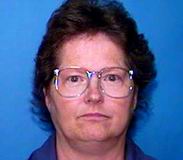 Bobbie Sue Terrell
Murderer · USA · 1984
Bobbie Sue Dudley Terrell was a Pinellas County nurse and worked as the night s…
12 victims
Bobbie Sue Terrell
Murderer · USA · 1984
Bobbie Sue Dudley Terrell was a Pinellas County nurse and worked as the night s…
12 victims
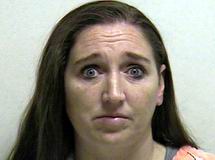 Megan Huntsman
Murderer · USA · 1996
Megan Huntsman was 40 at sentencing. She was a mother of three children who wer…
6 victims
Megan Huntsman
Murderer · USA · 1996
Megan Huntsman was 40 at sentencing. She was a mother of three children who wer…
6 victims
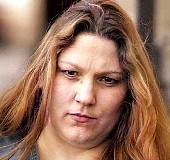 Angela Johnson
Murderer · USA · 1993
Angela Jane Johnson was convicted in federal court of aiding and abetting the m…
5 victims
Angela Johnson
Murderer · USA · 1993
Angela Jane Johnson was convicted in federal court of aiding and abetting the m…
5 victims
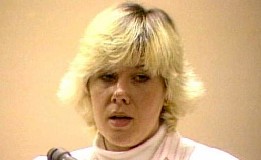 Catherine May Wood
Murderer · USA · 1987
Catherine May Wood was an American caregiver who worked at the Alpine Manor Nur…
5 victims
Catherine May Wood
Murderer · USA · 1987
Catherine May Wood was an American caregiver who worked at the Alpine Manor Nur…
5 victims
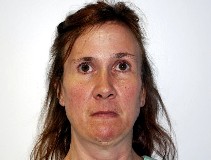 Michele Kalina
Murderer · USA · 1996
Michele Kalina pleaded guilty to murder for one of five infants she initially w…
5 victims
Michele Kalina
Murderer · USA · 1996
Michele Kalina pleaded guilty to murder for one of five infants she initially w…
5 victims
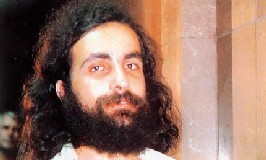 Theofilos Sechidis
Mass murderer · Greece · 1996
Theofilos Sechidis was a 24-year-old Greek law school student. In May 1996, he…
5 victims
Theofilos Sechidis
Mass murderer · Greece · 1996
Theofilos Sechidis was a 24-year-old Greek law school student. In May 1996, he…
5 victims
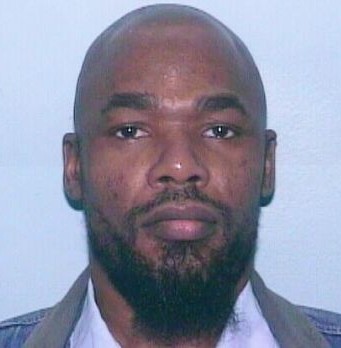 Gregory Clepper
Murderer · USA · 1996
1991 — The killings began. · April 24, 1996 — Patricia Scott was found in a tra…
1 victim
Gregory Clepper
Murderer · USA · 1996
1991 — The killings began. · April 24, 1996 — Patricia Scott was found in a tra…
1 victim
 Friedrich Schumann
Serial killer · Germany · 1911
Friedrich Schumann (1 February 1893 – 27 August 1921) was a German serial kille…
6 victims
Friedrich Schumann
Serial killer · Germany · 1911
Friedrich Schumann (1 February 1893 – 27 August 1921) was a German serial kille…
6 victims
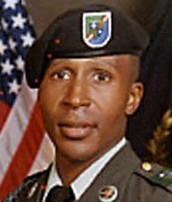 Louis Jones
Murderer · USA · 1995
Louis Jones Jr. — defendant; a decorated Army veteran and airborne ranger Louis…
1 victim
Louis Jones
Murderer · USA · 1995
Louis Jones Jr. — defendant; a decorated Army veteran and airborne ranger Louis…
1 victim
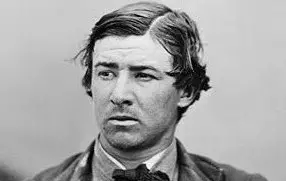 David Herold
Assassin · USA · 1865
David Edgar Herold (16 June 1842 – 7 July 1865) conspired with John Wilkes Boot…
1 victim
David Herold
Assassin · USA · 1865
David Edgar Herold (16 June 1842 – 7 July 1865) conspired with John Wilkes Boot…
1 victim
- Gender
- female
- Country
- USA
- Location
- Harris County, Texas, USA
- Date of birth
- April 12, 1965
- Age at first offence
- 22
- Characteristics
- parricide, financial gain, murder for hire
- Victim profile
- Adrian Newton, 23 (her husband), Alton Newton, 7 (her son) and Farrah Elaine Newton, 21 months (her daughter)
- Method of murder
- Shooting ( .25 caliber handgun)
- Date(s) of murder
- April 7, 1987
- Years active
- 1987
- Date of arrest
- April 22, 1987
- Status
-
Executed
Executed by lethal injection on September 14, 2005 in Texas
Background
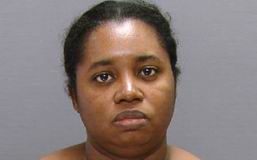
Frances Elaine Newton (April 12, 1965 – September 14, 2005) was executed by lethal injection in the state of Texas for the April 7, 1987 murder of her husband, Adrian Newton, and her 21-month-old daughter, Farrah Elaine Newton. She also was convicted for the murder of her son, Alton Newton.
In March 1987, Newton took out $50,000 life insurance policies on her husband, Adrian, and her daughter, Farrah, and also purchased a life insurance policy on herself. A policy already existed for her son, Alton.
Newton maintained her innocence from her first interrogation in 1987 until her execution in 2005. She claimed that a drug dealer named “Charlie” may have been responsible.
The offence
On the evening of April 7, 1987, a Harris County sheriff’s deputy was dispatched to an apartment complex at 6126 West Mount Houston in response to a report of a possible shooting. The deputy found the bodies of the three victims inside the apartment. All three had been shot to death.
Newton and her cousin were at the location when the deputy arrived. Earlier in the evening, Newton took a blue bag out of her car and put it in an abandoned house which belonged to her parents. Later, a homicide detective recovered the bag, which contained a .25 automatic pistol. A ballistics expert established that the pistol was the murder weapon.
A forensics expert for the State established that nitrites were present on the skirt Newton wore on the day of the shootings. In the expert’s opinion, the nitrites came from gunpowder residue and were consistent with someone shooting a pistol in the lower front area of the skirt. Less than a month prior to the murders, Newton purchased a $50,000 life insurance policy on herself, another on her husband and a third on her daughter. Newton was the primary beneficiary on the latter two policies and made claims on the policies following the killings.
Newton and her attorneys disputed key aspects of the prosecution’s case, including whether the gun recovered was the murder weapon and whether alternative sources could explain residue found on her clothing.
Investigation
Newton and her cousin were at the apartment complex when the deputy arrived. Earlier the same evening, Newton asked her cousin Sondra Nelms to come over to her apartment. Before leaving Nelms watched Newton remove a blue bag from her car and put it in the abandoned house next door to Nelms’ house. The abandoned house belonged to Newton’s parents.
Later that evening, homicide detective Michael Talton spoke with Nelms, who took him to the house at 6520 Sealy. Inside he found a blue bag containing a blue steel Raven Arms .25 automatic, which he turned over to a crime scene officer. The gun’s owner, Michael Mouton, had loaned the gun to his cousin, Jeffrey Frelow, five or six months prior to the murders. Frelow identified the gun and indicated that he kept it in a chest of drawers in his master bedroom. Because she often did Frelow’s laundry, Newton had access to the drawers and to the gun.
On April 8, 1987, Newton accompanied Detective Michael Parinello during a search of her apartment. She pointed out the clothing she wore the day of the murders. Parinello collected the clothing and delivered it to the Department of Public Safety Crime Laboratory to test for possible gunpowder residue.
Ballistics testing linked the pistol recovered in the abandoned house to the murder. Forensic testing established the presence of nitrites on Newton’s skirt, which the State characterized as gunpowder residue.
Newton’s defense raised challenges to the forensic evidence, including claims that fertilizer and other sources could have produced nitrites, and that evidence used at trial was improperly destroyed or contaminated. There were also conflicting reports presented during the appeals process concerning whether more than one pistol was recovered.
Arrest
Newton filed claims on the life insurance policies she had taken out a month earlier on 21 April. She was arrested and charged with capital murder the next day.
Trial
Newton was indicted for capital murder and was convicted in October 1988. She received a sentence of death after the jury answered special issues under Article 37.071(b)(1) and (2).
Newton pleaded not guilty. At trial she testified that she picked up her children after work and came home at around 4:30 p.m. She testified that she and her husband decided to reconcile and that she stopped seeing Jeffrey Frelow. She testified that she changed out of clothes that were later determined to contain traces of nitrites. She testified that she left the apartment about 6:00 p.m. in order to pay her automobile insurance and that, before leaving, she removed the handgun ultimately determined to be the murder weapon from a kitchen cabinet and placed it in her purse. She denied ever having seen the gun before and denied knowing that Frelow owned a handgun.
In her testimony, Newton described hearing a conversation between her husband, Adrian, and Sterling Newton involving trouble. She testified that she drove toward the insurance company but it had moved. Around 7:00 p.m., she went to her cousin Sondra’s house. She testified that she and Sondra later went back to the apartment but before leaving she took the gun in a knapsack and placed it in the abandoned house next door. She testified she did this so her family would not see the gun. She testified that upon arriving home she noticed the front door was slightly ajar and later discovered the bodies of her husband and children.
Newton’s defense contested sufficiency of evidence and challenged expert interpretations about nitrite residue and gunshot residue. The jury rejected her hypothesis that someone other than Newton committed the murders, and the court overruled her points of error on appeal regarding evidentiary sufficiency.
During the punishment phase, Dr. Charles Covert testified in response to a hypothetical that Newton would constitute a continuing threat to society based on a probability that she would commit future acts of violence. The prosecutor asked Dr. Covert on what he based his opinion, and appellant’s counsel objected that the question called for speculation and conclusion. The court did not rule on the objection, and the prosecutor did not pursue the line of questioning. Appellant’s counsel later told the jury that the doctor knew what his answer would be before being asked the hypothetical question because “his mind was made up.” In reply, the State argued that appellant had the opportunity to attack Covert’s credibility while he was on the stand but chose not to. The prosecutor then said:
"Mr. Mock's response: I object. He didn't want you to know what the doctor based it on. He didn't touch that evidence." Appellant objected but it was overruled. The court found the State’s reply was invited by appellant’s attack on credibility.
The court also addressed an argument by the State about the child’s perception of the shooting in the punishment phase, finding it a reasonable inference from the evidence.
Sentencing
Newton was sentenced to death after the jury made affirmative findings on both special issues submitted under Article 37.071(b)(1) and (2).
Appeals
Direct appeal
The Texas Court of Criminal Appeals affirmed Newton’s conviction and sentence in June 1992. The U.S. Supreme Court denied certiorari review and denied rehearing in 1993.
State and federal habeas proceedings
Newton filed a state writ of habeas corpus application on 04/26/96. On 12/06/00, the Texas Court of Criminal Appeals adopted the trial court’s findings and conclusions and denied the writ.
On 12/06/01, Newton petitioned a Houston federal district court for a writ of habeas corpus relief. On 08/29/03, the federal district court denied the writ, denied a certificate of appealability (“COA”), and issued final judgment.
On 11/04/03, Newton applied to the 5th U.S. Circuit Court of Appeals for a COA. On 05/20/04, the Fifth Circuit denied Newton’s request.
On 08/16/04, Newton petitioned the U.S. Supreme Court for certiorari review of the 5th Circuit’s denial of COA. On 11/01/04, the U.S. Supreme Court denied certiorari review.
Outcome
Newton’s execution was scheduled by the Harris County trial court for December 1, 2004 on 07/07/04. Governor Rick Perry granted a 120-day reprieve on December 1, 2004 and, after ballistics testing, the execution was carried out as scheduled on September 14, 2005 by lethal injection.
At the execution, Newton struggled and thrashed, knocking out one of the nurses. She declined to make a final statement, responding “no” and shaking her head when the warden asked if she would like to speak. One report stated she was pronounced dead at 6:17 p.m. CDT.
Other details
Criminal history
Newton was convicted of forgery in December 1985 and placed on three years probation.
Individuals and testimony referenced in the case
Psychologist Charles Covert testified at Newton’s trial that based on a hypothetical scenario paralleling the facts in Newton’s case, there is a probability such a person would commit violent acts constituting a threat to society.
The court’s opinion on direct appeal referenced testimony from witnesses including Ramona Bell, Alphonse Harrison, Claudia Chapman, Sondra Nelms, and Sterling Duane Newton.
Newton alleged her court-appointed trial attorney, Ron Mock, provided ineffective assistance, and the defense raised disputes about trial preparation and investigation.
Clemency and reprieve-related proceedings
Newton petitioned the Texas Board of Pardons and Paroles for clemency on 11/10/04. Newton asked the trial court for a stay of execution and appointment of counsel, or, for a successive habeas application in the trial court, on 11/18/04. Her petition for clemency and her motion/successive state writ were still pending.
The Texas Board of Pardons and Paroles voted 7-0 on September 12 not to recommend that her sentence be commuted to life imprisonment.
On September 13, the United States Supreme Court declined without dissent two appeals. The Texas Court of Criminal Appeals turned down a motion for a stay of execution on August 24, 2005 and turned down another appeal on September 9 for writ of habeas corpus, described as her fourth application.
Public reaction and protest references
Protesters gathered outside the prison and outside the governor’s mansion in Austin. Numerous people contacted the governor asking him to stop Newton’s execution, and others contacted him in support of the execution.
Spotted an error, or have more information about this case?