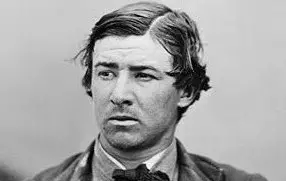
David Herold
Assassin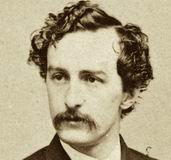 John Wilkes Booth
Assassin · USA · 1865
John Wilkes Booth (May 10, 1838 – April 26, 1865) was an American stage actor w…
1 victim
John Wilkes Booth
Assassin · USA · 1865
John Wilkes Booth (May 10, 1838 – April 26, 1865) was an American stage actor w…
1 victim
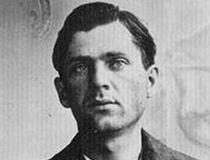 Leon Frank Czolgosz
Assassin · USA · 1901
Leon Frank Czołgosz (1873 – October 29, 1901) was the assassin of U.S. Presiden…
1 victim
Leon Frank Czolgosz
Assassin · USA · 1901
Leon Frank Czołgosz (1873 – October 29, 1901) was the assassin of U.S. Presiden…
1 victim
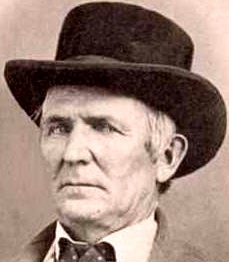 John Doyle Lee
Murderer · USA · 1857
Name: John Doyle Lee Lifespan: September 12, 1812 - March 23, 1877 Legal outcom…
120 victims
John Doyle Lee
Murderer · USA · 1857
Name: John Doyle Lee Lifespan: September 12, 1812 - March 23, 1877 Legal outcom…
120 victims
 Champ Ferguson
Murderer · USA · 1861
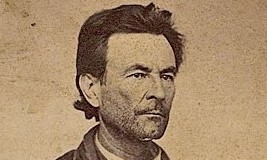
Champ Ferguson was born November 29, 1821 in Clinton County, Kentucky, near the…
100 victims
Champ Ferguson
Murderer · USA · 1861
Champ Ferguson was born November 29, 1821 in Clinton County, Kentucky, near the…
100 victims
 John Wesley Hardin
Murderer · USA · 1867
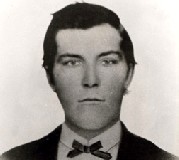
John Wesley (Wes) Hardin (1853-1895) was an American outlaw, gunfighter, and co…
42 victims
John Wesley Hardin
Murderer · USA · 1867
John Wesley (Wes) Hardin (1853-1895) was an American outlaw, gunfighter, and co…
42 victims
 Nathaniel Gordon
Homicide · USA · 1860
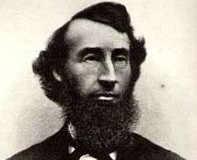
Nathaniel Gordon (c.1834 – February 21, 1862) was the first and only American s…
29 victims
Nathaniel Gordon
Homicide · USA · 1860
Nathaniel Gordon (c.1834 – February 21, 1862) was the first and only American s…
29 victims
 Ronnie Lee Bowling
Murderer · USA · 1989
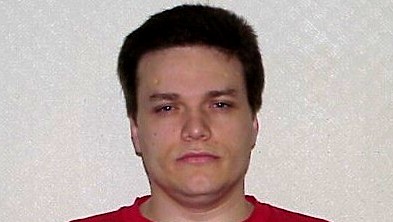
Ronnie Lee Bowling was sentenced to death on December 9, 1992. Bowling was from…
2 victims
Ronnie Lee Bowling
Murderer · USA · 1989
Ronnie Lee Bowling was sentenced to death on December 9, 1992. Bowling was from…
2 victims
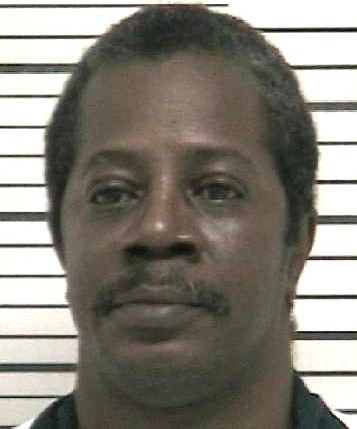 Johnny Lee Gates
Murderer · USA · 1976
Defendant: Johnny Lee Gates · Age: 41 · Court: Muscogee Superior Court · Judge:…
2 victims
Johnny Lee Gates
Murderer · USA · 1976
Defendant: Johnny Lee Gates · Age: 41 · Court: Muscogee Superior Court · Judge:…
2 victims
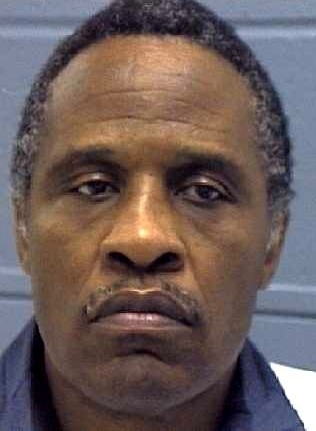 William Kenny Stephens
Murderer · USA · 1979
Defendant: William Kenny Stephens Victim: Investigator Larry D. Stevens, 38 · J…
1 victim
William Kenny Stephens
Murderer · USA · 1979
Defendant: William Kenny Stephens Victim: Investigator Larry D. Stevens, 38 · J…
1 victim
 Clifford Fortner
Homicide · USA · 1959
Clifford Fortner was a 15-year-old boy from the neighborhood. Lorna Lax was a 1…
1 victim
Clifford Fortner
Homicide · USA · 1959
Clifford Fortner was a 15-year-old boy from the neighborhood. Lorna Lax was a 1…
1 victim
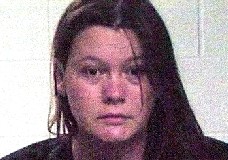 Debra Jeter
Murderer · USA · 2009
Debra Janelle Jeter was 33 at the time she pleaded guilty in Hillsboro. She was…
1 victim
Debra Jeter
Murderer · USA · 2009
Debra Janelle Jeter was 33 at the time she pleaded guilty in Hillsboro. She was…
1 victim
 Christopher Churchill
Mass murderer · USA · 1998
February 1998 — Christopher Churchill, 16, was arrested on charges he killed De…
5 victims
Christopher Churchill
Mass murderer · USA · 1998
February 1998 — Christopher Churchill, 16, was arrested on charges he killed De…
5 victims
- Gender
- male
- Country
- USA
- Location
- Washington, D.C., USA
- Date of birth
- J une 16, 1842
- Age at first offence
- 23
- Characteristics
- —
- Victim profile
- United States President Abraham Lincoln
- Method of murder
- Shooting
- Date(s) of murder
- April 14, 1865
- Years active
- 1865
- Date of arrest
- April 26, 1865
- Status
-
Executed
Executed by hanging in the Old Arsenal Penitentiary on July 7, 1865
Overview
David Edgar Herold (16 June 1842 – 7 July 1865) conspired with John Wilkes Booth to kill United States President Abraham Lincoln. Herold was born in Maryland to Adam and Mary Porter Herold. He was the sixth of ten children. He grew up near the Washington Navy Yard in a large brick house. He attended Gonzaga College High School, Georgetown College, and Rittenhouse Academy, and worked as a pharmacist and as a clerk for a doctor. He was also an avid hunter.
Background
The Herolds moved to Washington, D.C., and lived at a large brick home at 636 Eighth Street near the Washington Navy Yard. David's father was the chief clerk at the Navy Store at the Washington Navy Yard for more than 20 years. Herold liked to go bird hunting and spent several months every year engaged in that sport. He was familiar with the Maryland countryside.
Herold studied pharmacy at Georgetown College and worked for several druggists in Washington. During 1863, while working for Thompson's Pharmacy in Washington, Herold may have delivered a bottle of castor oil to the White House and personally given it to Abraham Lincoln.
Herold likely met John Surratt while attending Charlotte Hall Academy in the late 1850s. It was possible that Herold met Booth because of his friendship with Surratt. It was also possible that the initial meeting took place in 1863 when Booth purchased drugs to treat a growth on his neck. Booth's involvement in smuggling quinine to the South was described as a reason to befriend Herold due to his access to medicines. Another described reason was that Herold was recruited because of his knowledge of lower Maryland, which could be helpful in Booth's plot to kidnap Lincoln and take him south.
The offence
Herold conspired with Booth in an assassination plot targeting Abraham Lincoln. On the night of April 14, 1865, Herold guided Lewis Powell (also known as Lewis Payne / Lewis Paine in parts of the material) to the house of Lincoln's Secretary of State William Seward. Inside, Powell attempted to kill Seward, severely wounding Seward and other members of his household. After commotion frightened Herold, he rode off and left Powell to fend for himself. Another conspirator claimed that Herold was to have killed Vice President Andrew Johnson, but that attack was never carried out.
During the assassination, Booth broke his leg. Despite this injury, Booth escaped Washington into Maryland and by pre-arrangement met with Herold. Herold assisted Booth to Dr. Samuel Mudd's home, where Booth's leg was set. Herold remained with Booth and continually aided him until the authorities caught up with them.
Investigation and flight
Herold and Booth escaped Washington following the assassination and were on the run until April 26, 1865. On the night of the assassination, Booth assigned Powell to kill Seward, assigned Atzerodt to kill Johnson, and assigned David E. Herold to guide Powell to the Seward house and then lead him out of the city to rendezvous with Booth in Maryland.
It was stated that during the assassination Herold was seen with Booth during the 12 days after the assassination, and that he was in the barn when Booth was captured and killed.
Herold and Booth reunited after Booth escaped on horseback and crossed the Navy Yard Bridge out of the city into Maryland. Less than an hour later, Herold made it across the same bridge and reunited with Booth. After retrieving weapons and supplies previously stored at Surattsville, Herold and Booth went to Samuel A. Mudd, who determined that Booth's leg had been broken and put it in a splint. Mudd later made a pair of crutches for the assassin.
After spending a day at Mudd's house, Booth and Herold hired a local man to guide them to Samuel Cox's house. Cox led them to Thomas Jones, who hid Booth and Herold in a swamp near his house for five days until they could cross the Potomac River.
Arrest and capture
Booth and Herold remained on the run until April 26, when Union soldiers tracked them down to a farm belonging to Richard Garrett. The Garretts had locked Booth and Herold in their barn. Herold surrendered himself after the soldiers arrived, while Booth refused to come out. The soldiers set fire to the barn.
Booth was shot dead by a soldier named Boston Corbett who crept up behind the barn and shot Booth in the neck, paralyzing him. Booth was dragged out onto the steps of the barn. A soldier dribbled water onto his mouth. Booth told a soldier: "Tell my mother I died for my country." Booth then asked a soldier to lift his hands and whispered "Useless...Useless." Booth died on the porch of the Garrett farm about two hours after Corbett shot him.
Trial
Herold was tried before a military tribunal. His defense was that he was feeble-minded and under undue influence from Booth. It was also stated that Herold had already admitted his involvement in the assassination conspiracy.
It was stated that Herold had no chance whatsoever at trial. Herold had been seen with Booth during the 12 days after the assassination and was in the barn when Booth was captured and killed. Herold had bragged about the crime, telling Willie Jett as he crossed the Rappahannock, "We are the assassinators of the President."
Herold’s attorney Frederick Stone placed hopes for saving Herold’s life on convincing the Military Commission that Herold was a simple man barely an adult who fell under the spell of John Wilkes Booth. Stone presented testimony from friends describing Herold as easily persuaded and led, and as boyish. William Keilotz said: "I consider his character very boyish. I see him often in the company of boys; he is very fond of their company, and he never associates with men." James Nokes called Herold "a light and trifling boy" who was "easily influenced." Nokes added that he had "never heard him enter into any argument on any subject in the world."
Dr. Charles Davis testified that Herold was "a boy; he is trifling, and always has been." Davis also testified that "nature had not endowed him with as much intellect as the generality of people possess." Dr. Samuel McKim said of Herold: "In mind, I consider him about eleven years of age."
Stone argued to the Commission that Herold "was only wax in the hands of a man like Booth." Stone said Booth "exercised unlimited control over this miserable boy, body and soul, he found him unfit for the deeds of blood and violence; he was cowardly; he was too weak and trifling; but he still could be made useful." Stone also highlighted a statement Booth made about Herold: "I declare, before my Maker, that this man is innocent."
The Commission remained unpersuaded and sentenced Herold to death. The trial lasted for about seven weeks, with 366 witnesses testifying. The verdict was given on June 30, and all of the defendants were found guilty.
Among those sentenced to death by hanging were Mary Surratt, Lewis Powell, David Herold, and George Atzerodt. Samuel Mudd, Samuel Arnold, and Michael O'Laughlen were sentenced to life in prison.
Sentencing
Herold was sentenced to death by hanging.
It was stated that Herold was hanged with three fellow conspirators on the gallows in Washington on July 7, 1865. It was also stated that he is interred in the Congressional Cemetery in Washington, D.C.
Outcome
Herold was executed by hanging in the Old Arsenal Penitentiary on July 7, 1865. Of the four who were executed, it was stated that no last words were recorded for Herold.
Other details
Herold was born on 16 June 1842 in Maryland. He attended Charlotte Hall Academy, where he met John Surratt, who introduced him to Booth. He was described in parts of the material as having been easily influenced and boyish, with testimony placing his mental capacity at about eleven years of age.
In jail, Herold was visited by his mother and many of his eight sisters shortly before the execution.
It was stated that his burial was at the Congressional Cemetery, on the banks of the eastern branch of the Potomac River.
Spotted an error, or have more information about this case?