Yvonne Gladys Fletcher
Murderer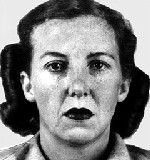 Jean Lee
Murderer · Australia · 1949
Jean Lee (10 December 1919 – 19 February 1951) was an Australian woman executed…
1 victim
Jean Lee
Murderer · Australia · 1949
Jean Lee (10 December 1919 – 19 February 1951) was an Australian woman executed…
1 victim
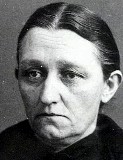 Sarah Makin
Murderer · Australia · 1892
Sarah Makin was also known as Sarah Jane Makin. John Makin (14 February 1845 –…
12 victims
Sarah Makin
Murderer · Australia · 1892
Sarah Makin was also known as Sarah Jane Makin. John Makin (14 February 1845 –…
12 victims
 Kathleen Folbigg
Murderer · Australia · 1989
Kathleen Megan Folbigg (née Donovan) was an Australian child killer. She was co…
4 victims
Kathleen Folbigg
Murderer · Australia · 1989
Kathleen Megan Folbigg (née Donovan) was an Australian child killer. She was co…
4 victims
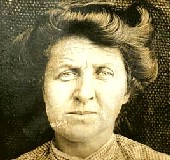 Martha Rendell
Murderer · Australia · 1907
Martha Rendell was executed by hanging at Fremantle Prison on October 6, 1909.…
3 victims
Martha Rendell
Murderer · Australia · 1907
Martha Rendell was executed by hanging at Fremantle Prison on October 6, 1909.…
3 victims
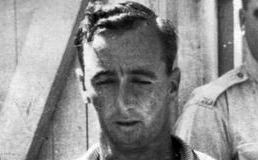 Raymond Bailey
Murderer · Australia · 1957
Raymond Bailey was convicted of the murder of Sally (Thyra) Bowman (43), her da…
3 victims
Raymond Bailey
Murderer · Australia · 1957
Raymond Bailey was convicted of the murder of Sally (Thyra) Bowman (43), her da…
3 victims
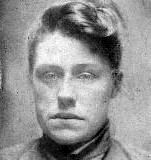 Frances Knorr
Murderer · Australia · 1891
Frances Lydia Alice Knorr (also known as Minnie Thwaites) was born in 1868 in L…
2 victims
Frances Knorr
Murderer · Australia · 1891
Frances Lydia Alice Knorr (also known as Minnie Thwaites) was born in 1868 in L…
2 victims
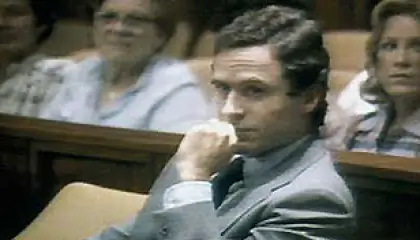 Ted Bundy
Serial killer · USA · 1973
Ted Bundy (born Theodore Robert Cowell; November 24, 1946 – January 24, 1989),…
14 victims
Ted Bundy
Serial killer · USA · 1973
Ted Bundy (born Theodore Robert Cowell; November 24, 1946 – January 24, 1989),…
14 victims
 David Tamihere
Murderer · New Zealand · 1972
David Tamihere was sentenced to life imprisonment with a 10-year non-parole per…
3 victims
David Tamihere
Murderer · New Zealand · 1972
David Tamihere was sentenced to life imprisonment with a 10-year non-parole per…
3 victims
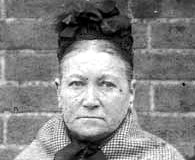 Amelia Dyer
Serial killer · United Kingdom · 1880
Amelia Dyer was convicted for the murder of Doris Marmon. She was known as a “b…
100 victims
Amelia Dyer
Serial killer · United Kingdom · 1880
Amelia Dyer was convicted for the murder of Doris Marmon. She was known as a “b…
100 victims
 Helmuth Schmidt
Serial killer? · USA · 1918
Helmuth Schmidt used a false name to place advertisements, which lured young, l…
30 victims
Helmuth Schmidt
Serial killer? · USA · 1918
Helmuth Schmidt used a false name to place advertisements, which lured young, l…
30 victims
 Richard Thornburg
Murderer · USA · 1996
Richard Alford Thornburg Jr. was a Grady County death row inmate who was convic…
3 victims
Richard Thornburg
Murderer · USA · 1996
Richard Alford Thornburg Jr. was a Grady County death row inmate who was convic…
3 victims
- Gender
- female
- Country
- Australia
- Location
- Newtown, New South Wales, Australia
- Date of birth
- 1922
- Age at first offence
- 26
- Characteristics
- poisoner
- Victim profile
- Desmond George Butler, 30 (her first husband) / Bertrand "Bluey" Fletcher, 30 (her second husband)
- Method of murder
- Poisoning (thallium)
- Date(s) of murder
- July 29, 1948 / March 23, 1952
- Years active
- 1948–1952
- Date of arrest
- May 19, 1952
- Status
-
Released
Sentenced to death on September 23, 1952; commuted to life imprisonment after the NSW Government abolished the death penalty; released in 1964
Case overview
Yvonne Gladys Fletcher was an Australian housewife and mother of two from the inner Sydney suburb of Newtown. She was tried for the murders of her first husband, Desmond George Butler, who died in 1948, and her second husband, Bertrand “Bluey” Fletcher.
Timeline
- March 23, 1952 — Bertram Henry Fletcher (30) died; Yvonne Fletcher was later charged with murdering him by poisoning.
- March 23, 1952 (early) — Yvonne Fletcher was arrested at her home early yesterday after the charges were read in Central Court of Petty Sessions.
- April 17, 1952 — Butler’s body was exhumed.
- April 21, 1952 — Detectives applied for, and were granted permission by the City Coroner, Mr. Forrest, to exhume the body of Butler; the exhumation took place at Rookwood Cemetery in drizzling rain at dusk on the same day.
- September 23, 1952 — Yvonne Gladys Fletcher was sentenced to death at the Central Criminal Court.
- September 24, 1952 — Reporting described the jury verdict and sentencing on September 23, 1952, and included details of the trial and sentencing.
The offence
Charges and allegations
Yvonne Fletcher was charged at Central Court of Petty Sessions with murdering two men to whom she had been married. The police alleged she poisoned them.
The charges said:
- On March 23, 1952 — Mrs. Fletcher murdered Bertram Henry Fletcher, 30.
- On July 29, 1948 — Mrs. Fletcher murdered Desmond George Butler, 29.
When details of the allegations were sought, Sergeant Bush said:
- “The allegation is that the first man died in 1948 as a result of poisoning. The defendant was his wife.”
- “We say the second man died in a similar manner in March this year when the defendant was his wife.”
The Crown alleged that Yvonne Fletcher poisoned Butler with thallium poison.
The Crown also alleged that Bertram Henry Fletcher (30) had died as the result of thallium poisoning.
Background
Thallium poison availability
In Australia in the early 1950s, there was a notable spate of cases of murder or attempted murder by thallium poisoning. At this time, thallium was readily available over the counter in New South Wales, where thallium sulphate was marketed as a commercial rat bait under the brand “Thall-rat”.
Marital context and alleged suffering
The sentencing remarks referred to evidence that showed she had suffered greatly at the hands of her second husband, while stating there was no evidence she had been mistreated by her first husband.
Mrs. Fletcher was understood to have obtained thallium poison that she used to kill her second husband earlier that year.
Suspicions were raised after it became obvious to friends and neighbours that Bluey Fletcher was suffering from the same fatal illness that had killed Yvonne’s first husband.
Investigation
Police investigation and medical actions
Superintendent J. Wiley ordered an investigation when doctors at Royal Prince Allred Hospital refused to sign a death certificate for Fletcher on March 23.
The next day, the Government Medical Officer, Dr. Percy, and Dr. Stratford Sheldon held a post-mortem. The detectives were present, but the examination did not reveal the cause of Fletcher’s death.
The contents of the stomach and certain organs were analysed by Mr. T. A. McDonald at the request of the Government Analyst, Dr. Taylor.
On April 21, detectives applied for, and were granted permission by the City Coroner, Mr. Forrest, to exhume the body of Butler. The exhumation was performed at Rookwood Cemetery in drizzling rain at dusk on the same day.
Later, at the City Morgue, Dr. Percy and Dr. Sheldon examined the remains, and samples of flesh tissue were forwarded to the Government Analyst, Dr. Taylor.
Detectives D. Fergusson and F. Krahe spread their investigations further afield, interviewing many people in Sydney, Melbourne and Broken Hill. They also inquired into Butler’s death at Broughton Hall psychiatric clinic.
Prisoner handling and observation
A gaol authority said that Mrs. Fletcher would be placed in an observation cell at Long Bay until the sentence was carried out or commuted to a term of imprisonment. The authority stated that, if the sentence was commuted to imprisonment for life, Mrs. Fletcher would be able to petition for release after serving about 20 years. Mrs. Fletcher would remain at Long Bay.
Arrest
Yvonne Fletcher was arrested at her home early yesterday, following the charges being read in Central Court of Petty Sessions.
Trial
Jury verdict and trial duration
A Central Criminal Court jury returned a verdict of guilty after an absence of four hours.
The jury deliberated for 37 hours.
Trial atmosphere and defendant reaction
Mrs. Fletcher, who wore a grey costume, blue jumper, and white hat, seemed self-composed when the jury returned to court. She showed no emotion when the foreman announced the verdict. When asked if she had anything to say before the Court passed sentence, she said, “No, your Honor.”
When she was sentenced to death, she went white, swayed and then collapsed in the dock. She was led sobbing from the court by policewomen.
During the sentencing remarks, Mrs. Fletcher constantly opened and closed her eyes as the Judge addressed her.
After dropping a prayer-book she had carried during the seven-day trial, three policewomen and a constable rushed to her aid, and they gave her a glass of water. Just before Mrs. Fletcher reached the door leading to the cells, she burst into a fit of weeping.
After Mrs. Fletcher had left the court, Mr Justice Kinsella complimented the jury on their “splendid service to the State.”
Sentencing
Judge Kinsella’s sentencing remarks
Mr. Justice Kinsella stated:
- “You have had a fair trial and a patient and careful consideration of the evi- dence by the jury. ”
- “If the conviction had been in respect of your second husband, possibly some palliation of your crime might have been found, for the evidence showed you suffered greatly at his hands. In respect of your first husband, there is no evidence at all of that nature. ”
- “The crime of murder is a terrible one, and when the killing is by means of an insidious poison, secretly administered within the family circle to an unsuspecting victim, which destroyed him mentally and physically, while permitting him to linger for months in wretched agony, then the crime is a horrible one.”
In the sentencing address reported separately, his Honour said:
- “But there is no evidence to say you were mistreated by your first husband,”
- “The crime of murder is a terrible one, but when the killing was by means of poison secretly administered which destroyed him mentally and physically, it is an atrocious thing.”
- “For the crime of murder, the law of this State has one sentence Death”.
- “I, therefore, sentence you, Yvonne Gladys Fletcher to death,”
Jury recommendation on thallium sale
Mr. Justice Kinsella referred to a recommendation from the jury that, in view of the scientific evidence, the sale of thallium poison in any form to the public should be prohibited, and said he would pass on the recommendation to the appropriate authority.
The foreman of the jury recommended that the sale of thallium to the public be prohibited.
After delivering the verdict of guilty, the foreman had made the recommendation.
Additional remarks to the jury
His Honour told the jury men there was ample evidence to bring in the verdict of guilty.
The Judge added that if the jurymen desired, they could be excused from jury work for three years.
Appeals
No appeals were stated.
Outcome
Yvonne Gladys Fletcher was sentenced to death on September 23, 1952. The sentence was subsequently commuted to life imprisonment after the NSW Government abolished the death penalty. She was released in 1964.
A legal authority said the case was the first known in Australia of a person having been convicted of murder by administering thallium poison.
Aftermath and additional details
Children and custody expectations
Mrs. Fletcher had two small children by her first marriage.
A gaol authority stated she would be placed in an observation cell at Long Bay until the sentence was carried out or commuted, and that she could petition for release after serving about 20 years if her sentence was commuted to life imprisonment.
Scientific and procedural elements described
The Crown Prosecutor, Mr Rooney, Q.C., said in an opening address that Mrs. Fletcher began administering thallium to her husband in 1947. He said Butler had sensations of pins and needles in his feet early in 1948.
The Crown Prosecutor stated:
- “In March this year, police began inquiries,”
- “and Butler's body was exumed on April 17.”
Three days after the trial started, Mr. Justice Kinsella decided to admit evidence on the death of Mrs. Fletcher’s second husband.
The Crown Prosecutor also alleged:
- that the first husband was poisoned with thallium, and
- that Bertram Henry Fletcher (30) had died as the result of thallium poisoning.
Arresting officer and later notoriety
The Fletcher case was noted for the fact that one of the arresting officers was Sydney detective Fred Krahe. He later became notorious for his suspected close involvement with elements of Sydney’s organised crime scene and his alleged involvement in the disappearance of social activist Juanita Nielsen.

Spotted an error, or have more information about this case?