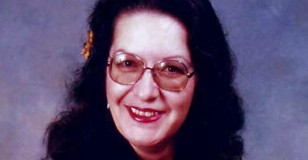
Stella Nickell
Murderer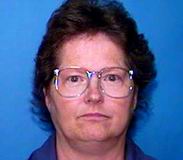 Bobbie Sue Terrell
Murderer · USA · 1984
Bobbie Sue Dudley Terrell was a Pinellas County nurse and worked as the night s…
12 victims
Bobbie Sue Terrell
Murderer · USA · 1984
Bobbie Sue Dudley Terrell was a Pinellas County nurse and worked as the night s…
12 victims
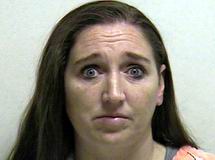 Megan Huntsman
Murderer · USA · 1996
Megan Huntsman was 40 at sentencing. She was a mother of three children who wer…
6 victims
Megan Huntsman
Murderer · USA · 1996
Megan Huntsman was 40 at sentencing. She was a mother of three children who wer…
6 victims
 Angela Johnson
Murderer · USA · 1993
Angela Jane Johnson was convicted in federal court of aiding and abetting the m…
5 victims
Angela Johnson
Murderer · USA · 1993
Angela Jane Johnson was convicted in federal court of aiding and abetting the m…
5 victims
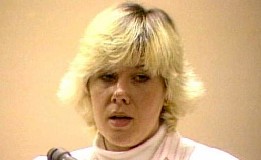 Catherine May Wood
Murderer · USA · 1987
Catherine May Wood was an American caregiver who worked at the Alpine Manor Nur…
5 victims
Catherine May Wood
Murderer · USA · 1987
Catherine May Wood was an American caregiver who worked at the Alpine Manor Nur…
5 victims
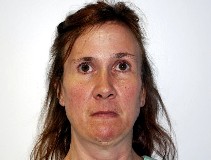 Michele Kalina
Murderer · USA · 1996
Michele Kalina pleaded guilty to murder for one of five infants she initially w…
5 victims
Michele Kalina
Murderer · USA · 1996
Michele Kalina pleaded guilty to murder for one of five infants she initially w…
5 victims
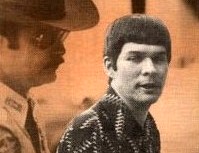 Arthur Frederick Goode
Homicide · USA · 1976
Arthur Frederick Goode was executed by electrocution in Florida on April 5, 198…
2 victims
Arthur Frederick Goode
Homicide · USA · 1976
Arthur Frederick Goode was executed by electrocution in Florida on April 5, 198…
2 victims
 Alec Kreider
Homicide · USA · 2007
Alec Devon Kreider (born February 4, 1991) was a Lancaster County, Pennsylvania…
3 victims
Alec Kreider
Homicide · USA · 2007
Alec Devon Kreider (born February 4, 1991) was a Lancaster County, Pennsylvania…
3 victims
 Frederick Smallwood
Murderer · USA · 1995
Frederick B. Smallwood (also known as Frederick B. Smallwood, Sr.) was convicte…
1 victim
Frederick Smallwood
Murderer · USA · 1995
Frederick B. Smallwood (also known as Frederick B. Smallwood, Sr.) was convicte…
1 victim
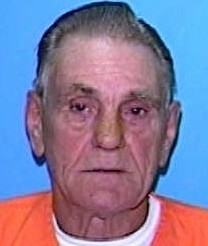 George Porter
Murderer · USA · 1986
George Porter was born on 02/18/32. He was associated with an Eighteenth Judici…
2 victims
George Porter
Murderer · USA · 1986
George Porter was born on 02/18/32. He was associated with an Eighteenth Judici…
2 victims
- Gender
- female
- Country
- USA
- Location
- Auburn, King County, Washington, USA
- Date of birth
- August 7, 1943
- Age at first offence
- 43
- Characteristics
- poisoner, abuse
- Victim profile
- Bruce Nickell, 52 (her husband) / Susan Snow, 40
- Method of murder
- Poisoning (cyanide)
- Date(s) of murder
- June 5/11, 1986
- Years active
- 1986
- Date of arrest
- December 9, 1987
- Status
-
Imprisoned
Sentenced to 90 years in prison with eligibility for parole in 2018
Case identification
Stella Nickell was prosecuted in federal court over deaths linked to product tampering involving cyanide-laced Excedrin capsules.
Background
Stella Nickell was born Stella Maudine Stephenson in Colton, Oregon. Her parents were Alva Georgia “Jo” (née Duncan; later changed her name to Cora Lee) and George Stephenson. She grew up poor. By age sixteen, she was pregnant with her daughter Cynthia. Nickell moved to Southern California, married, and had another daughter.
Nickell had legal troubles including a conviction for fraud in 1968. The following year she faced a charge of beating Cynthia with a curtain rod and later had a conviction for forgery in 1971. She served six months in jail for the fraud charge and was ordered into counseling after the abuse charge. She met Bruce Nickell in 1974; they married in 1976. Bruce Nickell was described as a heavy equipment operator with a drinking habit, and later entered rehab and gave up drinking. Stella Nickell reportedly resented his sobriety.
In the year before Bruce Nickell’s death, Nickell took out life insurance policies on his life. The record described additional payout terms tied to “accidental” death.
The offence
On June 5, 1986, Bruce Nickell, 52, was living in Auburn, Washington. He came home from work with a headache. Stella Nickell reported that he took Extra-Strength Excedrin capsules from a bottle in their home and collapsed minutes later. He died shortly thereafter at Harborview Medical Center.
A second death followed on June 11, 1986. Susan Snow, 40, an Auburn bank manager, took two Extra-Strength Excedrin capsules for an early-morning headache. Susan Snow’s husband, Paul Webking, took two capsules from the same bottle for arthritis and left for work. At 6:30 a.m., the Snows’ fifteen-year-old daughter found Susan Snow collapsed on the floor of her bathroom, unresponsive with a faint pulse. Paramedics transported her to Harborview Medical Center, where she died later the same day without regaining consciousness.
Investigators determined that the poisoned capsules contained cyanide. An autopsy on Susan Snow identified the scent of bitter almonds, and laboratory tests verified that Susan Snow died of acute cyanide poisoning.
The case involved product tampering that caused deaths, and the court treated the conviction as product tampering rather than murder.
Investigation
During an autopsy on Susan Snow, Assistant Medical Examiner Janet Miller detected the scent of bitter almonds. Tests verified acute cyanide poisoning.
Investigators examined the contents of the Snow-Webking household and identified the cyanide source as the bottle of Extra-Strength Excedrin capsules used in the morning of Susan Snow’s death. Three capsules remaining in a 60-capsule bottle were found to be laced with cyanide in toxic quantities.
In response to the discovery, Bristol-Myers initiated a heavily publicized recall of Extra-Strength Excedrin products in the Seattle, Washington area. Drug companies offered a $300,000 reward for the capture of the person responsible. In response to publicity, Stella Nickell came forward on June 19, stating that her husband had died suddenly after taking pills from a 40-capsule bottle of Extra-Strength Excedrin with the same lot number as the bottle associated with Susan Snow’s death. Tests confirmed the presence of cyanide in Bruce Nickell’s remains and in two Excedrin bottles Stella Nickell had turned over to police.
Bristol-Myers recalled all Excedrin capsules in the United States, pulling them from store shelves and warning consumers not to use any already purchased; it also announced a recall of all its non-prescription capsule products.
On June 24, a cyanide-contaminated bottle of Extra-Strength Anacin-3 was found at the same store where Susan Snow had bought her contaminated Excedrin. Later examination by the FBI Crime Lab found that, in addition to containing cyanide powder, the poisoned capsules contained flecks of an unknown green substance. Further tests showed the substance was an algaecide used in home aquariums, sold under the brand name Algae Destroyer.
With contamination at the source having been ruled out, investigators focused on end-users. The FBI began an investigation into possible product tampering. Both Paul Webking and Stella Nickell were asked to take polygraph examinations. Webking complied and later complained in press about his treatment by the FBI. Nickell declined to take a polygraph through the lawyer representing her in the wrongful-death suit, who told reporters she was too “shaken up” to be subjected to the examination.
Investigators became suspicious when Nickell claimed that two contaminated Excedrin bottles turned over to police had been purchased at different times and different locations. Investigators also uncovered circumstantial evidence including that Nickell took out about $76,000 in insurance coverage on Bruce Nickell’s life, with an additional payout of $100,000 if his death was accidental. Investigators also found that Bruce Nickell’s signatures on at least two insurance policies in his name were forged.
Nickell purchased Algae Destroyer from a local fish store, and investigators speculated that it became mixed with cyanide when Nickell used the same container to crush both substances without washing it between uses.
Nickell consented to a polygraph examination in November 1986 and failed it. However, investigators stated that concrete evidence proving she had ever purchased or used cyanide was lacking.
In January 1987, Nickell’s adult daughter, Cynthia Hamilton, approached police. Cynthia Hamilton said Nickell had spoken repeatedly about wanting her husband dead, described Bruce as a bore whom she said preferred to stay home and watch television rather than go out to bars, and said Nickell had tried to poison Bruce previously with foxglove. Cynthia Hamilton also said Nickell discussed what she and her daughter could do with the insurance money if Bruce Nickell died. Cynthia Hamilton also stated that Nickell had begun library research into other methods and had hit upon cyanide.
Subpoenaed records from the Auburn Public Library showed Nickell checked out numerous books about poisons, including “Human Poisonings from Native and Cultivated Plants” and “Deadly Harvest.” One book was marked overdue in library records. The FBI identified Nickell’s fingerprints on cyanide-related pages of several works checked out during that period.
By summer 1987, Nickell’s attorneys acknowledged she was the prime suspect. Investigators continued to build the case.
Arrest
On December 9, 1987, Stella Nickell was indicted by a federal grand jury on five counts of product tampering, including two counts that resulted in the deaths of Susan Snow and Bruce Nickell. Nickell was arrested the same day.
Trial
The trial began in April 1988. The jury deliberated for five days and found Stella Nickell guilty of all charges on May 9, 1988.
Nickell’s legal team alleged jury-tampering and judicial misconduct. A motion for a mistrial was denied. Despite the defense claims, the jury verdict stood.
A prosecution witness described the prosecution’s view of Nickell as an “icy human being without social or moral conscience.”
Cynthia Hamilton testified.
Sentencing
Nickell was sentenced to two ninety-year terms for charges relating to the deaths of Susan Snow and Bruce Nickell, and three ten-year terms for other product tampering charges. All sentences were ordered to run concurrently. The judge ordered Nickell to pay a small fine and forfeit remaining assets to the families of her victims.
Nickell was eligible for parole in 2018.
Appeals
An appeal based on jury-tampering and judicial misconduct issues was rejected by the United States Court of Appeals for the Ninth Circuit in August 1989.
A second appeal beginning in 2001, with assistance from the Innocence Project and private detectives Al Farr and Paul Ciolino, requested a new trial based on alleged new evidence that the FBI may have withheld documents from the defense. The appeal was denied.
Nickell continued to maintain her innocence after her trial. She asserted that Cynthia Hamilton lied about her involvement to reap reward money connected to the case.
Other details
Nickell’s legal troubles before the homicide-related proceedings included check fraud, with a described four-month jail term. She also had a history of child abuse allegations involving Cynthia, including that Cynthia was bruised on her legs after Nickell allegedly beat her with a curtain rod. Nickell denied abusing her children and asserted: “(Hamilton) wasn’t feeling good. She wanted to stay home. There was nothing wrong with her. I sent her to school; she told the nurse I had beat her that morning. They arrested me and I was only in jail overnight.” She said she was ordered to counseling and stated her daughter was jealous of her.
Paul Webking and Stella Nickell filed wrongful death lawsuits against Bristol-Myers.
Investigators linked the cyanide in tainted capsules to Algae Destroyer, an aquarium algaecide. The FBI and federal investigators examined the contaminated bottles at the FBI Crime Lab, including work that identified specks of a green crystal-like substance.
A federal product tampering statute came into effect after the Chicago Tylenol murders. Nickell’s conviction was for product tampering that caused death. The possibility of state charges for the actual murders of Susan Snow and Bruce Nickell was described as continuing.
Media references described multiple appearances and discussions of the case, including coverage on Forensic Files, The New Detectives, and Snapped, and two episodes of Deadly Women. A made-for-TV film based on the case was described as canceled before production based on objections from advertisers, including Johnson & Johnson. Seattle author Gregg Olsen wrote about the case in the book “Bitter Almonds: The True Story of Mothers, Daughters and the Seattle Cyanide Murders.”
Nickell’s case was described as becoming prosecutable as a federal product tampering case and as involving federal FDA requirements for tamper-resistant technologies for over-the-counter medicines.
Timeline
- June 5, 1986 — Bruce Nickell, 52, collapsed after taking Extra-Strength Excedrin; he died at Harborview Medical Center.
- June 11, 1986 — Susan Snow, 40, took Extra-Strength Excedrin and died later the same day after collapsing at home.
- June 19, 1986 — Stella Nickell came forward to police and reported her husband’s death after taking Excedrin with the same lot number as Susan Snow’s.
- December 9, 1987 — Stella Nickell was indicted by a federal grand jury on five counts of product tampering and arrested the same day.
- April 1988 — Stella Nickell went on trial.
- May 9, 1988 — The jury found Stella Nickell guilty of all charges.
- August 1989 — The United States Court of Appeals for the Ninth Circuit rejected an appeal based on jury-tampering and judicial misconduct issues.
Spotted an error, or have more information about this case?