Noah Beauchamp
Murderer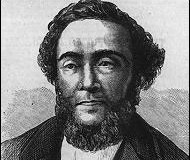 Edward Rulloff
Murderer · USA · 1845
Edward Rulloff was executed by hanging on May 18, 1871. His execution followed…
3 victims
Edward Rulloff
Murderer · USA · 1845
Edward Rulloff was executed by hanging on May 18, 1871. His execution followed…
3 victims
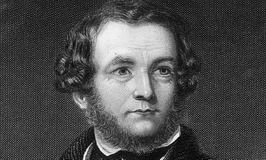 Thomas Simpson
Murderer · USA · 1840
Thomas Simpson was fatally shot at a wilderness camp in the U.S. territory of M…
2 victims
Thomas Simpson
Murderer · USA · 1840
Thomas Simpson was fatally shot at a wilderness camp in the U.S. territory of M…
2 victims
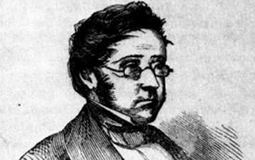 John White Webster
Murderer · USA · 1849
John White Webster (May 20, 1793–August 30, 1850) was born in Boston, Massachus…
1 victim
John White Webster
Murderer · USA · 1849
John White Webster (May 20, 1793–August 30, 1850) was born in Boston, Massachus…
1 victim
 Clinton Lee Young
Murderer · USA
Clinton Lee Young (born July 19, 1983) was convicted of murdering two men in No…
2001 victims
Clinton Lee Young
Murderer · USA
Clinton Lee Young (born July 19, 1983) was convicted of murdering two men in No…
2001 victims
 Kyle Huff
Mass murderer · USA · 2006
Kyle Aaron Huff was the shooter in a mass killing that occurred on the morning…
6 victims
Kyle Huff
Mass murderer · USA · 2006
Kyle Aaron Huff was the shooter in a mass killing that occurred on the morning…
6 victims
 Roy Whitting
Murderer · United Kingdom · 2000
Roy Whiting was convicted of the abduction and murder of eight-year-old Sarah P…
1 victim
Roy Whitting
Murderer · United Kingdom · 2000
Roy Whiting was convicted of the abduction and murder of eight-year-old Sarah P…
1 victim
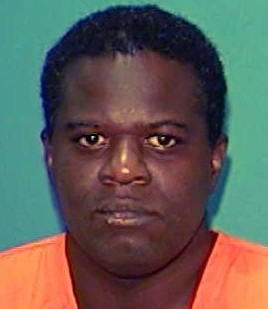 Gregory Capehart
Murderer · USA · 1988
Defendant: Gregory Capehart (born 08/09/67) Sixth Judicial Circuit: Pasco Count…
1 victim
Gregory Capehart
Murderer · USA · 1988
Defendant: Gregory Capehart (born 08/09/67) Sixth Judicial Circuit: Pasco Count…
1 victim
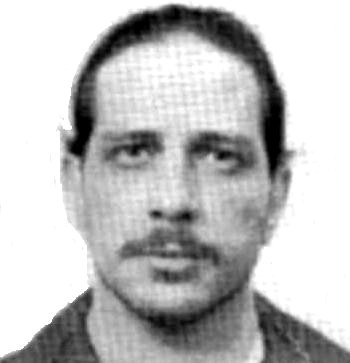 Kevin Lee Hough
Murderer · USA · 1985
Kevin Lee Hough was executed by lethal injection in Indiana on May 2, 2003. He…
3 victims
Kevin Lee Hough
Murderer · USA · 1985
Kevin Lee Hough was executed by lethal injection in Indiana on May 2, 2003. He…
3 victims
 Robert Gleason
Murderer · USA · 2007
Robert Charles Gleason was serving life imprisonment for the 2007 fatal shootin…
3 victims
Robert Gleason
Murderer · USA · 2007
Robert Charles Gleason was serving life imprisonment for the 2007 fatal shootin…
3 victims
 Donato Anthony Corbo
Homicide · Australia · 2011
Name: Donato Anthony Corbo · Age at time of incident: 39 · 2:30 a.m. — April 29…
3 victims
Donato Anthony Corbo
Homicide · Australia · 2011
Name: Donato Anthony Corbo · Age at time of incident: 39 · 2:30 a.m. — April 29…
3 victims
- Gender
- male
- Country
- USA
- Location
- Parke County, Indiana, USA
- Date of birth
- February 24, 1785
- Age at first offence
- 55
- Characteristics
- neighborhood disputes
- Victim profile
- His neighbor George Mickelberry
- Method of murder
- St abbing with knife
- Date(s) of murder
- July 1840
- Years active
- 1840
- Date of arrest
- April 1841
- Status
-
Executed
Executed by hanging on December 30, 1842
Case details
Noah Beauchamp (February 24, 1785 - December 30, 1842) was a blacksmith and an Indiana pioneer. He was the first person to be legally hanged in Parke County, Indiana after murdering his neighbor George Mickelberry over a dispute.
Background
Noah Beauchamp was born February 24, 1785 in Maryland to Thomas and Sarah Adams Beauchamp. As an adult, he was over six feet tall, burly, and had a ruddy complexion. He was said to have been quick to anger. It was also said that when he was a young man he had a disagreement with his father over the morality of slavery. He was described as very religious, a devote Baptist, and vehemently against slavery. His father owned slaves, possibly disowned Noah, and Noah soon left for Kentucky and then Ohio, where he may have met Elizabeth Adams, who became his wife.
Noah Beauchamp’s first child, Noah Beauchamp, Jr., was born in Cincinnati, Ohio, on November 29, 1804. By 1811, Noah moved with his family to Connersville Township in Fayette County in the Indiana Territory, where he set up a blacksmith shop. On December 14, 1812, Noah purchased a tract of land in Fayette County and lived there until the 1820s, when he moved his family to Edgar County, Illinois. They resided in Illinois until the mid 1830s when he relocated again to Indiana, to Vigo County.
The offence
Noah’s neighboring families in Sugar Creek Township, which abutted his farm, included the Mickelberry family. George Mickelberry and Noah got into a heated dispute over their property boundaries.
The tension between the two families did not prevent Mrs. Mickelberry from hiring Noah’s daughters to knit. After one of these knitting jobs in the July of 1840, a larger dispute took place between the Mickelberry and Beauchamp women. The Mickelberry daughters were spreading the word around town that Noah’s children stole some left over wool from the job. Noah got wind of the accusations and quickly became very angry over the slanderous statements made about his daughters.
Noah decided to confront George Mickelberry and ask him to prevent his family from making further comments about his daughters. Noah began walking over to George Mickelberry’s house and stopped in a clearing where meat had been prepared and where a large butcher’s knife was left on a stump. He stopped to pray for guidance and then decided to take the knife with him in case Mickelberry’s farm hands were around and gave him any trouble.
Only George answered the door when Noah knocked. In the doorway, Noah, in anger, berated him over his daughters’ behavior. One of the daughters was in the living room and began talking back to Noah. Becoming enraged, Noah threatened the daughter saying, “If you was a man I'd cut you into laces,” as he brandished the knife. George put his hand on Noah’s shoulder to quiet down the situation and, upon reflex, Noah plunged the knife into George’s chest. Noah’s breast bone cracked at the force of the blade, and George died almost instantly.
After killing George Mickelberry, Noah ran from the house in a panic and made for the Wabash River. He stole a row boat and used the river as a means of escape.
Investigation
After word got out that Noah had killed George Mickelberry, a large manhunt proceeded to search all over Vigo County and the whole area, but Noah was nowhere to be found.
George Mickelberry’s family grieved for their loss, and George was buried.
Arrest and attempted escape
Noah managed to flee to the vast state of Texas, where he borrowed money to open up a blacksmith shop. He owed large debts. The son of one of the men who loaned him money happened to see the wanted poster in the local hotel that was brought down to Texas by a traveller in April 1841. Since Noah had not used an assumed name, it was not long before the lenders son and another man went looking to collect the $500.00 reward on the fugitive.
Noah was quickly apprehended, and the two men set out for a river to ship Noah back up to Indiana in custody. Before they even made it to the river, Noah broke free and overpowered one of the men. Noah made a run for it but was soon recaptured.
Noah was locked in one of the cabins on the boat as it made its way up river. Unknown to his captors, Noah used the sheets of the bed to fashion a noose and tried to kill himself in the cabin. Just in the nick of time someone checked up on Noah and he was prevented from killing himself.
Trial
Back in Vigo County, Noah’s trial began in earnest. His lawyer got a change of venue from Vigo County to Parke County because the case was so well known. After a lengthy trial, Noah was sentenced to death on September 8, 1842.
The gallows were constructed in Rockville, Indiana.
Sentencing and execution
On the morning of December 30, 1842, Noah’s old friend and minister Reverend Newport delivered a sermon right outside Noah’s jail cell window so he could hear it.
Noah had his last meal and said his goodbyes to his family and friends. He was taken out to the gallows, where a large contingent from Vigo County waited. When he was asked if he had any last words, Noah said, “Goodbye,” and he was hanged.
Outcome
Noah Beauchamp was executed by hanging on December 30, 1842.
Other details
It was noted that a similar event had happened before, in the 1820s, involving a Beauchamp who, to defend the honor of a woman, killed a man in the man’s own doorway with a knife. Like Noah, that Beauchamp fled, a large manhunt took place, he was captured, tried to kill himself and was saved at the last minute, and was tried and hanged. That case was of Jereboam O. Beauchamp, who killed Col. Solomon P. Sharp on November 7, 1825. The case became famous and was known as The Beauchamp-Sharp Tragedy and inspired many literary works. Jereboam was Noah’s cousin. Noah Beauchamp was a direct descendant of the Quaker Ambrose Dixon, and Dixon was Beauchamps great-great-great grandfather.
Spotted an error, or have more information about this case?