
Frederick Smallwood
Murderer Brian Kevin Rosenfeld
Murderer · USA · 1985
Brian Kevin Rosenfeld Brian Kevin Rosenfeld was sentenced to three concurrent l…
23 victims
Brian Kevin Rosenfeld
Murderer · USA · 1985
Brian Kevin Rosenfeld Brian Kevin Rosenfeld was sentenced to three concurrent l…
23 victims
 Russell Ellwood
Murderer · USA · 1991
Russell Ellwood was a former taxi driver. Authorities suspected him of killing…
20 victims
Russell Ellwood
Murderer · USA · 1991
Russell Ellwood was a former taxi driver. Authorities suspected him of killing…
20 victims
 Robert Martines Perez
Murderer · USA · 1994
Name: Robert Martines Perez · Other name used in proceedings: Robert Martinez P…
15 victims
Robert Martines Perez
Murderer · USA · 1994
Name: Robert Martines Perez · Other name used in proceedings: Robert Martinez P…
15 victims
 Billy Frank Vickers
Murderer · USA · 1993
Billy Frank Vickers Vickers was executed by lethal injection in Texas on Januar…
14 victims
Billy Frank Vickers
Murderer · USA · 1993
Billy Frank Vickers Vickers was executed by lethal injection in Texas on Januar…
14 victims
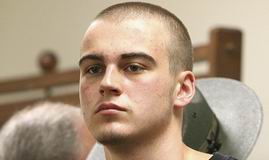 Steven Spader
Homicide · USA · 2009
Steven Spader was convicted in connection with the October 4, 2009 home invasio…
1 victim
Steven Spader
Homicide · USA · 2009
Steven Spader was convicted in connection with the October 4, 2009 home invasio…
1 victim
 Terry Jess Dennis
Murderer · USA · 1999
Terry Jess Dennis was a male white/Caucasian death row inmate named DENNIS, TER…
1 victim
Terry Jess Dennis
Murderer · USA · 1999
Terry Jess Dennis was a male white/Caucasian death row inmate named DENNIS, TER…
1 victim
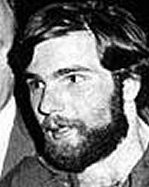 Ronald DeFeo
Mass murderer · USA · 1974
Ronald Joseph “Butch” DeFeo, Jr. (born September 26, 1951) was an American murd…
6 victims
Ronald DeFeo
Mass murderer · USA · 1974
Ronald Joseph “Butch” DeFeo, Jr. (born September 26, 1951) was an American murd…
6 victims
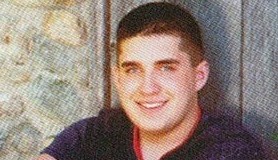 Tyler Peterson
Mass murderer · USA · 2007
Tyler Peterson committed suicide by shooting himself the same day victims. Tyle…
6 victims
Tyler Peterson
Mass murderer · USA · 2007
Tyler Peterson committed suicide by shooting himself the same day victims. Tyle…
6 victims
- Gender
- male
- Country
- USA
- Location
- Hampton, Virginia, USA
- Date of birth
- 1944
- Age at first offence
- 51
- Characteristics
- disputes, rape
- Victim profile
- H is wife, Debra Smith Mortimer Smallwood
- Method of murder
- Shooting
- Date(s) of murder
- August 31, 1995
- Years active
- 1995
- Date of arrest
- Same day
- Status
-
Life imprisonment
Sentenced to life in prison in Virginia in June 1996; conviction reversed in February 1998; resentenced to life in prison in March 2000
Case overview
Frederick B. Smallwood (also known as Frederick B. Smallwood, Sr.) was convicted of first degree murder and related use of a firearm. The Court of Appeals of Virginia reversed the convictions. After remand and further proceedings, he was resentenced to life in prison in March 2000.
Frederick B. Smallwood was described as a Baptist minister and a “Bluebeard” slayer of women for profit.
Timeline
- June 1996 — He was sentenced to life in prison in Virginia.
- February 1998 — The Court of Appeals of Virginia reversed the convictions.
- March 2000 — He was resentenced to life in prison.
- March 29, 2000 — A prosecution began at Hampton Circuit Court with arguments in a resentencing-related trial context.
Background
Frederick B. Smallwood was a former Southern Baptist minister.
His wife was Debra Smith Mortimer Smallwood (referred to as Debra). Smallwood and Debra reunited more than 30 years later when Smallwood moved back to the area from Albany, Ga. They had been married just two months at the time of her death.
Smallwood stated that he dated Smith back in high school but that he lost touch over the years. He became a preacher, and she became a science teacher at Kecoughtan High. They each married others and then divorced before they reunited.
Smallwood claimed that Debra was upset because he wanted to return to the ministry and that she shot herself after they argued about the “situation.”
The offence
At approximately 1:50 p.m. on August 31, 1995, Hampton Police Officer John B. Proctor was dispatched to Smallwood’s residence.
Upon arrival, Proctor found Smallwood standing outside the home, and Proctor found Debra dead in an upstairs room. Debra was the apparent victim of a gunshot wound to the head.
A gun was resting between Debra’s feet. The gun’s position was described as:
“muzzle point[ed] . . . outward . . . [and] handle pointed . . . away from the body”
There was a single shell casing near Debra’s foot.
Smallwood told Proctor that Debra shot herself with the weapon following an argument between the two. He later elaborated that Debra “got [his] gun off the desk and put it to her head and pulled the trigger.”
Smallwood told police later that he believed Debra had fired the gun accidentally. Debra had previously expressed suicidal thoughts.
After arrest, Smallwood inquired of police:
“What if we were in an argument and we fought over the gun and the gun accidentally went off?”
He answered affirmatively when asked:
“if that's what happened.”
Investigation
The autopsy revealed little, if any, blood on Debra’s right hand and “minimal spatter” on Debra’s right arm.
Forensic testimony established that the gun was fired with the muzzle against Debra’s skin while Debra was seated, leaving only a “slight leak on the upper part of the wound.”
Gunshot residue samples (GSRs) were taken from both Smallwood and Debra, and those samples were negative.
Detective Kenneth Seals testified that shell casings ejected from the weapon “usually go out a good distance into the air” and that:
“casing [near Debra’s foot] appeared . . . to be in an improper position. The firearm appeared to be in an improper position . . . [and] based on those matters, . . . we conducted an investigation . . . as to whether or not this is an actual suicide, or . . . a death by some other means.”
A firearms expert testified for the Commonwealth that testing of the weapon revealed that casings were:
“ejected over to the right and a little bit rearward.”
The firearms expert also testified that:
“different weapons [eject casings] different distances.”
Arrest
After the initial police response, Smallwood was arrested following the investigation into Debra’s death.
Trial
Court and participants
The appellate memorandum opinion addressed proceedings in the Circuit Court of the City of Hampton, with Judge Wilford Taylor, Jr. presiding. The memorandum opinion lists the following attorneys:
- Robert Moody, IV (Segall & Moody, on brief) for appellant
- Daniel J. Munroe, Assistant Attorney General (Richard Cullen, Attorney General, on brief) for appellee
Verdict
A jury convicted Frederick B. Smallwood of first degree murder and related use of a firearm.
Grounds for appeal
On appeal, Smallwood complained that the trial court erroneously:
- allowed the Commonwealth to impeach its own witness, thereby exposing the jury to impermissible hearsay, and
- refused to allow the testimony of a defense witness relative to evidence introduced by the Commonwealth during its case-in-chief.
The Court of Appeals of Virginia agreed and reversed the convictions.
Evidence and testimony described in the appellate opinion
The Commonwealth presented evidence that Smallwood was romantically involved with two women, Nancy Locke and Linda Norton, and received money from each, both before and after his marriage to Debra. Norton continued to provide Smallwood approximately $400-$500 every two weeks until trial.
Linda Norton was called as a witness for the Commonwealth. She testified that her prior statements to investigators relative to Debra’s death were “lies,” and that they were coerced by police.
Over Smallwood’s repeated objections, the trial court permitted the Commonwealth to impeach Norton through excerpts from a transcript of her police interview. The Commonwealth also introduced an audio tape of the interview, and portions of it were played to the jury, including hearsay highly prejudicial to Smallwood.
The trial court later reconsidered and sustained Smallwood’s objection to the interview and tape evidence. The court advised the jury:
“I have since . . . made a decision to sustain the defendant's objection to that tape, so the tape will not be played for your hearing. Now, there was a statement made in the tape attributed to Ms. Norton's mother that you heard. I'm going to instruct you to disregard that statement. You're not to consider that statement.”
Ruling on expert testimony
The trial court would not allow the testimony of defense witness Peter A. Smerick, an expert “crime scene analyst,” to explain the “improper” location of the shell casing.
The trial court also precluded introduction of the factual results of Smerick’s test firings of the weapon to establish its precise ejection pattern and characteristics.
Appellate analysis included in the memorandum
The appellate opinion discussed:
- The handling of improper impeachment of a witness and the effect of a limiting instruction, including that the portion of Norton’s testimony impeached by her prior statement was done improperly.
- The admission of expert opinion and the issue that the court barred Smerick’s testimony regarding the ejection pattern and location of the shell casing while the Commonwealth introduced evidence focused on the casing location.
- Harmless error analysis, concluding that the cumulative effect prejudiced the defendant and that the Commonwealth failed to show the error was harmless beyond a reasonable doubt.
The Court of Appeals reversed the convictions and remanded the case for further proceedings as the Commonwealth deems appropriate.
Sentencing
Frederick B. Smallwood was sentenced to life in prison in Virginia in June 1996.
After the February 1998 reversal and remand, the case returned to Hampton Circuit Court, and he was resentenced to life in prison in March 2000.
At a later stage reflected in the March 29, 2000 DailyPress.com proceeding, the prosecution was described as beginning with opening statements.
Appeals
Court of Appeals of Virginia memorandum opinion
The memorandum opinion is titled: “FREDERICK B. SMALLWOOD, S/K/A FREDERICK B. SMALLWOOD, SR. v. COMMONWEALTH OF VIRGINIA”
Record number: 1616-96-1 It states the appeal was from the Circuit Court of the City of Hampton with Judge Wilford Taylor, Jr.
The memorandum opinion states that the jury convicted Smallwood of first degree murder and related use of a firearm. The Court of Appeals reversed the convictions, agreeing with Smallwood that:
- the Commonwealth improperly impeached its own witness, exposing the jury to impermissible hearsay, and
- the trial court erred by refusing to allow defense witness testimony relative to evidence introduced by the Commonwealth during its case-in-chief.
The opinion concluded:
- “Accordingly, we reverse the convictions and remand the case for such further proceedings as the Commonwealth deems appropriate.”
Panel and argument details
The memorandum opinion lists “Present: Judges Baker, Bray and Overton.” It states the matter was argued at Norfolk, Virginia.
Outcome
The Court of Appeals of Virginia reversed Smallwood’s convictions.
After further proceedings following remand, he was resentenced to life in prison in March 2000.
Aftermath and later proceedings described
The March 29, 2000 DailyPress.com account described a trial context in which prosecution began with opening statements and arguments.
Joanne Kimberlin’s account included the following opening language from the prosecution:
“This man, the defendant Fred Smallwood, is a liar, a fraud and a murderer.”
The account identified Hampton Assistant Commonwealth’s Attorney Kimberly Enderson Hensley as using those words in her opening statement and identified John Haugh as the city’s Chief Deputy Commonwealth’s Attorney. The account described them as “tag-team” prosecutors during day one of a trial expected to last through Friday.
The account said Smallwood had been through “all this before.” It stated a jury convicted him of murder in 1996, and he won a new trial when the state Court of Appeals overturned the verdict in February 1998. It also said most involved parties returned to Hampton Circuit Court the week described.
The account stated Judge Wilford Taylor sat on the bench again and said Haugh orchestrated the prosecution.
It described Smallwood as 56 and in failing health, sitting subdued and pale next to his court-appointed attorney, Wesley Pendergrass.
The same account described testimony from three colleagues from Kecoughtan High. It said they testified that Debra seemed happy and upbeat in the hours before her death, and that each had met Smallwood only briefly before Debra died.
The account included a specific claim by one colleague, that the colleague had lied to Debra during their meeting by telling her he was a medical doctor from another state and that his co-workers were “watching his patients while he was gone.”

Spotted an error, or have more information about this case?