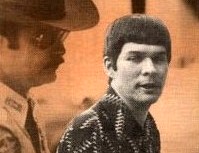
Arthur Frederick Goode
Homicide Edward Charles Allaway
Homicide · USA · 1976
Edward Charles Allaway Edward Charles Allaway was found not guilty by reason of…
7 victims
Edward Charles Allaway
Homicide · USA · 1976
Edward Charles Allaway Edward Charles Allaway was found not guilty by reason of…
7 victims
 Elizabeth Ramsey
Murderer · USA · 2011
Elizabeth Ramsey was the 33-year-old stepmother of Johnathan Ramsey. Johnathan…
1 victim
Elizabeth Ramsey
Murderer · USA · 2011
Elizabeth Ramsey was the 33-year-old stepmother of Johnathan Ramsey. Johnathan…
1 victim
 Askari Abdullah Muhammad
Murderer · USA · 1974
Askari Abdullah Muhammad, previously known as Thomas Knight, was convicted of t…
4 victims
Askari Abdullah Muhammad
Murderer · USA · 1974
Askari Abdullah Muhammad, previously known as Thomas Knight, was convicted of t…
4 victims
 Eugene Robert Tucker
Murderer · USA · 1999
Eugene Robert Tucker had been dating a woman named AnnMarie Merchant. AnnMarie…
3 victims
Eugene Robert Tucker
Murderer · USA · 1999
Eugene Robert Tucker had been dating a woman named AnnMarie Merchant. AnnMarie…
3 victims
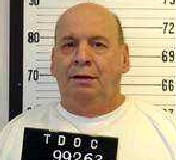 Jerry Ray Davidson
Murderer · USA · 1995
Jerry Ray Davidson was convicted of premeditated murder and aggravated kidnappi…
1 victim
Jerry Ray Davidson
Murderer · USA · 1995
Jerry Ray Davidson was convicted of premeditated murder and aggravated kidnappi…
1 victim
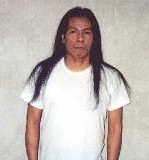 Jerald Harjo
Murderer · USA · 1988
Jerald Wayne Harjo was convicted of first degree murder in Seminole County, Okl…
1 victim
Jerald Harjo
Murderer · USA · 1988
Jerald Wayne Harjo was convicted of first degree murder in Seminole County, Okl…
1 victim
 Myron Lance
Spree killer · USA · 1966
Myron Lance was 25 years old on Dec. 17, 1966, when he teamed up with fellow pa…
6 victims
Myron Lance
Spree killer · USA · 1966
Myron Lance was 25 years old on Dec. 17, 1966, when he teamed up with fellow pa…
6 victims
- Gender
- male
- Country
- USA
- Location
- Maryland/Florida, USA
- Date of birth
- 1954
- Age at first offence
- 22
- Characteristics
- mentally ill, child molester, rape
- Victim profile
- Jason Verdow (male, 9) / Kenneth Dawson (male, 11)
- Method of murder
- Strangulation
- Date(s) of murder
- March 5/20, 1976
- Years active
- 1976
- Date of arrest
- March 29, 1976
- Status
-
Executed
Executed by electrocution in Florida on April 5, 1984
Case overview
Arthur Frederick Goode was executed by electrocution in Florida on April 5, 1984. He was 30 years old.
In a press conference the night of his death, Goode acknowledged: "Yes, I asked [the guard] to bring in a 9-year-old boy so I could have sex with a little boy for one last time before they kill me."
His last words were: "I have remorse for the two boys I murdered. But it's hard for me to show it."
Timeline
- March 1975 — Goode was arrested on five charges of sexual assault involving abuse of a 9-year-old boy.
- March 5, 1976 — Goode lured 9-year-old Jason VerDow away from a school bus stop in Fort Myers and later strangled him; the body was recovered nude except for stockings and Goode was questioned twice as a suspect.
- March 20 — Goode met Kenny Dawson, who joined him and Billy Arthe for a bus ride to Tysons Corner, Virginia; during a woods hike near town, Goode forced Dawson to undress and strangled him with a belt while Arthe looked on.
- March 21, 1977 — The court imposed a life sentence after a Maryland jury found Goode sane and guilty of murder.
- April 5, 1984 — Goode was electrocuted at Florida State Prison in Starke, Florida.
- February 28, 1982 — The Eleventh Circuit addressed a stay of execution and granted it.
- May 2, 1983 — The Eleventh Circuit issued an opinion affirming in part, reversing in part, and remanding.
- Jan. 27, 1984 — On remand from the Supreme Court of the United States, the Eleventh Circuit affirmed the district court judgment.
- April 4, 1984 — The Eleventh Circuit addressed a late habeas petition and denied a certificate of probable cause and a stay.
Background
Arthur Frederick Goode was a native of Hyattsville, Maryland. He was described as a victim of borderline retardation, and he wore his hair in Little Lord Fauntleroy bangs.
The record described that in Goode’s teens he began making sexual advances to younger boys and became notorious in his own neighborhood. He was arrested three times for indecent assaults upon minors, and he was freed each time when his parents posted bail.
Goode received voluntary psychiatric treatment at Spring Grove State Hospital after being placed on probation. He later escaped from the hospital, spending fifteen weeks there after which he checked out, catching a bus for his parents’ new home in St. James City, Florida.
Warnings were issued and a bench warrant for his arrest was described, but Goode was not taken back.
In the later federal appeals, Goode was described as competent to stand trial and competent to waive trial counsel.
The offence
Goode’s crimes were described as resulting in the abduction, rape and murder of two boys, and the kidnapping and sexual assault of at least one other boy.
Murder of Jason Verdow (Jason VerDow)
On March 5, 1976, Goode lured 9-year-old Jason VerDow away from a school bus stop in Fort Myers, asking the child to help him "find something" in the woods nearby.
Goode later confessed: "I told him he was going to die," and described how he would kill him. He said: "I asked him if he had any last words, and he said, 'I love you,' and then I strangled him."
Police recovered the body nude except for stockings. Goode was questioned as a suspect in Jason VerDow’s case.
A memorial park later was established in Jason’s name in Cape Coral, Florida.
Goode also wrote a letter to Jason’s parents, saying: "Ha! Ha! I murdered your sexy little boy, Jason, and I'm proud of it!"
Kidnapping, sexual assault and murder involving Kenny Dawson
While fleeing after Jason VerDow’s murder, Goode kidnapped 10-year-old Billy Arthe, persuading him to join him in Washington, D.C., where they toured and spent the next ten days in motels.
On March 20, Goode met Kenny Dawson, 11, and Goode talked the boy into joining them for a bus ride to Tysons Corner, Virginia.
In the wooded area near town while hiking, Goode forced Dawson to undress. Afterward, Goode strangled Dawson with a belt while Billy Arthe looked on, horrified.
A woman in Falls Church recognized Billy Arthe from newspaper photographs and summoned police. Billy Arthe was described as being unharmed on March 20 until later events.
When Goode was placed under arrest, he complained to police: "You can't to nothing to me. I'm sick."
Testimony of Billy Arthe
Billy Arthe testified that he was in Goode’s company for several days shortly after Jason VerDow’s murder and that Goode told him he had killed Jason. After Billy’s testimony was complete, Goode handed him a piece of candy and said: "I love you, Billy. Goodbye."
Investigation and custodial conduct
Goode was twice questioned as a suspect in Jason VerDow’s murder and then left town and returned to Spring Grove State Hospital. He fled after spending five minutes there, convinced that a receptionist was calling police, even though the staff professed no knowledge of outstanding arrest warrants.
Goode’s later incarceration was described as involving harassment of the parents of his victims with cruel, taunting letters. He was also described as frequently abused by others inmates and reviled on death row as "the most hated man on death row."
Arrest, trial, and sentencing
Maryland proceedings
The record described that a Maryland jury disagreed with a sanity position and found Goode sane and guilty of murder, after which the court imposed a life sentence.
In federal proceedings, the Eleventh Circuit stated that Goode was found guilty by a jury of the gruesome killing of Jason Verdow, a boy ten years of age, and that Goode was convicted of first degree murder and sentenced to death in Florida.
Florida proceedings
After being transferred to Florida, Goode was convicted on a second murder count and sentenced to die in the electric chair.
In March 1977 sentencing context, the trial judge’s pronouncement included the quote: "If organized society is to exist with the compassion and love that we all espouse, there comes a point when we must terminate that, and there are certain cases and certain times when we can no longer help, we can no longer rehabilitate and there are certain people, and Arthur Goode is one of them, that's actions demand that society respond and all we can do is exterminate. Philosophically I believe that in certain limited instances we should do that. In this particular case that is my opinion, and that is my order, and the only answer I know that will once and for all guarantee society, at least as far as it relates to this man, is that he will never again kill, maim, torture or harm another human being. You have violated the laws, you have had your trial and I am convinced that the punishment is just and proper, and truthfully, may God have mercy on your soul."
Quotations and statements
Statements in the sentencing record
During the sentencing phase, Goode testified, with an interruption and objection overruled, about his willingness to kill again:
"The next statement I have here to prove my guilt, is if Judge John Shearer would authorize this next statement, which I know he won't--I know you won't authorize it--but if the judge would authorize me to murder a little boy ... I am ready right now, I am ready right now to murder another little boy. I am strictly a dangerous, cold-blooded murderer."
Statements to prosecutors and interview quotations
Prosecutor Joe D’Alessandro said: "I wasn’t there five minutes when he invoked something in me that has never been invoked," he said. “I wanted to hurt him. If I had been there alone, I would have hurt him. That scared me."
Goode’s reported interview remarks included: "I don't want people to think I'm crazy because I like molesting children. I'm competent ... I'm aware that what I've done is wrong. I'm proud of the fact that I murdered two boys as protest to society."
Goode also said: "Yeah, I do. You see, I loved the kids. That's one thing I hate to do, but it's my way to protest. I feel proud I killed those two kids knowing that society will never let me have sex with kids again. At least I can pay them back."
In the Baltimore interview setting, Goode said: "There's nothing wrong with me. It's the damn people in society who are prejudiced against pedophilia. There's every reason in the world why I want to be executed. Of course, that's the last thing I really want because I'd like to be on the street doing sex with young boys. What I want to do is get a legal way to marry a boy. Society doesn't have the right to get into my business."
He also said: "Kenny Dawson, I wish I hadn't killed him. He was one of the nicest kids I ever met."
Goode also addressed an assault involving a 13-year-old boy in Baltimore: "I lured a 13-year-old boy in the woods in Dundalk area and I had sex with him and kept all his clothes. They found him, some motorist saw him coming out of the woods with no clothes on. I had actually tried to kill him. I gave him some Dramamine. That was before I knew anything about strangling. The thing that was funny is that he came out of the woods with no clothes on."
Statements about psychiatric evaluations and execution
Goode said during an interview: "Last week the governor appointed these psychiatrists to examine me for evaluation."
He also said: "Yeah, I'm competent for execution. I have a mental disorder, but who doesn't?"
He described his view about execution:
He also stated: "I haven't decided how I'm going to react. I really don't want to be electrocuted, but then again I don't have a choice so I guess I'm going to have to force myself to go ahead and accept it."
In discussing psychiatric evaluations and letters, he said: "I don't believe those people care about me, because they've never written me a letter since I've been here, much less come see me."
Goode’s apology and remorse included: "I want to apologize to my parents. I have remorse for the two boys I murdered. But it's difficult for me to show it."
Appeals
Eleventh Circuit — February 28, 1982 (stay granted)
In 670 F.2d 941, the Eleventh Circuit stated that Goode was under sentence of death in Florida for first degree murder and was scheduled to be executed March 2, 1982, pursuant to a death warrant signed by the Governor of Florida on February 5, 1982.
The court granted a motion for a stay of execution and ordered the case to be expedited.
The court noted an issue about whether the Supreme Court of Florida, in reviewing Goode’s appeal from conviction, violated due process by receiving and considering psychological screening information not part of the record before it.
Eleventh Circuit — May 2, 1983 (affirmed in part, reversed in part, remanded)
In 704 F.2d 593, the Eleventh Circuit held:
- It rejected the first seven claims.
- It found merit in the final claim and reversed, remanding for resentencing.
The opinion described an issue regarding a nonstatutory aggravating factor described by the sentencing judge as a recurrence/repeat risk justification and held that Goode’s death sentence was imposed in an arbitrary manner and would be a "freakish instance," in violation of the Eighth and Fourteenth Amendments.
Eleventh Circuit — Jan. 27, 1984 (on remand; affirmed)
In 725 F.2d 106, the Eleventh Circuit stated that upon authority of Wainwright v. Goode, it affirmed the district court judgment. The court denied additional relief described in the remand procedural posture.
Eleventh Circuit — April 4, 1984 (abuse of the writ; CPC and stay denied)
In April 4, 1984, the Eleventh Circuit described a Florida statutory procedure under Florida Statute 922.07, in which the governor appointed a commission of three psychiatrists to examine Goode. The commissioners advised the governor that Goode understood the nature and effect of the death penalty and why it was to be imposed upon him.
The Eleventh Circuit addressed a late habeas petition filed in the Supreme Court of Florida on March 30, 1984, which was decided April 2, and then a petition filed April 3 in the United States District Court, M.D. Florida. The district court denied the writ on April 4, 1984, without a hearing and with a lengthy opinion, and denied a certificate of probable cause and a stay.
The Eleventh Circuit held:
- The attack on Florida Statute 922.07 met minimum standards required by procedural due process.
- The substantive claim was barred due to abuse of the writ.
- The motion for certificate of probable cause was denied.
- The motion for stay was denied.
The opinion described that there had been no conclusive determination under federal law whether an insane person has a constitutional entitlement barring execution.
Outcome
Goode was executed by electrocution in Florida on April 5, 1984. The opinion described that the governor signed a warrant directing execution, and execution was scheduled for April 5, 1984.
A denial of a last request for sexual intercourse with "a sexy little boy" was described, alongside his last meal request for steak.
Spotted an error, or have more information about this case?