
Katariina Pantila
Murderer Steen Christensen
Murderer · Finland · 1997
Steen Viktor Christensen (born 1964) was a Danish criminal. He was sentenced in…
2 victims
Steen Christensen
Murderer · Finland · 1997
Steen Viktor Christensen (born 1964) was a Danish criminal. He was sentenced in…
2 victims
 Jarno Elg
Murderer · Finland · 1998
Jarno Sebastian Elg was a Finnish satanist. He was sentenced to life in prison…
1 victim
Jarno Elg
Murderer · Finland · 1998
Jarno Sebastian Elg was a Finnish satanist. He was sentenced to life in prison…
1 victim
 Miranda Barbour
Murderer · USA · 2013
Miranda Barbour, 19, defendant. · Elytte Barbour, 22, defendant and husband of…
100 victims
Miranda Barbour
Murderer · USA · 2013
Miranda Barbour, 19, defendant. · Elytte Barbour, 22, defendant and husband of…
100 victims
 Tiffany Hall
Murderer · USA · 2006
Tiffany Hall was 24 when she was charged in September 2006. She later entered a…
5 victims
Tiffany Hall
Murderer · USA · 2006
Tiffany Hall was 24 when she was charged in September 2006. She later entered a…
5 victims
 Banita Jacks
Murderer · USA · 2007
Banita Jacks was a Washington, DC resident convicted of murdering her four daug…
4 victims
Banita Jacks
Murderer · USA · 2007
Banita Jacks was a Washington, DC resident convicted of murdering her four daug…
4 victims
 Gertraud Arzberger
Murderer · Austria · 2000
Gertraud Arzberger was an Austrian woman from the city of Graz. She worked as a…
4 victims
Gertraud Arzberger
Murderer · Austria · 2000
Gertraud Arzberger was an Austrian woman from the city of Graz. She worked as a…
4 victims
 Robert Anthony Preston
Murderer · USA · 1978
Robert Anthony Preston (born 11/13/57) was convicted in the Eighteenth Judicial…
1 victim
Robert Anthony Preston
Murderer · USA · 1978
Robert Anthony Preston (born 11/13/57) was convicted in the Eighteenth Judicial…
1 victim
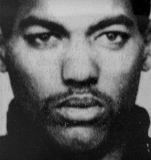 Guy Georges
Serial killer · France · 1991
Guy Georges was a French rapist and serial killer who preyed on attractive, you…
7 victims
Guy Georges
Serial killer · France · 1991
Guy Georges was a French rapist and serial killer who preyed on attractive, you…
7 victims
 Jean Pierre Orlewick
Murderer · USA · 2007
Jean Pierre Orlewicz was an 18-year-old high school senior from Canton, Michiga…
1 victim
Jean Pierre Orlewick
Murderer · USA · 2007
Jean Pierre Orlewicz was an 18-year-old high school senior from Canton, Michiga…
1 victim
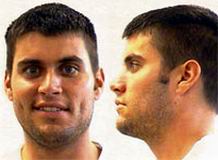 Andrew Paul Witt
Murderer · USA · 2004
Andrew Paul Witt (born 1982) was a former Senior Airman in the United States Ai…
2 victims
Andrew Paul Witt
Murderer · USA · 2004
Andrew Paul Witt (born 1982) was a former Senior Airman in the United States Ai…
2 victims
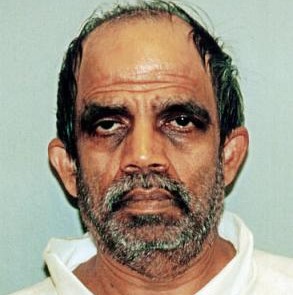 Biswanath Halder
Murderer · USA · 2003
Biswanath Halder was an alumnus of Case Western Reserve University (CWRU) who w…
1 victim
Biswanath Halder
Murderer · USA · 2003
Biswanath Halder was an alumnus of Case Western Reserve University (CWRU) who w…
1 victim
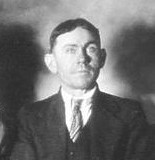 Charles Davis Lawson
Mass murderer · USA · 1929
Charles Davis Lawson was an American tobacco farmer from Stokes County, North C…
7 victims
Charles Davis Lawson
Mass murderer · USA · 1929
Charles Davis Lawson was an American tobacco farmer from Stokes County, North C…
7 victims
- Gender
- female
- Country
- Finland
- Location
- Ylöjärvi, Pirkanmaa, Finland
- Date of birth
- 1981
- Age at first offence
- 26
- Characteristics
- nurse, poisoner
- Victim profile
- A seriously mentally disabled 79-year-old woman
- Method of murder
- Poisoning ( by injecting with insulin)
- Date(s) of murder
- March 2007
- Years active
- 2007
- Date of arrest
- —
- Status
-
Died in custody
Sentenced to life in prison on May 19, 2009; committed suicide in prison on March 8, 2010
Case identification
Katariina Meri-Tuulia Pantila was born as Katariina Hyttinen and had a first marriage as Katariina Lönnqvist. She divorced during the trial of poisonings. She later had a second marriage in prison, taking the name Katariina Pantila.
Timeline
- March 2007 — Pantila, a nurse, gave a baby an injection of insulin at a family gathering.
- A few days later (after March 2007) — Pantila murdered a mentally disabled patient she was caring for.
- November 20, 2007 — Police suspected Pantila also had been behind the death of a 91-year-old woman in Nokia; medical examiners found deadly levels of morphine in the woman's exhumed body.
- May 19, 2009 — A life sentence was imposed.
- March 8, 2010 — Pantila was found dead in her prison cell.
Background
Pantila was a Finnish nurse. She was dubbed an “angel of death” for murdering a mentally disabled patient and attempting to murder a baby with insulin.
The offence
In March 2007, Pantila gave a baby an injection of insulin at a family gathering. A few days later, she murdered a mentally disabled patient she was caring for.
The murder victim was a 79-year-old, bed-ridden, elderly developmentally disabled woman. The murder took place at the Ylinen rehabilitation centre where the defendant was working.
The attempted murder was of an eight-month-old baby, described as the son of a relative. The court found that the poisoning of the baby took place in 2007, and that the fact that a defenceless child was involved was taken as an aggravating circumstance.
The court found Pantila acted with firm determination in both cases, and that the murder was executed according to a meticulous plan.
Investigation
Police began investigating Pantila after a young child, who was a relative of hers, suffered insulin poisoning at a summer cottage in Kuru. Police then looked more closely at deaths of a 54-year-old man and a 79-year-old woman, who were mentally handicapped. Pantila was working at the Ylinen rehabilitation centre in Ylöjärvi, and police suspected she killed them with overdoses of insulin.
Police also investigated a case involving a 72-year mentally handicapped man in Ylinen, in which Pantila was suspected of trying to kill him.
Police said the deaths in Ylöjärvi and Nokia had no connection with the insulin-induced death of a 21-year-old woman with cerebral palsy who died at the Lehtimäki Institute in South Ostrobothnia in July; two women who worked at the institute were suspected in the Lehtimäki case.
Arrest
Pantila had been held on suspicion in connection with deaths of mentally handicapped residents of the Ylinen rehabilitation centre with overdoses of insulin.
Trial
Pantila was apprehended, put on trial, and convicted of the murder of the patient and the attempted murder of the baby.
The Tampere District Court imposed a life sentence on May 19, 2009.
Pantila appealed the case, and her lawyer Pertti Patrikainen suggested there was room for reasonable doubt. The Tampere unit of the National Bureau of Investigation (NBI) was also investigating another case in which Pantila was implicated in a death by morphine overdose.
A final assessment by a forensic pathologist was still to come, and the matter could move forward already this month, but no additional procedural outcome for that morphine-overdose investigation was stated in the material provided.
The court found Pantila was of sound mind in a psychiatric examination.
Sentencing
The Tampere District Court imposed a life sentence on a nurse from the city of Nokia who had been found guilty of murder and attempted murder in the insulin poisoning death of a patient. The nurse was described as 27-year-old Meri-Tuulia Lönnqvist and was to appeal the case.
The appeals court later upheld the life sentence.
Appeals
An appeals court upheld a life sentence for Pantila for the murder of a 79-year-old bed-ridden woman by injecting her with insulin at a rehabilitation centre in 2007.
Outcome
In March 2010, Pantila was found dead in her prison cell.
Finland’s “angel of death” nurse found dead She was found dead after resuscitation efforts in her cell at a Turku jail. Police were investigating the cause of Pantila’s death. An officer with the police in Turku told AFP: “She has perished there,” confirming that Pantila died after resuscitation efforts in her cell at a Turku jail Monday.
Other details
Possible additional suspected case involving morphine
On November 20, 2007, police suspected Pantila, described as a 26-year-old nurse, might also have been behind the death of a 91-year-old woman at a health centre in the city of Nokia. Medical examiners found deadly levels of morphine in the woman's exhumed body. Police said Pantila was involved in care for the woman in the last stages of her life.
Five bodies were disinterred in September, and investigations into causes of death were still underway.
Police began investigating after insulin poisoning of a young relative’s child at a summer cottage in Kuru, which led police to look more closely at deaths of the 54-year-old man and the 79-year-old woman.
Paavo Tuominen of the NBI said that so far the 91-year-old woman was the only one in which it was clear that the deceased had a lethal dose. The morphine content in the blood of the 91-year-old was nearly four milligrams per litre. Tuominen said that in her final days she was administered some morphine for pain, but the normal therapeutic dose for a pain patient is less than one thirtieth of the amount detected in the analysis.
Erkki Vuori, a professor of forensic chemistry, said: “what constitutes a lethal dose of morphine depends on the patient and the conditions; just one milligramme per litre of blood would induce an exceptional toxic state.”
Insulin was found in all of the exhumed bodies, even though only one of the deceased had suffered from diabetes. It was not easy to determine if insulin was injected or if it was naturally occurring. Samples had been sent to a German doping laboratory to ascertain if it was possible to distinguish between the two types of insulin. The laboratory had experience in this, but it remained uncertain if samples from the deceased could yield reliable results.
Tuominen noted: “It is a laboratory for the living”.
The nurse denied any connection with the deaths.
Tuominen said: “The investigation has not yielded any sensible motive.”
Family gatherings and timing
The baby poisoning occurred at a family gathering in March 2007, and the murder of the mentally disabled patient occurred about a week later, described as a meticulous plan.

Spotted an error, or have more information about this case?