
Gertraud Arzberger
Murderer Estibaliz Carranza
Murderer · Austria · 2008
Estibaliz Carranza was sentenced to life in a secure mental institution on Nove…
2 victims
Estibaliz Carranza
Murderer · Austria · 2008
Estibaliz Carranza was sentenced to life in a secure mental institution on Nove…
2 victims
 Renuka Shinde
Murderer · India · 1990
Renuka Shinde was sentenced to death on June 29, 2001. The High Court upheld th…
9 victims
Renuka Shinde
Murderer · India · 1990
Renuka Shinde was sentenced to death on June 29, 2001. The High Court upheld th…
9 victims
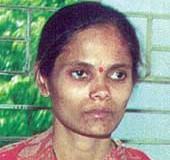 Seema Gavit
Murderer · India · 1990
Seema Mohan Gavit and her sister Renuka Shinde received death sentences. The se…
9 victims
Seema Gavit
Murderer · India · 1990
Seema Mohan Gavit and her sister Renuka Shinde received death sentences. The se…
9 victims
 Megan Huntsman
Murderer · USA · 1996
Megan Huntsman was 40 at sentencing. She was a mother of three children who wer…
6 victims
Megan Huntsman
Murderer · USA · 1996
Megan Huntsman was 40 at sentencing. She was a mother of three children who wer…
6 victims
 Angela Johnson
Murderer · USA · 1993
Angela Jane Johnson was convicted in federal court of aiding and abetting the m…
5 victims
Angela Johnson
Murderer · USA · 1993
Angela Jane Johnson was convicted in federal court of aiding and abetting the m…
5 victims
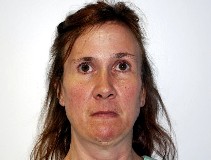 Michele Kalina
Murderer · USA · 1996
Michele Kalina pleaded guilty to murder for one of five infants she initially w…
5 victims
Michele Kalina
Murderer · USA · 1996
Michele Kalina pleaded guilty to murder for one of five infants she initially w…
5 victims
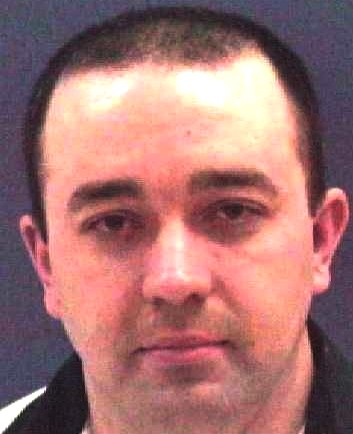 David Scott Franks
Murderer · USA · 1994
Name: David Scott Franks · August 5, 1994 — David Scott Franks stabbed to death…
3 victims
David Scott Franks
Murderer · USA · 1994
Name: David Scott Franks · August 5, 1994 — David Scott Franks stabbed to death…
3 victims
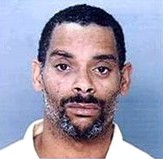 Juan Covington
Serial killer · USA · 1998
Juan Covington was an American serial killer in Philadelphia, Pennsylvania. Cov…
3 victims
Juan Covington
Serial killer · USA · 1998
Juan Covington was an American serial killer in Philadelphia, Pennsylvania. Cov…
3 victims
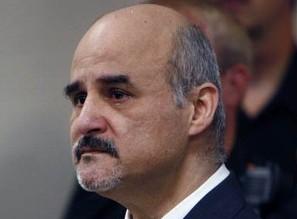 Altemio Sanchez
Serial killer · USA · 1990
Altemio Sanchez was an American serial killer who murdered at least three women…
3 victims
Altemio Sanchez
Serial killer · USA · 1990
Altemio Sanchez was an American serial killer who murdered at least three women…
3 victims
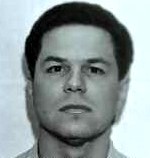 Walter LaGrand
Murderer · USA · 1982
Walter LaGrand was convicted for his role in a bungled armed robbery of the Val…
1 victim
Walter LaGrand
Murderer · USA · 1982
Walter LaGrand was convicted for his role in a bungled armed robbery of the Val…
1 victim
- Gender
- female
- Country
- Austria
- Location
- Graz, Austria
- Date of birth
- 1972
- Age at first offence
- 28
- Characteristics
- infanticide, domestic violence, motive unknown, mentally ill
- Victim profile
- Her four babies
- Method of murder
- Unknown (s tuffed two of her babies in a freezer and entombed two others in concrete-filled buckets)
- Date(s) of murder
- 2000 - 2005
- Years active
- 2000–2005
- Date of arrest
- June 2005
- Status
-
Life imprisonment
Pleaded guilty; sentenced to life imprisonment on March 31, 2006
Case record: Gertraud Arzberger
Background
Gertraud Arzberger was an Austrian woman from the city of Graz. She worked as a bookkeeper and lived with her long-term partner, Johannes Genser, for eight years.
Johannes Genser was 39 when he was sentenced. He was described as a carpenter and as living with Arzberger as her partner for eight years. Neighbours described Arzberger as “a real mensch” who worked hard to keep a tidy house and a beautiful yard.
Arzberger told investigators that she killed the infants out of despair over her inability to pay the bills, and out of fear that having children might drive away her partner. She told investigators she had financial problems and feared her partner might leave if she had a baby.
Arzberger said she gave birth to the children in a bath, but she could not remember what happened next.
Genser denied knowing about her pregnancies, insisted he had never noticed Arzberger was pregnant, and proclaimed his innocence. He acknowledged telling her that she would have to leave him if she got pregnant.
Neighbours told the court that her pregnancies had been obvious, and prosecutors said it was implausible to believe Genser did not know she was carrying the children.
The offence
Two of Arzberger’s babies were found in a freezer at an apartment block in Graz; they were wrapped in plastic.
Two other babies were found entombed in concrete in plastic buckets in a garden shed at the residence about 200km (120 miles) south of Vienna.
A fifth pregnancy had been described by neighbours, but a fifth body was never found. Arzberger pleaded guilty to killing four babies, and experts said one of the babies may have been still-born.
Autopsies indicated that the two infants found in the freezer were still alive when put inside, wrapped in plastic bags. Tests could not be performed on the two newborns whose remains were sealed in concrete because they had deteriorated too much.
Investigation
Forensic experts carried out post-mortem examinations on two babies found in Graz. Police Lieutenant Colonel Werner Jud told the Austrian media that the possibility of more bodies being found at the site could not be ruled out.
Police Lieutenant Colonel Werner Jud said: “We are trying to determine the woman's past,” and continued: “Where did she live? Who were her acquaintances? Did anybody know about the pregnancies? These are the questions we're trying to answer.”
Police said evidence at the scene quickly pointed to the newborns’ slayings before their bodies were stuffed in the freezer.
Arrest
Police arrested the suspect and her 38-year-old partner. Police Lieutenant Colonel Werner Jud said police were questioning Arzberger to determine what happened. Neighbours and the court proceedings described Arzberger’s partner as denying knowing about her pregnancies and insisting he played no role in the slayings or the hiding of the bodies.
Trial
Sentencing
On March 31, 2006, Arzberger pleaded guilty and was sentenced to life imprisonment. She had been convicted on three counts of murder after experts said one of the babies may have been still-born.
Arzberger pleaded guilty to four murders in court. Her long-term partner, Johannes Genser, was sentenced to 15 years as an accessory.
Before the verdicts were read out, Arzberger said: “I'm sorry. I can't make everything all right again,”
As he left court in handcuffs Genser sought to propose marriage to Arzberger. He asked the judge: “Can I still offer her my hand?” The judge replied firmly: “No”.
Austrian state attorney Johannes Winklhofer urged the court to deliver a stiff sentence. Johannes Winklhofer said: “She is a murderer. She killed four babies in a brutal and gruesome fashion,” and said: “knew everything ... she could not hide her condition from the neighbors, and certainly not from her friend.”
Appeals
Outcome
A fifth body was never found, and prosecutors had charged Arzberger with killing five infants based on testimony from neighbours who said they saw five pregnancies, but Arzberger pleaded guilty to killing only four babies.
DNA tests were said to show that Genser had fathered at least three of the four infants.
Aftermath
Police Lieutenant Colonel Werner Jud said police would determine questions about the woman’s past, including where she lived and who knew about her pregnancies.
A special task-force researched the former homes of the couple for more possible dead babies.
Timeline
- June 3, 2005 — Police in southern Austria made the discovery of four slain newborns stuffed into a freezer and entombed with cement in a paint bucket in an apartment building in Graz.
- June 6, 2005 — Forensic experts carried out post-mortem examinations on two babies found at an apartment block in Graz; police carried out investigations and said DNA tests would be carried out on the partner to determine if he was the father.
- March 31, 2006 — Arzberger pleaded guilty and was sentenced to life imprisonment; Johannes Genser was sentenced to 15 years as an accessory.
Other details
A neighbour was reported to have gone to the basement freezer to fetch ice cream for his children and found two of the tiny bodies beneath frozen meat and vegetables while he was rummaging through the freezer. The third and fourth were found using police sniffer dogs in concrete-filled buckets hidden beneath debris piled up inside a garden shed.
Arzberger lived in the building with her partner for the past eight years. Neighbours described her as “always friendly and helpful”.
Arzberger was reported to have been not entirely coherent during questioning, but she told investigators she gave birth to all the babies in her bathtub. Police said she confessed during questioning that she was in despair over her ability to survive and worried that she would lose her companion if she had a child.
Genser’s lawyer, Kurt Klein, insisted in closing arguments that the charges were “pure fiction.”

Spotted an error, or have more information about this case?