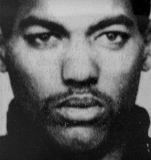
Guy Georges
Serial killer Thierry Paulin
Serial killer · France · 1984
Thierry Paulin was born in Fort-de-France, Martinique on November 28, 1963. His…
21 victims
Thierry Paulin
Serial killer · France · 1984
Thierry Paulin was born in Fort-de-France, Martinique on November 28, 1963. His…
21 victims
 Francis Heaulme
Serial killer · France · 1984
Francis Heaulme was sentenced to several life sentences in different trials, 19…
9 victims
Francis Heaulme
Serial killer · France · 1984
Francis Heaulme was sentenced to several life sentences in different trials, 19…
9 victims
 Claude Lastennet
Serial killer · France · 1993
Claude Lastennet (born January 19, 1971 at Brest, France) was a French serial k…
5 victims
Claude Lastennet
Serial killer · France · 1993
Claude Lastennet (born January 19, 1971 at Brest, France) was a French serial k…
5 victims
 Patrice Alègre
Serial killer · France · 1989
Patrice Alègre was 32 years old when he was arrested on September 5, 1997, in P…
5 victims
Patrice Alègre
Serial killer · France · 1989
Patrice Alègre was 32 years old when he was arrested on September 5, 1997, in P…
5 victims
 Denis Waxin
Serial killer · France · 1985
Denis Waxin Denis Waxin was sentenced to life in prison (minimum 30 years) on M…
3 victims
Denis Waxin
Serial killer · France · 1985
Denis Waxin Denis Waxin was sentenced to life in prison (minimum 30 years) on M…
3 victims
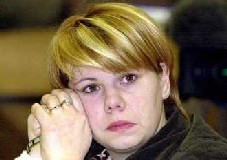 Christine Malèvre
Serial killer · France · 1997
Christine Malèvre Christine Malèvre (born 1970) was a French serial killer. She…
30 victims
Christine Malèvre
Serial killer · France · 1997
Christine Malèvre Christine Malèvre (born 1970) was a French serial killer. She…
30 victims
 Susan Smith
Murderer · USA · 1994
Susan Vaughan Smith, also known as Susan Leigh Vaughan Smith, was an American w…
2 victims
Susan Smith
Murderer · USA · 1994
Susan Vaughan Smith, also known as Susan Leigh Vaughan Smith, was an American w…
2 victims
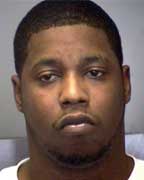 Chauncy Starling
Murderer · USA · 2001
Chauncy Starling Starling, Richard Frink, and Alfred Gaines went into a barbers…
2 victims
Chauncy Starling
Murderer · USA · 2001
Chauncy Starling Starling, Richard Frink, and Alfred Gaines went into a barbers…
2 victims
 Elfriede Blauensteiner
Serial killer · Austria · 1981
Elfriede Blauensteiner (born 22 January 1931 in Vienna; died 18 November 2003)…
5 victims
Elfriede Blauensteiner
Serial killer · Austria · 1981
Elfriede Blauensteiner (born 22 January 1931 in Vienna; died 18 November 2003)…
5 victims
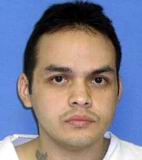 Miguel Angel Paredes
Murderer · USA · 2000
Miguel Angel Paredes was a Hispanic male who was 19 years old when received on…
3 victims
Miguel Angel Paredes
Murderer · USA · 2000
Miguel Angel Paredes was a Hispanic male who was 19 years old when received on…
3 victims
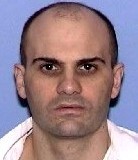 Ronald Prible
Mass murderer · USA · 1999
Ronald Prible, Jr. was born 04/18/1972 and received his case on 11/04/2002 at a…
5 victims
Ronald Prible
Mass murderer · USA · 1999
Ronald Prible, Jr. was born 04/18/1972 and received his case on 11/04/2002 at a…
5 victims
 Daniel Camargo Barbosa
Serial killer · Colombia / Ecuador · 1974
Daniel Camargo Barbosa was a psychopathic serial killer from Colombia. It was b…
72 victims
Daniel Camargo Barbosa
Serial killer · Colombia / Ecuador · 1974
Daniel Camargo Barbosa was a psychopathic serial killer from Colombia. It was b…
72 victims
- Gender
- male
- Country
- France
- Location
- Paris, France
- Date of birth
- October 15, 1962
- Age at first offence
- 29
- Characteristics
- rape, serial rapist
- Victim profile
- Pascale Escarfail, 19 / Catherine Rocher, 27 / Elsa Benady, 22 / Agnes Nijkamp, 33 / Hélène Frinking, 27 / Magalie Sirotti, 19 / Estelle Magd, 25
- Method of murder
- St abbing with knife
- Date(s) of murder
- 1991 - 1997
- Years active
- 1991–1997
- Date of arrest
- March 27, 1998
- Status
-
Life imprisonment
Sentenced to life imprisonment, without the possibility of parole for 22 years on April 5, 2001
Overview
Guy Georges was a French rapist and serial killer who preyed on attractive, young, energetic women. He assaulted, tortured, raped and killed women between 1976 and 1997. He was dubbed “the Beast of Bastille” because several of his attacks occurred in the Bastille quarter, an east Parisian neighbourhood.
Timeline
- 1976 — At age 14, Georges tried to strangle Roselyne D.
- 1978 — Georges attacked Christiane D.
- 6 February 1979 — Georges attacked Pascale C and tried to strangle her but she escaped.
- May 1980 — Georges attacked Jocelyne S.
- May 1980 — Georges attacked Roselyne C, stabbing her violently in her face.
- 16 November 1981 — Georges attacked Nathalie C and raped her, stabbed her and left her for dead.
- 7 June 1982 — Georges raped, stabbed and strangled Violette K in a car park in the 16th arrondissement; she escaped and went to the police.
- February 1984 — Georges attacked Pascale N in a car park, where he raped and stabbed her; she managed to break free and run away.
- January 24, 1991 — Pascale Escarfail was raped and murdered.
- 7 January 1994 — Catherine Rock was raped and murdered.
- 13 January 1994 — Annie L was raped and murdered on the patio of her home.
- 8 November 1994 — Elsa Benady was raped and killed in an underground parking garage.
- 10 December 1994 — Agnes Nijkamp, Dutch, was raped and murdered in her home in the 11th arrondissement.
- June 1995 — Georges attacked Elisabeth O and tried to kill her but she made a narrow escape.
- 8 July 1995 — Helena Frinking was raped and murdered in her apartment after returning from an evening out.
- 25 August 1995 — Georges assaulted Melanie B in the Marais quarter.
- 8 September 1997 — Georges attacked and attempted to rape Estelle F; she fought him and escaped.
- 23 September 1997 — Magalie Sirotti was raped and stabbed to death.
- 28 October 1997 — Georges assaulted Valerie L in the stairwell of her apartment block.
- 16 November 1997 — Estelle Magd was raped and murdered.
- 27 March 1998 — Georges was arrested in Montmartre for the rape and murder of Pascale Escarfail, Catherine Rock, Elsa Benady and Agnes Nijkamp.
- December 2000 — Georges tried to escape while in custody; he and three cellmates attempted to saw through the bars of their cell but were caught by prison guards.
- Monday 19 March 2001 — The three-week trial began.
- Thursday 5 April 2001 — Georges was sentenced to life imprisonment, without the possibility of parole for 22 years.
- April 5, 2001 — A Paris court sentenced the 38-year-old serial killer Guy Georges to life in prison for the rape and murder of seven women in the 1990s.
Other details
Names and personal background
- Guy Georges was born Guy Rampillon on 15th October 1962 in Angers, France.
- He was born to an American father and a French mother.
- His father was George Cartwright, described as a soldier who worked as a cook on NATO bases.
- Georges was abandoned by his parents when he was very young.
- He was taken in by the DDASS, the French social welfare service.
- He was placed with a foster family.
- At the age of six, to aid his adoption, he was given the surname Georges after his father.
- He was adopted by the Morins and grew up in a family of 12 adopted children.
- The young Georges began to show a violent and aggressive streak in his personality.
- A doctor likened him to a cat that catches birds through natural impulse.
- Psychiatrists described Georges as a “narcissistic psychopath.”
- His biological parents were described as an American soldier and a French woman who abandoned him when he was an infant.
- Jeanne Morin was identified as Georges’ 71-year-old foster mother.
- In court, Jeanne Morin said he was “a sensational child.”
- Georges was 38 at sentencing.
Sexual assault and violence characteristics (as stated)
- Police said his victims were all attractive women who appeared energetic and successful.
- Georges’ victims had their throats cut after being raped.
- Some attacks occurred in car parks; others involved him following victims to their homes and killing them there.
- He was said to have engaged victims in conversation and talked his way into their apartments.
- Once inside, he was described as binding them to the bed, raping and torturing them, then slitting their throats.
- Georges was described as a persistent sexual offender who had been living in cheap hotels and squats in Paris for some time.
The offence
Georges assaulted, tortured, raped and killed women between 1976 and 1997. His killing victims were described as single and aged between 19 and 27.
Murder victims (raped and murdered)
- January 24, 1991 — Pascale Escarfail, 19 (raped and murdered)
- January 7, 1994 — Catherine Rocher, 27 (raped and murdered)
- November 8, 1994 — Elsa Benady, 22 (raped and murdered)
- December 10, 1994 — Agnes Nijkamp, Dutch, 33 (raped and murdered)
- July 8, 1995 — Hélène Frinking, 27 (raped and murdered)
- September 23, 1997 — Magalie Sirotti, 19 (raped and murdered)
- November 16, 1997 — Estelle Magd, 25 (raped and murdered)
Other crimes and attacks
- 1976 — Roselyne (adoptive sister), attempted strangulation
- 1978 — Christiane (adoptive sister), attempted strangulation
- February 1979 — Pascale C., attempted strangulation
- May 1980 — Jocelyne S., attacked
- May 1980 — Roselyne C., attacked, stabbed in face
- November 16, 1981 — Nathalie C., 18, raped, stabbed and left for dead
- June 7, 1982 — Violette K., raped, stabbed and strangled but escaped
- February 1984 — Pascale N., 21, raped, stabbed but escaped
- April 22, 1992 — Éléonore D., assaulted
- January 13, 1994 — Annie L., attacked
- June 1995 — Élisabeth O., assaulted
- August 25, 1995 — Mélanie B., assaulted
- October 1997 — Valérie L., assaulted
- 8 September 1997 — Estelle F, attempted rape; she fought him and escaped
Investigation
Police said DNA traces were left at two crime scenes by the same individual and a footprint was found at the location of the Helena Frinking crime.
Police also said they had DNA evidence linking Georges to the murders at trial. It transpired that Georges’ DNA matched that found at four crime scenes, as well as at one attempted rape.
Investigators knew for certain that several unsolved crimes were linked and that they potentially had a serial killer.
The hunt was described as one of the largest manhunts in French criminal history.
Claims of police bungling were made:
- Officers failed to match up DNA results for several months.
- At least one murder was committed while George was on day release from prison.
Georges was described as a vagrant at the time of his arrest.
Arrest
Georges was arrested in Montmartre on 27th March 1998 for the rape and murder of Pascale Escarfail, Catherine Rock, Elsa Benady and Agnes Nijkamp.
He was confronted while in custody with DNA evidence and confessed to these four murders, as well as three other murders.
Trial
The three-week trial began on Monday 19th March 2001.
- The trial included 50 witnesses.
- The witnesses included four women previously attacked and raped by Georges who survived.
- Amongst those giving evidence were 15 experts.
- Georges’ 71-year-old foster mother Jeanne Morin testified.
- Families of some of Georges’ victims testified.
Georges pleaded not guilty to all charges at trial.
Georges retracted his confession, claiming the police had tortured and beaten him to obtain it.
Eight days into the proceedings, Georges broke down in tears and confessed. He admitted the original four murders, as well as the rape and murder of Helena Frinking in 1995, Magalie Sirotti in 1997 and Estelle Magd in 1997, and asked for forgiveness from the victims’ families.
A prosecutor statement was made:
- Public prosecutor Evelyne Lesieur told the court: “He is a diabolical personality...the incarnation of evil”
Georges was described in court as being legally sane and fit to stand trial after being assessed by psychiatrists.
Verbatim statements by Georges
Georges asked for forgiveness before sentencing and indicated he might commit suicide.
Georges told the court:
“I ask forgiveness from my family, from my little sister, from my father, and from God, if there is one”.
Georges also said:
“I ask forgiveness from my family, from my little sister, from my father, and from God, if there is one. I ask forgiveness from myself,”
Before the verdict was delivered, Georges stated:
“The sentence that you are going to impose me is nothing, I will inflict a sentence upon myself,”
Georges also said:
“Twenty two years. That's nothing. Life is life. You can rest assured, I will never leave prison. But I can tell you that I won't serve this sentence.”
He told the court:
“I am nearly 40 years old and I will never get out.”
And:
“You can rest assured, I know that I will never leave prison. But I can assure you that I will never serve my sentence”
He further said:
Sentencing
On Thursday 5th April 2001 Guy Georges, 38, was sentenced to life imprisonment, without the possibility of parole for 22 years, for the rape and murder of seven women between 1991 and 1997.
Outcome
Georges’ conviction resulted in a life sentence without the possibility of parole for 22 years.
Spotted an error, or have more information about this case?