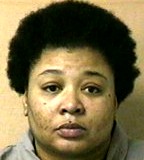
Carlette Parker
Murderer Megan Huntsman
Murderer · USA · 1996
Megan Huntsman was 40 at sentencing. She was a mother of three children who wer…
6 victims
Megan Huntsman
Murderer · USA · 1996
Megan Huntsman was 40 at sentencing. She was a mother of three children who wer…
6 victims
 Angela Johnson
Murderer · USA · 1993
Angela Jane Johnson was convicted in federal court of aiding and abetting the m…
5 victims
Angela Johnson
Murderer · USA · 1993
Angela Jane Johnson was convicted in federal court of aiding and abetting the m…
5 victims
 Michele Kalina
Murderer · USA · 1996
Michele Kalina pleaded guilty to murder for one of five infants she initially w…
5 victims
Michele Kalina
Murderer · USA · 1996
Michele Kalina pleaded guilty to murder for one of five infants she initially w…
5 victims
 Tiffany Hall
Murderer · USA · 2006
Tiffany Hall was 24 when she was charged in September 2006. She later entered a…
5 victims
Tiffany Hall
Murderer · USA · 2006
Tiffany Hall was 24 when she was charged in September 2006. She later entered a…
5 victims
 Banita Jacks
Murderer · USA · 2007
Banita Jacks was a Washington, DC resident convicted of murdering her four daug…
4 victims
Banita Jacks
Murderer · USA · 2007
Banita Jacks was a Washington, DC resident convicted of murdering her four daug…
4 victims
 Susan Eubanks
Murderer · USA · 1996
Susan Dianne Eubanks, also referred to as Susan Eubanks, was convicted by a jur…
4 victims
Susan Eubanks
Murderer · USA · 1996
Susan Dianne Eubanks, also referred to as Susan Eubanks, was convicted by a jur…
4 victims
 Richard Lee Beavers
Murderer · USA · 1986
Richard Lee Beavers (age 38 (31)) — defendant; executed by lethal injection in…
1 victim
Richard Lee Beavers
Murderer · USA · 1986
Richard Lee Beavers (age 38 (31)) — defendant; executed by lethal injection in…
1 victim
 Lam Kor-wam
Serial killer · United Kingdom · 1982
Lam Kor-wan (Traditional Chinese 林過雲, born 1955) was one of Hong Kong's two kno…
4 victims
Lam Kor-wam
Serial killer · United Kingdom · 1982
Lam Kor-wan (Traditional Chinese 林過雲, born 1955) was one of Hong Kong's two kno…
4 victims
 Janjira Smith
Murderer · USA · 2006
Janjira Jeffrey Smith poisoned her ex-boyfriend’s Jägermeister with insecticide…
1 victim
Janjira Smith
Murderer · USA · 2006
Janjira Jeffrey Smith poisoned her ex-boyfriend’s Jägermeister with insecticide…
1 victim
 Janice Carter
Murderer · United Kingdom · 2011
Janice Carter was a Margate woman. She was 29 at the time of being jailed for a…
1 victim
Janice Carter
Murderer · United Kingdom · 2011
Janice Carter was a Margate woman. She was 29 at the time of being jailed for a…
1 victim
- Gender
- female
- Country
- USA
- Location
- North Raleigh, Wake County, North Carolina, USA
- Date of birth
- June 12, 1963
- Age at first offence
- 35
- Characteristics
- kidnapping, torture
- Victim profile
- Alice Covington, 88
- Method of murder
- Drowning in a bathtub
- Date(s) of murder
- May 12, 1998
- Years active
- 1998
- Date of arrest
- 4 days after
- Status
-
Sentenced to death
Sentenced to death on 1 April 1999
Case record: State of North Carolina v. Carlette Elizabeth Parker
Background
Carlette Elizabeth Parker was indicted in connection with the death of Alice Covington. The case recorded a date of birth of 6/12/1963, and Parker was 34 years old at the time of the offense.
Prior to the 1998 offenses, Parker had pled guilty in 1995 to sixteen felony counts of obtaining property by false pretenses from Catherine Stevenson, an elderly woman for whom Parker provided care. The earlier conduct involved forged bank withdrawal slips for a total amount of $44,000. After pleading guilty, the trial court suspended Parker’s sentence and placed her on probation for 48 months, and ordered restitution in monthly payments of $920.43. By 1 April 1998, Parker was over $4,000 behind in restitution payments.
The offence
On 12 May 1998, Parker kidnapped and drowned Alice Covington, the victim. Covington was 86 years old at the time of her death, and stood five feet one and one-half inches tall and weighed eighty-eight pounds. Parker was 34 years old and weighed approximately 230 to 240 pounds.
From December 1996 to March 1997, Parker served as the home health-care worker for Charles Holtz, a close friend of the victim. Holtz and the victim were residents at Springmoor Retirement Village in Raleigh. On the morning of 12 May 1998, Parker and the victim saw each other at a Kroger parking lot on Creedmoor Road in Raleigh.
Between 9:00 and 10:00 a.m., three witnesses saw the victim and a heavyset black woman struggling on Strickland Road. The witnesses reported that the heavyset woman attacked the victim and that the victim tried to get away by hitting the heavyset woman over the head with her purse.
Later that afternoon, against the victim’s will, Parker drove the victim to the First Union Market Street teller window in Smithfield and withdrew $2,500 from the victim’s account. A heavyset black woman gave the teller a withdrawal slip and the victim’s driver’s license. The teller looked into the car and saw the victim in the passenger seat, leaning against the car door, and the victim was not moving and appeared to be napping.
Parker drove the victim back to the Kroger parking lot, moved her to Parker’s Ford Fiesta hatchback, and drove to Parker’s trailer in Angier, North Carolina, where the victim drowned in the bathtub.
After the drowning, Parker undressed the victim’s body, washed the victim’s clothes, redressed the body, and put the body in the hatchback of Parker’s car. Parker left in a separate vehicle and drove to a family party. After leaving the party, Parker drove around for several hours.
The next morning, Parker returned to the Kroger parking lot and transferred the victim’s body to the front seat of the victim’s car. Parker drove the victim’s car around Raleigh, Hillsborough, and Burlington for several hours. Finally, Parker left the victim’s body in the car on a dirt road in Morrisville. Parker walked to Davis Drive and caught a ride to a gas station, took a cab back to her car, went home, and drank wine coolers.
Investigators later found substantial bruising around the victim’s face, neck, hands, upper part of both arms, upper left back and shoulder area, and left wrist. The victim also had a laceration on her left wrist and lower left leg. The victim was dressed in blue slacks and a light pink nylon jacket. The jacket had reddish discoloration on the lower portion.
Testing before trial revealed that a pepper-spray container found in Parker’s car emitted spray that left a pink stain on a clean sheet.
Parker also admitted in additional interviews to throwing the victim’s purse out of the car window near Falls Lake. Parker also admitted she had a confrontation with the victim on Strickland Road. Parker initially said she merely stopped the car to adjust the victim’s seat, get gas, and massage a cramp from the victim’s leg. Parker paused to consult with her attorney, and then admitted she forcefully took the victim to the bank and the trailer against the victim’s will. Parker conceded that, although the victim had previously voluntarily written the withdrawal slip used in Smithfield, the victim changed her mind about giving Parker the money before Parker forcefully took her to Smithfield to withdraw it. Parker stated that the victim hit Parker with her purse, and that Parker grabbed the victim by her shirt and threw her into the car. Parker stated the victim’s shirt was actually torn when Parker forced the victim back into the car.
Although Parker had been trained as a health-care professional and certified in CPR, Parker did not perform CPR and did not call 911.
Investigation and discovery of the victim’s body
On 14 May 1998, a passerby discovered the victim’s body and notified police. The body was lying across the front seat of the victim’s car, with the head propped against the driver’s side door, the chest under the steering wheel, and the feet on the right front floorboard.
Police testing and trial testimony included the presence and effects of pepper spray and a stun gun found in Parker’s possession. Police reported that a stun-gun and pepper-spray were recovered from the vehicle owned by Parker and were contended to have been involved in the incident.
Autopsy and medical evidence
Dr. James Ronald Edwards performed the first autopsy on 15 May 1998. The autopsy revealed no obvious cause of death. There was no visible sign of an acute heart attack, stroke, brain hemorrhage, blood clot, aneurysm, or external strangulation. Dr. Edwards observed external trauma, including bruises on the victim’s right and left wrists, left shoulder, face, and left side of the neck. Dr. Edwards also noted the lungs were congested and edematous, and he testified that this fluid could be caused by drowning. Dr. Edwards concluded that a natural cause of death was not documented, and that “some external trauma appears to be present” and “additional history may be helpful in coming to a final conclusion.”
Dr. Robert L. Thompson performed a second autopsy. This autopsy revealed no obvious fatal injury and no evidence of strangulation or disease in the victim. Dr. Thompson specifically testified that the victim did not die of a heart attack. Dr. Thompson also testified that two small, round, sightly reddened areas on the surface of the victim’s skin could have been caused by a stun gun found in Parker’s possession. Dr. Thompson later listed the immediate cause of death as “drowning” and the manner of death as “homicide” in an amendment to the death certificate.
Dr. Wells Edmunson, accepted as an expert in internal medicine and described as the victim’s doctor for twelve years, testified that the victim’s overall physical and mental health was excellent, and that her blood pressure, respiration, and cholesterol readings were normal at her most recent physical.
Parker presented evidence from Dr. Page Hudson. Prior EKGs indicated heart abnormalities. Dr. Hudson opined that the victim could have died from a cardiac arrhythmia. Dr. Hudson stated that cardiac arrhythmia could result from stress, and that a stun gun would produce such stress in a person. Dr. Hudson testified that he had not read Parker’s statement to police and that reading it would be helpful. Dr. Hudson also testified, “[T]here’s an excellent chance that [the victim] drowned.”
Arrest and interviews
Parker made multiple statements during police interviews.
In the first interview, Parker stated she saw the victim on 12 May 1998 in a Kroger parking lot between 1:00 and 3:00 p.m., and said she and the victim drove to a car wash and then to the victim’s home. Parker said she remained at the victim’s home for two to three minutes and then left. After SBI Agent M.B. East told Parker that the victim had been found dead in her car in Morrisville, Parker responded, “Oh really?” At the end of the interview, Parker denied killing the victim or knowing who did, and denied having recently been to Morrisville or any banks in Smithfield.
During the second interview, Parker’s demeanor changed. Agent East told Parker that witnesses saw her in an altercation with the victim on Strickland Road and showed Parker a copy of the $2,500 check drawn from the victim’s account while telling Parker that a teller described the person who accompanied the victim when the money was withdrawn. Parker became visibly nervous. Parker’s leg shook and her knee bounced up and down. Agent East asked again if Parker knew who murdered the victim. Parker responded, “Possibly.” Parker denied assaulting or accidentally killing the victim. During transport home after the interview, Agent East heard Parker say, “I'm going to lose my job,” and “I won't be able to take care of old people anymore.”
On 16 May 1998, police conducted two more interviews. Parker told Agent East and Raleigh Police Detective K.W. Andrews that she had a story and it would be kind of “far-fetched” but that she wanted to come clean and say what had transpired. Parker claimed she ran into the victim between 10:00 and 11:00 a.m. as opposed to between 1:00 and 3:00 p.m., and her account became ambiguous about whether she and the victim rode together to the victim’s home or took separate cars. Parker stated that after going to the victim’s house, she and the victim returned to the Kroger parking lot, got into Parker’s car, and drove to the First Union in Smithfield where Parker cashed a check for $2,500. Parker claimed the victim gave Parker this money to help Parker with her doll business and stated she never stopped on Strickland Road with the victim. Parker said she drove the victim to Parker’s trailer in Angier. Parker stated that the victim sat on the commode in a bathroom, and Parker filled the bathtub with water. Parker said she left the bathroom and when she returned the victim’s head had fallen into the water. Parker said she sat the victim up and left again, and when she returned the victim’s head was submerged. Parker said she grabbed the victim by the hair, pulled the victim out of the water, and tore the victim’s shirt. Parker said she slapped the victim across the face a couple of times but the victim did not respond, and Parker described that the victim’s head then slammed into the floor. Parker said she carried the victim into the living room and placed her on the floor, removed the victim’s clothes, washed and dried them, and redressed the victim without the torn shirt. Parker said the victim was unresponsive but that the victim’s hand may have twitched.
Parker admitted she did not perform CPR or call 911 despite being trained as a health-care professional and being certified in CPR. Parker put the body in the hatchback of her Ford Fiesta and drove her other automobile, a truck, to a party in Durham. Parker left the party and drove around for several hours before returning home. At home, Parker stated she got into her Ford Fiesta and drove to a hotel where her husband was staying on Highway 70 East, and Parker did not tell her husband what had happened that day. Parker stated the victim’s body was still in the hatchback. Parker said she returned to the Kroger parking lot the next morning around 6:45 a.m. and moved the victim’s body to the front seat of the victim’s car. Parker stated she put two pillows on the victim’s body because the body smelled. Parker drove around Hillsborough and Burlington, ending up on a dirt road in Morrisville around 1:00 or 2:00 p.m. Parker said the car got stuck, and she left the victim’s body in the car with the engine running. Parker stated she caught a ride to a gas station, called a cab, returned home, and drank wine coolers.
In an additional interview, Parker admitted throwing the victim’s purse out of the car window near Falls Lake, and admitted a confrontation on Strickland Road, ultimately conceding she forcefully took the victim to the bank and the trailer against the victim’s will.
Trial
At the 8 March 1999 Criminal Session of Superior Court, Wake County, Parker was capitally tried before a jury. Assistant District Attorney Howard Cummings said he would create a “chronological road map” showing development of the crime and also produced information about a prior conviction. Defense attorney Spurgeon Fields asked jurors to keep an open mind and discussed Parker’s performance as a home health worker.
The jury heard testimony during the trial and returned verdicts. On 30 March 1999, the jury found Parker guilty of first-degree-kidnapping and of first-degree murder on the basis of premeditation and deliberation and under the felony murder rule.
The earlier news coverage described that prosecutors called Parker a planner, a schemer and a murderer, and said she befriended Alice Covington and swindled her out of thousands of dollars. The defense said Parker did not have a history of violence and argued the state’s case was based mostly on circumstantial evidence.
Sentencing
On 1 April 1999, after a capital sentencing proceeding, the jury recommended a sentence of death for the first-degree murder conviction, and the trial court entered judgment in accordance with that recommendation. The trial court also sentenced Parker to 100-129 months’ imprisonment for the kidnapping conviction.
Appeals
On 22 June 1999, Parker was indicted for first-degree murder and first-degree kidnapping. The appellate case included the citation “State v. Parker STATE of North Carolina v. Carlette Elizabeth PARKER. No. 556A99.”
The appellate decision dated 9 November 2001 stated the appellate review addressed the trial and capital sentencing proceeding, and reviewed assignments of error including denial of motions regarding sufficiency of evidence and admission of evidence, including evidence about Parker’s conduct on 8 May 1998 at a bank in Dunn, North Carolina, and details of prior crimes.
The appellate court stated that it concluded the trial and capital sentencing proceeding were free from prejudicial error and that the sentence of death was left undisturbed.
Outcome
The appellate court concluded that the judgments and sentences entered by the trial court, including the sentence of death for first-degree murder, were left undisturbed, and it issued “NO ERROR.”
Timeline
- 8 August 1995 — Parker pled guilty to sixteen felony counts of obtaining property by false pretenses involving Catherine Stevenson and forged unauthorized withdrawals totaling around $44,000.
- 30 April 1998 — Parker cashed a $2,500 check signed by Alice Covington at the drive-through window of the Crabtree First Union.
- 8 May 1998 — Parker attempted to cash a $600 check at a First Union in Dunn, North Carolina, and after the teller refused, she caused a disturbance and left before police arrived.
- 12 May 1998 — Parker kidnapped and drowned Alice Covington; witnesses saw the victim and Parker struggling on Strickland Road between 9:00 and 10:00 a.m.; Parker withdrew $2,500 from the victim’s account at a Smithfield bank.
- 14 May 1998 — A passerby discovered the victim’s body and notified police.
- 15 May 1998 — Dr. James Ronald Edwards performed the first autopsy.
- 16 May 1998 — Police conducted two more interviews with Parker.
- 1 April 1999 — The jury recommended a sentence of death for first-degree murder and the trial court entered judgment accordingly; the trial court also sentenced Parker to 100-129 months’ imprisonment for kidnapping.
- 30 March 1999 — The jury found Parker guilty of first-degree kidnapping and first-degree murder.
- 9 November 2001 — The appellate decision was issued.
Other details
Parker’s address appeared in reporting as 2329 Zacks Mill Road at the time of an early court appearance. The news coverage stated that prosecutors said the state's case relied on circumstantial evidence, and defense counsel argued there was no history of violence.
Police reporting described that Parker appeared to have acted alone, and it stated police suspected foul play, with the cause of death not having been released at the time of earlier charges. Police also stated that Parker’s bond was set at $1 million at an early stage and that additional charges might come after a search of Parker’s home and an autopsy of Covington.
The appellate decision also described statutory and case law standards for motions to dismiss and evidence admission, as well as proportionality review standards, and it addressed the aggravating circumstance found by the jury: that the murder of Alice Covington was committed for pecuniary gain under N.C.G.S. § 15A-2000(e)(6). It stated three statutory mitigating circumstances were submitted to the jury under N.C.G.S. § 15A-2000(f)(1), (f)(2), and (f)(9), and that the jury found only (f)(2) to exist. It also described that nonstatutory mitigating circumstances were found by the jury, including that Parker’s mother died when Parker was five years old and that Parker suffered and suffers from a mental defect and/or impairment.

Spotted an error, or have more information about this case?