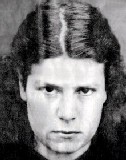
Pauline Parker
Homicide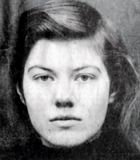 Juliet Hulme
Homicide · New Zealand · 1954
Juliet Hulme was known as Juliet Marion Hulme and later as Anne Perry. Juliet H…
1 victim
Juliet Hulme
Homicide · New Zealand · 1954
Juliet Hulme was known as Juliet Marion Hulme and later as Anne Perry. Juliet H…
1 victim
 Renee Kara O'Brien
Homicide · New Zealand · 2002
Renee Kara O'Brien was 14 years and nine months old when she beat Kenneth Pigot…
1 victim
Renee Kara O'Brien
Homicide · New Zealand · 2002
Renee Kara O'Brien was 14 years and nine months old when she beat Kenneth Pigot…
1 victim
 Constance Fisher
Homicide · USA · 1954
Constance Fisher · 3 August 1954 — Constance Fisher drowned her three children…
6 victims
Constance Fisher
Homicide · USA · 1954
Constance Fisher · 3 August 1954 — Constance Fisher drowned her three children…
6 victims
 Akshay Chand
Homicide · New Zealand · 2011
Akshay Anand Chand murdered Christie Alexis Lesley Marceau on 7 November 2011,…
1 victim
Akshay Chand
Homicide · New Zealand · 2011
Akshay Anand Chand murdered Christie Alexis Lesley Marceau on 7 November 2011,…
1 victim
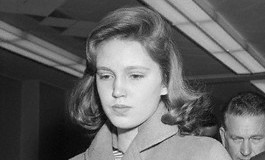 Cheryl Crane
Homicide · USA · 1958
Cheryl Christina Crane (born July 25, 1943) was the only child of actress Lana…
1 victim
Cheryl Crane
Homicide · USA · 1958
Cheryl Christina Crane (born July 25, 1943) was the only child of actress Lana…
1 victim
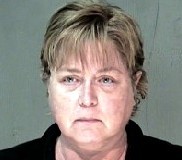 Shari Tobyne
Murderer · USA · 2009
Shari Tobyne Shari Tobyne was the wife of Dwight Tobyne and had been married to…
1 victim
Shari Tobyne
Murderer · USA · 2009
Shari Tobyne Shari Tobyne was the wife of Dwight Tobyne and had been married to…
1 victim
 Sirhan Bishara Sirhan
Murderer · USA · 1968
Sirhan Bishara Sirhan was convicted of the murder of United States Senator Robe…
1 victim
Sirhan Bishara Sirhan
Murderer · USA · 1968
Sirhan Bishara Sirhan was convicted of the murder of United States Senator Robe…
1 victim
 Stephen Stanko
Murderer · USA · 2005
Stephen Stanko was born in 1968. He had previously been incarcerated for Assaul…
2 victims
Stephen Stanko
Murderer · USA · 2005
Stephen Stanko was born in 1968. He had previously been incarcerated for Assaul…
2 victims
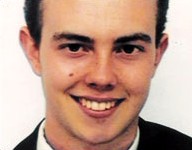 Brian Blackwell
Murderer · United Kingdom · 2004
Brian Blackwell was an Englishman who killed his parents at their Merseyside ho…
2 victims
Brian Blackwell
Murderer · United Kingdom · 2004
Brian Blackwell was an Englishman who killed his parents at their Merseyside ho…
2 victims
- Gender
- female
- Country
- New Zealand
- Location
- Christchurch, Canterbury, South Island, New Zealand
- Date of birth
- May 26, 1938
- Age at first offence
- 16
- Characteristics
- juvenile (16)
- Victim profile
- Honora Rieper (her mother)
- Method of murder
- B eating to death with a half brick concealed in a stocking
- Date(s) of murder
- June 22, 1954
- Years active
- 1954
- Date of arrest
- Next day
- Status
-
Released
Sentenced to be detained at Her Majesty's pleasure on August 28, 1954; released in 1959
Case record: Pauline Parker
Identification
Pauline Parker was born on 26 May 1938. She was from Christchurch, New Zealand, and was convicted in connection with the murder of her mother, Honora Rieper. At the time of the offence she was sixteen years of age.
Her mother was Honora Rieper (also referred to as Honora Mary Parker). Honora Rieper had a father figure described as Herbert Rieper, who had been living with her; it was revealed during police investigations that they were not, in fact, married. As a result, during the trial both Honora and Pauline were referred to with the "Parker" surname.
Pauline Parker had a friend and co-accused, Juliet Marion Hulme.
Timeline
- 22 June 1954 — Pauline Parker and Juliet Hulme murdered Honora Rieper in Victoria Park, Christchurch. Their initial account to others was that Honora had slipped and hit her head. The next night police found Pauline's diary; the next day they were arrested for murder.
- 28 August 1954 — Pauline Parker and Juliet Hulme were convicted of murder after the jury rejected the defence assertion that they were insane; they were sentenced to be detained at Her Majesty's pleasure.
- 1959 — Pauline Parker was released.
- 1964 — Pauline Parker graduated BA from Auckland University.
- 1997 — A New Zealand journalist tracked Pauline Parker down in a small village in Kent, England.
- 9 May — A documentary in which Pauline Parker was played premiered at Lincoln University.
- 2011 — A book by Peter Graham was published.
- March 5, 2006 — Juliet Hulme (now known as Anne Perry) said she and Parker were never lesbians, in comments reported by NZHerald.
The offence
On 22 June 1954, Honora Rieper went for a walk through Victoria Park with her daughter Pauline Parker and Pauline's best friend Juliet Hulme. Approximately 130 m (420 ft) down the path, in a wooded area of the park near a small wooden bridge, the girls bludgeoned Honora Rieper to death with a half brick concealed in a stocking.
After committing the murder, Pauline Parker and Juliet Hulme fled, covered in blood, back to the tea kiosk where the three of them had eaten minutes earlier. They told the owners of the tea shop, Agnes and Kenneth Ritchie (referred to as the proprietress and her husband/owner; later also as Kenneth Nelson Ritchie), that Honora had fallen and hit her head and that she “kept bumping and bumping” as she fell. Honora’s body was found on the path.
Police counted injuries on Honora’s body and determined the account of an accidental fall could not explain them. There were conflicting totals stated in the material: one account described 45 wounds on the woman's head, while another account described forty-five discernible injuries, with twenty-four being lacerated wounds on the face and head. The stocking with the brick concealed in it was found nearby, and police also discovered the murder weapon in the nearby woods.
Investigation
Before trial began, it was discovered that Honora Rieper had never married Herbert Rieper, the man known as her husband. Pauline and Honora were therefore referred to by Honora’s maiden name, “Parker,” during the trial.
After the murder, police found Pauline Parker’s diary that night. The diary included entries describing plans to kill Honora and references to their fantasy world and intended plans to flee to the United States. The diary was described as having a page for every day in the year, written in ink in clear, adult calligraphy.
Police interviews also included statements by Pauline Parker and by Juliet Hulme, and a piece of paper that Pauline Parker had tried to burn was taken from her in custody, with the writing: “I am taking the blame for everything.”
Arrest
After the police discovered Honora’s body and examined evidence from the scene, Pauline Parker and Juliet Hulme were arrested. One account described that the next day the teenagers were arrested for murder, and a later account described that two girls were arrested and charged on the evening of 22 June 1954 (Pauline) and the next day (Juliet).
Trial
Pauline Parker and Juliet Hulme were tried by jury in Christchurch for the murder of Honora Rieper (referred to as Honora Mary Parker in parts of the material).
Plea and sanity
Both girls pleaded insanity; the defence assertion that they were insane was rejected by the court.
In opening and argument described in the material:
- The Crown Prosecutor argued that they were sane and that the motive arose from opposition of Mrs Parker to the girls’ plans to go overseas together.
- The defence argued that the sole issue was mental capacity and sanity at the time of the assault, describing their condition as paranoia and folie a deux (“communicated insanity”).
The judge instructed the jury that grave crimes can be committed by persons who know the act is wrong, and explained the legal question of whether the accused knew the act was wrong. The judge asked the jury to consider the words “wrong” and “knowing,” including that “wrong” could mean contrary to the law of the land and contrary to the moral standards accepted by ordinary, reasonable members of the community.
Evidence described
The material described the prosecution case as including:
- Statements and confessions made shortly after the commission of the crime, including the accounts given by Pauline Parker and Juliet Hulme to police and to the tea kiosk.
- Physical evidence including a brick and stocking with blood and hairs similar to those of the dead woman found beside the body.
- The diary’s entries read in court.
Verbatim excerpts attributed to Pauline Parker’s diary included the following lines:
- “February 23th, 1954: Why could not Mother die? Dozens, thousands of people are dying. Why not Mother, and Father too? Life is very hard.”
- “April 28th: Anger against Mother boiling inside me as she is the main obstacle in my path. Suddenly, means of ridding myself of the obstacle occur to me. If she were to die…”
- “June 20th: Deborah and I talked for some time. Afterwards, we discussed our plans for moidering Mother and made them clear. But peculiarly enough, I have no qualms of conscience. Or is it peculiar? We are so made.”
- “June 21st: Deborah rang and we decided to use a brick in a stocking rather than a sandbag. Mother has fallen in with plans beautifully. Feel quite keyed up.”
- “June 22nd: I felt very excited last night and sort of nightbefore-Chrisnnas, but I did 'not have pleasant dreams. I am about to rise.”
- The top of the page for June 22nd was headed in printed letters: “The Day of the Happy Event.”
Additional verbatim diary entries were provided in another portion of the material:
- “29th April: I did not tell Deborah (her pet name for Juliet) of my plans for removing mother … the last fate I wish to meet is one in a Borstal…. I am trying to think of some way. I want it to appear either a natural or an accidental death.”
- “19th June: We practically finished our books … to-day and our main "ike" for the day was to moider mother. The notion is not a new one, but this time it is a definite plan which we intend to carry out.”
- “20th June: We discussed our plans for moidering mother and made them a little clearer.”
- “21st June: We decided to use a brick in a stocking rather than a sandbag.”
- “22nd June: I am writing a little of this up in the morning before the death.”
- “From Juliet Hulme's: "I gave the brick to Pauline…. I know it was put in the stocking…. I wasn't quite sure what was going to happen when we went to Victoria Park. I thought we might have been able to frighten Mrs Rieper [Parker] with the brick, and she would have given her consent for me and Pauline to stay together. I saw Pauline hit her mother with the brick in the stocking. I took it and hit her, too. After the first blow was struck, I knew it would be necessary for us to kill her. I was terrified, hysterical."”
- “From Pauline Parker's: "I killed my mother. Had made up my mind to do it some days before. I don't know how many times I hit her; a great many, I imagine."”
A verbatim poem attributed to Pauline Parker was included, titled “The Ones That I Worship,” and the material provided the verse in full:
“There are living amongst two dutiful daughters Of a man who possesses two beautiful daughters The most glorious beings in creation They'd be the pride and joy of any nation.
You cannot know nor try to guess The sweet soothingness of their caress. The outstanding genius of this pair Is understood by few, they are so rare. Compared with these two every man is a fool, The world is most honoured that they should deign to rule And above us these goddesses reign on high. I worship the power of these lovely two With that adoring love known to so few. 'Tis indeed a miracle one must feel, That two such heavenly creatures are real. Both sets of eyes, though different far, hold many mysteries strange Impassively they watch the race of man decay and change. Hatred burning bright in the brown eyes with enemies for fuel. Icy scorn glitters in the grey eyes, contemptuous and cruel. Why are men such fools they will not realise The wisdom that is hidden behind those strange eyes And these wonderful people are you and I.”
Confession and police statement quotations
One portion described Pauline Parker’s statement to Detective-Sergeant Brown using verbatim question-and-answer format:
- “Q. Who assaulted your mother?” “A. I did.”
- “Q. Why?” “A. If you don't mind I won't answer that question.”
- “Q. When did you make up your mind to kill your mother?” “A. A few days ago.”
- “Q. Did you tell anyone you were going to do it?” “A. No. My friend did not know anything about it. She was out of sight at the time, she had gone on ahead.”
- “Q. What did your mother say when you struck her?” “A. I would rather not answer that.”
- “Q. How often did you hit her?” “A. I don’t know but a great many times I imagine.”
- “Q. What did you use?” “A. A half brick inside the foot of a stocking. I took them with me for the purpose. I had the brick in my shoulder bag. I wish to state that Juliet did not know of my intentions and she did not see me strike my mother. I took the chance to strike my mother when Juliet was away. I still do not wish to say why I killed my mother.”
- “Q. Did you tell Juliet that you killed your mother?” “A. She knew nothing about it. As far as I know she believed what I told her, although she may have guessed what had happened, but I doubt it, as we were both so shaken that it probably did not occur to her.”
- “Q. Why did Juliet tell the same story as you to the lady in the tea kiosk?” “A. I think she simply copied what I said. She might have suspected what I had done and she would not have wished to believe it nor to have got me into trouble. As soon as I had started to strike my mother I regretted it, but I could not stop.”
Another portion described a statement about detectives interviewing Pauline:
- “I am taking the blame for everything.”
Sentencing
On 28 August 1954, Pauline Parker and Juliet Hulme were convicted of murder. Because they were too young for the death penalty under New Zealand law at the time, they were convicted and sentenced to be detained at Her Majesty's pleasure.
The material describes that, in practice, this sentence meant detention at the discretion of the Minister of Justice.
Pauline Parker spent around five years in prison. Her imprisonment location is given as Paparua Prison, near Christchurch in one portion of the material, while another section described her being sent to Arohata Borstal, near Wellington. The material also described that she studied under a Government correspondence school scheme, sitting for a school certificate and passing.
Appeals
No appeal information was provided in the material.
Outcome
Pauline Parker remained under detention after the 28 August 1954 sentence and was released in 1959.
Aftermath and later life
After release, the material stated that Pauline Parker:
- Was under close surveillance in New Zealand before being allowed to leave for England.
- Was living in Hoo near Strood, Kent, in 1997, running a children's riding school.
- Became a Roman Catholic.
- Expressed strong remorse about killing her mother and refused to give interviews for many years surrounding the murder.
- Studied at Auckland University and graduated BA in 1964.
- Worked for a year as a librarian in Wellington, then worked in England as a London librarian before giving up that profession.
Later portrayals of the case included:
- The film Heavenly Creatures (1994) by producer-director Peter Jackson, with Pauline Parker played by Melanie Lynskey and Juliet Hulme played by Kate Winslet.
- A documentary titled Reflections of the Past in which Pauline Parker was played by Alice Drewitt; it premiered at Lincoln University on 9 May (year not specified in that line).
- A book by Peter Graham, “So Brilliantly Clever: Parker, Hulme & The Murder that Shocked the World,” published in 2011.
In the material, Juliet Hulme later became known as acclaimed fiction author Anne Perry. Comments in March 2006 attributed to Perry stated: “We were not lesbians, says former Juliet Hulme,” and included the reported assertion that she and Parker were never lesbians while also describing that their relationship was obsessive.
Other details
Pauline Parker’s early life included:
- Hospitalisation at age five with osteomyelitis, described as a crippling bone marrow infection.
- Chronic leg pain throughout her youth, which excused her from physical activities at Christchurch Girls' High School.
- An interest in art and writing, including sculpting with clay.
- Attendance at East Belt Methodist Church for some time with her older sister Wendy, despite the Reipers being described as not a religious family.
Her friendship with Juliet Hulme included:
- Both attended Christchurch Girls' High School.
- The girls formed an elaborate fantasy world, creating an invented religion that rejected Christianity and worshipped their own saints.
- The material described a parallel dimension called “The Fourth World.”
- They planned to flee and sought a future writing and film career in Hollywood.
In the material, the trial and public discussion included claims about the girls’ relationship, including discussion that homosexuality was considered a serious mental illness at the time, and that both sets of parents tried to prevent the girls seeing each other.
A person named Walter Perry was mentioned as involved in the social context: he was described as an engineer, and as having lived in part of Dr. Hulme’s house and as being associated with the Hulme family through his relationship with Juliet’s mother.
A court-related detail included that Mr Justice Adams presided over the sentencing in one narrative portion, and that a man called “I protest!” in the public gallery.
The NZ History and other passages in the material described the case as known as the “Parker–Hulme Murder” and as a murder committed in Christchurch in 1954 with a subsequent court case.
Spotted an error, or have more information about this case?