
Latasha Pulliam
Murderer Bobbie Sue Terrell
Murderer · USA · 1984
Bobbie Sue Dudley Terrell was a Pinellas County nurse and worked as the night s…
12 victims
Bobbie Sue Terrell
Murderer · USA · 1984
Bobbie Sue Dudley Terrell was a Pinellas County nurse and worked as the night s…
12 victims
 Megan Huntsman
Murderer · USA · 1996
Megan Huntsman was 40 at sentencing. She was a mother of three children who wer…
6 victims
Megan Huntsman
Murderer · USA · 1996
Megan Huntsman was 40 at sentencing. She was a mother of three children who wer…
6 victims
 Angela Johnson
Murderer · USA · 1993
Angela Jane Johnson was convicted in federal court of aiding and abetting the m…
5 victims
Angela Johnson
Murderer · USA · 1993
Angela Jane Johnson was convicted in federal court of aiding and abetting the m…
5 victims
 Catherine May Wood
Murderer · USA · 1987
Catherine May Wood was an American caregiver who worked at the Alpine Manor Nur…
5 victims
Catherine May Wood
Murderer · USA · 1987
Catherine May Wood was an American caregiver who worked at the Alpine Manor Nur…
5 victims
 Michele Kalina
Murderer · USA · 1996
Michele Kalina pleaded guilty to murder for one of five infants she initially w…
5 victims
Michele Kalina
Murderer · USA · 1996
Michele Kalina pleaded guilty to murder for one of five infants she initially w…
5 victims
 Amy Bishop
Murderer · USA · 1986
Amy Bishop — biology professor and perpetrator · James Anderson — Bishop’s husb…
4 victims
Amy Bishop
Murderer · USA · 1986
Amy Bishop — biology professor and perpetrator · James Anderson — Bishop’s husb…
4 victims
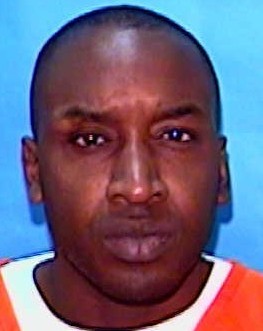 Byron Bryan
Murderer · USA · 1991
Byron Bryan was born 02/20/67 and was tried in the Fifteenth Judicial Circuit,…
1 victim
Byron Bryan
Murderer · USA · 1991
Byron Bryan was born 02/20/67 and was tried in the Fifteenth Judicial Circuit,…
1 victim
 Ronald Macon
Serial killer · USA · 1999
Ronald Macon was convicted of three murders and one criminal sexual assault in…
3 victims
Ronald Macon
Serial killer · USA · 1999
Ronald Macon was convicted of three murders and one criminal sexual assault in…
3 victims
 Frank James Coppola
Murderer · USA · 1978
Frank James Coppola (1944–August 10, 1982) was a former police officer from Por…
1 victim
Frank James Coppola
Murderer · USA · 1978
Frank James Coppola (1944–August 10, 1982) was a former police officer from Por…
1 victim
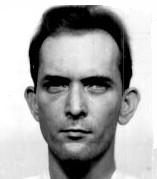 Denton Crank
Murderer · USA · 1984
June 14, 1994 — Denton Crank was executed by lethal injection in Texas. · April…
1 victim
Denton Crank
Murderer · USA · 1984
June 14, 1994 — Denton Crank was executed by lethal injection in Texas. · April…
1 victim
- Gender
- female
- Country
- USA
- Location
- Chicago, Illinois, Cook County, USA
- Date of birth
- April 11, 1971
- Age at first offence
- 20
- Characteristics
- kidnapping, rape, torture
- Victim profile
- Shenosha Richards, 6 (her neighbor's daughter)
- Method of murder
- Strangulation
- Date(s) of murder
- March 21, 1991
- Years active
- 1991
- Date of arrest
- Same day
- Status
-
Life imprisonment
Sentence commuted to life in prison without parole following Illinois Governor clemency granted in March 2003
Case record: Latasha Pulliam
STATUS and procedural posture
Latasha Pulliam received clemency from the Governor of Illinois in March 2003 for all 167 people on Illinois’s death row, including Pulliam. Her sentence was commuted to life in prison without parole.
On June 15, 1994, Pulliam was sentenced to death.
The offence
On March 21, 1991, Latasha Pulliam and her boyfriend, Dwight Jordan, sexually assaulted, tortured, and strangled her neighbor’s 6-year-old daughter, Shenosha Richards, in Chicago.
Pulliam confessed to shutting the girl in a closet until she suffocated, and then hiding the body in a garbage can.
Shenosha was six years old at the time of the offence. On the day of the murder, Shenosha was playing in her South Side Chicago neighborhood when she was approached by Pulliam and Pulliam’s boyfriend, Dwight Jordan. She went with them after they purchased her a bag of chips and promised to take her to a movie.
Pulliam took Shenosha to Pulliam’s apartment. Over several hours, Pulliam and Jordan sexually assaulted the girl with a shoe polish applicator and a hammer. Prosecutors said the conduct also involved use of a hammer to pulverize her skull. Pulliam also beat and strangled the girl.
Attorneys for Pulliam said Pulliam was drug-crazed at the time. A court psychologist described Pulliam as “a female John Gacy” who got sexual satisfaction from hurting someone weaker than she.
Timeline
- March 21, 1991 — Pulliam and Dwight Jordan sexually assaulted, tortured, and strangled six-year-old Shenosha Richards in Chicago; Pulliam took Shenosha to her third-floor apartment, where the abuse occurred.
- March 21, 1991 — Pulliam was arrested for the murder of six-year-old Shenosha Richards.
- March 22, 1991 — Pulliam spoke to law enforcement officers and signed a court-reported confession.
- 1994 — Pulliam examined by a psychologist in connection with testimony at trial; the defence presented testimony that Pulliam had IQ of 69 and was mildly mentally retarded.
- April 17, 1997 — The Supreme Court of Illinois affirmed Pulliam’s convictions and sentences.
- October 18, 2002 — An opinion addressing post-conviction proceedings was filed with Justice Harrison dissenting (Harrison, J., dissents; and the opinion noted that the United States Supreme Court denied certiorari).
Background
Pulliam was convicted in Cook County. Pulliam and Dwight Jordan were tried simultaneously by separate juries in the circuit court of Cook County.
Investigation and confession
On March 21, 1991, after the commission of the crime, Pulliam was pursued and apprehended. During the pursuit, bystanders shouted such things as “There she goes, right there, she's running.” After Pulliam was apprehended, members of the crowd said such things as “They got her, there she is right there, they got her in the car.”
Pulliam spoke to law enforcement officers and signed a court-reported confession on the next day after her arrest.
In her confession, Pulliam related an account of the murder. Pulliam said that on March 21 she was outside when Shenosha asked to come to her house. Pulliam took Shenosha to her third-floor apartment. Upon entering, she took Shenosha to her bedroom, where Dwight Jordan was sitting on the bed. Pulliam went to the kitchen to use cocaine and remained there for half an hour. When she returned, Shenosha was on the floor crying with her underwear down to her knees. Jordan was behind her attempting to attain an erection.
Pulliam confessed that, after failing to achieve an erection, Jordan picked up a white shoe polish bottle and inserted it into the victim’s rectum. Pulliam confessed that Jordan then told her to get a hammer, and Pulliam put saliva on the hammer and inserted the straight end into Shenosha’s vagina while Jordan continued inserting the shoe polish bottle into her rectum. Pulliam and Jordan continued this activity for 10 minutes. Pulliam said that Shenosha tried to scream when Pulliam put her hand over her mouth. Pulliam then took an electrical cord from a television, wrapped it around Shenosha’s neck, and “started to strangle her.”
Pulliam said she took Shenosha to an empty apartment down the hall with the electrical cord still wrapped around her neck. Pulliam said Shenosha fell onto a board with a nail protruding from it. Pulliam then took Shenosha to the kitchen of the apartment where she started a fire “to scare her.” Pulliam put the fire out, and Shenosha told her she would not tell anyone except she would have to tell her parents. Pulliam then pulled the cord tighter around Shenosha’s neck and continued tightening it for 10 minutes.
Because Pulliam heard knocking at her apartment door down the hall, Pulliam said she put Shenosha in a closet in the empty apartment. Pulliam confessed that she looked in the closet a few minutes later and saw that Shenosha was not breathing. Pulliam then hit Shenosha on the head three or four times with the hammer she had used earlier. Pulliam said she placed Shenosha in a garbage can, struck her head with a two-by-four, and tried to cover her up with garbage.
Pulliam said she gave the statement willingly, fully aware of her constitutional rights to remain silent and have the assistance of counsel.
Investigators searched the crime scene and recovered Shenosha’s shoes, a hammer, a white shoe polish bottle, and a triangular piece of wood with a protruding nail.
According to testimony of one of Pulliam’s cellmates, Pulliam admitted that she had also used a wooden doorstop with a nail in it to jab Shenosha in the chest.
Medical evidence
At trial, the medical examiner testified that Shenosha suffered 42 distinct injuries.
She sustained two puncture wounds to her chest which damaged her lungs and coronary artery. The medical examiner testified that these wounds were consistent with being struck by a board with a nail. Shenosha had six lacerations on her head, three of which penetrated through to the skull. These injuries were consistent with being hit with a hammer, or a board such as a two-by-four. She had injuries under her chin consistent with ligature strangulation.
The examiner testified that Shenosha sustained lacerations to the skin of her anus consistent with traumatic penetration or sexual assault, and that injuries caused by the penetration were at least eight inches deep and consistent with the handle of the hammer or the shoe-polish bottle. The examiner also testified about lacerations alongside her clitoris and on the lower surface of her vagina extending to her anus consistent with penetration of the hammer or the shoe-polish bottle.
Shenosha’s injuries were consistent with the conduct described in Pulliam’s confession.
Charges and verdicts
Pulliam was indicted on 131 counts of murder, aggravated criminal sexual assault, aggravated kidnapping, and aggravated unlawful restraint. Pulliam’s jury convicted her of first degree murder, two counts of aggravated criminal sexual assault, and two counts of aggravated kidnapping.
Death eligibility and sentencing
The jury determined there were no mitigating factors sufficient to preclude imposition of the death penalty.
The trial court sentenced Pulliam to death for the murder and to three consecutive prison terms of 60, 30, and 15 years on the remaining convictions (aggravated criminal sexual assault and aggravated kidnapping).
The jury found Pulliam death-eligible based on two grounds:
- that she committed the murder in the course of other felonies, namely aggravated criminal sexual assault and aggravated kidnapping (720 ILCS 5/9--1(b)(6) (West 1992));
- that the victim was under the age of 12 and her death resulted from exceptionally brutal and heinous behavior indicative of wanton cruelty (720 ILCS 5/9--1(b)(7) (West 1992)).
Trial
Hearsay rulings and evidence
Pulliam appealed, arguing multiple errors including admission of hearsay, admission of a book found in her apartment, and admission of testimony concerning a court-ordered fitness examination.
During the trial, the court permitted testimony about bystanders’ statements made during the pursuit and after apprehension. The appellate court held those statements were not inadmissible hearsay because they were offered to explain investigative steps taken by police.
The appellate court also held that statements given to Kenosha by a young girl about Shenosha going to the movies, and statements by Dwight Jordan to Kenosha that defendant “live[s] up there,” were not inadmissible hearsay because they were offered to explain why Kenosha searched for Shenosha and why Kenosha and her mother went to the apartment.
The appellate court held that statements given by Shenosha’s mother, Emma Richards, were not hearsay for several of the issues raised:
- Emma testified that Shenosha told her that Jordan’s girlfriend had taken her to a park across the street that day; the appellate court held the statement was offered to explain why Emma and Kenosha sought out Pulliam after they discovered Shenosha was missing.
- Emma testified that a neighbor, Leslie Moon, told her that no one had left Pulliam’s apartment recently; the appellate court held the statement was offered to show why Kenosha and her mother went to the apartment a second time.
However, the appellate court held that Moon’s statement to Emma that she observed Pulliam place something in the garbage can on the porch of Pulliam’s apartment was hearsay, and that the trial court erred in admitting it. The appellate court found the error harmless because the evidence of guilt was overwhelming.
Book evidence
At trial, the State was permitted to show the jury the cover of a book entitled The Force of Sex. A police officer testified that he found the book on a coffee table in Pulliam’s apartment two days after the murder and that he did not notice it when he searched the apartment the day after the murder. The officer testified the apartment was not locked between the time of the murder and his discovery of the book.
The officer also testified regarding where and when he found the book. The trial court ruled that the cover and title were probative of Pulliam’s state of mind and allowed the jury to view only the cover and title.
The appellate court held the trial court erred in admitting the book because there was no testimony that Pulliam owned or had read it, or concerning the nature of its contents, and because the apartment was unsecured for two days before the book was found. The appellate court still held the error was harmless.
Fitness examination testimony
Pulliam contended that the trial court erred in allowing testimony from a state psychologist regarding statements made during a 1991 fitness examination ordered to determine Pulliam’s fitness to stand trial. The appellate court noted that Pulliam had not raised an affirmative insanity defense. The appellate court held Pulliam waived any error by failing to object contemporaneously.
The appellate court also rejected arguments for plain error, effective assistance of counsel violations, and challenges to rebuttal testimony about malingering, concluding it was proper given that Pulliam first raised malingering at trial.
The appellate court also held that Pulliam waived error in admission of the same fitness-examination testimony during sentencing by failing to object contemporaneously, and again rejected plain error and ineffective assistance claims.
The appellate court rejected an argument that testimony about sexual sadism improperly converted a mitigating factor of mental illness into an aggravating factor because Pulliam waived the issue by failing to object.
The appellate court rejected a challenge to testimony about Pulliam’s sanity, concluding the State did not affirmatively use sanity as an aggravating factor and only mentioned it to rebut Pulliam’s mitigation claim of mental illness.
Evidence admitted in aggravation
Pulliam argued that the trial court erred in admitting aggravation evidence from a fellow inmate. The inmate testified that Pulliam confessed to committing the sexual assault and murder and related specific details as told by Pulliam. The inmate also testified that Pulliam said she could avoid going to prison for the assault and murder by pleading insanity.
The appellate court held evidence concerning Pulliam’s role and participation in the commission of the offense was admissible at sentencing to establish her character and that this testimony properly showed lack of remorse.
Pulliam challenged admission of evidence that her infant daughter was hospitalized in 1989 with burns. The examining doctor testified that the burn was second-degree with a clearly demarcated line around the buttocks and that the doctor believed it was caused by someone intentionally dipping the child into scalding water because there were no burns or splash marks elsewhere. The appellate court held the testimony was admissible given other extensive evidence of abuse of the daughter.
Pulliam challenged admission of allegations that she sexually assaulted another inmate while incarcerated awaiting trial. A prison guard testified that inmates told her Pulliam had sexually assaulted an inmate, that when asked the alleged victim nodded slightly but would not speak, and that the alleged victim had marks on her neck, face, and arm and seemed frightened. The guard testified that no report was filed because the alleged victim refused to talk.
The appellate court held evidence was admissible if relevant and reliable, and held the trial court did not abuse its discretion because the allegations were corroborated by the guard’s testimony of visible injuries and fear. The appellate court also found no error in the guard describing the victim as “a real petite little white girl” given it was a single isolated statement and the jury was instructed not to be influenced by race.
Excluded testimony on mental disabilities
Pulliam contended that the trial court erred in excluding testimony from a member of the Illinois Human Rights Commission about difficulties faced by mentally handicapped people. The appellate court held there was no abuse of discretion, noting that defense had already presented expert testimony substantially similar to the proffered testimony, that the witness was not an expert in that trial posture, the witness did not know Pulliam’s case, and the defense failed to notify the court or the State until the moment it was offered.
State closing arguments and juror question
Pulliam contended that the trial court erred in allowing various arguments by the State at the conclusion of sentencing. The appellate court held Pulliam waived the issues due to failure to object contemporaneously.
Pulliam also contended the trial court erred in responding to a jury note during sentencing deliberations. The note asked: “What happens if we cannot reach a unanimous decision on either verdict?”
Pulliam moved for a response giving the jury the instruction: “According to the law, if you are not unanimous, you are to sign the verdict that says you are not unanimous and it is a no death verdict.” The trial court overruled the motion and instead instructed the jury in writing: “You have your instructions. Keep deliberating.”
The appellate court held the trial court did not err in its response, emphasizing that the jury had been instructed before deliberations that it could not sign a verdict imposing death unless it unanimously voted for it.
Additional appellate dissent content
A dissenting opinion (and note that Chief Justice HEIPLE delivered the opinion for the court while Harrison, J., dissented) expressed that the trial court should not have admitted testimony from a state psychologist about statements during a 1991 court-ordered fitness examination, asserting that admission denied Pulliam her right to a fair trial and constituted plain error. The dissent stated the concept of a fair trial involved more than the majority’s approach and concluded: “I would reverse and remand for a new trial.”
Post-conviction and related proceedings
After the Supreme Court of Illinois affirmed direct appeal, Pulliam filed a petition for relief under the Post-Conviction Hearing Act challenging her death sentence on several grounds.
In later proceedings described, Pulliam filed an original and then an amended petition for post-conviction relief in the circuit court of Cook County. The amended petition raised seven claims challenging only the death sentence. Pulliam devoted the bulk of the amended petition to allegations that trial counsel was ineffective at the aggravation-mitigation phase due to failing to conduct a complete investigation into mitigating evidence and failing to present evidence that would have been uncovered.
The amended petition included allegations that trial counsel was ineffective in failing to:
- obtain early childhood hospital records suggesting sexual abuse at age 22 months and possible lead poisoning at age 2;
- fully investigate the circumstances surrounding the death of Pulliam’s brother, Joseph Jr., suggesting the cause might have been abuse by Renee rather than SIDS;
- present additional evidence that Renee sexually abused Pulliam to rebut a claim that Pulliam recently fabricated claims about Renee;
- present an accurate picture of Pulliam’s early childhood by portraying Joseph as responsible when evidence existed that Joseph helped conceal Renee’s abuse;
- interview and present testimony of numerous additional witnesses, including an expert witness, who could have provided information about Pulliam’s abusive upbringing and its impact;
- present evidence showing Pulliam had organic brain damage.
The post-conviction materials included Michael Reese Hospital records indicating Pulliam had been hospitalized when she was 22 months old for a 104 degree fever and a near-drowning incident in the bathtub, with marks indicative of physical abuse and a perineal rash around her vagina; Renee and Joseph gave conflicting reports about the bathtub incident and the parents were referred to social service for suspected child abuse. It stated she was discharged with follow-up by social service, and that eight months later she was hospitalized for ingesting iron pills with high lead content in her blood; hospital staff did not consider whether she was abused despite a rash on her face caused by “window sealer.”
The materials included an affidavit of Donna Crowell Bryant stating she was not contacted by trial counsel but would have been willing to testify about a seven-year relationship with Joseph beginning in 1982. Bryant stated Pulliam was repeatedly abused physically and sexually by Renee, and that Joseph admitted Renee tried to drown Pulliam in the bathtub once resulting in hospitalization. Bryant also stated Joseph said Joseph Jr. died from Renee suffocating the child and not from SIDS. Bryant stated Renee had Pulliam performing and receiving oral sex when Pulliam was five years old, and that Joseph and his mother knew about abuse and covered it up.
The materials also included an affidavit from Juliett Brown Perry, DCFS social worker who had testified for the State at sentencing, stating that she became the caseworker when Pulliam was about 12, and that Pulliam told her Renee, Renee’s boyfriend, and Pulliam slept in the same bed and had sex; Perry stated Renee was an alcoholic and Joseph was always working, and that she would have been willing to testify but was not contacted by trial counsel.
The materials also included a letter from Janice J. Ophoven, M.D. Ophoven reviewed documents and concluded Pulliam was the victim of repeated and severe physical and sexual abuse, relying on factors including perineal rash at 22 months and sexually transmitted disease and pregnancy at ages 13 and 15. Ophoven opined abuse led to tragic and long-term consequences for children and was a well recognized and direct factor leading to abusive behavior as an adult. Ophoven further noted Joseph Jr.’s death was highly suspicious and stated: “there [was] insufficient evidence to exclude homicide.”
The materials included the 1979 report of Dr. Christel Lembke stating Pulliam “suffered early medical complications and [it] must [be] assume[d] that she has a considerable amount of brain damage.” Additional letters included Dr. Mark Moulthrop stating risks for brain damage in early childhood based on information not available at trial (maternal alcoholism during pregnancy, premature birth, febrile seizures and anoxia due to submersion in the bathtub, ingestion of iron and lead, blows to the head, and illicit drug use). Dr. Jonathan L. Hess concluded based on record review that Pulliam has “verifiable brain dysfunction,” affecting her ability to control her behavior.
Finally, Pulliam presented an affidavit of Gary Copp stating he represented Pulliam as counsel at trial and at capital sentencing hearings. Copp stated he did not obtain Lembke’s 1979 report or Pulliam’s Michael Reese Hospital records and that failure was not trial strategy, stating he would have provided those documents to defence experts.
Other details
Jury evidence on drug use and mental capacity presented at trial
At trial, the defence called a psychologist who examined Pulliam in 1994. The psychologist testified that Pulliam had an IQ of 69 and that he believed her to be mildly mentally retarded. He testified that a person with Pulliam’s degree of mental retardation would be easily influenced by others, would not anticipate consequences of her actions, and would have difficulty predicting the outcome of a situation.
The State called a psychologist who examined Pulliam in 1991. He testified he did not believe Pulliam was mentally retarded and that Pulliam malingered, or faked mental illness, during his examination. He also opined she likely did so during the 1994 examination.
At the sentencing hearing, the State offered evidence in aggravation, including testimony from a Department of Children and Family Services employee that Pulliam frequently had been placed in state facilities as a youth and often ran away. The employee testified that Pulliam physically forced another girl under state care to submit to oral, anal, and vaginal sex performed by one of Pulliam’s former boyfriends. The employee testified the girl was also forced to perform oral sex on Pulliam and her former boyfriend.
The State also presented evidence that Pulliam’s daughter was twice hospitalized, once for injuries consistent with physical abuse and once for both physical and sexual abuse, and evidence that Pulliam while incarcerated awaiting trial sexually assaulted an inmate. The State presented evidence of lack of remorse by describing what Pulliam told another inmate in detail about the sexual assault and murder of Shenosha.
In mitigation, Pulliam presented evidence that her parents and other adults physically and sexually abused her as a child. Evidence indicated Pulliam gave birth to a child at age 15 and another at age 17, with fathers being two separate boyfriends of Pulliam’s mother. Pulliam offered evidence that codefendant Jordan physically abused Pulliam.
A second defence psychologist testified Pulliam is mildly mentally retarded, with a long history of alcohol and drug abuse.
Additional aggravation and mitigation details described
The post-conviction and related proceedings also described a State expert describing Pulliam as a “sexual sadist” with borderline intellectual functioning and antisocial personality disorder, and explained sexual sadism as a person sexually enjoying inflicting pain and suffering. The State presented additional details on injuries and abuse including a burn injury to Pulliam’s baby daughter and a jail assault allegation based on testimony of a Cook County sheriff’s department officer. The proceedings also described mitigation evidence including testimony by a psychiatrist and sentencing advocate, testimony by jail guards, and testimony by Pulliam’s father, Joseph Pulliam.
Supreme Court of Illinois case identification
The Supreme Court of Illinois addressed the case with citation identifying the parties as “THE PEOPLE OF THE STATE OF ILLINOIS, Appellee, v. LATASHA PULLIAM, Appellant. No. 78406” and listed an opinion date of “April 17, 1997.” The opinion stated Chief Justice HEIPLE delivered the opinion of the court.


Spotted an error, or have more information about this case?