
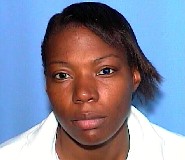
Cynthia Pugh
Murderer Bobbie Sue Terrell
Murderer · USA · 1984
Bobbie Sue Dudley Terrell was a Pinellas County nurse and worked as the night s…
12 victims
Bobbie Sue Terrell
Murderer · USA · 1984
Bobbie Sue Dudley Terrell was a Pinellas County nurse and worked as the night s…
12 victims
 Angela Johnson
Murderer · USA · 1993
Angela Jane Johnson was convicted in federal court of aiding and abetting the m…
5 victims
Angela Johnson
Murderer · USA · 1993
Angela Jane Johnson was convicted in federal court of aiding and abetting the m…
5 victims
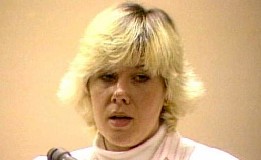 Catherine May Wood
Murderer · USA · 1987
Catherine May Wood was an American caregiver who worked at the Alpine Manor Nur…
5 victims
Catherine May Wood
Murderer · USA · 1987
Catherine May Wood was an American caregiver who worked at the Alpine Manor Nur…
5 victims
 Amy Bishop
Murderer · USA · 1986
Amy Bishop — biology professor and perpetrator · James Anderson — Bishop’s husb…
4 victims
Amy Bishop
Murderer · USA · 1986
Amy Bishop — biology professor and perpetrator · James Anderson — Bishop’s husb…
4 victims
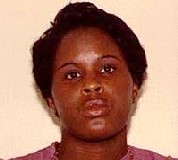 Debra Sue Tuggle
Murderer · USA · 1974
Debra Sue Tuggle was an African American woman born in Arkansas. She had a hist…
4 victims
Debra Sue Tuggle
Murderer · USA · 1974
Debra Sue Tuggle was an African American woman born in Arkansas. She had a hist…
4 victims
 Qiu Xinghua
Mass murderer · China · 2006
Qiu Xinghua (邱兴华) was executed by shot in the head on December 28, 2006. · July…
11 victims
Qiu Xinghua
Mass murderer · China · 2006
Qiu Xinghua (邱兴华) was executed by shot in the head on December 28, 2006. · July…
11 victims
 Timothy Stemple
Murderer · USA · 1996
Timothy Shaun Stemple was convicted by jury of first degree malic murder (count…
1 victim
Timothy Stemple
Murderer · USA · 1996
Timothy Shaun Stemple was convicted by jury of first degree malic murder (count…
1 victim
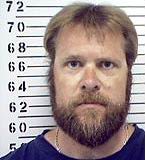 Jason Wayne Rose
Murderer · USA · 1988
Jason Wayne Rose was a state prisoner who appealed the denial of his 28 U.S.C.…
1 victim
Jason Wayne Rose
Murderer · USA · 1988
Jason Wayne Rose was a state prisoner who appealed the denial of his 28 U.S.C.…
1 victim
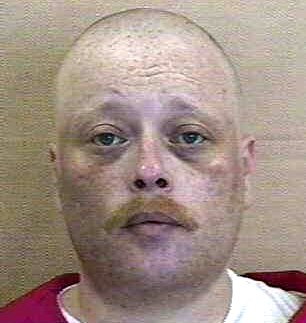 Bobby Lee Harris
Murderer · USA · 1991
Bobby Lee Harris was convicted in North Carolina and received a death sentence…
1 victim
Bobby Lee Harris
Murderer · USA · 1991
Bobby Lee Harris was convicted in North Carolina and received a death sentence…
1 victim
 Robert Leach
Murderer · USA · 1999
Robert L. Leach, Jr. was convicted in a capital case of two counts of first deg…
2 victims
Robert Leach
Murderer · USA · 1999
Robert L. Leach, Jr. was convicted in a capital case of two counts of first deg…
2 victims
 Omer Ninham
Homicide · USA · 1998
Omer Ninham was sentenced to life in prison without the possibility of parole o…
1 victim
Omer Ninham
Homicide · USA · 1998
Omer Ninham was sentenced to life in prison without the possibility of parole o…
1 victim
- Gender
- female
- Country
- USA
- Location
- Fayetteville, Onondaga County, New York, USA
- Date of birth
- 1938
- Age at first offence
- 45
- Characteristics
- —
- Victim profile
- James Pipines, 58 (her employer and lover)
- Method of murder
- Shooting ( .38 Derringer pistol)
- Date(s) of murder
- February 24, 1983
- Years active
- 1983
- Date of arrest
- —
- Status
-
Released
Released on February 12, 2008
Case record: Cynthia Pugh
Background
Cynthia Pugh was convicted in 1984 of murdering her boss and lover, Manlius businessman James Pipines. During the parole process, Cynthia Pugh maintained her innocence.
The offence
James Pipines was shot while lying in bed in his home in Fayetteville. The bullet entered behind his right ear and emerged in front of his left ear. The spent bullet was caught in James Pipines’s cupped left hand and fell to the ground when the body was moved a few inches by the police.
Cynthia Pugh was convicted of murder in the second degree for the February 24, 1983 shooting death of James Pipines.
Investigation
A number of evidence points and discrepancies were discussed at trial and on appeal.
A .38 Derringer pistol belonging to Cynthia Pugh’s common-law husband was the murder weapon. Ballistics established that the bullet was fired from that pistol. The pistol was found on March 5 in a grassy area of the Fayetteville Mall.
The Pipines residence had an elaborate alarm system that was not triggered. There were no signs of a break-in or forced entry, and nothing was disturbed or taken.
Arrest
Cynthia Pugh was questioned by police for nearly 12 hours on the day of the murder. She denied that she and James Pipines were lovers.
Trial
After Cynthia Pugh’s first trial ended in a hung jury, a second trial was held in which 62 witnesses testified and 96 exhibits were received, along with extensive hearings on posttrial motions to set aside the verdict.
Defendant’s account of the day of the murder
Cynthia Pugh claimed that on the night preceding the day of the murder she went bowling and returned home at approximately midnight. Her daughter, Kelly, and Michelle Alling were asleep in Kelly’s bedroom. Her son Gary was asleep on the living room couch and the television was on. She turned off the television and went upstairs to bed. Awakened during the night by the family dogs, she arose, put her coat over her night clothes, went downstairs, and let the dogs out. After a few minutes, she let the dogs in and returned to bed.
She arose the next morning at approximately 7:30, showered and washed her hair, went to the basement, turned on the clothes dryer for a few moments, removed a load of clothes from the dryer, folded them, and placed a load of clothes from the washer into the dryer. She went upstairs to dress, went into her daughter’s room to borrow shoes, and left for work at approximately 8:30. She drove toward Central City Roofing, then stopped en route for a morning newspaper. She then went to Denny’s restaurant about one-half mile from Central City Roofing. She arrived at Denny’s at about 9:00 A.M. and entered the table area of the restaurant, ordering juice, eggs, ham, home fries, and coffee, and was served by a chunky woman in her mid-forties.
She arrived at her office at approximately 10:30. The decedent was president of Central City Roofing. It was adduced at trial that he normally came to work at 10:00–10:30 A.M. When he had not appeared at the office by noon, Cynthia Pugh testified she became concerned and inquired about him. A fellow employee said he talked to Pipines at approximately 7:30 that morning.
Shortly after 2:00 P.M., Cynthia Pugh called Pluto Poulios, Pipines’s partner in Rochester, and told him she had not heard from the victim and that she was going to contact the corporation’s lawyer, William Mackay. When she called Mackay’s office, she was informed Mackay was on vacation. Sometime thereafter, she called Poulios again and he directed her to go to Pipines’s home.
Cynthia Pugh left her office at about 3:30 and proceeded to the Pipines residence. Approaching a side entrance near the garage, she knocked on the door and rang the doorbell. Receiving no answer, she went to the main entrance and rang that bell and knocked on windows. When she started to leave, she noticed the victim’s Mercedes was parked in a circular driveway to the right of the entrance drive. She also noticed a station wagon belonging to Billy Pipines, the victim’s son, was in the drive. She went back to the house and once more rang the doorbell and knocked on the door.
She opened the storm door on the entrance near the garage and when she tried the inner door, it opened. She proceeded through the house calling Pipines’s name. As she approached the master bedroom, she saw the victim lying on the bed with his back to her and thought he was asleep. She climbed on the bed behind him and attempted to turn him over by pulling on his shoulder. When she was unable to move him, she went to the other side of the bed where she was facing him and tried to push him, touching his neck to check for a pulse. She noticed his neck was warm. She then put her head down next to his and could see blood and what appeared to be vomit around his mouth and his tongue was swollen.
She left the house and drove to the Fayetteville Mall where she used a pay phone to call Poulios. After she informed him that Pipines was dead, he told her to return to the house and call the police. After calling the police from the Pipines residence, she went to the garage, opened the door, and awaited the police in the garage.
Cynthia Pugh testified in her second trial: “I got out, and I knocked on the door next to the garage, rang the bell.” “I went to the front door. I rang the doorbell several times.” “I put my hand on the knob of the inside door next to the garage and touched it.” “The door just gave way, and I went into the house.” “Mr. Pipines was lying in bed, facing away from the doorway,” “I called to him; I walked over to the bed.” “I walked around to the other side of the bed,” “His one hand was up in front of his face. I pushed on his shoulder, and as I looked down I could see blood.” “She told the court that she fled the house in search of a telephone, ending up at the Fayetteville Mall.”
Trial evidence and disputed points
Murder weapon
The victim was killed by a bullet which entered behind his right ear and emerged in front of his left ear. The spent bullet was caught in his cupped left hand and fell from his hand when the body was moved a few inches by the police. It was later established the bullet was fired from a .38 Derringer pistol belonging to Cynthia Pugh’s common-law husband, found March 5 in a grassy area of the Fayetteville Mall.
The flaws in Cynthia Pugh’s story
(1) Discovery of the body
Cynthia Pugh’s first story to police was that when she discovered the body, she attempted to give him mouth-to-mouth resuscitation; she later recanted. She was unable to make significant changes to her account of getting on the bed behind the decedent and trying to turn him over by pulling on his shoulder, then going around to the front and attempting to push him backward.
In trial testimony, she conceded she knew the victim was dead but said she thought he might have suffered a stroke. The trial court record recounted that examination of pictures showed the condition of the head and the substantial amount of blood on the sheet could not have failed to be recognized immediately. The prosecutor suggested in cross-examination and on summation that Cynthia Pugh’s account of finding the body was based on how he appeared when she left him that morning after shooting him.
The medical examiner testified that after the fatal shot was fired, the victim did not die instantly. The record described comatose continuation of bleeding and brain tissue oozing out of the puncture.
Cynthia Pugh attempted to account for her failure to see what was there by stating it was dark in the bedroom. Police officers testified that sunlight was streaming into the room through the adjacent conservatory, and that there was sufficient light to read. The police officer who first approached the body moved it only a few inches, dislodging the spent bullet caught in the victim’s cupped left hand. The appellate record described it as obvious that if she had pulled and pushed the body as she described, the bullet would have fallen from his hand.
The medical examiner’s testimony rebutted Cynthia Pugh’s statement that the body was warm: full rigor mortis had set in by the time the body was removed at 12:05 A.M. the following day, indicating the victim had been dead since at least noon.
The jury found the story unbelievable, with the conviction described as hinging on her credibility. The record also recounted the “jury obviously found her story unbelievable.”
The record discussed additional discrepancies in the account of the afternoon. Cynthia Pugh testified that Poulios called her twice at the office; on the first call they expressed concern over the decedent, and she told Poulios she might call Mackay’s office. She said Mackay was on vacation. The appellate record stated this version was rebutted by Poulios and telephone records, indicating Poulios called her only once at 2:11 P.M. and told her to go to the Pipines residence. The record described this as meaning she waited well over an hour before going to Pipines’s home.
The appellate record also described Mackay’s secretary testifying that Cynthia Pugh called the office on Wednesday, the day preceding the murder, and was told Mackay was on vacation.
The appellate record described another discrepancy: she testified that she approached the Pipines residence that afternoon, parked in the drive, then went to both doors, ringing bells and banging on doors and windows. Receiving no answer, she got into her car and started to leave but noticed decedent’s car parked in the circular drive as she drove out. Pictures of the residence and driveway illustrated that the Mercedes would be “perfectly obvious to anyone driving into the driveway and going to the doors.” The appellate record stated she could not have failed to see the car when she first drove in.
(2) Defendant’s alibi
The appellate record described that the period between 7:30 A.M. and 10:30 A.M. was critical. It stated that it was determined the victim spoke to an employee at 7:30 that morning and that Cynthia Pugh arrived at work at 10:30.
Cynthia Pugh testified she arose at about 7:30, left the house at 8:30 or 8:45, picked up a newspaper, and drove to Denny’s for breakfast. Michelle Alling testified she awoke at approximately 5:00 or 5:30 that morning, saw Cynthia Pugh with a coat and long garment, heard her go downstairs and heard the door open and close. When Michelle arose at 7:30 to let the family dogs out, she did not see Cynthia Pugh’s car in the driveway nor hear or see her in the house.
The appellate record stated Cynthia Pugh’s son awakened at approximately 7:30, looked in his mother’s bedroom, did not see her, left at 7:45, did not see her car in the driveway, and specifically looked for it.
The appellate record described that coworkers testified Cynthia Pugh customarily arrived at work between 8:00 and 8:30. Yet on this day, she left at 8:30 or 8:45 and went to Denny’s for breakfast, something she admitted she had never done before, and stayed for over an hour reading the paper.
She described the server as a mid-forties chunky woman with dark hair. The appellate record stated the only woman fitting that description working there was working at the counter, not in the table area where Cynthia Pugh testified she sat, and the description also stated that woman did not have a check reflecting the food Cynthia Pugh said she ordered.
The appellate record stated that when questioned by police on the night of the murder, Cynthia Pugh did not describe her trip to Denny’s and stated she had arrived late for work because she had bowled the night before.
(3) Evidence that Cynthia Pugh was with the victim on the morning of his death
The appellate record described Cynthia Pugh’s testimony that the decedent delayed his return from Florida until the week of February 20. It stated that she and decedent spent Monday night together and that they were unable to be together on Tuesday night because Cynthia Pugh’s husband returned briefly, then left again on Wednesday. It also stated that she testified she was unable to be with decedent on Wednesday night because she could not get a substitute for her bowling team and contended she spoke with him for the last time on Wednesday evening.
The appellate record stated Pipines was last heard from at approximately 7:30 A.M. on Thursday when he called his office to reach James Buck, an employee supposed to replace locks that morning. The record stated he was going to tell him not to come but was unable to contact him.
When Buck arrived at approximately 8:45 A.M., the appellate record stated he observed the victim’s Mercedes parked in the circular driveway and found a note on the door telling him to return the next day. It also described testimony that Cynthia Pugh had been at the house on numerous occasions, was aware of the security system, and had a key to a recently installed deadbolt lock.
The appellate record stated the record lent credence to the prosecutor’s theory that Cynthia spent at least a portion of the night and/or morning with the victim. It also noted that the victim was shot in the nude, apparently while sleeping.
Evidence of motive
The appellate record stated that Cynthia Pugh had drawn checks on a corporate account in large amounts payable to “petty cash” and had deposited corresponding amounts in her personal account. It stated she admitted accumulating approximately $10,000 in cash kept in the false bottom of a drawer in her bedroom. The record stated the jury could reasonably infer she had been stealing from Central City Roofing.
The appellate record stated that Pluto Poulios testified that he and decedent discussed replacing Cynthia’s assistant in the accounting department, Frank Pfau, with Douglas Lowden because Pfau was never able to “get close to the records” which were under Cynthia’s control. It stated that Poulios testified the decedent hoped Lowden would be more successful in getting “closer to the books” and would eventually replace Cynthia as head of the accounting department.
The appellate record stated that Pipines had dinner with Lowden the evening before he was killed.
It also stated that although Cynthia claimed the decedent loved her and was going to leave his wife and asked her to marry him, there was contradictory proof. The appellate record stated that the decedent told a close friend that he enjoyed being with his wife and family in Florida and that it was becoming increasingly difficult for him to return to Syracuse, and he was looking forward to celebrating his wedding anniversary with his wife in Florida. The record stated there was sufficient evidence to infer Cynthia had a motive to kill James Pipines who, after a relationship of 12 years, was attempting to ease her out of personal and business affairs.
Murder weapon defense theory and timeline disputes
The appellate record recounted that Cynthia Pugh testified that on Wednesday, February 16, decedent called her from Florida during the day and told her to be home that night to receive an important phone call. She testified that in order to receive the call, she obtained a substitute for her bowling team.
She testified that when he called, decedent told her he had had an argument with his wife, was going to leave, begged her to take her daughter and go with him to Key West, and indicated he was staying an extra week in Florida so he could be alone in his home the following week. She testified they discussed an attempted break-in at his Fayetteville home that day, and she said he was concerned about the break-in and did not want to stay alone without a gun. She testified he asked her to get a gun from her husband’s gun cabinet and take it with her when she picked him up at the airport on Sunday. She testified she took the Derringer from the locked gun cabinet, taking two each of two different types of bullets, put them in a cosmetic bag, and put the bag in her purse.
The appellate record stated that the attempted break-in of Pipines’s residence occurred on February 17, not February 16. It stated that the lengthy conversation on February 16 could not have concerned the break-in as the reason for requesting the gun. The appellate record also stated that telephone records established a lengthy call from Florida to Cynthia’s residence on February 16 but reflected only one call to Central City Roofing that day, and it was after Cynthia stated she left the office, so it described that decedent could not have told her to be home for the call after she left for work.
The appellate record stated that Cynthia insisted the phone call on the 16th concerned the break-in but later conceded it must have occurred on February 18. It also stated that the victim was a hunter with guns of his own.
The appellate record described the defense theory as that “gangland executioners” went into the victim’s house and killed him with the gun and disposed of it in the place where it was later found.
Alleged withholding of exculpatory material and Brady issue
Three days after the jury verdict, defense counsel learned that Patricia Kolbasook, a woman who did cleaning work in residences in decedent’s neighborhood, had seen three men in a late model Lincoln driving out of decedent’s driveway at approximately 9:15 on the morning of the murder, and she provided an affidavit at the Manlius police station.
Defense counsel moved to set aside the verdict on the ground that the People improperly withheld exculpatory evidence entitled under Brady v Maryland and/or that newly discovered evidence entitled her to a new trial.
The court denied both prongs, and Cynthia Pugh challenged that determination on appeal.
The appellate record included discussion of Brady v Maryland and United States v Agurs and the standards for materiality and newly discovered evidence, concluding that the omitted evidence did not meet the test of materiality and did not warrant reversal.
Jury selection issue
In a newspaper account appearing the day after the verdict, a woman juror was quoted as having said: “Shanahan (defense counsel) never would have kept her as a juror had he been able to read her mind during the jury selection process. She said she originally thought Pugh was guilty.”
Cynthia Pugh moved to set aside the verdict on that basis (CPL 330.30[2]). A hearing was held with all women jurors called. One admitted it was she who spoke to the reporter and that she had told her she held a pretrial opinion defendant was in fact guilty. The court found no conflict between that statement and her voir dire testimony. On appeal, the court described that the trial court indicated it would ask prospective jurors if they held an opinion regarding guilt or innocence without asking them what the opinion was. It stated counsel had not objected and that questioning followed that line.
Sentencing
After 50 hours of deliberation, the jury convicted Cynthia Pugh of murder. When the foreman read the verdict, she fainted and slid from her chair underneath the defense table. She was removed from the courthouse under guard and taken to a local hospital, then transported to jail to await sentencing.
At the sentencing hearing, Cynthia Pugh told the judge: “I can’t show any guilt or remorse.” “I did not kill Jim Pipines.”
The judge handed down a 20-year-to-life sentence.
Appeals
Cynthia Pugh appealed seeking reversal of the judgment of conviction and dismissal of the indictment or, in the alternative, a new trial.
She claimed:
- the evidence of her guilt was legally insufficient;
- the court erred in denying a motion to set aside the verdict for failure to provide Brady material;
- the court erred on the ground that a juror gave false answers concealing a preexisting bias;
- prosecutorial misconduct compelled reversal;
- the court erred in prohibiting her from introducing certain proof.
The appellate court reviewed the grounds and found that none required reversal, stating that there was sufficient proof of her guilt and no errors requiring reversal. The judgment of conviction was affirmed unanimously. The appellate decision cited People v Pugh, 107 A.D.2d 521 (1985), Appellate Division of the Supreme Court of the State of New York, Fourth Department, with concurrence by DOERR, BOOMER, and SCHNEPP, JJ.
Outcome
Cynthia Pugh was sentenced to 20 years to life in prison in 1984.
In January, she was granted parole. She was released on February 12, 2008. Central New York woman Cynthia Pugh was free after 24 years in state prison.
A parole board decision and later recission were also described:
- A parole decision was granted after her first appearance before the New York State Board of Paroles.
- A month later, the Parole Board reversed its decision and told Cynthia Pugh she would be staying behind bars.
- Cynthia Pugh took her fight for parole all the way to the appellate court, where she was denied.
- In January 2006, the Parole Board rejected her second bid for parole and she would be eligible in 2008.
- After word she was finally returning to her home outside Syracuse, NY, the Pipines family and William Fitzpatrick, the man who prosecuted Cynthia Pugh in 1983, protested because they had not been advised she was up for parole, leading to a parole board recission hearing and reversal.
Cynthia Pugh maintained her innocence “all along” while serving her 20-year term for killing James Pipines.
The Onondaga County District Attorney Bill Fitzpatrick disagreed with the parole board’s decision, stating: “The fact that she has not, the fact that she has told three or four different stories to the parole board should have been taken into account and it was taken into account by at least one parole board member. The bottom line is the law was followed the system ran its course, she is released and I have to accept that.”
Aftermath
Cynthia Pugh was described as being released on February 14, 2008, with Syracuse, N.Y. included in the release narrative.
Tom Pipines described the parole saga as “It’s been utter hell,” and: “You’re living the murder and reliving it and reliving it a third time…The only thing you can do is get down on your knees and pray that you can have the strength and courage to go through it.”
Cynthia Pugh wrote an op-ed from prison that said: “If you have political/wealthy connections — or in this case, both — you can do anything you please,” she wrote in a Herald-Journal op-ed piece. “Even destroy people’s lives.”
Peter Pipines told the Herald-Journal: “My brother was in the Marine Corps for four years. He taught me how to hunt,” Peter Pipines told The Herald-Journal. “There was no way he would take a little .38 Derringer for protection when he had shotguns in the basement. And if he was threatened, why didn’t he have the alarm system on that morning.”
Cynthia Pugh’s sister Anne asked: “How could they do this to her?” Cynthia’s sister, Anne, asked after her sister was convicted. “She would never hurt anyone.”
Cynthia Pugh’s credibility was described as being central, including the quoted juror: “Her credibility went down the drain,” a juror said. “That’s what we based in all on. There were too many discrepencies in her questioning, her testimony.”
A juror’s deliberation vote at the first trial was described as: “11 jurors from her first trial voted for acquittal.”

Spotted an error, or have more information about this case?