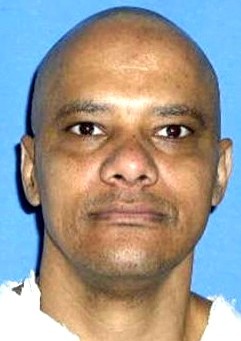
Herbert Lee Richardson
Murderer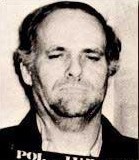 Ervil LeBaron
Murderer · USA · 1972
Ervil Morrell LeBaron (1925 to August 16, 1981) was the leader of a polygamous…
35 victims
Ervil LeBaron
Murderer · USA · 1972
Ervil Morrell LeBaron (1925 to August 16, 1981) was the leader of a polygamous…
35 victims
 Brian Kevin Rosenfeld
Murderer · USA · 1985
Brian Kevin Rosenfeld Brian Kevin Rosenfeld was sentenced to three concurrent l…
23 victims
Brian Kevin Rosenfeld
Murderer · USA · 1985
Brian Kevin Rosenfeld Brian Kevin Rosenfeld was sentenced to three concurrent l…
23 victims
 Marvin Gray
Murderer · USA · 1975
Marvin Gray was convicted killer who claimed responsibility for 23 slayings and…
23 victims
Marvin Gray
Murderer · USA · 1975
Marvin Gray was convicted killer who claimed responsibility for 23 slayings and…
23 victims
 Yahweh ben Yahweh
Murderer · USA · 1980
Yahweh ben Yahweh was born and legally named Hulon Mitchell Jr. (October 27, 19…
23 victims
Yahweh ben Yahweh
Murderer · USA · 1980
Yahweh ben Yahweh was born and legally named Hulon Mitchell Jr. (October 27, 19…
23 victims
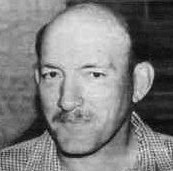 Patrick Henry Sherrill
Mass murderer · USA · 1986
Patrick Henry Sherrill Patrick Henry Sherrill committed suicide by shooting him…
14 victims
Patrick Henry Sherrill
Mass murderer · USA · 1986
Patrick Henry Sherrill Patrick Henry Sherrill committed suicide by shooting him…
14 victims
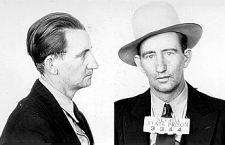 Ray Elmer Miller
Murderer · USA · 1932
Ray Elmer Miller was a native of Nebraska and was 34 years old. He worked as a…
1 victim
Ray Elmer Miller
Murderer · USA · 1932
Ray Elmer Miller was a native of Nebraska and was 34 years old. He worked as a…
1 victim
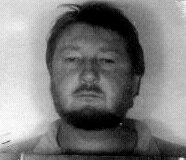 Larry Gene Bell
Murderer · USA
Larry Gene Bell (1948 – October 4, 1996) was awaiting execution in South Caroli…
3 victims
Larry Gene Bell
Murderer · USA
Larry Gene Bell (1948 – October 4, 1996) was awaiting execution in South Caroli…
3 victims
 Kimberly Emelyantsev
Murderer · USA · 2008
Kimberly Emelyantsev was a Tooele mother who admitted to killing her 14-month-o…
1 victim
Kimberly Emelyantsev
Murderer · USA · 2008
Kimberly Emelyantsev was a Tooele mother who admitted to killing her 14-month-o…
1 victim
- Gender
- male
- Country
- USA
- Location
- Houston County, Alabama, USA
- Date of birth
- February 16, 1946
- Age at first offence
- 31
- Characteristics
- revenge
- Victim profile
- Rena Mae Callins (female, 11)
- Method of murder
- Pipe bomb
- Date(s) of murder
- August 16, 1977
- Years active
- 1977
- Date of arrest
- —
- Status
-
Executed
Executed by electrocution in Alabama on August 18, 1989
Case record: Herbert Lee Richardson
Identity
Herbert Lee Richardson was executed by electrocution in Alabama on August 18, 1989.
Timeline
- August 16, 1977 — A bomb exploded on the front porch of Doris Wyms' home in Dothan, Alabama, killing Rena Mae Collins.
- May 1977 — Doris Wyms ended a relationship with Richardson.
- August 15, 1977 — Doris Wyms received a threatening note from Richardson.
- June 12, 1989 — The Supreme Court denied Richardson's petition for writ of certiorari.
- August 8, 1989 — Richardson filed a motion for stay of execution in the Alabama Supreme Court.
- August 10, 1989 — Richardson filed a motion for post-conviction relief under Ala.Temp.R.Crim.P. 20 in the Circuit Court of Houston County, Alabama.
- August 12, 1989 — The circuit judge held a hearing on Richardson's Ala.Temp.R.Crim.P. 20 motion.
- August 13, 1989 — The circuit court denied Richardson's motion for post-conviction relief.
- August 15, 1989 — The Alabama Supreme Court denied Richardson's petition for a stay of execution.
- August 17, 1989 — The United States Court of Appeals, Eleventh Circuit denied a certificate of probable cause to appeal and denied a motion for stay of execution.
- August 18, 1989 — Richardson was executed at Holman Prison; he was pronounced dead at 12:14 A.M., central daylight time.
The offence
At about 6:00 A.M. on August 16, 1977, a bomb exploded on the front porch of Doris Wyms' home in Dothan, Alabama, killing Rena Mae Collins.
- Rena Mae Collins was described as a child of ten and Wyms' niece.
- The only witness to the explosion was a twelve-year-old friend of the decedent, who testified that the two girls had come out to the porch that morning and had seen what looked like a drink can in a plastic bag.
- The device detonated when the decedent pulled her arm back as she prepared to throw the object away.
The evidence clearly reflected that Richardson was responsible for the bombing.
Harassment and threats before the bombing
Wyms had ended a relationship with Richardson in May 1977, but he continued to harass and threaten her and her family.
- One week before Rena Mae was killed, Richardson threw an object from his car into Wyms' yard where it exploded on the ground.
- On August 15, 1977, Wyms received a threatening note from Richardson.
- Rena Mae's brother testified that early on the morning of August 16th, he saw Richardson watching Wyms' house.
Bomb-making evidence and related items
Richardson had been employed as an electrician. A week before the explosion at issue, he told two co-workers that he had made a bomb and set it off in a field. A search of his car and his home revealed materials necessary for making bombs, including the one that killed the child.
- A number of the items recovered during the searches matched fragments of the bomb found at Wyms' house.
- Police found a library book entitled "Explosives and Bomb Disposal Guide" at Richardson's residence.
At trial, Richardson offered evidence of an alibi and claimed that someone else had committed the act.
How Richardson explained the device
Richardson argued that the device was not meant to explode, but only to frighten the girl's family because her aunt had broken off a romance with him.
In later federal habeas testimony (January 1988), Richardson testified that he had constructed and placed the bomb that killed the child, and he stated that the bomb was not meant to explode, but was just a stink bomb. He also testified at trial that he had neither made a bomb nor put one on the porch.
Conviction and sentencing history in state court
Richardson was convicted by a jury of capital murder and sentenced to death in 1978.
The Alabama Court of Criminal Appeals found the sentence defective because the sentencing judge had failed to enter written findings, and remanded for resentencing (376 So.2d 205 (Ala.Crim.App.1978)).
On resentencing:
- The trial court again imposed a sentence of death.
- The Alabama Supreme Court affirmed (376 So.2d 228 (Ala.1979)).
Richardson filed a first coram nobis petition in 1982, which was denied (419 So.2d 289 (Ala.Crim.App.1982), cert. denied, No. 81-937 (Ala.1982), cert. denied, 460 U.S. 1017, 103 S.Ct. 1262, 75 L.Ed.2d 488 (1983)).
Execution scheduling and stays:
- Richardson was scheduled for execution on October 25, 1985.
- The Supreme Court of Alabama entered a stay of execution on October 23, 1985.
Second coram nobis: After an evidentiary hearing on Richardson's ineffective assistance of counsel claim, a state circuit court judge denied Richardson's second petition for a writ of coram nobis filed on October 17, 1985.
- The Court of Criminal Appeals affirmed.
- The Alabama Supreme Court denied certiorari.
Sentencing determinations and aggravating and mitigating circumstances
After the jury returned a verdict of guilt, the trial judge conducted a sentencing hearing pursuant to Ala.Code Sec. 13-11-3 (1975).
A presentence report revealed that Richardson had two prior convictions in North Carolina for assaults on women.
- The court found that these convictions negated the mitigating circumstance urged by Richardson of "no significant history of prior criminal activity" (Ala.Code Sec. 13-11-7(1) (1975)).
- Finding no mitigating circumstances and two aggravating circumstances, the court accepted the jury's recommendation of the death penalty.
The two aggravating circumstances were:
- "knowingly creating a great risk of death to many persons"
- the felony was "especially heinous, atrocious and cruel"
Richardson now claimed that the jury's death verdict and the sentencing judge's considerations violated constitutional requirements, and that his sentencing included errors related to jury instructions and certain convictions.
Appellate and habeas proceedings (federal)
Herbert Lee Richardson v. Willie Johnson; Fred Smith (Eleventh Circuit)
Case caption included: Herbert Lee Richardson, Petitioner-Appellant, v. Willie Johnson, Warden, Holman Unit, and Fred Smith, Commissioner, Alabama Department of Corrections, Respondents-Appellees. No. 88-7201. United States Court of Appeals, Eleventh Circuit. Jan. 17, 1989. As Modified on Denial of Rehearing Feb. 27, 1989. Appeal from the United States District Court for the Middle District of Alabama.
The Eleventh Circuit panel was KRAVITCH, JOHNSON and CLARK, Circuit Judges. The disposition stated: "PER CURIAM: Herbert Lee Richardson appeals the district court's denial of his petition for habeas corpus under 28 U.S.C.A. Sec. 2254. Concluding that he is not entitled to relief, we affirm the district court."
Richardson appealed the denial of federal habeas relief and raised claims including: (i) the trial judge was constitutionally required to give a lesser included offense instruction to the jury; (ii) jury instructions on intent and malice violated due process; (iii) the trial judge improperly considered the jury's death verdict as a factor in imposing the death sentence; (iv) the use of uncounseled misdemeanor convictions by the trial judge in assessing potential mitigating factors at sentencing violated his Eighth Amendment rights; (v) he was denied effective assistance of counsel because of counsel's failure to object to the sentencing judge's consideration of the uncounseled convictions; and (vi) the "especially heinous, atrocious or cruel" aggravating factor was applied by the sentencing judge without a narrowing construction, rendering it unconstitutionally vague under the Eighth Amendment.
The court addressed each claim and concluded that Richardson was not entitled to relief, affirming the district court's denial of the habeas petition.
Key quoted language from the Eleventh Circuit opinion included:
"beyond the bounds of reason to believe that a device which maimed and killed an 11-year-old child by exploding in her hands could be thought of as not presenting a serious risk of harm."
The opinion included discussion of:
- the Hopper and Beck framework for lesser included offense instructions
- procedural default of Sandstrom and Winship claims related to jury instructions
- Baldwin v. Alabama concerning whether the judge considered the jury's verdict as a factor
- use of allegedly uncounseled misdemeanor convictions and ineffective assistance standards under Strickland
- procedural default related to the Maynard-type challenge to "especially heinous, atrocious or cruel"
The opinion stated, at the conclusion:
"We AFFIRM the district court's denial of Richardson's petition."
Another Eleventh Circuit case on stays and probable cause (scheduled execution)
Case caption included: 883 F.2d 895 Morris THIGPEN, Commissioner, Alabama Department of Corrections, Respondent-Appellee. No. 89-7604. Aug. 17, 1989.
The panel was KRAVITCH, JOHNSON and CLARK, Circuit Judges. It stated that Richardson was scheduled to be executed in Alabama at 12:01 A.M. on Friday, August 18, 1989.
The Eleventh Circuit disposition included:
- denial of his application for certificate of probable cause and denial of a motion for stay of execution
- grant of his motion for leave to proceed in forma pauperis
The court discussed Richardson's second petition for habeas corpus and concluded he failed to make a substantial showing that he was denied a federal right.
Last statement and execution details
Richardson was blindfolded and strapped in the electric chair at Holman Prison. Warden Charlie Jones read the death warrant. Richardson received a surge of 1,800 volts of electricity. He was pronounced dead at 12:14 A.M., central daylight time.
Richardson made a final statement:
"I have no ill feeling and hold nothing against anyone."
Alabama Prison Commissioner Morris Thigpen stated Richardson requested that he be blindfolded from the time he left the holding cell adjacent to the execution room at 11:57 P.M. Thigpen also said:
"He never saw the execution chamber."
Margie Collins, the mother of the victim, said:
"I can't rest until he gets the chair."
In Montgomery, Lucia Penland of the Alabama Prison Project stated: Richardson "was what most of us would call an all-around American boy with a bright fugure before he went to Vietnam."
Clemency and related events
Richardson sought clemency from Gov. Guy Hunt. In his clemency plea, Richardson described writing to a church after listening to broadcasts of its services.
As a result of the letter, Richardson met Debbie Herbert. On Aug. 9, the two were married in a prison ceremony. The governor rejected the clemency plea.
Richardson's wife, Katie, and some of her family and a minister visited him Thursday until about 10:30 P.M. The Richardsons were married in the prison's visiting room on Aug. 9.
Richardson met his wife, a member of the El Bethel Primitive Baptist Church, three years before the execution after he wrote the church saying that he listened to its radio broadcasts.
Trial issues referenced in the Eleventh Circuit opinion
The Eleventh Circuit opinion discussed evidence and intent regarding the bomb:
- The state characterized the bomb as an "anti-personal" device meant to be triggered by the movement of the intended victim.
- Although the actual switching device that detonated the bomb was not found in the debris, Richardson had an empty box of such switches at his house.
- Cardboard "spacers" found at Richardson's house and a spring found in the debris suggested the bomb maker carefully constructed the bomb with safety devices to ensure transporting and placing would not cause accidental detonation.
- The movement of the victim reported by the young girl who witnessed the explosion was consistent with the motion necessary to cause such bombs to explode.
The opinion stated that there was insufficient evidence presented at trial upon which a conviction of a lesser included offense could have been based, because convicting under the lesser offense would have required the jury to disbelieve evidence that Richardson intended to kill when he planted the bomb.
Procedure in the final days of litigation (scheduled execution)
After the Supreme Court denied Richardson's petition for writ of certiorari on June 12, 1989, the State of Alabama scheduled Richardson's execution for August 18, 1989.
On August 8, 1989, Richardson filed a motion for stay of execution in the Alabama Supreme Court. On August 10, 1989, he filed a motion for post-conviction relief under Ala.Temp.R.Crim.P. The circuit court denied his motion on Sunday, August 13, 1989. The Alabama Supreme Court denied his petition for a stay of execution on Tuesday, August 15, 1989. On that day, Richardson filed his petition for habeas corpus in federal district court.
Psychiatry and PTSD references
Richardson was diagnosed as suffering from PTSD as a result of his service in the Vietnam War. The courts addressed claims that he had been unfairly denied a psychologist to determine whether he was suffering from post-traumatic stress disorder as a result of his service in Vietnam.
A psychiatrist found that his mental condition "impacted Mr Richardson’s functioning significantly and played a contributing role" in the murder for which he was sentenced to death.
His lawyer, Bryan Stevenson, said Richardson served three years in Vietnam as a technic i an "in a forward area."
Lucia Penland described him as an "all-around American boy" before he went to Vietnam and stated he was left emotionally disturbed by his Vietnam War experience.
Other details and quotations preserved from the narrative
The New York Times reported that Richardson was executed early today in Alabama for the 1977 pipe-bomb killing of an 11-year-old girl. The narrative described the execution as carried out after the Supreme Court refused Richardson's request for a stay, as had the United States Court of Appeals for the 11th Circuit and Federal District Judge Robert Varner.
It also described Warden Charlie Jones reading the death warrant and stated that Margie Collins, the girl's mother, said:
The narrative included a statement attributed to Lucia Penland:
The narrative included a quote attributed to Alabama Prison Commissioner Morris Thigpen:
Spotted an error, or have more information about this case?