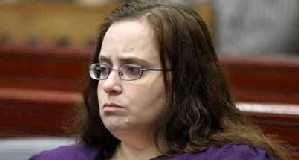
Carolyn Riley
Murderer Miranda Barbour
Murderer · USA · 2013
Miranda Barbour, 19, defendant. · Elytte Barbour, 22, defendant and husband of…
100 victims
Miranda Barbour
Murderer · USA · 2013
Miranda Barbour, 19, defendant. · Elytte Barbour, 22, defendant and husband of…
100 victims
 Megan Huntsman
Murderer · USA · 1996
Megan Huntsman was 40 at sentencing. She was a mother of three children who wer…
6 victims
Megan Huntsman
Murderer · USA · 1996
Megan Huntsman was 40 at sentencing. She was a mother of three children who wer…
6 victims
 Michele Kalina
Murderer · USA · 1996
Michele Kalina pleaded guilty to murder for one of five infants she initially w…
5 victims
Michele Kalina
Murderer · USA · 1996
Michele Kalina pleaded guilty to murder for one of five infants she initially w…
5 victims
 Tiffany Hall
Murderer · USA · 2006
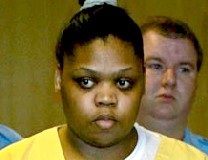
Tiffany Hall was 24 when she was charged in September 2006. She later entered a…
5 victims
Tiffany Hall
Murderer · USA · 2006
Tiffany Hall was 24 when she was charged in September 2006. She later entered a…
5 victims
 Banita Jacks
Murderer · USA · 2007
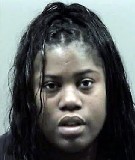
Banita Jacks was a Washington, DC resident convicted of murdering her four daug…
4 victims
Banita Jacks
Murderer · USA · 2007
Banita Jacks was a Washington, DC resident convicted of murdering her four daug…
4 victims
 Holly Grigsby
Murderer · USA · 2011
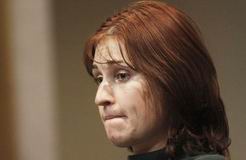
Holly Grigsby was sentenced to life in prison without parole on July 15, 2014.…
4 victims
Holly Grigsby
Murderer · USA · 2011
Holly Grigsby was sentenced to life in prison without parole on July 15, 2014.…
4 victims
 Carzell Moore
Murderer · USA · 1976
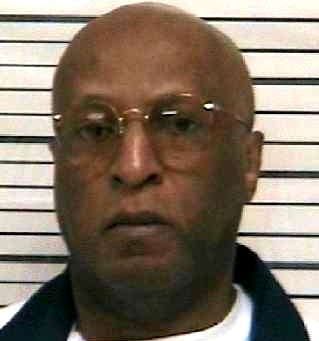
Carzell Moore was tried in the Superior Court of Monroe County, Georgia, for th…
1 victim
Carzell Moore
Murderer · USA · 1976
Carzell Moore was tried in the Superior Court of Monroe County, Georgia, for th…
1 victim
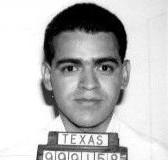 Paul Nuncio
Murderer · USA · 1993
Paul Selso Nuncio was convicted of capital murder in the strangulation death of…
1 victim
Paul Nuncio
Murderer · USA · 1993
Paul Selso Nuncio was convicted of capital murder in the strangulation death of…
1 victim
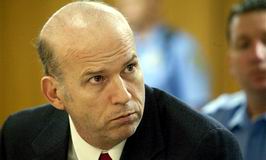 Scott Roeder
Murderer · USA · 2009
Scott Roeder was an anti-abortion activist. George Tiller, a physician from Wic…
1 victim
Scott Roeder
Murderer · USA · 2009
Scott Roeder was an anti-abortion activist. George Tiller, a physician from Wic…
1 victim
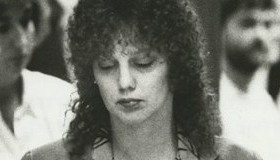 Brenda Humphrey
Murderer · USA · 1987
Brenda Humphrey was convicted with Gregory Wilson for the kidnapping, rape, rob…
1 victim
Brenda Humphrey
Murderer · USA · 1987
Brenda Humphrey was convicted with Gregory Wilson for the kidnapping, rape, rob…
1 victim
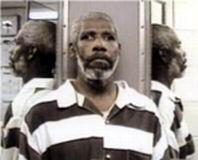 William Henry Furman
Murderer · USA · 1967
William Henry Furman William Henry Furman was sentenced to death on September 2…
1 victim
William Henry Furman
Murderer · USA · 1967
William Henry Furman William Henry Furman was sentenced to death on September 2…
1 victim
- Gender
- female
- Country
- USA
- Location
- Hull, Plymouth County, Massachusetts , USA
- Date of birth
- 1974
- Age at first offence
- 32
- Characteristics
- parricide, poisoner
- Victim profile
- Rebecca Jeanne Riley, 4 (her daughter)
- Method of murder
- Poisoning ( deliberate overdose of prescription pills)
- Date(s) of murder
- December 13, 2006
- Years active
- 2006
- Date of arrest
- February 6, 2007
- Status
-
Life imprisonment
Sentenced to life in prison with the possibility of parole in 15 years
Case record
Other details
Carolyn Riley was convicted in Plymouth County Superior Court of second-degree murder in the death of her four-year-old daughter, Rebecca Riley. The case involved allegations that Rebecca died from an overdose of prescription drugs prescribed for bipolar disorder and attention deficit hyperactivity disorder (ADHD).
Rebecca Riley was born April 11, 2002, and died December 13, 2006. She was the daughter of Michael and Carolyn Riley and a resident of Hull, Massachusetts. She was found dead in her home after prolonged exposure to various medications, and her lungs were described as filled with fluid. The medical examiner’s office determined that Rebecca died from “intoxication due to the combined effects” of the drugs Clonidine, valproic acid (Depakote), Dextromethorphan, and Chlorpheniramine, and that her heart and lungs were damaged due to prolonged abuse of these prescription drugs.
The record also described that police reports stated she was taking 750 milligrams a day of Depakote, 200 milligrams a day of Seroquel, and .35 milligrams a day of Clonidine. Rebecca had been taking the drugs since the age of two for bipolar disorder and ADHD, diagnosed by psychiatrist Kayoko Kifuji of the Tufts-New England Medical Center.
Carolyn Riley’s husband Michael Riley was arrested along with her on February 6, 2007, and both were charged with first-degree murder for Rebecca’s death. Their two other children were moved to foster homes, and the Department of Social Services reported the parents had a history of being abusive and neglectful.
Timeline
- December 13, 2006 — Police responded to a 911 call and found Rebecca Riley dead on the floor next to her parents’ bed in her parents’ bedroom.
- February 6, 2007 — Carolyn Riley and Michael Riley were taken into police custody for Rebecca’s death and charged with first-degree murder.
- February 5, 2010 — The jury began to deliberate Carolyn Riley’s fate.
- February 8, 2010 — The jury met for seven hours and reconvened to deliberate Carolyn Riley’s fate.
- February 9, 2010 — A jury convicted Carolyn Riley of second-degree murder, and the court sentenced her to life in prison with the possibility of parole in 15 years.
- March 8, 2010 — Michael Riley’s trial began.
- September 27, 2010 — Michael Riley was found guilty of first-degree murder and received the automatic sentence of life in prison without the possibility of parole.
- February 10, 2010 — The sentence was described in a news report.
Background
Carolyn Riley was one of the parents of four-year-old Rebecca Riley, who was being treated for bipolar disorder (manic depression) and ADHD. Rebecca was diagnosed after sessions over eight months, and the record stated she was two years old when she began the medications.
The record described that the family also included Rebecca’s siblings, who were taken away and placed in foster homes.
The offence
Carolyn Riley was convicted of second-degree murder for the death of her daughter Rebecca Riley.
Prosecutors accused Carolyn Riley of deliberately causing Rebecca to die from an overdose of Clonidine, and Depakote, and the record stated Clonidine was prescribed for attention deficit disorder (ADHD) and Depakote was administered for bipolar disorder.
Police reports stated Rebecca was taking 750 milligrams a day of Depakote, 200 milligrams a day of Seroquel, and .35 milligrams a day of Clonidine.
Investigation
An affidavit filed with the court included statements by State Police Trooper Anna Brookes describing evidence of a “slow and painful killing of Rebecca Riley over a period of days.” The affidavit also stated that the Rileys refused to accept help from agencies that had identified problems with the way Rebecca was being given medicine, and it alleged the couple was indifferent to Rebecca’s “obvious pain and suffering,” and failed “to provide any medical care to their own daughter as she lay visibly suffering, drowning in her own bodily fluids on the floor beside their bed.”
The state medical examiner’s office said the girl died from the combined effects of three drugs used to treat bipolar disorder, including Clonidine, and two over-the-counter cold medicines. The Plymouth County District Attorney’s office said: “This occurred as a result of the intentional overdose of Rebecca with Clonidine.”
The district attorney’s office also stated: “The manner of death was determined to be homicide….”
Arrest
Police were called to the Rileys’ home at 70 Lynn Ave. in Hull’s Kenberma neighborhood, opposite Nantasket Beach, at 6:30 a.m. on Dec. 13, and investigators found Rebecca dead on the floor of her parents’ bedroom.
Carolyn Riley and Michael Riley were arrested the day before the February 7, 2007 arraignment described in the record, at Michael Riley’s mother’s home on Fallgren Lane in Weymouth. The record stated that Michael Riley was held overnight at the Plymouth County jail, and Carolyn Riley was held at the Marshfield police lockup.
Trial
Jury deliberations
The jury began to deliberate Carolyn Riley’s fate on Feb. 5. The jury met for seven hours on Feb. 8 and reconvened on Feb. 9 before returning a verdict shortly after 4 p.m.
Verdict
On February 9, 2010, a jury convicted Carolyn Riley of second-degree murder in the death of her four-year-old daughter Rebecca Riley.
The record stated Carolyn Riley showed no emotion as the verdict was read.
Court officers placed handcuffs on Carolyn Riley after the jurors said yes when Judge Charles Hely asked them if they unanimously agreed with the verdict.
Prosecutor and defence positions
Prosecutors sought to have Carolyn Riley convicted of first-degree murder.
The record stated that prosecutors accused Carolyn Riley of deliberately causing Rebecca to die from an overdose of Clonidine and Depakote as part of an alleged scheme to collect Social Security disability payments. The assistant district attorney Middleton said that Carolyn Riley needed to keep Rebecca on the behavioral medications so she could get Social Security Insurance payments for her, in addition to the SSI payments she was receiving for her two older children who were diagnosed with mental disorders.
The record stated Dr. George Behonick, the former director of the state’s toxicology lab, said on Jan. 27 that Rebecca had three times the maximum level of Clonidine in her body when she died.
Carolyn Riley’s attorneys maintained that Rebecca died of a fast developing case of pneumonia and that they administered the medications to their daughter under the instructions of psychiatrist Dr. Kayoko Kifuji of Tufts-New England Medical Center.
The defence presented Dr. Jonathan Arden, who testified in Carolyn Riley’s defence, stating on Feb. 3 that Rebecca died of pneumonia and not from a deliberate overdose of behavioral prescription drugs. Arden was described as the first witness to state that pneumonia was responsible for Rebecca’s death. The record said Arden suggested that Massachusetts’s medical examiners committed an error by not pursuing further lung and blood cultures on Rebecca after she died.
Arden also told jurors that “Clonidine is rarely fatal,” and the record stated that sections of dead tissue in Rebecca’s lungs suggested a “necrotizing,” pneumonia and bronchitis caused her death. Arden said an infection would explain why Rebecca had a fever and incessant coughing in her final days.
Prosecutors responded by portraying Arden as a professional witness-for-hire.
Quotes and statements made in court
Robert Davidson, the adoptive father of Rebecca’s 17-year-old sister, offered a victim impact statement. Davidson said:
“Rebecca was my sister,” said Davidson as he read his adoptive daughter’s statement. “I was only a freshman in high school when she died. I was devastated to hear of her death. My biological mother let her die. My mother. It is so hard going through life ‘normally’ knowing what she did to Rebecca. Knowing what could have happened to (Rebecca’s siblings) and even to me if I hadn’t been taken away. Knowing what she did to my sister has made every day a challenge – just to get up every morning. Knowing I will never see Rebecca again – you don’t know how much that hurts. The only good thing about that is that because of Rebecca’s death, (Rebecca’s siblings) were taken from the horrible environment in which they were being raised.”
Plymouth County District Attorney Timothy Cruz said:
“Today was a small measure of justice,” said Plymouth County District Attorney Timothy Cruz shortly after the jury rendered its verdict. “It’s a tragic case.”
Court statements were also included in the record from assistant district attorney Middleton, which appeared with the summary text rather than as a separate quoted block.
Bourbeau said:
“She was always hopeful (about an acquittal),” Bourbeau said.
Bourbeau also said:
“She was devastated that the jurors could believe she was responsible for Rebecca’s death. “She was always hopeful (about an acquittal),” Bourbeau said.
Carolyn Riley’s mother, Valerie Berio, said:
“I prayed for three years for this to be over and never thought it would go so wrong with a verdict like this,” Berio said.
Medical context and medication
The record stated Dr. Kayoko Kifuji diagnosed Rebecca with the behavior disoders when she was two and prescribed Clonidine for ADHD and Depakote for the bipolar condition.
The record described that in medical records reviewed elsewhere in the material, Kifuji noted Rebecca’s increased risk of mental illness because of her family history, and Rebecca was diagnosed after Carolyn said her daughter was—quoted—“driving me crazy” and her mood switches within a minute.
Sentencing
Judge Charles Hely sentenced Carolyn Riley after Robert Davidson read his victim impact statement. Hely pronounced the life imprisonment term on Carolyn Riley with the possibility of parole after 15 years.
Appeals
The record stated that state law permits Carolyn Riley to seek parole after 15 years and appeal her sentence.
Spotted an error, or have more information about this case?