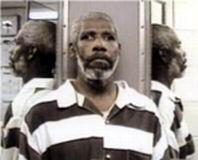
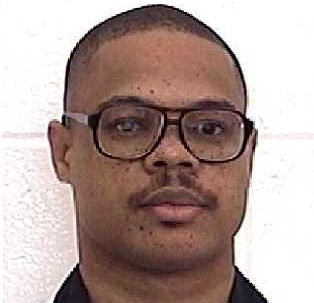
William Henry Furman
Murderer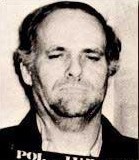 Ervil LeBaron
Murderer · USA · 1972
Ervil Morrell LeBaron (1925 to August 16, 1981) was the leader of a polygamous…
35 victims
Ervil LeBaron
Murderer · USA · 1972
Ervil Morrell LeBaron (1925 to August 16, 1981) was the leader of a polygamous…
35 victims
 Marvin Gray
Murderer · USA · 1975
Marvin Gray was convicted killer who claimed responsibility for 23 slayings and…
23 victims
Marvin Gray
Murderer · USA · 1975
Marvin Gray was convicted killer who claimed responsibility for 23 slayings and…
23 victims
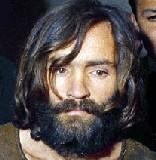 Charles Manson
Murderer · USA · 1969
Charles Milles Manson (born November 12, 1934) was an American criminal and mus…
9 victims
Charles Manson
Murderer · USA · 1969
Charles Milles Manson (born November 12, 1934) was an American criminal and mus…
9 victims
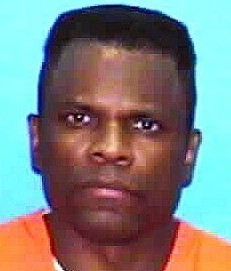 John Errol Ferguson
Murderer · USA · 1977
John Errol Ferguson was sentenced to death and was executed by lethal injection…
8 victims
John Errol Ferguson
Murderer · USA · 1977
John Errol Ferguson was sentenced to death and was executed by lethal injection…
8 victims
 Robert Reldan
Murderer · USA · 1974
Name: Robert Reldan Robert Reldan was sentenced to life in prison on two counts…
8 victims
Robert Reldan
Murderer · USA · 1974
Name: Robert Reldan Robert Reldan was sentenced to life in prison on two counts…
8 victims
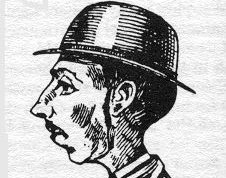 Percy Mapleton
Murderer · 1881
Percy Mapleton (real name Percy Mapleton; also given as Percy Lefroy Mapleton a…
1 victim
Percy Mapleton
Murderer · 1881
Percy Mapleton (real name Percy Mapleton; also given as Percy Lefroy Mapleton a…
1 victim
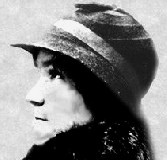 Charlotte Bryant
Murderer · United Kingdom · 1935
Charlotte Bryant, also known as Charlotte McHugh, was born in Londonderry in 19…
1 victim
Charlotte Bryant
Murderer · United Kingdom · 1935
Charlotte Bryant, also known as Charlotte McHugh, was born in Londonderry in 19…
1 victim
 Ivan Milat
Serial killer · Australia · 1989
Ivan Milat was convicted of seven murders and received multiple life sentences.…
7 victims
Ivan Milat
Serial killer · Australia · 1989
Ivan Milat was convicted of seven murders and received multiple life sentences.…
7 victims
 Garry Dean Miller
Murderer · USA · 1988
Garry Dean Miller — offender · April Marie Wilson — victim (7-year-old) Garry D…
1 victim
Garry Dean Miller
Murderer · USA · 1988
Garry Dean Miller — offender · April Marie Wilson — victim (7-year-old) Garry D…
1 victim
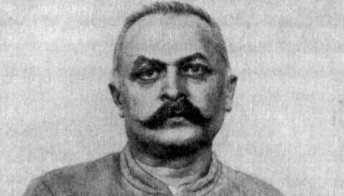 Ernst Wagner
Spree killer · Germany · 1913
Ernst August Wagner (September 22, 1874 – April 27, 1938) was a German spree ki…
14 victims
Ernst Wagner
Spree killer · Germany · 1913
Ernst August Wagner (September 22, 1874 – April 27, 1938) was a German spree ki…
14 victims
- Gender
- male
- Country
- USA
- Location
- Savannah, Georgia , USA
- Date of birth
- 1941
- Age at first offence
- 26
- Characteristics
- mentally ill, torture
- Victim profile
- William Joseph Micke Jr., 29
- Method of murder
- Shooting
- Date(s) of murder
- August 11, 1967
- Years active
- 1967
- Date of arrest
- Same day
- Status
-
Imprisoned
Sentenced to death on September 20, 1968 after a one-day trial; overturned by the Supreme Court in 1972; paroled in April 1984; pleaded guilty to a 2004 burglary charge in Bibb County Superior Court and was sentenced to 20 years in prison
Name
William Henry Furman
Status / legal outcome
William Henry Furman was sentenced to death on September 20, 1968 after a one-day trial for murdering William Micke during a home invasion in Savannah, Georgia on August 11, 1967. His death sentence was overturned by the Supreme Court in 1972. Furman was paroled in April 1984. He pleaded guilty to a 2004 burglary charge in Bibb County Superior Court and was sentenced to 20 years in prison.
Background
In the Furman v. Georgia case, the victim awoke in the middle of the night to find William Henry Furman burgling in his house.
Furman was judged “emotionally disturbed and mentally impaired.” Furman had a six-grade education.
The offence
Furman was convicted of murdering William Micke, a father of 5, during a home invasion.
On the night of August 11, 1967, William Joseph Micke, Jr., came home from work to his wife and five children in Savannah, Georgia. Micke went to bed around midnight. Two hours later, the Mickes were awakened by strange noises in the kitchen. Thinking that one of his children was sleepwalking, Micke went to the kitchen to investigate. Micke found William Henry Furman in the kitchen. Furman was carrying a gun. When Micke saw Furman, Furman fled the house, shooting Micke as he left. The bullet hit Micke in the chest, killing him instantly.
Micke’s family called the police. Within minutes, the police searched the neighborhood and found Furman still carrying his gun.
Furman was charged with murder.
Investigation / psychiatric examination
Before Furman’s trial, the court committed Furman to the Georgia Central State Hospital for psychological examination. After studying Furman, the hospital decided he was mentally ill and psychotic.
At trial, in an unsworn statement allowed under Georgia criminal procedure, Furman said that while trying to escape, he tripped and the weapon he was carrying fired accidentally, killing the victim. This contradicted his prior statement to police that he had turned and blindly fired a shot while fleeing.
Trial
Furman’s trial was held on September 20, 1968.
Because Furman was poor, Furman’s court-appointed lawyer, B. Clarence Mayfield, received the regular court-approved fee of $150.
Furman testified in his own defense. He said that when Micke caught him in the kitchen, Furman started to leave the house backwards and tripped over a wire. When Furman tripped, the gun fired. Furman said he did not mean to kill anyone.
The trial lasted one day. The court rejected Furman’s insanity plea. The jury found Furman guilty of murder based largely on Furman’s own statement. Although the evidence suggested Furman killed Micke accidentally, the jury sentenced Furman to death.
Appeals
The Georgia Supreme Court affirmed Furman’s conviction and sentence on April 24, 1969.
On May 3, the court stayed Furman’s execution so Furman could appeal to the U.S. Supreme Court.
Anthony G. Amsterdam joined Mayfield to help with the appeal because Furman’s case attracted publicity.
Before the Supreme Court on January 17, 1972, Anthony G. Amsterdam argued that the death penalty in Georgia violated the Eighth Amendment of the U.S. Constitution. The Eighth Amendment says the federal government may not use “cruel and unusual punishments.” States, including Georgia, must obey the Eighth Amendment under the Due Process Clause of the Fourteenth Amendment.
Amsterdam said the death penalty was “cruel and unusual” for several reasons: juries received no guidance about choosing the death penalty; studies showed juries acted randomly when choosing the death penalty; and studies showed defendants who were black, uneducated, poor, or mentally ill received the death penalty more often than defendants who were white, educated, wealthy, and mentally healthy.
Supreme Court case details
The Supreme Court decision reversed Furman’s conviction.
The Supreme Court consolidated Jackson v. Georgia and Branch v. Texas with the Furman decision, and thus invalidated the death penalty for rape (which was confirmed post-Gregg in Coker v. Georgia). The Court had intended to include Aikens v. California, but the Supreme Court of California decided in California v. Anderson that the death penalty violated the state constitution, so the Aikens case was dismissed as moot since all death cases in California were overturned.
The Supreme Court case Furman v. Georgia was dated June 29, 1972. William Henry Furman was the appellant and the State of Georgia was the appellee.
Appellant’s claim: that the Georgia death penalty was cruel and unusual punishment under the Eight and Fourteenth Amendments. Chief lawyer for appellant: Anthony G. Amsterdam. Chief lawyer for appellee: Dorothy T. Beasley, Assistant Attorney General of Georgia.
Justices for the Court: William J. Brennan, Jr., William O. Douglas, Thurgood Marshall, Potter Stewart, Byron R. White. Justices dissenting: Harry A. Blackmun, Warren E. Burger, Lewis F. Powell, Jr., William H. Rehnquist.
Holding and opinions
With a 5–4 decision, the Supreme Court held that the imposition of the death penalty in these cases constituted cruel and unusual punishment and violated the Constitution.
Each of the justices filed their own concurrence or dissent; none were able to gather more than three other justices to support them.
Only Justices Brennan and Marshall believed the death penalty was unconstitutional in all instances.
Justice Potter Stewart wrote:
"These death sentences are cruel and unusual in the same way that being struck by lightning is cruel and unusual. For, of all the people convicted of rapes and murders in 1967 and 1968, many just as reprehensible as these, the petitioners are among a capriciously selected random handful upon whom the sentence of death has in fact been imposed. My concurring Brothers have demonstrated that, if any basis can be discerned for the selection of these few to be sentenced to death, it is the constitutionally impermissible basis of race. See McLaughlin v. Florida , 379 U.S. 184 (1964) But racial discrimination has not been proved, and I put it to one side. I simply conclude that the Eighth and Fourteenth Amendments cannot tolerate the infliction of a sentence of death under legal systems that permit this unique penalty to be so wantonly and so freakishly imposed."
Four justices dissented: Chief Justice Burger and Justices Harry Blackmun, Lewis F. Powell, and William H. Rehnquist.
The dissenters argued that capital punishment had always been regarded as appropriate under the Anglo-American legal tradition for serious crimes and that the text of the Constitution implicitly authorized United States death penalty laws because of the reference in the Fourteenth Amendment to the taking of “life.”
Justice William O. Douglas reviewed the history of the death penalty in England and America. Douglas noted that under English law, the death penalty was unfair if applied unevenly to minorities, outcasts, and unpopular groups. Douglas decided that the death penalty in the United States was “unusual” under the Eighth Amendment if it discriminated against a defendant because of his “race, religion, wealth, social position, or class.”
Douglas reviewed studies and believed that African Americans and the poor, sick, and uneducated members of society received the death penalty most often because juries had no guidance when applying the death penalty.
Justices Byron White and William O. Douglas expressed similar concerns about the apparent arbitrariness with which death sentences were imposed under existing laws.
Oral argument quotations (verbatim fragments)
Chief Justice Warren E. Burger, to Anthony G. Amsterdam:
"Arguments next in 69-5003, Furman against Georgia.c Mr. Amsterdam you may proceed whenever you are ready."
Anthony G. Amsterdam:
"Thank you Mr. Chief Justice. One thing I perhaps should make clear, it's our position on the question asked by Mr. Justice Stewart as to whether if there were shown today any legitimate legislative basis for a punishment that would itself in the Eighth Amendment is referring, the answer in my judgment is unmistakably no. The argument about whether there is a legitimate base for a legislative judgment has a very, very small part in our brief as I am sure the Court has noted. We have essentially, simply pointed out that one of the reasons why a Court need not hesitate to strike down a rare and harsh punishment like capital punishment is that it is not taking away anything that is very important to the State, both in the sense that the only thing is really an issue here is whether instead of killing 20 or 15 people randomly selected a year, they are going to keep them in prison and the impact of that from all available determiners is in current to punishment, but we do not urge that legislature could not, we do not urge in this forum at this time that the legislature could not find that there is a basis for boiling an oil. That I think really presents the question very squarely."
Anthony G. Amsterdam:
"Mr. George said and I think the State generally takes the position that if boiling an oil came before this Court, even though it had a legitimate legislative base, even though a legislature might find the boiling in oil was a deterrent that somehow the Court could say that that was a cruel and unusual punishment because it is “unnecessarily cruel.”"
Chief Justice Warren E. Burger:
"Now, if the Courts understook to accept your general composition on the cruel and unusual aspect, could a Court make exceptions to it for a certain crime or would it -- would the Court be obliged to follow an all or nothing approach?"
Anthony G. Amsterdam:
"If -- Mr. Chief Justice, if Your Honor means, could the death -- could the Court find that the death penalty is unconstitutional for some crimes and not for others, I believe that it could rationally, although I do not think it should or can on the indicators available to the Court in this country."
Chief Justice Warren E. Burger:
"But could the Court for example make an exception as to homicides committed by a life term prisoner here of a fellow prisoner or the guards?"
Justice Thurgood Marshall, to Anthony G. Amsterdam:
"Is it true that New York, there is such a statute, that is restricted the killing of a prison guard?"
Anthony G. Amsterdam:
"Oh! Yes. As a matter of fact there are several different statutes Mr. Justice Marshall, in different States. California has a mandatory death penalty statute for killing by life termers. It need not be a guard but it is any non-inmate. There are five States though that have a statute such the Chief Justice suggests which limit the penalty to killings of guards in the course of their duty and that sort of thing."
Justice William H. Rehnquist, to Anthony G. Amsterdam:
"Mr. Amsterdam, you have said that one out of 12 or 13 death verdicts is returned as what -- as what might be returned, in each of the 12 or 13 were those cases which the prosecution had asked for death or was it just the death could have been returned under the statute if the prosecution had asked for it?"
Anthony G. Amsterdam:
"It is impossible to know in what percentage of the case if the prosecution asked for it."
Justice Potter Stewart:
"Also your statistics, you cannot tell even from those fragmentary statistics whether, as you put it, juries are imposing the death penalty in only one out every 12 defendants or does it mean that only one out of every 12 juries imposing the death sentence?"
Anthony G. Amsterdam:
"No. No, that is certainly clear Your Honor."
Justice Harry A. Blackmun, to Anthony G. Amsterdam:
"Mr. Amsterdam is the -- are your most recent remarks also directed to judge imposed penalties?"
Anthony G. Amsterdam:
"The figures that are available do not discriminate so that the one out of 12 or 13 figures is a total figure that does not discriminate between a judgment and jury sentencing where prosecutors have or have not asked."
Justice William O. Douglas:
"Is there anything in the Georgia record that indicates what kind of cases Georgia executes?"
Anthony G. Amsterdam:
"There are, again, judicially noticeable figures on this. There is nothing in the record. There is no evidence that was presented, but the figures that perfectly frames the national prison statistics, judge executes black people."
Chief Justice Warren E. Burger:
Anthony G. Amsterdam:
Lord Ellenborough (as quoted by Anthony G. Amsterdam):
"how but by the enactment of this capital punishment law, the cottages of the industrious poor to be protected, what other security has a poor peasant when he and his wife come home that his clothing would be safe other than the death penalty."
"Those are on to say, your Lordships have told what is extremely true that the number of people actually put to death for stealing five shillings from a shop is very small."
"And this circumstance is urged as the reason for the repeal of the law."
"But before your Lordships are induced to consent to such repeal, I beg to call to your consideration the number of innocent persons who might have been plundered of their property or destroyed by midnight murderers if the law now sought to be repealed had not been in existence, a law upon which all the retailed trade of this commercial country depends in which I for one do not consent to be put in jeopardy."
Chief Justice Warren E. Burger, to Anthony G. Amsterdam:
"Mrs. Beasley. Argument of Dorothy T. Beasley"
Dorothy T. Beasley:
"The question in this case is and particularly in the case now before the Court that is Furman versus Georgia involves the Fourteenth Amendment first."
"I think that petitioner has in all of these arguments and all of these cases given way to the proposition that the Fourteenth Amendment hasn't anything to do with these cases and the argument is made simply that in this cruel and unusual punishment to deprive a man of his life, due process of law is not really looked that at all."
"However, as it affects the State that is exactly is the most important point."
Dorothy T. Beasley:
"The Fourteenth Amendment provides that life, liberty that no State may deprive any person of life, liberty or property without due process of law."
Anthony G. Amsterdam (rebuttal):
"We -- on one point I essentially do not disagree with Mrs. Beasley. I think juries are in many ways the conscience of the community although I think other organs of government, prosecutors and judges are as well and our whole case rests on what juries and prosecutors and the other agencies of government have done. What they have done is to refuse to impose the death penalty."
"The answer to that is the case like Furman versus Georgia. Where what you have is a regular garden variety, burglary, murder."
"Unintended killing, somebody shot through the door, a case submitted on the theory that it was an unintended killing, there are thousands of these."
"The jury comes back with death, the defendant is black, the victim is white, it is all the aggravation in the case."
Sentencing
Furman was sentenced to death on September 20, 1968.
Furman’s death punishment was never carried out. Furman was later paroled in April 1984.
In 2004, Furman pleaded guilty to burglary in Bibb County Superior Court and was sentenced to 20 years in prison.
Aftermath
The Supreme Court decision led to a de facto moratorium on capital punishment throughout the United States, which came to an end when Gregg v. Georgia was decided in 1976.
In the following four years after the Furman decision, 37 states enacted new death penalty laws aimed at overcoming concerns about arbitrary imposition of the death penalty. Statutes mandating bifurcated trials with separate guilt-innocence and sentencing phases and imposing standards to guide jury and judge discretion were upheld in 1976 decisions led by Gregg v. Georgia. Other statutes enacted in response to Furman mandating imposition of the death penalty upon conviction of certain crimes were struck down in cases in the same year.
The Furman decision did not outlaw the death penalty; it required states to prevent random, racial, unfair results by providing guidance to juries. The new laws created a two-phase system: the jury decides guilt of murder in the first phase, and in the second phase hears new evidence to decide if the defendant deserved the death penalty.
The decision led to capital punishment being renewed in 1977 with the firing-squad execution of Gary Gilmore in Utah.
Other details
Furman v. Georgia was associated with discussion of Jackson v. Georgia and Branch v. Texas. Jackson involved attempted armed robbery and rape. Branch involved a conviction of rape.
Florida electric chair debate appeared in the provided material, including references to Allen Lee Davis’s execution in Florida in July 1999, and a debate about whether the electric chair was cruel and unusual punishment. Florida Governor Jeb Bush and Florida State Senator Locke Burt were mentioned, with Burt saying: “a painless death is not punishment.” The Florida legislature passed a law on January 7, 2000 to switch the death penalty from the electric chair to lethal injection.
Some statistical discussion in the provided material included that in 1999, 98 people were executed in the United States, with 104 of their victims being white and 15 of their victims being black; death penalty opponents cited this as evidence that the system treated whites better, while supporters disagreed.
Spotted an error, or have more information about this case?