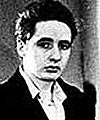
Yuri Chubarov
Mass murderer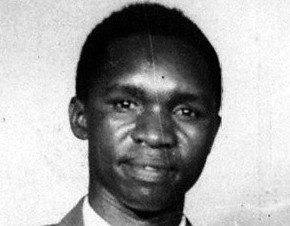 Joseph Kibweteere
Mass murderer · Uganda · 2000
Joseph Kibweteere led a breakaway sect known as the Movement for the Restoratio…
1000 victims
Joseph Kibweteere
Mass murderer · Uganda · 2000
Joseph Kibweteere led a breakaway sect known as the Movement for the Restoratio…
1000 victims
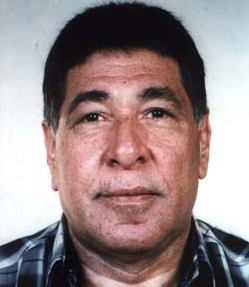 Gameel Al-Batouti
Mass murderer · USA · 1999
Gameel Al-Batouti (also rendered “Gamil ElBatouty” or “El Batouty” in U.S. offi…
216 victims
Gameel Al-Batouti
Mass murderer · USA · 1999
Gameel Al-Batouti (also rendered “Gamil ElBatouty” or “El Batouty” in U.S. offi…
216 victims
 Kim Dae-Han
Mass murderer · South Korea · 2003
Name: Kim Dae-Han · Age: 56 · Occupation/background: He was an unemployed forme…
198 victims
Kim Dae-Han
Mass murderer · South Korea · 2003
Name: Kim Dae-Han · Age: 56 · Occupation/background: He was an unemployed forme…
198 victims
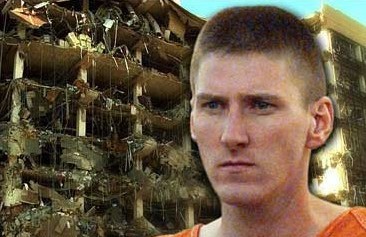 Timothy McVeigh
Mass murderer · USA · 1995
Timothy James McVeigh (April 23, 1968 – June 11, 2001) was a United States Army…
168 victims
Timothy McVeigh
Mass murderer · USA · 1995
Timothy James McVeigh (April 23, 1968 – June 11, 2001) was a United States Army…
168 victims
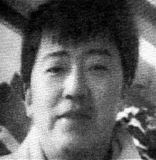 Zhang Pilin
Mass murderer · China · 2002
Zhang Pilin (张丕林) died in the plane crash of China Northern Airlines Flight 613…
111 victims
Zhang Pilin
Mass murderer · China · 2002
Zhang Pilin (张丕林) died in the plane crash of China Northern Airlines Flight 613…
111 victims
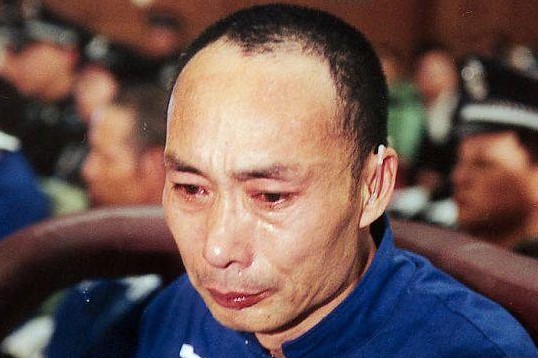 Jin Ruchao
Mass murderer · China · 2001
Jin Ruchao was blamed and arrested for planning and carrying out the Shijiazhua…
108 victims
Jin Ruchao
Mass murderer · China · 2001
Jin Ruchao was blamed and arrested for planning and carrying out the Shijiazhua…
108 victims
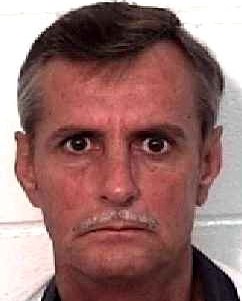 Tommy Lee Waldrip
Murderer · USA · 1991
Tommy Lee Waldrip (51) was sentenced to death on November 4, 1994. Keith Lloyd…
1 victim
Tommy Lee Waldrip
Murderer · USA · 1991
Tommy Lee Waldrip (51) was sentenced to death on November 4, 1994. Keith Lloyd…
1 victim
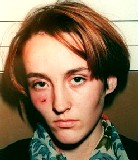 Florence Rey
Murderer · France · 1994
Florence Rey was born August 25, 1975. She was 19 years old at the time of the…
4 victims
Florence Rey
Murderer · France · 1994
Florence Rey was born August 25, 1975. She was 19 years old at the time of the…
4 victims
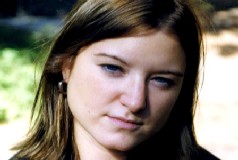 Amber Trudell
Murderer · USA · 2003
March 2005 — Amber Lynn Trudell’s first trial ended in a hung jury. · March 30,…
1 victim
Amber Trudell
Murderer · USA · 2003
March 2005 — Amber Lynn Trudell’s first trial ended in a hung jury. · March 30,…
1 victim
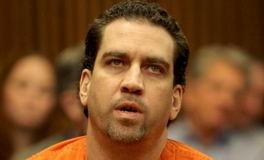 Dr. Yazeed Essa
Murderer · USA · 2005
Dr. Yazeed Essa was sentenced to life in prison with no chance of parole for 20…
1 victim
Dr. Yazeed Essa
Murderer · USA · 2005
Dr. Yazeed Essa was sentenced to life in prison with no chance of parole for 20…
1 victim
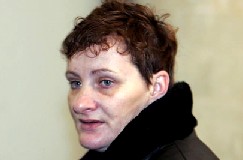 Patricia Cartier
Murderer · France · 2002
Name: Patricia Cartier Role in case: defendant (wife) Patricia Cartier was sent…
1 victim
Patricia Cartier
Murderer · France · 2002
Name: Patricia Cartier Role in case: defendant (wife) Patricia Cartier was sent…
1 victim
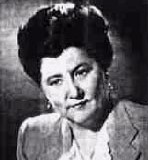 Maria Lee
Murderer · South Africa · 1947
Maria Helena Gertruida Lee (née van Niekerk), later known as Maria Lee, was bor…
1 victim
Maria Lee
Murderer · South Africa · 1947
Maria Helena Gertruida Lee (née van Niekerk), later known as Maria Lee, was bor…
1 victim
- Gender
- male
- Country
- Latvia
- Location
- Iecava, Latvia
- Date of birth
- 1950
- Age at first offence
- 47
- Characteristics
- revenge, shooting rampage
- Victim profile
- F ive men and two women
- Method of murder
- Shooting (hunting rifle)
- Date(s) of murder
- September 20, 1997
- Years active
- 1997
- Date of arrest
- —
- Status
-
Died in custody
Committed suicide by shooting himself; he died in a forest following a shooting spree that killed seven people in Latvia
Case identification
Yuri Chubarov
Background
Yuri Chubarov was a farmer and a retired Russian soldier known locally as “The Hunter.” He arrived in Iecava more than 20 years before the shootings, bought a ruined house, fixed it up, and lived quietly in a place where keeping to oneself was a virtue. His problems began after the Soviet Union collapsed.
Two branches of the Koshkin family, ethnic Latvians, claimed the acreage where he lived, and began harassing him by clanging pots and pans outside his door at night. Someone later burned down his house. The police said the house fire involved faulty wiring, but no one believed that explanation. “It seems the police chose to ignore footprints in the mud outside,” said Iecava’s mayor, Janis Pelsis.
Over the past few years, Chubarov began to grouse about Latvian independence and the effect it was having on his life. Olga M., a Russian friend of his in Iecava, said:
“The Hunter was from Siberia and was used to space and wandering freely. But suddenly, land was being taken and the owners forbade him from hunting on their properties. He began to feel limited,”
Chubarov worked without incident in a factory for many years in Iecava. No one had anything bad to say about him except that his hunting forays sometimes sent children and women indoors for fear of getting hit by stray shot.
After the Soviet Union collapsed, Chubarov’s situation was also described in terms of low-grade ethnic tensions between Latvians and a Russian minority. People in the area believed the Chubarov slayings had less to do with ethnic hatred than with Russian reaction to changes in Latvia since independence.
The offence
Chubarov shot a family while they were picking potatoes in southern Latvia.
Last September, five Koshkins came to visit the property and pick potatoes. Chubarov drove a car up a muddy path, eyed the visitors without a word, then stopped. He pulled four rifles out of the trunk of his car and yelled out, “Privet!” The Russian way of saying hi was associated with his greeting. He shot one after the other, pursuing two Koshkin men and three women across the field, and finished off the wounded with shots to the head. He also killed two Latvian farmers who were helping pick the potatoes.
The attack was described as a shooting rampage. An eighth person was in critical condition in a hospital in the southern city of Bauska.
The dead were described as five men and two women who were members of the Koshkin family or their acquaintances.
Investigation and manhunt
After the shootings, Chubarov fled to the deep woods. Police and dogs chased him.
A tracker dog sniffed out the body of the attacker. Criminal police chief Alois Blonskis said the tracker dog sniffed out the body. A manhunt involving more than 500 people occurred, with roadblocks thrown up in the region. A helicopter, police officers, an elite anti-terrorist unit, and the paramilitary Home Guard were drafted in to hunt for the killer.
The body was found about one mile from the scene of the shooting spree.
Death / self-inflicted death
Chubarov died after a self-inflicted gunshot wound. Police said he committed suicide in a forest about one mile from the scene of the shooting spree. He was found dead.
Other details
Iecava lay about 30 miles from Riga. In the master planning of Soviet times, Iecava was made the egg producing capital of the country; nearby Kekava was the chicken capital. The small town center was described as surrounded by checkerboards of farmland and forest. Paved roads radiating out from Iecava quickly gave way to clay that became slick in the rain. Peaked wooden houses became fewer as the forests thicken and the farmland shrinks.
Quoted statements
Alois Blonskis
Criminal police chief Alois Blonskis said a tracker dog sniffed out the body of the attacker.
Janis Pelsis
“I t seems the police chose to ignore footprints in the mud outside,” said Iecava’s mayor, Janis Pelsis.
Olga M.
“ The Hunter was from Siberia and was used to space and wandering freely. But suddenly, land was being taken and the owners forbade him from hunting on their properties. He began to feel limited,” said Olga M., a Russian friend of his in Iecava.
“No one can forgive The Hunter, but he had built the house himself, and someone burned it down. It stayed with him like a disease. He felt surrounded and believed life as he knew it was coming to an end. No one can excuse this, but if the truth be known we all feel a little like him,” said Olga M.
Spotted an error, or have more information about this case?