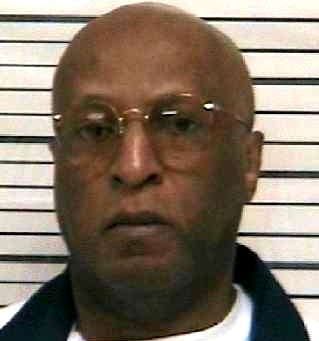
Carzell Moore
Murderer Ervil LeBaron
Murderer · USA · 1972
Ervil Morrell LeBaron (1925 to August 16, 1981) was the leader of a polygamous…
35 victims
Ervil LeBaron
Murderer · USA · 1972
Ervil Morrell LeBaron (1925 to August 16, 1981) was the leader of a polygamous…
35 victims
 Brian Kevin Rosenfeld
Murderer · USA · 1985
Brian Kevin Rosenfeld Brian Kevin Rosenfeld was sentenced to three concurrent l…
23 victims
Brian Kevin Rosenfeld
Murderer · USA · 1985
Brian Kevin Rosenfeld Brian Kevin Rosenfeld was sentenced to three concurrent l…
23 victims
 Marvin Gray
Murderer · USA · 1975
Marvin Gray was convicted killer who claimed responsibility for 23 slayings and…
23 victims
Marvin Gray
Murderer · USA · 1975
Marvin Gray was convicted killer who claimed responsibility for 23 slayings and…
23 victims
 Yahweh ben Yahweh
Murderer · USA · 1980
Yahweh ben Yahweh was born and legally named Hulon Mitchell Jr. (October 27, 19…
23 victims
Yahweh ben Yahweh
Murderer · USA · 1980
Yahweh ben Yahweh was born and legally named Hulon Mitchell Jr. (October 27, 19…
23 victims
 Jon Nödtveidt
Murderer · Sweden · 1997
Jon Andreas Nödtveidt (June 28, 1974 – August 16, 2006) was a lead guitarist an…
1 victim
Jon Nödtveidt
Murderer · Sweden · 1997
Jon Andreas Nödtveidt (June 28, 1974 – August 16, 2006) was a lead guitarist an…
1 victim
 Michele Anderson
Mass murderer · USA · 2007
Michele Kristen Anderson was charged in connection with the Carnation Massacre,…
6 victims
Michele Anderson
Mass murderer · USA · 2007
Michele Kristen Anderson was charged in connection with the Carnation Massacre,…
6 victims
 Rhonda Orr
Murderer · USA · 2003
Name: Rhonda Orr Rhonda and James Orr married in 1999. James Orr required the u…
1 victim
Rhonda Orr
Murderer · USA · 2003
Name: Rhonda Orr Rhonda and James Orr married in 1999. James Orr required the u…
1 victim
 Denard Manns
Murderer · USA · 1998
1998-11-18 — Denard Manns entered the home of Michelle Robson in Killeen and se…
1 victim
Denard Manns
Murderer · USA · 1998
1998-11-18 — Denard Manns entered the home of Michelle Robson in Killeen and se…
1 victim
 John Christopher Marquard
Murderer · USA · 1991
John Christopher Marquard was sentenced to death on February 5, 1993. The Flori…
1 victim
John Christopher Marquard
Murderer · USA · 1991
John Christopher Marquard was sentenced to death on February 5, 1993. The Flori…
1 victim
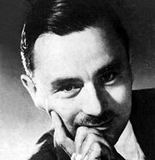 John George Haigh
Serial killer · United Kingdom · 1944
John George Haigh was an English serial killer during the 1940s. He was commonl…
6 victims
John George Haigh
Serial killer · United Kingdom · 1944
John George Haigh was an English serial killer during the 1940s. He was commonl…
6 victims
- Gender
- male
- Country
- USA
- Location
- Bleckley County, Georgia, USA
- Date of birth
- 1952
- Age at first offence
- 24
- Characteristics
- kidnapping, rape, robbery
- Victim profile
- Teresa Carol Allen, 18 (store clerk)
- Method of murder
- Shooting (high-powered rifle)
- Date(s) of murder
- December 12, 1976
- Years active
- 1976
- Date of arrest
- —
- Status
-
Sentenced to death
Death sentence in January 1977 was reversed; Moore was resentenced to life in prison after later sentencing proceedings, including a death sentence later set aside and a new sentencing trial pending since August 1992
Case details
Carzell Moore was tried in the Superior Court of Monroe County, Georgia, for the rape, robbery, and first-degree murder of 18-year-old Teresa Carol Allen, an honors college student who worked part-time at the Majik Market.
The state presented evidence that Moore met Roosevelt Greene the day before the killing. Greene had escaped from prison shortly before the offenses.
Timeline
- December 12, 1976 — Teresa Carol Allen arrived at her part-time employment, the Majik Market in Cochran, Georgia; shortly before 7 p.m. the store was found open and unattended, the cashier was missing, and the victim’s automobile vanished.
- December 14, 1976 — Ms. Allen’s body was discovered lying in a wooded grassy area just off a dirt road near Highway 41 in Monroe County, Georgia.
- December 11, 1976 — Greene, out on escape, arrived in Cochran looking for Moore; Moore introduced Greene to friends in Cochran, including Thomas Pasby.
- January 1, 1977 — Thomas Pasby testified that Moore confessed that Moore and Greene robbed the Majik Market, kidnapped and raped Ms. Allen, and shot her to death with a 30.06 rifle.
- January 4, 1977 — Pasby was arrested on a theft by taking charge.
- January 5, 1977 — Pasby was arrested and confined in the Bleckley County jail for stealing a 30.06 caliber hunting rifle and also for allegedly violating the conditions of probation.
- January 10, 1977 — Carzell Moore was arrested and placed in the Bleckley County jail in Cochran.
- February 9, 1977 — A transcript of the committal hearing was filed and placed in the record, including testimony relevant to Roosevelt Green’s committal hearing.
- February 12, 1976 — The two men robbed the store where Ms. Allen worked, taking her, $466 and her vehicle.
- February 15, 1977 — A grand jury in Monroe County returned an indictment charging Moore and Green with rape and first-degree murder of Ms. Allen.
- June 1977 — Moore was tried separately before a jury in the Superior Court of Monroe County after Green escaped prior to trial and was not recaptured for several years.
- January 21, 1987 — The United States Court of Appeals for the Eleventh Circuit issued its decision in Carzell Moore v. Ralph Kemp, Warden, Georgia Diagnostic and Classification Center.
- August 1992 — A new sentencing trial has been pending since August 1992.
- January 1977 — Moore was sentenced to death in January 1977.
The offence
Majik Market robbery, kidnapping, rape, and killing
Shortly before 7 p.m. on December 12, 1976, several patrons of the Majik Market convenience store in Cochran, Georgia, found the store open and unattended. The cash register and safe were open and empty, and Teresa Carol Allen was missing. Her automobile had also vanished.
The Majik Market area supervisor determined that $466 was missing from the store.
In the early evening of the robbery, Carzell Moore and Roosevelt Green were let off at Moore’s house. Moore’s house was four blocks from the Majik Market. Green was wearing high-heeled shoes.
The state’s evidence described that Green entered the Majik Market and distracted Ms. Allen so that Moore could enter the store with a rifle. After robbing the store, the two men abducted Ms. Allen and drove away in her car. With Moore driving the car, Green raped Ms. Allen. The two men then exchanged places, and Moore raped Ms. Allen.
Moore told Green to stop the car. Moore got out of the car with Ms. Allen and told Green to go to a gas station to get gas for the car. After Green left, Ms. Allen begged Moore not to kill her. Ms. Allen crossed her arms over her stomach to protect herself. Moore shot her in the abdomen with the rifle. He then shot her in the face in an attempt to make identification difficult. Moore stated that he shot Ms. Allen in the face in an attempt to disfigure her so as to make it difficult to identify her.
When Green returned, the two of them picked up Ms. Allen and threw her into the bushes.
Discovery of the body and forensic findings
On December 14, 1976, Ms.
Police found footprints, two 30.06 cartridge hulls, a 30.06 metal jacket of a bullet, parts of Ms. Allen’s flesh, teeth and bone, tire tracks, and a nylon stocking near the body. Footprints were found near the body and later compared to a footprint cast.
The cause of her death was determined to be loss of blood from bullet wounds.
Examination disclosed bruising on the inside of one thigh, a laceration of the vagina, and blood and mucous-like matter in the vaginal canal. A pathologist testified that the wounds in the abdomen, arms and face were caused by a high-powered missile and that the location and nature of the wounds were consistent with arms being crossed across the stomach and shot with a high-powered bullet which passed through both arms and the abdomen.
The pathologist testified that Ms. Allen was also shot by a high-powered bullet entering the left side of the neck, penetrating the lower face and exiting the right side of the head.
The ballistics evidence involved bullets fired from the 30.06 caliber rifle confiscated from Livingston and registered to Terry Kilgore, and matching the 30.06 caliber slug retrieved at the murder site.
A plaster cast of a footprint found near Ms. Allen’s body was similar in size and impression to a flat Hushpuppy shoe taken from Moore’s room, and tire tracks near the body were similar in size and tread design to the tires on Ms. Allen’s automobile.
A crime lab serologist testified that vaginal swabbings taken from the victim revealed seminal fluids from an individual with type A blood and concluded that the seminal fluid could not have come from Roosevelt Green because Green had type B blood. The serologist testified that both Moore and Pasby had type A blood, and that the seminal fluid could have come from Moore because Moore was a “strong secretor,” and could not have come from Pasby because Pasby was a “weak secretor.”
In addition, Tillman testified that a Caucasian pubic hair and Negroid head hair removed from the gold towel seized in the search of Moore’s home could have come from Ms. Allen and Moore respectively, and that the Negroid head hair found on the towel did not come from Roosevelt Green or Thomas Pasby.
Investigation and pretrial events
Events involving Roosevelt Green and Thomas Pasby
Approximately one month after the robbery and killing, the automobile was discovered in South Carolina in the possession of an escaped convict, 20-year-old Roosevelt Green. Green had been arrested for an unrelated convenience store robbery.
From jail, Green made a telephone call to the mother of an acquaintance, Thomas Pasby, stating: “Tell Carzell Moore I'm in jail in South Carolina.”
Georgia law enforcement officials investigating Ms. Allen’s murder learned of this telephone call and questioned persons in Cochran about possible links between Green and Moore. They discovered that Green and Moore had met and became friends while they were in prison in Alabama, that on December 11, 1976, Green arrived in Cochran asking for Moore, and that Moore had introduced Green to friends in Cochran, including Thomas Pasby.
Moore’s arrest and search of home
On January 10, 1977, Carzell Moore was arrested and placed in the Bleckley County jail, located in Cochran.
Five days later, authorities obtained a search warrant for Moore’s home. They seized items including a pair of brown “Hush Puppy” shoes and a gold towel. These items were submitted to the Georgia crime lab for analysis.
Arrest and charges
Indictment
On February 15, 1977, a Monroe County grand jury returned an indictment charging Moore and Green with the rape and first-degree murder of Ms. Allen.
Escape of co-defendant
Green escaped from the Monroe County jail prior to trial and was not recaptured for several years.
Trial
Separate trial of Moore
Because Green escaped, Moore was tried separately.
In June 1977, Moore was tried before a jury in the Superior Court of Monroe County, Georgia.
Key witness
The key witness for the State was 30-year-old Thomas Pasby.
Pasby testified that he had known Carzell Moore for fifteen years and that since his return to Cochran in 1974 after serving in the Army for eight years, he had “spent a lot of time” with Moore.
Pasby’s account of the crimes
Pasby testified that in late November 1976, he drove Moore to a location near a flower shop in Cochran. Moore asked Pasby to park and wait. After a few minutes, Moore returned to the car carrying a 30.06 caliber hunting rifle similar to the murder weapon.
Pasby testified that a few weeks later he accompanied Moore to an abandoned schoolhouse where Moore kept the rifle. Pasby stated he noticed the rifle’s serial number had been obliterated.
Pasby testified that on January 1, 1977, Moore confessed to him that Moore had raped and murdered Ms. Allen and described how the crimes were committed.
Pasby related the events of December 12, 1976, including that Green entered the Majik Market and distracted Ms. Allen so Moore could enter with a rifle; after robbing the store the two abducted Ms. Allen and drove away in her car; with Moore driving Green raped Ms. Allen; they exchanged places and Moore raped Ms. Allen; Moore directed Green to stop the car; Moore and Ms. Allen got out; Moore told Green to go to a gas station for gas; after Green left, Moore pointed the rifle at Ms. Allen and she crossed her arms over her stomach; Moore fired into her abdomen and fired a second shot into her face to make identification difficult; when Green returned, the two picked up the body and threw it into bushes.
Pasby also testified that he was arrested on January 4, 1977, for theft by taking, and that shortly after he was taken into custody he was transferred to the Bleckley County jail in Cochran. Pasby stated that Moore was placed in jail with him after Moore’s arrest on January 10, 1977.
Pasby testified that while he was in jail with Moore he learned that Roosevelt Green had been arrested, and Moore exclaimed: “Damn, I told Green to get rid of that car and rifle.”
Other witnesses and corroboration
Terry Kilgore, a flower shop owner in Cochran, testified that his 30.06 hunting rifle was stolen from his truck some time after Thanksgiving 1976. He stated the rifle was registered in his name and was determined in a ballistics test to have been the murder weapon.
Charles Livingston testified that on the morning after the Majik Market robbery and Ms. Allen’s disappearance, Green arrived at his home in South Carolina driving an automobile similar to Ms. Allen’s car. Green had a roll of bills, a “bank bag,” and a large amount of coins consistent with items taken from the Majik Market. Livingston testified that Green traded the 30.06 rifle for Livingston’s .25 caliber automatic pistol.
The testimony of Johnny Johnson described that on December 9, 1976, Moore asked him and a friend if they knew of a place to “hit,” and told them he had a high-powered rifle and ammunition useful in a robbery.
A gas station attendant near the murder site testified about a car matching the victim’s automobile description stopping for gas on the night of the murder and that two persons were in the car. The attendant remembered the passenger paid for the gas and used the restroom, and he thought the driver was also a black male.
Forensic and expert evidence
- A pathologist testified that Ms. Allen’s injuries were consistent with the description given by Moore to Pasby and described bullet wounds in each arm, the abdomen, and the head. The pathologist stated the right arm was “almost completely torn in two,” with the right hand remaining attached only by soft tissue. He also stated a separate bullet entered the left side of the victim’s head over her ear.
- A ballistics expert testified that bullets fired from the 30.06 rifle registered to Terry Kilgore matched the slug retrieved at the murder site.
- A microanalyst, Warren Tillman, testified that a footprint cast from near the body was similar to “Hush Puppy” shoes found in Moore’s home. He testified about plaster casts of tire tracks and hair comparisons. He stated the Negroid head hair on the towel did not come from Roosevelt Green or Thomas Pasby.
- Linda Barton, a crime lab serologist, testified that semen swabs revealed seminal fluids from an individual with type A blood; she testified the seminal fluid could not have come from Roosevelt Green because Green had type B blood, and described secretor status as “strong secretor” for Moore and “weak secretor” for Pasby.
Moore’s testimony
Moore testified in his defense that he was 24 years old and employed by a lumber company in Cochran.
He admitted meeting Green in an Alabama penitentiary in 1975, and that Green escaped from that penitentiary in late 1975 and arrived in Cochran looking for Moore on December 11, 1976. He stated that he allowed Green to stay in his home and introduced Green to friends in Cochran.
Moore testified that on the afternoon of the robbery he and Green had been drinking, and after Green left on foot headed toward town, Moore passed out.
He denied participating in the robbery, raping Teresa Allen, and killing her, and denied making any statements to Pasby about the incident, including denying getting a 30.06 rifle.
Moore admitted discussing other topics with Thomas Pasby, including Moore telling Pasby: “Well, I killed somebody, too,” and he then related the events described by Pasby’s testimony; Moore denied making the statement to Pasby about robbing the Majik Market, raping Teresa Allen, and killing her.
Moore denied making statements in jail about the rifle and car. He also testified that he explained forensic evidence by stating that he had skinned himself while having intercourse with his girlfriend and that Green exchanged his high platform shoes for Moore’s Hushpuppys prior to the evening of the robbery.
In rebuttal, the state presented testimony that when Green visited in South Carolina the morning following the robbery he was wearing high-heeled shoes and not Hushpuppys.
Verdict
The jury rejected Moore’s testimony and returned a verdict of guilty on both the rape and the first-degree murder counts.
Sentencing
State’s evidence and aggravating circumstances
During sentencing, the State presented documentary evidence of Moore’s prior convictions for burglary and for possession of marijuana.
Moore testified again during sentencing asking the jury for mercy and repeating his denial of involvement. His mother, Catherine Moore, testified asking the jury to spare her son’s life.
The State called Joseph Allen, the victim’s father, in rebuttal.
Joseph Allen testified that Ms. Allen would have been nineteen on December 25, 1976, had been an honor student in high school, was attending Middle Georgia College on a partial scholarship studying to become a nurse, and had been working part time at the Majik Market.
After deliberating, the jury recommended the death penalty on both the rape and the first-degree murder counts and found statutory aggravating circumstances:
- Each crime was committed during the commission of additional capital felonies: the murder was committed during the commission of the rape, kidnapping, and armed robbery, and the rape was committed during the commission of the murder, kidnapping, and armed robbery, as cited under O.C.G.A. Sec. 17-10-30(b)(2) (1982).
- Each crime was outrageously and wantonly vile, horrible, and inhuman in that it involved torture of the victim and depravity of mind on the part of the defendant, as cited under O.C.G.A. Sec. 17-10-30(b)(7) (1982).
The trial judge adopted the jury’s recommendation and entered a sentence of death on both counts.
Appeals and postconviction
Direct appeal and state habeas
On direct appeal, the Supreme Court of Georgia affirmed Moore’s convictions and sentences (Moore v. State, 240 Ga. 807, 243 S.E.2d 1).
Moore’s state habeas petition was denied after an evidentiary hearing. The Supreme Court of Georgia denied an application for a certificate of probable cause to appeal, and the United States Supreme Court denied his petition for a writ of certiorari to review the state habeas decision (Moore v. Zant, 446 U.S. 947).
Moore then filed a second habeas corpus petition in the Superior Court of Butts County, which was summarily dismissed without holding a hearing. The Supreme Court of Georgia denied his application for a certificate of probable cause to appeal.
Federal habeas and remand issues
Moore filed a federal habeas corpus petition in the district court on April 7, 1981 raising sixteen claims of error. The district court denied the petition without an evidentiary hearing after adopting a magistrate’s recommendation.
On appeal, the panel affirmed, then the court vacated the panel and granted rehearing en banc. The Eleventh Circuit proceeded to discuss four en banc claims and determined:
- The denial of Moore’s motion for an independent expert to confront physical evidence did not violate due process, and the court affirmed the district court’s rejection of that Ake claim.
- The Brady/Giglio claim required an evidentiary hearing due to the state habeas process not providing a full, fair, and adequate hearing.
- The sentencing jury instruction did not clearly and explicitly inform the jury of its option to impose a life sentence even if it found a statutory aggravating circumstance; therefore the death sentences must be set aside.
- The remaining sentencing-phase evidentiary challenge regarding testimony by the victim’s father was not addressed on the merits because the instruction error required setting aside the death sentences.
The appellate disposition included:
- “AFFIRMED in part; REVERSED in part; and REMANDED, with instructions.”
- The case was remanded for an evidentiary hearing on the Brady/Giglio claim, and then the district court was to issue a writ directing the State either to grant Moore a new trial or a new sentencing proceeding depending on the evidentiary hearing outcome.
- The death sentences were set aside due to the defective sentencing instructions.
Outcome
Moore’s death sentence from January 1977 was reversed. He was resentenced to life in prison. A new sentencing trial had been pending since August 1992. The status also reflects that the death sentence was overturned a third time, leading to that pending new sentencing trial.
Other details
Pretrial and trial procedural notes included in the record
- The indictment for rape and first-degree murder was returned after a committal hearing and eliminated the need for the committal hearing portion in terms of continuing jurisdiction.
- Green escaped from Monroe County jail prior to trial and was not recaptured for several years, resulting in Moore’s trial being separate.
- The trial lasted four days.
Statements attributed to Moore or others
Moore told Pasby, in conversation about killing: “Well, I killed somebody, too.”
During jail interaction after learning of Green’s arrest, Moore exclaimed: “Damn, I told Green to get rid of that car and rifle.”
Moore stated in jail after being informed Green had been arrested with the Allen car in South Carolina: “Damn, I told Green to get rid of that car and that rifle.”
Moore later told Pasby again: “You know, Green was supposed to have gotten rid of that rifle and the car.”
Green, after turning to Ms. Allen during kidnapping and rape, ordered her: “Bitch, take off your clothes.”
Spotted an error, or have more information about this case?