
Margaret Rudin
Murderer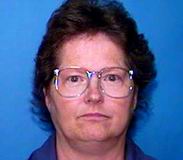 Bobbie Sue Terrell
Murderer · USA · 1984
Bobbie Sue Dudley Terrell was a Pinellas County nurse and worked as the night s…
12 victims
Bobbie Sue Terrell
Murderer · USA · 1984
Bobbie Sue Dudley Terrell was a Pinellas County nurse and worked as the night s…
12 victims
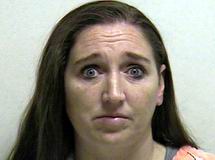 Megan Huntsman
Murderer · USA · 1996
Megan Huntsman was 40 at sentencing. She was a mother of three children who wer…
6 victims
Megan Huntsman
Murderer · USA · 1996
Megan Huntsman was 40 at sentencing. She was a mother of three children who wer…
6 victims
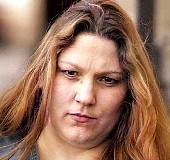 Angela Johnson
Murderer · USA · 1993
Angela Jane Johnson was convicted in federal court of aiding and abetting the m…
5 victims
Angela Johnson
Murderer · USA · 1993
Angela Jane Johnson was convicted in federal court of aiding and abetting the m…
5 victims
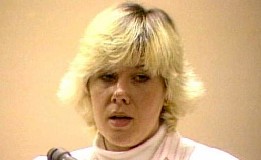 Catherine May Wood
Murderer · USA · 1987
Catherine May Wood was an American caregiver who worked at the Alpine Manor Nur…
5 victims
Catherine May Wood
Murderer · USA · 1987
Catherine May Wood was an American caregiver who worked at the Alpine Manor Nur…
5 victims
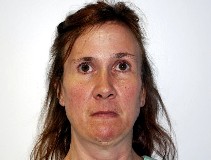 Michele Kalina
Murderer · USA · 1996
Michele Kalina pleaded guilty to murder for one of five infants she initially w…
5 victims
Michele Kalina
Murderer · USA · 1996
Michele Kalina pleaded guilty to murder for one of five infants she initially w…
5 victims
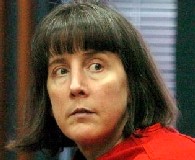 Amy Bishop
Murderer · USA · 1986
Amy Bishop — biology professor and perpetrator · James Anderson — Bishop’s husb…
4 victims
Amy Bishop
Murderer · USA · 1986
Amy Bishop — biology professor and perpetrator · James Anderson — Bishop’s husb…
4 victims
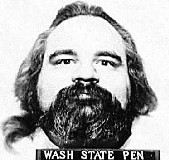 Mitchell Rupe
Murderer · USA · 1981
Mitchell Rupe (1955–February 8, 2006) was convicted of aggravated first degree…
2 victims
Mitchell Rupe
Murderer · USA · 1981
Mitchell Rupe (1955–February 8, 2006) was convicted of aggravated first degree…
2 victims
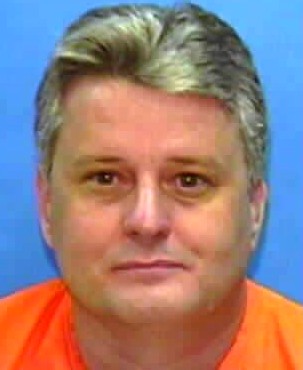 Bobby Joe Long
Serial killer · USA · 1984
Bobby Joe Long (born October 14, 1953) was an American serial killer. He was al…
10 victims
Bobby Joe Long
Serial killer · USA · 1984
Bobby Joe Long (born October 14, 1953) was an American serial killer. He was al…
10 victims
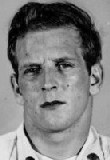 Edward Edwards
Serial killer · USA · 1977
Edward Edwards (June 14, 1933 – April 7, 2011) was a convicted American serial…
5 victims
Edward Edwards
Serial killer · USA · 1977
Edward Edwards (June 14, 1933 – April 7, 2011) was a convicted American serial…
5 victims
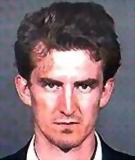 Kenneth Kimes
Murderer · USA · 1996
Kenneth Kimes was convicted and sentenced in relation to the murders of Irene S…
3 victims
Kenneth Kimes
Murderer · USA · 1996
Kenneth Kimes was convicted and sentenced in relation to the murders of Irene S…
3 victims
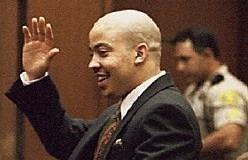 Damian Monroe Williams
Murderer · USA · 2000
Damian Monroe Williams (also known as Football) was born March 17, 1973. Willia…
1 victim
Damian Monroe Williams
Murderer · USA · 2000
Damian Monroe Williams (also known as Football) was born March 17, 1973. Willia…
1 victim
- Gender
- female
- Country
- USA
- Location
- Las Vegas, Clark County, Nevada, USA
- Date of birth
- May 31, 1943
- Age at first offence
- 51
- Characteristics
- parricide, mutilation, domestic violence
- Victim profile
- Her fifth husband, real estate magnate Ronald Rudin, 64
- Method of murder
- Shooting
- Date(s) of murder
- December 18, 1994
- Years active
- 1994
- Date of arrest
- November 1999
- Status
-
Life imprisonment
Sentenced to life in prison with parole possible after 20 years on August 31, 2001
Case record: Margaret Rudin
Overview
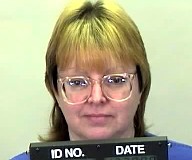
Margaret Rudin (born May 31, 1943) was an American woman convicted in the December 1994 murder of her fifth husband, Ronald Rudin. She was convicted by a jury after a 10-week trial. Jurors found her guilty of first-degree murder (Count II) and unauthorized surreptitious intrusion of privacy by listening device (Count I).
Rudin reported her husband missing after his disappearance. Ronald Rudin’s decapitated, burned remains and bullet-ridden body were found at Nelson’s Landing on the Colorado River south of Las Vegas. The case was notable for the discovery of Ronald Rudin’s skull and charred bones in a remote desert area near Lake Mohave, and for the recovery of three .22 caliber bullets from inside his skull and two bullet fragments.
People
- Margaret Rudin — defendant; wife of Ronald Rudin.
- Ronald (“Ron”) Rudin — victim; real estate magnate and husband of Margaret Rudin; died from multiple gunshot wounds to the head.
- Dona Cantrell (also referred to as “Dona Cantrell-Robinson”) — Rudin’s sister; testified for the prosecution.
- Augustine Lovato — handyman; testified about cleaning and removing items from the master bedroom.
- Yehuda Sharon — Rudin’s close friend; described as involved in disposal of the body; was granted immunity.
- Patricia Brown — Ron’s attorney.
- Bruce Honabach — antique dealer; testified for the prosecution.
- Thomas Pitaro — defense attorney appointed to assist; later took a leading role on behalf of Rudin.
- John Momot — defense attorney appointed.
- Michael Amador — defense attorney initially representing Rudin on a pro bono basis; later removed as co-counsel.
- Christopher Oram — Rudin’s new attorney in connection with post-conviction proceedings.
- Sally Loehrer — Clark County District Judge.
- Roger L. Hunt — U.S. District Court Judge.
- Joseph Bonaventure — sentencing judge and trial judge.
- Marcus D. Cooper — Public Defender for Appellant.
- Craig D. Creel — Deputy Public Defender for Appellant.
- Brian Sandoval — Attorney General for Respondent.
- David J. Roger — District Attorney for Respondent.
- James Tufteland — Chief Deputy District Attorney.
- Christopher J. Owens — Deputy District Attorney.
- Michael Perkins — blood splatter expert for the State.
- Ronald Vest — foreman of the jury.
- Juror Number Eleven — described as the lone holdout who was initially in favor of a lesser count or not guilty and later voted guilty.
- Harold Dow — correspondent for “48 Hours.”
- Su Lyles — close friend and former employee of Ronald Rudin.
- Jeanne Nakashima — friend of Rudin; testified she was with Rudin at the antique store.
- Carol Kawazoe — tax preparation office worker; testified about conversation with Rudin.
- Detective Frank Janise — detective who spoke with Rudin at the antique store.
- Deputy Public Defender Craig Creel — testified in connection with hearing on Amador’s alleged faults.
Timeline
- December 18, 1994 — Ronald Rudin disappeared from his home in Las Vegas.
- December 19, 1994 — police investigators found Ronald Rudin’s car parked in an alley behind the Crazy Horse Too Saloon in Las Vegas; the car was locked and police retrieved two sets of keys from inside.
- December 20, 1994 — two of Ronald Rudin’s employees went to a local police station to report his disappearance; Rudin made a missing persons report early that afternoon.
- December 21, 1994 — Rudin hired Augustine Lovato to clean stains on the carpet in front of her washer and dryer.
- December 23, 1994 — Ronald Rudin’s car was discovered parked in the alley behind the Crazy Horse Too Saloon in Las Vegas.
- December 25, 1994 — Rudin hired a locksmith and gained entry into Ronald Rudin’s realty office.
- December 29, 1994 — Cantrell testified that Detective Frank Janise asked to speak with Rudin; Rudin told the detective about Ron’s clothing.
- January 12, 1995 — Rudin hired Augustine Lovato to help turn the master bedroom into an office.
- January 21, 1995 — fishermen discovered charred remains near Nelson’s Landing at Lake Mohave.
- January 23, 1995 — detectives met with Rudin to notify her that they had identified Ronald Rudin’s remains.
- January 27, 1995 — police searched Rudin’s residence and discovered blood-like splatters in multiple locations.
- January 27, 1995 — Rudin was observed by police surveillance driving toward her residence, leaving the area, and making phone calls at a convenience store; she then visited Cantrell, went to Sharon’s residence, and police followed them to Stateline.
- November 1999 — law enforcement officers in Massachusetts apprehended Rudin.
- December 1994 — Ronald Rudin was murdered; the judgment was for murder with use of a deadly weapon (Count II).
- April 17, 1997 — Rudin was indicted by a Clark County grand jury for unauthorized surreptitious intrusion of privacy by listening device, murder with use of a deadly weapon, and accessory to murder.
- March 31, 2000 — Rudin was arraigned in the Eighth Judicial District Court and pleaded not guilty to all counts.
- February 20, 2001 — the district court appointed attorney Thomas F. Pitaro to assist Amador to avoid further delays.
- March 2, 2001 — trial commenced.
- March 5, 2001 — Rudin notified the district court, outside the jury’s presence, that she was dissatisfied with her defense counsel.
- March 8, 2001 — district court conducted a hearing to determine if Rudin and her counsel needed additional time to prepare.
- March 15, 2001 — Rudin moved for a mistrial based on Amador’s alleged lack of preparation.
- March 29, 2001 — the district court appointed John Momot as an additional attorney for Rudin.
- April 16, 2001 — defense began its case-in-chief after a five-day recess.
- April 23, 2001 — Donald Shaupeter contacted the defense; Rudin filed a motion to dismiss the charges regarding alleged withholding of exculpatory evidence; the district court allowed the defense to reopen to elicit Shaupeter’s testimony.
- April 30, 2001 — district court addressed a reported issue involving Juror Eleven and an alternate juror.
- May 1, 2001 — state indicated it had information suggesting Juror Eleven had been untruthful during jury selection; the district court chose not to remove Juror Eleven.
- May 2, 2001 — jury returned a verdict of guilty on Counts I and II.
- May 8, 2001 — Rudin filed a motion for a new trial.
- August 24, 2001 — district court denied Rudin’s motion for a new trial.
- August 31, 2001 — Rudin was sentenced to life in prison with parole possible after 20 years; the court ordered a concurrent sentence for wiretapping and an additional month for refusing a handwriting sample.
- September 17, 2001 — judgment of conviction was entered on Count I and Count II.
- 2002 — Nevada Supreme Court denied Rudin’s appeal and found she was not denied effective assistance of counsel.
- April 26, 2011 — Las Vegas Sun reported Rudin filed a habeas corpus petition in federal court seeking a new trial and reversal.
- January 25, 2012 — U.S. District Court Judge Roger L. Hunt dismissed Rudin’s federal habeas corpus case with prejudice.
- 10 May 2010 — Nevada Supreme Court ruled against convicted Rudin and ruled she would not get another trial; the lower appeals court’s ruling was overturned and the original conviction stood.
- February 11, 2009 — CBSNews.com report included information about the investigation and trial; it described key events including discovery of skull and charred bones and the two-year investigation before police moved to arrest Rudin.
The offence
Ronald Rudin was shot to death and his remains were found burned. Investigators identified the cause of death as multiple gunshot wounds to the head. Police recovered three .22 caliber bullets from inside Ronald Rudin’s skull and two bullet fragments.
The State’s theory at trial included that Margaret Rudin and an accomplice shot Ronald Rudin while he slept and then burned his remains in a trunk near Lake Mohave.
Rudin faced conviction for:
- Count I — unauthorized surreptitious intrusion of privacy by listening device.
- Count II — murder with use of a deadly weapon.
The Nevada Supreme Court opinion described listening device activity:
- In 1991, following an altercation between Rudin and Ron’s employees, Ron forbade Rudin from entering his realty office before 5:00 p.m.
- Ron also removed a phone line shared between his office and his residence after his employees claimed Rudin was eavesdropping.
- Rudin and her sister secretly placed hidden listening devices in Ron’s office that transmitted a signal to a receiver and recorder kept in the residence.
The Nevada Supreme Court opinion also described a secret directive:
- In 1991, Ron executed a secret directive to the trustees of his estate that they take “extraordinary steps” to investigate the cause of his death if he died by “violent means.”
- The directive provided that any beneficiary who caused his death was not to receive any assets from his estate.
The National Post report described Ronald Rudin’s will clause:
- “In the event my death is caused by violent means [for example gunshot, knife or a violent automobile accident] extraordinary steps be taken in investigating the true cause of the death.”
- “Should said death be caused directly or indirectly by a beneficiary of my estate, said beneficiary shall be totally excluded from my estate and/or any trusts I may have in existence.”
Investigation
Investigators discovered that the bullet-riddled, charred remains were associated with Ronald Rudin through dental records identification after the remains were found near Nelson’s Landing at Lake Mohave.
Police recovered evidence from Rudin’s residence, including minute splatters of a blood-like substance on the walls, ceiling, an outlet cover, and an electronic control device, and blood-like splatters on a box spring and on a glamour shot portrait.
Ballistic evidence included the presence of a .22 caliber Ruger handgun with a sound suppressor found by a scuba diver in July 1996 near Pyramid Island at Lake Mead. The handgun was registered to Ron, and Ron had reported the items missing in October 1988. The opinion recounted Ron sent a letter to the Bureau stating he suspected his wife packed his gun in anticipation of a move due to a pending divorce.
The opinion described surveillance and travel after the remains were discovered:
- Rudin was observed being surveilled as she drove toward her residence, made phone calls at a convenience store, visited Cantrell, drove to Sharon’s residence for nearly two hours, and then left with Sharon and crossed to California.
- Police contacted the Los Angeles Police Department, which surveilled Rudin until the next morning when she boarded a flight to St. Louis, Missouri.
- Rudin did not return to Nevada until Massachusetts law enforcement apprehended her and she was extradited to Nevada in 1999.
Arrest and custody
Rudin was indicted on April 17, 1997, and a warrant was issued for her arrest. Law enforcement officers in Massachusetts apprehended her in November 1999. After officers asked Rudin why she was being arrested, she responded: “Yes. This is about Las Vegas, isn't it?”
Trial
The trial started on March 2, 2001.
Opening statement remarks
Michael Amador’s opening statement included:
This is a great day, in a lot of different ways. Some days are difficult; some days we hear bad news or we go through a difficult time, but every day, every day, depending on how you look at it, with a few exceptions, can be a celebration. ․ This is a great today for me. This is a culmination of a career. The people in this case, we are not strangers; we know each other. Chris and I were sworn in as deputy DAs the same day. And I congratulate Chris on a presentation that was organized and well thought out, the best money can buy. It was really good. ․ If you want to know an opinion about me, I guarantee you'll find some, different ones from different people. Not many people know me. I have few close friends, like Ronald Rudin had few close friends. ․ I could be a wonderful, caring father, coaching soccer, helping kids with their homework, which I did the first time I got married when they were young. Then another day, I might scream at someone, yell at them for-I don't know-for asking me some question, because I was too busy and I was thinking of something else. ․ The difficulty I have at times is communicating to people. I have to look at it and talk to other people and they will bring me back down to earth and say: Mike, what are you trying to say? What are you trying to get across? ․ I reviewed again this morning my opening statement and threw most of it away. I don't know, maybe it's just something I do.
Motions and disputes during trial
On March 5, 2001, Rudin told the district court outside the jury’s presence that she believed Michael Amador was not prepared to try the case, had not adequately investigated witnesses, and had problems in his personal life impairing his effectiveness. Rudin indicated she did not desire a mistrial because she was satisfied with Pitaro’s legal representation and did not want to replace Amador; she wanted Pitaro to take a more active role.
On March 15, 2001, Rudin moved for a mistrial, claiming Amador was not adequately prepared, failed to adequately cross-examine Cantrell, and Pitaro had joined the defense too late to remedy the problem. The district court denied the motion.
On March 29, 2001, the district court appointed John Momot as an additional attorney for Rudin.
Defense evidence themes
The Nevada Supreme Court recounted that the defense elicited testimony from over twenty witnesses, focusing on:
- an expert’s testimony that forensic evidence did not support the conclusion that Ronald Rudin was murdered in the master bedroom; and
- testimony that several other people had motive and opportunity to kill Ronald Rudin.
Juror issues
Juror Number Eleven was reported to have been upset about being the only juror favoring a not guilty verdict and was described as having gotten into an altercation with staff at the Golden Nugget over a smoking break. The district court denied a mistrial and decided not to discharge Juror Eleven after concluding the jury was not tainted and Rudin had not been prejudiced.
The State later moved that Juror Eleven be discharged due to information suggesting she had been untruthful during jury selection about close friends in law enforcement and whether she had been the victim of a crime. After meeting with Juror Eleven in chambers, the district court chose not to remove Juror Eleven.
Verdict and post-verdict statements
On May 2, 2001, after thirty-eight days of trial, the jury returned guilty verdicts on Counts I and II.
The jury foreman held a one-person press conference after the verdict and declared:
In his opening remarks on March 2, [defense attorney] Michael Amador said, “This is a great day.” I submit to you that today, May 2, is a great day. Ronald Rudin, his family and the people of the great state of Nevada can [take] comfort in the fact that justice was served today.
The verdict was for first-degree murder and illegal wiretapping. Another reporting account described jurors deliberated for nearly 28 hours and returned a guilty verdict after five days of deliberations, with sentencing following.
Sentencing
Margaret Rudin was sentenced on August 31, 2001.
The sentencing judge was Joseph Bonaventure.
Sentencing included:
- Life in prison with parole possible after 20 years for the December 1994 death of her husband, Ronald Rudin.
- A concurrent sentence of 19 months to 4 years for wiretapping her husband’s office.
- An extra month in prison for refusing to give authorities a handwriting sample.
The Department of Parole and Probation had recommended a no-parole life term.
At sentencing, Joseph Bonaventure told Rudin:
“You're going to be locked away in the cold confines of your prison cell, never to be heard from again,”
A related account described that Rudin faced life in prison when sentenced June 8 and that she was sentenced to at least 20 years in prison after jury deliberations, but the sentencing date and specific life-parole structure were described as occurring on August 31, 2001 in reporting.
Appeals
Nevada Supreme Court
Rudin appealed her conviction. In 2002, the Nevada Supreme Court denied Rudin’s appeal, finding she was not denied effective assistance of counsel.
The Nevada Supreme Court decision described Rudin’s appeal arguments:
- abuse of discretion in admitting unreliable expert testimony,
- prosecutorial misconduct,
- judicial misconduct,
- inability of one trial counsel to adequately prepare for trial.
The Nevada Supreme Court concluded Rudin’s arguments were without merit and affirmed the judgment of conviction.
The Supreme Court opinion framed the appeal as from a judgment of conviction on:
- Count I — unauthorized surreptitious intrusion of privacy by listening device, and
Subsequent rulings described in reporting
A reporting account stated that on 10 May 2010, the Nevada Supreme Court ruled against convicted Rudin and ruled she would not get another trial. A lower appeals court’s ruling was overturned and the original conviction stood.
Federal habeas corpus proceedings
On April 26, 2011, the Las Vegas Sun reported that Rudin filed a habeas corpus petition in federal court seeking a new trial and reversal of her conviction based on:
- ineffective assistance of trial counsel,
- impermissible hearsay testimony,
- faulty jury instructions,
- and other points.
On January 25, 2012, U.S. District Court Judge Roger L. The opinion in that ruling found that Rudin’s federal petition was not filed in a timely manner and stated that the ruling paved the way for an appeal to the 9th U.S. Circuit Court of Appeals in San Francisco.
Other details
Early life and marriage history
Rudin was born in Memphis, Tennessee, one of three daughters of a barber. The family moved frequently and she had lived in 15 states before graduating from high school. She had been married four times before meeting Ronald Rudin at the First Church of Religious Science in Las Vegas. Rudin and Ron married in September 1987.
Victim age and key relationship facts described
Ronald Rudin was described as 64 years old at trial reporting. Margaret Rudin was described as 58 in reporting and 57 in another trial reporting account.
Trial evidence highlights described
The National Post account described that after prosecutors said Rudin and an accomplice shot Ron in their bedroom, his bullet-ridden skull and charred bones were found in a remote desert fire pit in 1995, a month after employees reported him missing.
Prosecutors concentrated in closing arguments on circumstantial evidence, including:
- Rudin’s slow contact to police,
- her behavior and actions in connection with financial papers and will,
- and the handling of carpet and items from the master bedroom.
Defense arguments in reporting included that:
- the defense suggested others had motives and opportunities to murder Ronald Rudin,
- and the condition of remains was said to be inconsistent with the prosecution’s fire-evidence theory, including defense experts saying more than fifty gallons of gasoline would be needed to burn the body to the degree prosecutors described.
Evidence involving the trunk and carpet
The Nevada Supreme Court opinion described Rudin’s hiring of Lovato to dismantle and remove parts of the master bedroom, including removing carpet beneath the bed and removing items later loaded into a U-Haul truck.
The Nevada Supreme Court opinion described a steamer trunk:
- found with Ronald Rudin’s remains,
- and Cantrell testified she had seen a similar trunk in Rudin’s antique shop during the shop’s grand opening,
- and an antique dealer Bruce Honabach recalled selling such a trunk to Rudin in 1994.
Defense claims about shakedown and reward
In reporting, defense attorney Tom Pitaro said Augustine Lovato lied to police to receive a reward. Trustees for Ron’s estate offered $25,000 for information leading to the conviction; Lovato would receive the entire $5,000 according to reporting.
Jury foreperson and juror behavior described in reporting
Reporting described juror Ronald Vest wearing cowboy boots with golden tips and holding a “Teachers Rule” pin; it described jurur #11 phoning an alternate, being urged to deliberate, and jurors considering coerced decision-making claims that were contested by other jurors.
Post-trial motion and relief of counsel
After the verdict, Rudin filed a motion for a new trial. During a hearing on May 9, 2001, Rudin moved to terminate Michael Amador’s services, alleging misconduct including:
- abusing drugs,
- retaining personal possessions without permission,
- mishandling the defense,
- secretly securing media rights,
- and secretly releasing private information to tabloid media.
After a hearing, the district court relieved Amador from further representing Rudin.
Outcome
Rudin’s conviction was affirmed by the Nevada Supreme Court. Her federal habeas corpus case was dismissed with prejudice by U.S. District Court Judge Roger L. Hunt on January 25, 2012, on timeliness grounds. She remained sentenced to life in prison with parole possible after 20 years.
Spotted an error, or have more information about this case?