
Robin Lee Row
Murderer Bobbie Sue Terrell
Murderer · USA · 1984
Bobbie Sue Dudley Terrell was a Pinellas County nurse and worked as the night s…
12 victims
Bobbie Sue Terrell
Murderer · USA · 1984
Bobbie Sue Dudley Terrell was a Pinellas County nurse and worked as the night s…
12 victims
 Megan Huntsman
Murderer · USA · 1996
Megan Huntsman was 40 at sentencing. She was a mother of three children who wer…
6 victims
Megan Huntsman
Murderer · USA · 1996
Megan Huntsman was 40 at sentencing. She was a mother of three children who wer…
6 victims
 Angela Johnson
Murderer · USA · 1993
Angela Jane Johnson was convicted in federal court of aiding and abetting the m…
5 victims
Angela Johnson
Murderer · USA · 1993
Angela Jane Johnson was convicted in federal court of aiding and abetting the m…
5 victims
 Catherine May Wood
Murderer · USA · 1987
Catherine May Wood was an American caregiver who worked at the Alpine Manor Nur…
5 victims
Catherine May Wood
Murderer · USA · 1987
Catherine May Wood was an American caregiver who worked at the Alpine Manor Nur…
5 victims
 Michele Kalina
Murderer · USA · 1996
Michele Kalina pleaded guilty to murder for one of five infants she initially w…
5 victims
Michele Kalina
Murderer · USA · 1996
Michele Kalina pleaded guilty to murder for one of five infants she initially w…
5 victims
 Amy Bishop
Murderer · USA · 1986
Amy Bishop — biology professor and perpetrator · James Anderson — Bishop’s husb…
4 victims
Amy Bishop
Murderer · USA · 1986
Amy Bishop — biology professor and perpetrator · James Anderson — Bishop’s husb…
4 victims
 Guy Martel
Spree killer · France
Guy Martel killed seven people and wounded five others in a shooting spree thro…
7 victims
Guy Martel
Spree killer · France
Guy Martel killed seven people and wounded five others in a shooting spree thro…
7 victims
 Artur Ryno
Serial killer · Russia · 2006
Artur Ryno led a skinhead gang described as the “Ryno skinhead gang” (also desc…
37 victims
Artur Ryno
Serial killer · Russia · 2006
Artur Ryno led a skinhead gang described as the “Ryno skinhead gang” (also desc…
37 victims
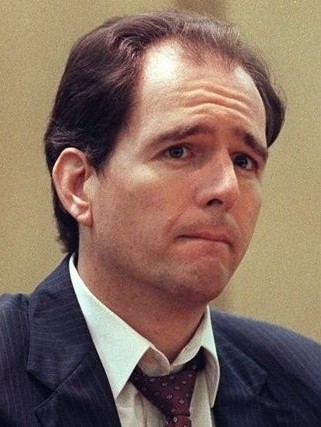 Danny Rolling
Serial killer · USA · 1989
Danny Harold Rolling was executed by lethal injection in Florida on October 25,…
8 victims
Danny Rolling
Serial killer · USA · 1989
Danny Harold Rolling was executed by lethal injection in Florida on October 25,…
8 victims
 Marc Lepine
Mass murderer · Canada · 1989
Marc Lépine committed a shooting at the École Polytechnique engineering school…
14 victims
Marc Lepine
Mass murderer · Canada · 1989
Marc Lépine committed a shooting at the École Polytechnique engineering school…
14 victims
 Julius Murphy
Murderer · USA · 1997
Julius Murphy (TDCJ Number 999279) was born on 10/25/1978. He was received on 0…
1 victim
Julius Murphy
Murderer · USA · 1997
Julius Murphy (TDCJ Number 999279) was born on 10/25/1978. He was received on 0…
1 victim
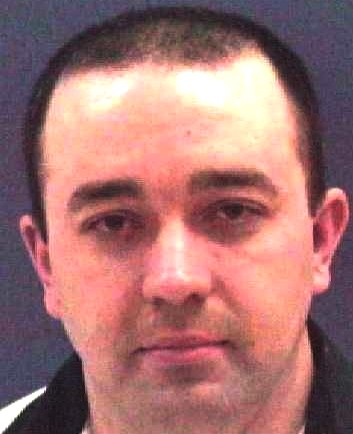 David Scott Franks
Murderer · USA · 1994
Name: David Scott Franks · August 5, 1994 — David Scott Franks stabbed to death…
3 victims
David Scott Franks
Murderer · USA · 1994
Name: David Scott Franks · August 5, 1994 — David Scott Franks stabbed to death…
3 victims
- Gender
- female
- Country
- USA
- Location
- Boise, Ada County, Idaho, USA
- Date of birth
- September 12, 1957
- Age at first offence
- 35
- Characteristics
- arson, attempt to collect insurance money, torture
- Victim profile
- Her husband Randy Row, 34, and her children from a previous marriage, Joshua Cornellier, 10, and Tabitha Cornellier, 8
- Method of murder
- Carbon monoxide poisoning
- Date(s) of murder
- February 10, 1992
- Years active
- 1992
- Date of arrest
- 3 days after
- Status
-
Sentenced to death
Sentenced to death on December 16, 1993
Case details
Robin Lee Row was convicted of aggravated arson and three counts of murder for setting a fire in Boise in February 1992 that killed her husband and two children while they slept.
Row was White and was age 35 at the time of the crimes, with a date of birth of 9-12-1957. The victims were her husband, Randy Row (White male age 34), her son, Joshua (White male age 10), and her daughter, Tabitha (White female age 8). The arson occurred in February 1992 at a Boise duplex on Seneca Street during the early morning hours, and the deaths occurred from carbon monoxide poisoning while the victims slept in their upstairs bedrooms.
Row was sentenced to death on December 16, 1993. She continued to appeal the death sentence.
Timeline
- February 10, 1992 — Robin Row set fire to her Ada County home (duplex on Seneca Street in Boise); Randy Row, Joshua, and Tabitha died from carbon monoxide poisoning while they slept in upstairs bedrooms.
- August 29, 2011 — Robin Lee Row v. Thomas J. Beauclair was decided by the United States District Court for the District of Idaho; the court denied habeas relief and dismissed the case.
- January 25, 2008 — The Idaho Supreme Court dismissed an appeal from Robin Row on death row.
- December 16, 1993 — The trial court sentenced Row to death for the murder convictions and to twenty years fixed for aggravated arson.
- October 19, 1993 — The sentencing hearing began.
The offence
On February 10, 1992, Robin Row’s husband, Randy, and her two children, Joshua and Tabitha, died from carbon monoxide poisoning while they slept in their upstairs bedrooms during an early morning fire at their duplex on Seneca Street in Boise.
Investigators later concluded that the fire had been intentionally set downstairs with a flammable substance that likely burned slowly before igniting a much hotter burning petroleum product. The circuit breaker for the smoke detector was shut off and the furnace fan was set to run continuously, feeding the flames and circulating smoke quickly through the home. Row was not harmed, as she was staying at the home of her close friend, Joan McHugh.
Within the weeks before the fire, Row told McHugh and others that Randy was physically abusing her and that the abuse involved serious beatings, kidnapping, and rape. Row also told her friends that she intended to divorce Randy and that she had recently moved her possessions out of the family home and into a storage unit. Later developments showed Row’s abuse claims were either largely or entirely fabricated.
In the period after investigators learned of Row’s loss of two other children under suspicious circumstances, the arson investigation focused on her.
Investigation
Investigators obtained a search warrant for the burned Seneca Street residence, Row’s car, her storage unit, and McHugh’s home.
Inside the storage unit, investigators uncovered evidence that Row had been embezzling money from the YWCA, where she had recently worked as the manager of a bingo game. Investigators also found insurance policies on the lives of Randy, Joshua, and Tabitha that totaled over $275,000, and Robin Row was the beneficiary of these policies, with the last policy purchased only a few weeks before the fire.
Investigators later discovered that Row had started a new sexual relationship with Joan McHugh’s adult son, John Blackwell, in the weeks before the fire.
Investigators also found that Row’s claims of abuse were contradicted by the lack of official reports and by the fact that state welfare agents had never been to the home to give Randy tranquilizing shots after domestic disturbances that Row had claimed.
Sheriff Gary Raney, the lead investigator in 1992, described the murders as “probably the most premeditated, in some ways, premeditated for gain murders that I’ve seen.” Raney said Row had taken out life insurance policies on her family and that there was a quarter million dollars covering her children. Raney said “For her, it was a matter of would I rather have this money or would I rather have my husband and my two kids. She’s a sociopath, so she could make the decision, I’d rather have the money.”
Raney also stated that he believed Row killed a 15-month old daughter in New Hampshire in 1976 and her 6-year-old son in California in 1980. Raney said the New Hampshire case involved a daughter whose cause of death was listed as SIDS, but that evidence showed children that age do not die from SIDS and that he believed Row smothered the baby. Raney said Row was staying in a borrowed cabin with her 6-year-old son Keith when a fire broke out and killed him in 1980; Raney said forensics suggested the boy’s bedroom door was locked and an electric heater was pushed up against his bed blankets, and that he believed the boy probably tried crawling to the door, couldn’t get out, and died trying to get to the window. Raney said Row collected $28,000 in life insurance from Keith’s death.
Arrest
On February 13, 1992, Row was arrested and charged with grand theft for stealing from the YWCA.
Row was not yet charged with any crimes associated with the suspected arson at that time, but she remained incarcerated because she could not post a bond on the theft charge. An attorney represented her on that charge.
After Row began calling Joan McHugh from the county jail, McHugh was in contact with Ada County Sheriff’s Detective Gary Raney. Raney suggested that McHugh should secretly tape her telephone conversations with Row, and McHugh agreed. The Sheriff’s Office provided the equipment for her to do so.
On March 18, Detective Raney suggested that McHugh should lie and tell Row that she woke up early on the morning of the fire and came downstairs to where Row was supposedly sleeping, but that she did not see Row. When Row was confronted with this scenario, she said that she could not remember what she was doing at that time.
By March 20, law enforcement officers believed they had sufficient evidence to charge Row with murder. A deputy prosecuting attorney signed a criminal complaint charging Row with three counts of murder at about 11:00 a.m. on that date, and the complaint was presented to a magistrate judge, who issued a warrant for Row’s arrest. At 1:00 p.m., the Sheriff and prosecutors held a joint press conference to announce the filing of these charges.
Row learned she was being charged and called McHugh at about the same time as the press conference. McHugh repeated the story about not finding Row in the home on the night of the fire. Row responded that she had been outside speaking with her psychiatrist, whom she refused to name. Row later said she had been outside speaking with her psychiatrist in a car outside the apartment.
Row was arrested on the murder charges the following Monday, March 23, and she made her initial appearance before a magistrate judge that day.
Trial
After a preliminary hearing, Row was bound over for trial on three counts of first degree murder and one count of aggravated arson.
The trial court appointed the Ada County Public Defender as counsel for Row, and August Cahill and Amil Myshin were assigned to the case.
A jury trial was held from late January to early March of 1993. The jury returned guilty verdicts on all charges.
Sentencing
The sentencing hearing began on October 19, 1993.
The State chose not to offer any additional evidence in aggravation.
Defense counsel Cahill and Myshin presented the testimony of three witnesses in addition to letters written in support of Row, and Row gave an unsworn statement in court.
At the conclusion of the hearing, the trial court found four statutory aggravating circumstances proven beyond a reasonable doubt:
- Row committed multiple murders at the same time, Idaho Code § 19-2515(g)(2).
- The murders were committed during an arson, making them first degree felony murders, and were accompanied by a specific intent to kill, Idaho Code § 19-2515(g)(7).
- The murders were committed for remuneration or the promise of remuneration, Idaho Code § 19-2515(g)(4).
- Row exhibited an “utter disregard for human life,” Idaho Code § 19-2515(g)(6).
The trial court found mitigation factors including that Row had endured a difficult and abusive childhood, had shown responsibility in the past, did not have an extensive record of violent crimes, was involved in a mutually abusive relationship with Randy, and suffered from various mental, psychological, and personality problems.
The court weighed all mitigating circumstances against the multiple murder aggravating factor and concluded that mitigation did not outweigh that single aggravating circumstance. The court declined to engage in a formal weighing assessment for each of the other aggravating factors, concluding that it would be an exercise in futility.
On December 16, 1993, the trial court sentenced Row to death for the murder convictions and to twenty years fixed for aggravated arson.
During sentencing in Idaho proceedings, the trial judge Alan Schwartzman called Row a pathological liar, citing Row’s purchase of $276,000 in life insurance on her family in the year preceding their deaths and her admission that she was having an affair with a married man. Schwartzman said the premeditated arson murders were “the final betrayal of motherhood,” and “a descent into the blackened heart of darkness.”
Row’s mitigation evidence at the penalty phase included testimony from her sister, Terry Cornellier, about Row’s difficult childhood, open fights between Row’s mother and father in front of the children, and the divorce when Row was in her early teenage years. Cornellier testified that Row felt abandoned after her father left the family and was in prison, and Cornellier testified that Row was not close to her mother, described as not loving or nurturing. Cornellier testified that she had been sexually abused by a step-grandfather for many years and that Row had recently admitted to her that she had also been sexually abused by the same man.
After Cornellier’s testimony, Row gave an unsworn statement to the court. Row claimed that “through many hours of intense interviews and hypnosis” she had come to realize she was not “completely innocent,” and she admitted for the first time that she was at the Seneca Street residence on the night of the fire. Row asserted that the fire was intended to cause only minor property damage so that Randy would move back with his family. Row also admitted that she had been upstairs and had seen Tabitha asleep.
Defense counsel presented testimony from a psychologist, Dr. Art Norman, and Norman’s assistant, Carla Anderson. Dr. Norman found Row’s affect to be fixed, flat, and inappropriate in light of the circumstances of the case and concluded that she suffered from “alexithymia,” described as a pathological condition causing a person to be unable to express their emotions or feelings. Anderson testified that Row eventually came to express remorse and that Row had told her John Blackwell aided or possibly started the fire.
The State offered rebuttal testimony from Dr. Robert Engle, who claimed that “alexithymia” was nothing more than a description of a person’s emotional state and was not a formal diagnosis of a mental illness. Engle interpreted Row’s psychological test results as reflecting an antisocial personality disorder with histrionic, impulsive, dishonest, and manipulative tendencies, and also believed she suffered from mild chronic depression.
The trial court considered mitigation evidence in seven numbered paragraphs in its written decision and found that Row had a mutually abusive and strained relationship with Randy and did not have a record of violent crimes. Regarding mental health, the court said it had “no difficulty in referring to Robin Row as mentally ill or having a mental disorder,” but not in the sense that she was psychotic or could not understand the difference between right and wrong. The court found Row had an antisocial personality disorder and exhibited “alexithymia” as described by Dr. Norman.
The trial court weighed the mitigating facts against the most compelling statutory aggravating factor that Row had simultaneously committed three willful and deliberate murders and concluded that the murders “weigh like a boulder over against the pebbles of those mitigating circumstances articulated above.” The trial court found it would not be meaningful to weigh each of the remaining aggravating circumstances separately given that issue had already been decided, and determined the death penalty was appropriate.
Post-conviction and appeals
After Row was sentenced, Rolf Kehne and John Adams substituted as conflict counsel for the Ada County Public Defender in the capital post-conviction and appellate proceeding.
The trial court ordered the immediate filing of a “tentative or generic” post-conviction petition required by Idaho Code § 19-2719, but set a deadline of 42 days after trial transcripts were completed to submit a finalized petition.
Kehne and Adams lodged an initial Petition for Post-Conviction Relief on March 17, 1994. Six months passed before the transcripts were finished, and counsel did not file an amended petition by the deadline. Three months later counsel requested another extension of time, granted until June 15, 1995.
Kehne and Adams asked that the court appoint an independent “money judge” to review motions for the appointment of experts. The request was denied, though the court left open in camera review of certain privileged matters. In March 1995, counsel filed a motion for an order authorizing $5,000 for a “mitigation specialist,” which was denied without prejudice, with the court indicating it would consider again if a special showing could be made.
On June 16, 1995, counsel filed an Amended Petition including claims of ineffective assistance of trial counsel. Two weeks later, the court granted limited discovery and set an evidentiary hearing for January 8, 1996. On the day the hearing was set to begin, counsel requested another continuance to follow up on an earlier CT scan showing Row’s brain may have atrophied; the court denied the continuance and the hearing proceeded.
Kehne and Adams’ evidentiary hearing included testimony from August Cahill and Amil Myshin. Kehne testified as an “expert” witness and gave his opinion about the reasonableness of trial counsel’s investigation. The trial court denied all relief in a Memorandum Decision.
On March 18, 1998, the Idaho Supreme Court affirmed Row’s convictions, sentences, and the trial court’s order denying post-conviction relief (State v. Row, 955 P.2d 1082 (Idaho 1989), “Row I”).
Row filed a Petition for Writ of Habeas Corpus in the federal court in 1999. The federal case was stayed at her request pending a second post-conviction proceeding, which was dismissed (Row v. State, 21 P.3d 895 (Idaho 2001), “Row II”). After returning to federal court, Row filed a Second Amended Petition.
The United States District Court for the District of Idaho, in Robin Lee Row v. Thomas J. Beauclair and Brian T. Underwood, issued a Capital Case Memorandum Decision and Order delivered by Honorable B. Lynn Winmill Chief U. S. District Judge, dated August 29, 2011. The court concluded that Row was not entitled to habeas relief and dismissed the case. The court denied relief on claims including Claims 1-6, 7 (remainder), 8-12, 21, 22, 32, 35-37, and denied with prejudice Row’s request for new evidentiary development. The court dismissed the case because there were no claims left to be adjudicated.
The court also issued a Certificate of Appealability limited to resolution of Claims 1, 2, 7 (limited to allegations ineffective assistance of counsel at the capital sentencing proceeding addressed herein), 35, and 36, including decisions to deny discovery, expansion of the record, or an evidentiary hearing if applicable.
The Idaho Supreme Court dismissed Row’s death row appeal on January 25, 2008. The Idaho Supreme Court dismissed Row’s appeal from the state’s only woman on death row, finding the allegedly withheld evidence did not cast doubt on the reliability of her conviction and sentence. Row already had brought three appeals when she filed a fourth petition alleging deputy prosecutor misconduct by withholding evidence. The evidence in question was that a law enforcement officer was present when one of Row’s friends recorded a telephone conversation with Row discussing the night of the murders. The Idaho Supreme Court determined that the information did not likely change the outcome and that a detective’s report made clear the detective and McHugh were in close contact during the calls.
Other details
Row’s night-of-fire account included that she awakened Joan McHugh around 3:00 a.m. and told her she had “a terrible feeling that there was something wrong at her house.” As they approached Seneca Street and saw flashing lights, Row told McHugh there must have been a fire even though they could not yet see smoke. Once they arrived and saw the house burning, paramedics informed Row that her children and husband had been found dead.
The United States District Court described Row’s abuse claims as fabricated or unsupported. It stated that Row had told McHugh and others that Randy was physically abusing her with beatings, kidnapping, and rape, and that Row also told friends she intended to divorce Randy and had moved her possessions to a storage unit.
Quotes (verbatim)
Sheriff Gary Raney said: “This was probably the most premeditated, in some ways, premeditated for gain murders that I’ve seen,”
Sheriff Gary Raney said: “For her, it was a matter of would I rather have this money or would I rather have my husband and my two kids.
Row told Joan McHugh: “a terrible feeling that there was something wrong at her house.”
Sheriff Gary Raney said: “I think she deserves to be the death penalty,”
Sheriff Gary Raney said: “But every day up until that day, she’s not able to manipulate other people, she’s not able to get anything out of her web of lies, she’s not going to kill anymore children. So she sits there 23 hours a day on death row and waits for that day to come, then there’s probably some justice alongside that.”
Row stated: “through many hours of intense interviews and hypnosis” and said she was not “completely innocent,”
Row asserted: the fire was intended to cause only “minor property damage so that Randy would move back with his family.”
Trial judge Alan Schwartzman said the premeditated arson murders were “the final betrayal of motherhood,” and “a descent into the blackened heart of darkness.”
Spotted an error, or have more information about this case?