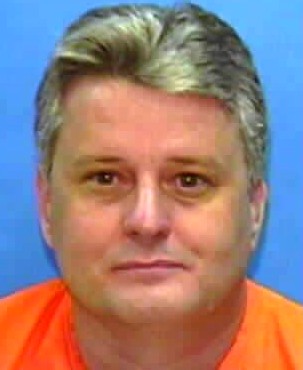
Bobby Joe Long
Serial killer Carl Eugene Watts
Serial killer · USA · 1974
Carl Eugene Watts (born November 7, 1953; died September 21, 2007), also known…
100 victims
Carl Eugene Watts
Serial killer · USA · 1974
Carl Eugene Watts (born November 7, 1953; died September 21, 2007), also known…
100 victims
 Rodney Alcala
Serial killer · USA · 1977
Rodney James Alcala (born August 23, 1943) was also known as Rodrigo Jacques Al…
100 victims
Rodney Alcala
Serial killer · USA · 1977
Rodney James Alcala (born August 23, 1943) was also known as Rodrigo Jacques Al…
100 victims
 Glen Edward Rogers
Serial killer · USA · 1993
Glen Edward Rogers was a spree killer whose cross-country rampage in 1994-95 le…
70 victims
Glen Edward Rogers
Serial killer · USA · 1993
Glen Edward Rogers was a spree killer whose cross-country rampage in 1994-95 le…
70 victims
 Donald Leroy Evans
Serial killer · USA · 1975
Donald Leroy Evans (born July 5, 1957) was an American serial killer who murder…
60 victims
Donald Leroy Evans
Serial killer · USA · 1975
Donald Leroy Evans (born July 5, 1957) was an American serial killer who murder…
60 victims
 Michael Swango
Serial killer · USA · 1981
Michael Swango (Joseph Michael Swango) was a physician and American serial kill…
60 victims
Michael Swango
Serial killer · USA · 1981
Michael Swango (Joseph Michael Swango) was a physician and American serial kill…
60 victims
 Efren Saldivar
Serial killer · USA · 1989
Efren Saldivar (born 30 September 1969) was an American serial killer who murde…
50 victims
Efren Saldivar
Serial killer · USA · 1989
Efren Saldivar (born 30 September 1969) was an American serial killer who murde…
50 victims
 Robert Cordell
Murderer · USA · 2002
Robert Cordell was an Ohio man who pleaded guilty and was sentenced to 81 years…
3 victims
Robert Cordell
Murderer · USA · 2002
Robert Cordell was an Ohio man who pleaded guilty and was sentenced to 81 years…
3 victims
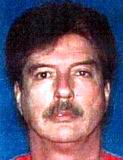 David Roland Waters
Murderer · USA · 1995
David Roland Waters was an American office manager for American Atheists. He wa…
4 victims
David Roland Waters
Murderer · USA · 1995
David Roland Waters was an American office manager for American Atheists. He wa…
4 victims
 Eugene de Kock
Murderer · S outh Africa · 1970
Eugene de Kock was a former assassin for the apartheid government in South Afri…
6 victims
Eugene de Kock
Murderer · S outh Africa · 1970
Eugene de Kock was a former assassin for the apartheid government in South Afri…
6 victims
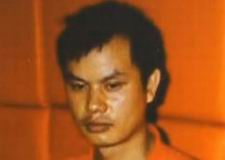 Li Hao
Murderer · China · 2009
Li Hao was convicted of murder, rape, illegal detention, organized prostitution…
2 victims
Li Hao
Murderer · China · 2009
Li Hao was convicted of murder, rape, illegal detention, organized prostitution…
2 victims
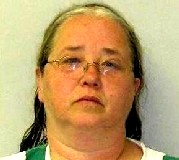 Cheryl Gasper
Murderer · USA · 1994
Cheryl Gasper was accused in the murder of her husband, Andie Gasper. She consp…
1 victim
Cheryl Gasper
Murderer · USA · 1994
Cheryl Gasper was accused in the murder of her husband, Andie Gasper. She consp…
1 victim
- Gender
- male
- Country
- USA
- Location
- Tampa Bay Area, Florida, USA
- Date of birth
- October 14, 1953
- Age at first offence
- 31
- Characteristics
- serial rapist, rape, kidnapping, abuse, torture
- Victim profile
- Ngeun Thi Long, 20 / Michelle Denise Simms, 22 / Elizabeth B. Loudenback, 22 / Chanel Devon Williams, 18 / Karen Beth Dinsfriend, 28 / Kimberly Kyle Hopps, 22 / Virginia Lee Johnson, 18 / Kim Marie Swann, 21 / Vicki Elliott / An unidentified woman
- Method of murder
- Most victims were strangled and/or asphyxiated; however, one was shot and one died of a cut throat
- Date(s) of murder
- May-November 1984
- Years active
- 1984
- Date of arrest
- November 16, 1984
- Status
-
Sentenced to death
Sentenced to death on July 25, 1986
Case record: Bobby Joe Long
Bobby Joe Long (born October 14, 1953) was an American serial killer. He was also known as Bobbie Joe Long, Robert Joe Long, and Robert Joseph Long. He was born in Kenova, West Virginia.
Status / current standing
Long was sentenced to death on July 25, 1986.
Offences (as described)
Long abducted, sexually assaulted, and murdered at least 10 women in the Tampa Bay Area during an eight month period in 1984. He released his last victim after sexually assaulting her for a period of 26 hours.
Long was accused of committing multiple sexual battery and murder offences in and around the Tampa Bay area. He was on probation for assault at the time his 1984 activity began.
Victims and related details (as described)
Ngeun Thi Long
A nude woman was found in southern Hillsborough County in May 1984. The victim was identified as Ngeun Thi Long, a 20-year-old Laotian female. She was employed as an exotic dancer at a lounge located on Nebraska Avenue in the City of Tampa. She normally worked the evening shift and was known to use alcohol and drugs.
- Long was last seen in the apartment complex where she lived, near the University of South Florida area.
- She had been missing for approximately 3 days.
- The victim had been dead for approximately 48 to 72 hours.
- She was lying face down with her hands tied behind her back with rope and fabric.
- A rope was observed around her neck with a “leash-like” extension approximately 14 inches in length.
- The ropes around the wrists and neck were different in nature.
- Under the victim’s face was a piece of fabric that may have been used as a gag.
- Her feet were spread apart more than 5 feet, and it appeared the body had been deliberately “displayed” in this manner.
- The victim’s clothing and personal belongings were never found.
- During the autopsy, a large open wound was discovered on the victim’s face; the cause of death was determined to be strangulation.
Tire impressions were found on the roadway leading to the body, and three of the tires were of different brands and all were worn.
Michelle Denise Simms
On May 27, 1984, the body of a young white female was discovered in an isolated area of eastern Hillsborough County. The victim was identified as Michelle Denise Simms, 22 years old and a native of California.
- She was found nude with clothing near the body.
- She was on her back with her hands bound at the waist and a ligature around the neck.
- Her throat had been cut.
- She sustained multiple blunt trauma injuries to the head.
- She had been at the scene for approximately 8 to 10 hours.
- Her hands were bound to her sides with clothesline-type rope.
- The ligature at the neck was made of the same type of rope and was tied in a type of hangman’s noose; there was a 3- to 4-foot length of rope extending from the noose.
- She had what appeared to be a green man’s T-shirt binding her upper arms.
- Hair and fiber evidence were collected.
A composite drawing was released to the media after she remained unidentified at first. She was last seen the previous night talking with two white males near Kennedy Boulevard in an area popular for working prostitutes. Simms had previously worked as a prostitute.
Evidence was flown to the FBI Laboratory quickly because it had been a “fresh” site.
One tire impression was identified in the FBI Laboratory reference files as being from a Goodyear Viva tire with the white wall facing inward; the other tire impression could not be immediately identified in the FBI Laboratory files. A tire expert in Akron, OH identified it as being made by a Vogue tire, an expensive tire that comes only on Cadillacs. A Vogue tire was obtained and photographed.
Fibers removed from the evidence revealed red lustrous trilobal nylon fibers that matched the Lana Long fiber. A second type of fiber, a red trilobal delustered fiber, was found, indicating a vehicle containing two different types of carpet fibers.
Grouping tests conducted on semen stains identified on the clothing of Michelle Simms disclosed the presence of the “B” and “H” blood group substances.
The hairs from the body and clothing of Michelle Simms were examined, and brown, medium-length Caucasian head hairs were found that could have originated from the killer.
Long was sentenced to death for the offence involving Michelle Simms.
Elizabeth B. Loudenback
On June 24, 1984, the body of another young white female was found in an orange grove in southeastern Hillsborough County. The victim was identified as Elizabeth B. Loudenback, 22, of Tampa. She was employed as an assembly line worker and was last seen at approximately 7:00 p.m. on June 8, 1984.
- She had no criminal history.
- She was known to frequent the area of Nebraska Avenue and Skipper Road in northern Hillsborough County.
The body was found fully clothed in an advanced stage of decomposition. The total body weight including clothes was only 25 pounds. There were no ligatures and the victim was not found near an interstate.
During the initial stages of the investigation, the victim’s boyfriend failed a polygraph examination and appeared to be an excellent suspect. Evidence from the case was sent to the FBI Laboratory, and no request was made for comparison until much later.
The victim’s hairs were examined with negative results, and serology examinations were negative due to the extensive decomposition.
Later, the fibers were determined to be both types of the red carpet fibers evidenced in the two previous cases, and the case was therefore linked to them.
The fibers arrived at the FBI Laboratory were not assigned to the examiner who worked the first two homicides.
Chanel Devon Williams
On October 7, 1984, the nude body of a young black female was discovered near the Pasco/Hillsborough County line, lying next to the dirt entrance road of a cattle ranch.
- The victim was identified as Chanel Devon Williams, an 18-year-old black female.
- Her clothing, except for her bra, was found next to the body.
- The bra had been tied in a knot and found hanging from the entrance gate.
- Her head area was in an advanced state of decomposition.
- An autopsy revealed a puncture wound to the back of the neck; a gunshot wound to the neck was the cause of death.
Williams had been previously arrested for prostitution. She was known to frequent a gay bar on Kennedy Boulevard in Tampa. She was last seen on the night of September 30, 1984 by another prostitute with whom she had been working. The pair were working the area of Nebraska Avenue when Williams’ companion was solicited by a “john.” Her companion rode back to the motel in the “john’s” car, and Williams was instructed to slowly walk back to the motel to check on her companion. Williams never made it back.
The HCSO requested a criminal personality profile from the FBI on the Long, Simms, and Williams cases and one other homicide in which another female had been shot. A profile was returned indicating strong similarities between the Long case and the Simms case. Due to differences (including race, lack of ligatures, and cause of death), it was believed the Williams case and another case were not related.
Evidence from the Williams case was sent to the FBI Laboratory a second time. Both types of red nylon carpet fibers were found on various articles of her clothing. A brown Caucasian pubic hair eventually associated with Robert Long was discovered on the victim’s sweater. Grouping tests on semen stains on Williams’ clothing disclosed the presence of the “A” and “H” blood group substances. This grouping was inconsistent with results in the Simms case, but could be due to working as prostitutes.
Karen Beth Dinsfriend
On the morning of October 14, 1984, the body of a white female, nude from the waist down, was discovered in an unpopulated area of northeastern Hillsborough County.
- The victim was identified as Karen Beth Dinsfriend, a 28-year-old cocaine user and prostitute.
- She had been working the area of Nebraska and Hillsborough Avenues.
- She was last seen during the early morning hours of October 14, 1984.
The body was found in an orange grove approximately 30 feet from a dirt road, apparently dragged from the roadway. The body had been placed on a gold-colored bedspread, and a blue jogging suit was tied outside the blanket. The bedspread was tied at both ends with common white string. Her hands were bound in front with a red and white handkerchief. Her right wrist and legs were bound with another white string. There were ligature marks on the victim’s throat. She was struck on the forehead and strangled.
Red fibers were found on examination of the body at the medical examiner’s office. A personal computer was purchased for the investigation to record information on vehicles, vehicular tags, information gathered from talking to prostitutes, and information derived from field interrogation reports.
The homicide detectives were assigned to the case and six tactical deputies were assigned to do night surveillance in the suspect’s hunting grounds.
At the disposal site, knot similarity in ligatures and knots was described as a “signature” of the offender. A brown Caucasian pubic hair eventually associated with Robert Long was found on the bedspread, and semen was found on the bedspread and sweat shirt. Tests again disclosed the “A” and “H” blood group substances. The bedspread was composed of gold delustered acrylic fibers. Both types of red nylon carpet fibers were found on most items and microscopically compared to previous carpet fibers. The dyes from the red carpet fibers were also compared using microspectrophotometry. Since the carpet fibers matched those from previous five cases, investigators believed the fibers originated from the same source and that the cases were related.
Kimberly Kyle Hopps (“Sugar”)
On October 30, 1984, the nude mummified remains of a white female were discovered near Highway 301 in northern Hillsborough County just south of the Pasco County line.
- The victim was identified as Kimberly Kyle Hopps, a 22-year-old white female, last seen by her boyfriend getting into a 1977-78 maroon Chrysler Cordoba.
- Hopps would eventually be associated with Long’s vehicle through a comparison of her head hairs with hairs found in his vehicle.
The investigation described a street name of “Sugar,” which Long referred to the victim by. No clothing, ligatures, or other physical evidence was found at the scene, and no foreign hairs, fibers, semen, or other evidence were discovered.
Virginia Lee Johnson
On November 6, 1984, the remains of a female were discovered near Morris Bridge Road in Pasco County just north of the Hillsborough County Line.
- The victim was identified as Virginia Lee Johnson, an 18-year-old white female originally from Connecticut.
- She split her time between Connecticut and the North Tampa area, working as a prostitute in the North Nebraska Avenue area in Hillsborough County.
The bones of the victim were scattered in a large area; a ligature was found and another ligature was discovered on an arm bone. A shirt, a pair of panties, and some jewelry were also found. Human head hairs, presumed to be from the victim, were recovered. The evidence yielded little due to decomposition; however, a single red lustrous carpet fiber was found on the victim’s head hair from the crime scene.
Eventually, Virginia Johnson was also associated with Robert Long’s vehicle through a transfer of her head hairs.
Long was convicted and sentenced to die for a first-degree murder offence involving Virginia Johnson, and a later appellate remand directed entry of an order of acquittal for her murder.
Kim Marie Swann
On November 24, 1984, the nude body of a young white female was found on an incline off of North Orient Road in the City of Tampa.
- The victim was identified as Kim Marie Swann, a 21-year-old female narcotics user who worked as a nude dancer.
- She was last seen walking out of a convenience store near her parents’ home at approximately 3:00 p.m. on November 11, 1984.
The victim’s body was face down with the head at the lower portion of the incline. A wadded pair of blue jeans and a blue flowered top were near the body. She was wearing knee-high nylons. Faint tire impressions were observed in the grass next to the roadway, and a piece of wood with possible tire impressions was found. Investigators believed the killer pulled off the road and threw the body over the edge.
Fecal matter was present on the inside of the victim’s legs and on the exterior of the clothing. The body had a pronounced ligature mark on the front portion of the neck, and there were ligature marks on both wrists and on both arms; however, no ligatures were found. The evidence was described as believed related to previous homicides.
The evidence from the Swann disposal site was sent to the FBI Laboratory. Red nylon carpet fibers were found on the victim’s clothing, and her head hair was examined and would eventually be associated with the suspect’s vehicle.
Lisa McVey (kidnapping and sexual battery; released victim)
On November 3, 1984, Lisa McVey was leaving a doughnut shop in northern Tampa when she was abducted. The offender took her to an unknown apartment and sexually assaulted her for 26 hours before releasing her.
The HCSO urged the Tampa Police Department to send rape evidence to the FBI Laboratory. On November 13, 1984, the FBI Laboratory called with a link; they found the same red fibers on McVey’s clothes as had been found on the homicide victims.
McVey was extensively interviewed and recalled that after leaving the apartment where she was held, the suspect stopped at a “24-hour teller machine” to withdraw money at approximately 3:00 a.m. She described the suspect’s vehicle as red with a red interior and red carpet, with the word “Magnum” on the dash. En route to the release site, she recalled seeing a Howard Johnson’s motel as they drove up on the interstate.
Long was arrested in connection with the kidnapping and sexual battery of Lisa McVey.
Modus operandi / conduct (as described)
Long was described as driving around areas known for prostitution and shoddy bars where women were found alone, “trolling” for victims. He was described as claiming victims approached him, then he persuaded them to enter his car and took them to an apartment where he bound victims with rope and ligature collars fashioned using a variety of rope knots.
Investigators described Long as later confessing that he derived sadistic pleasure from the abduction, rape, and brutal murder of victims. Some victims were said to be strangled; others were said to have had throats cut or were bludgeoned to death.
The bodies were described as being placed in unique positions or “displayed.” It was also described that of Long’s ten known victims, five were identified as prostitutes, two as exotic dancers, one as a factory worker, one as a student, and one as unknown occupation.
Investigation and forensic evidence (as described)
Early investigation and coordination
The first victim in the Tampa Bay series was discovered in May 1984. This began an intensive investigation into the abduction, rape, and murder of at least 10 women in three counties in the Tampa Bay area: Hillsborough, Pasco, and Pinellas. Personnel involved were described as from the Hillsborough County Sheriff’s Office (HCSO), the FBI, the Tampa Police Department (TPD), the Pasco County Sheriff’s Office (PCSO), and the Florida Department of Law Enforcement (FDLE).
The bodies were described as found usually long after murder in a state of decomposition, dumped near a rural roadside, and dragged into woods.
Fiber evidence and “red carpet” link
The investigation described hair and fiber evidence analysis conducted with specialized equipment including a stereoscopic microscope, a comparison microscope, a polarized light microscope, a microspectrophotometer, a melting point apparatus, and an infrared spectrophotometer.
A single lustrous red trilobal nylon fiber was found on a piece of fabric near the victim in the first homicide, and it was determined it was probably a carpet fiber.
Investigators described that because serial killers might change patterns if fiber evidence were publicized, the fiber information was kept confidential.
Subsequent homicides included collection of hair and fiber evidence. Matching carpet fibers were described as linking victims to Long’s vehicle.
Criminal personality profile and investigative guidance
The HCSO requested a criminal personality profile from the FBI, including on the Long, Simms, and Williams cases and one other homicide. The FBI profile included investigation and interrogation guidance.
Arrest and interrogation (as described)
Long was wanted by three jurisdictions in the Tampa Bay Area who collected forensic evidence including clothing and carpet fibers, semen, ligature marks, and rope knots.
Long was arrested on November 16, 1984, and charged with the sexual battery and kidnapping of Lisa McVey. Long signed a formal Miranda waiver and consented to questioning.
After detectives procured a confession for the McVey case, questioning focused on unsolved sexual battery homicides. As detectives began to question Long about murders, he replied: “I'd rather not answer that.” The detectives continued the interrogation and handed Long photographs of murder victims. Long then stated: “The complexion of things sure have changed since you came back into the room. I think I might need an attorney.”
Long eventually confessed to eight murders in Hillsborough County and one murder in Pasco County. Fiber evidence analysis by the FBI linked Long’s vehicle to most victims.
In one detailed account of the interrogation, detectives were described as interviewing Long after his arrest and speaking initially about the McVey rape and abduction until he confessed to the McVey case. Long denied involvement in homicides initially and continued denying until fibers were matched. The suspect gave a brief description of each homicide and drew a map showing where he had placed victim number nine. The account included that Long admitted killing Loudenback and using her money card.
Long was located at his apartment approximately two hours after being stopped by the task force members. He was arrested after he walked out of a movie theater.
The interrogation described that Long refused to exit the police vehicle to witness the search.
Trial and sentencing (as described)
Indictment and trial summary (as described)
During the trial, testimony was presented stating Long had suffered a series of head injuries:
- knocked unconscious for several minutes as a result of falling off of a swing
- knocked unconscious for approximately 20 minutes as a result of falling down a flight of stairs
- hospitalized for approximately one week as a result of being hit by a car at age seven
- knocked unconscious as a result of falling off a horse
- serious motorcycle accident at age 20 while enlisted in the army in which he suffered serious head injuries
Long’s trial summary described:
- 11/28/84 Indicted as follows:
- Count I: Kidnapping
- Count II: Sexual Battery
- Count III: First-Degree Murder
- 09/23/85 Jury returned guilty verdicts on all counts of the indictment
- 07/18/86 Jury recommended death by a vote of 11-1
- 07/25/86 Sentenced as follows:
- Count I: Kidnapping – Life
- Count II: Sexual Battery – Life
- Count III: First-Degree Murder – Death
- 06/30/88 FSC remanded case for resentencing as to Count III
- 06/29/89 Jury recommended death by a vote of 12-0
- 07/21/89 Sentenced as follows:
Michelle Simms penalty phase (as described)
In July 1986, the penalty phase of the Michelle Simms trial was held in Tampa and lasted one week. Long was found guilty and was sentenced to die in Florida’s electric chair. The confession was described as thrown out, and the trial proceeded straight to the penalty phase.
The case information described that in early 1985 he received the death penalty and that he was convicted and appealed of a first-degree murder conviction and death sentence for crimes committed in Hillsborough County involving Virginia Johnson.
Virginia Johnson case and acquittal direction (as described)
On appeal from the Circuit Court in and for Pasco County, Long’s death sentence was vacated, his conviction reversed, and the case was remanded to the trial court with directions to enter an order of acquittal for the murder of Virginia Johnson.
Long was convicted and sentenced to die for the murder of Virginia Johnson at a trial held in Dade City, FL (Pasco County) on April 22, 1985.
Prior sentences / incarceration history (as described)
The case information listed prior incarceration history in the State of Florida. The list included:
- 03/06/1984 Burglary of an Occupied Dwelling — 6/17/1985 — 99Y
- 03/06/1984 Kidnapping during a Felony — 6/17/1985 — 99Y
- 03/06/1984 Robbery with a Deadly Weapon — 6/17/1985 — 99Y
- 03/06/1984 Sexual Battery with a Deadly Weapon — 6/17/1985 — 99Y
- 04/05/1984 Aggravated Assault — 9/23/1985 — 5Y
- 05/10/1984 Kidnapping during a Felony — 9/23/1985 — LIFE
- 05/10/1984 Sexual Battery with a Deadly Weapon — 9/23/1985 — LIFE
- 05/10/1984 First-Degree Murder — 9/23/1985 — LIFE
- 05/29/1984 Sexual Battery with a Deadly Weapon — 7/12/1985 — LIFE
- 05/29/1984 Kidnapping during a Felony — 7/12/1985 — LIFE
- 05/29/1984 Robbery with a Deadly Weapon — 7/12/1985 — LIFE
- 05/29/1984 Armed Burglary — 7/12/1985 — LIFE
- 06/07/1984 Kidnapping during a Felony — 9/23/1985 — LIFE
- 06/07/1984 Sexual Battery with a Deadly Weapon — 9/23/1985 — LIFE
- 06/07/1984 First-Degree Murder — 9/23/1985 — LIFE
- 09/06/1984 Kidnapping during a Felony — 9/23/1985 — LIFE
- 09/06/1984 Sexual Battery with a Deadly Weapon — 9/23/1985 — LIFE
- 09/06/1984 First-Degree Murder — 9/23/1985 — LIFE
- 09/30/1984 Kidnapping during a Felony — 9/23/1985 — LIFE
- 09/30/1984 Sexual Battery with a Deadly Weapon — 9/23/1985 — LIFE
- 09/30/1984 First-Degree Murder — 9/23/1985 — LIFE
- 10/04/1984 Kidnapping during a Felony — 9/23/1985 — LIFE
- 10/04/1984 Sexual Battery with a Deadly Weapon — 9/23/1985 — LIFE
- 10/04/1984 First-Degree Murder — 9/23/1985 — LIFE
- 10/14/1984 Kidnapping during a Felony — 9/23/1985 — LIFE
- 10/14/1984 Sexual Battery with a Deadly Weapon — 9/23/1985 — LIFE
- 10/14/1984 First-Degree Murder — 9/23/1985 — LIFE
- 11/03/1984 Kidnapping during a Felony — 9/23/1985 — LIFE
- 11/03/1984 Sexual Battery with a Deadly Weapon — 9/23/1985 — LIFE
- 11/10/1984 Kidnapping during a Felony — 9/23/1985 — LIFE
- 11/10/1984 First-Degree Murder — 9/23/1985 — LIFE
A separate paragraph described that Long confessed to eight other murders and was convicted of sexual battery in numerous other cases where the victim was not murdered.
Appeals and post-conviction (as described)
Direct appeals (as described)
A Direct Appeal was filed to the Florida Supreme Court on 09/02/86. Issues raised included whether the trial court erred by denying the defendant’s motion to vacate his plea agreement and whether the use of prior convictions, which were later vacated by the Court, unfairly prejudiced sentencing proceedings.
The Court agreed that the use of prior convictions as aggravating factors was harmful error and remanded the case to the Circuit Court for resentencing on 06/30/88.
A second Direct Appeal was filed to the Florida Supreme Court on 08/03/89. Issues raised included whether the trial court erred in denying Long’s motion to withdraw his guilty pleas and whether the trial court erred in allowing the hearsay testimony of two detectives regarding the details of the two other rapes as crimes of violence in aggravation.
The Court found all issues either harmless or without error and affirmed the conviction and the death sentence on 10/15/92.
U.S. Supreme Court
A Petition for Writ of Certiorari was filed to the United States Supreme Court on 04/26/93 and denied on 10/04/93.
State post-conviction filings
A 3.850 Motion was filed to the Circuit Court on 12/29/94 and denied on 08/01/95.
A 3.850 Appeal was filed to the Florida Supreme Court on 09/11/95 and was dismissed without prejudice at the request on 03/18/96 so that an amended 3.850 could be filed. The amended 3.850 was filed on 10/04/95 to the Florida Supreme Court and is currently pending.
Timeline
- 05/27/84 — Michelle Simms’ sexual battery and murder were described as occurring; her nude body was discovered on 05/27/84 in a wooded area near Plant City, Florida in one account, and in the other description she was discovered in eastern Hillsborough County on 05/27/84.
- 06/24/84 — Elizabeth B. Loudenback’s body was found in an orange grove in southeastern Hillsborough County.
- 10/07/84 — Chanel Devon Williams’ body was discovered near the Pasco/Hillsborough County line.
- 10/14/84 — Karen Beth Dinsfriend’s body was discovered in northeastern Hillsborough County.
- 10/30/84 — Kimberly Kyle Hopps’ mummified remains were discovered near Highway 301.
- 11/03/84 — Lisa McVey was abducted and sexually assaulted for 26 hours before being released.
- 11/06/84 — Virginia Lee Johnson’s remains were discovered near Morris Bridge Road in Pasco County.
- 11/16/84 — Robert Long was arrested and charged with the sexual battery and kidnapping of Lisa McVey.
- 11/28/84 — Long was indicted on Count I (Kidnapping), Count II (Sexual Battery), and Count III (First-Degree Murder).
- 04/22/85 — The first trial for the Virginia Johnson murder was held in Dade City, FL (Pasco County).
- 09/23/85 — A jury returned guilty verdicts on all counts of the indictment.
- 07/18/86 — A jury recommended death by a vote of 11-1.
- 07/25/86 — Long was sentenced: Kidnapping — Life; Sexual Battery — Life; First-Degree Murder — Death.
- 06/30/88 — FSC remanded for resentencing as to Count III.
- 06/29/89 — A jury recommended death by a vote of 12-0.
- 07/21/89 — Long was resentenced: First-Degree Murder — Death.
- 09/02/86 — A Direct Appeal was filed to the Florida Supreme Court.
- 08/03/89 — A second Direct Appeal was filed to the Florida Supreme Court.
- 10/15/92 — The Florida Supreme Court affirmed the conviction and the death sentence.
- 04/26/93 — A Petition for Writ of Certiorari was filed to the United States Supreme Court.
- 10/04/93 — The Petition for Writ of Certiorari was denied.
- 12/29/94 — A 3.850 Motion was filed to the Circuit Court.
- 08/01/95 — The 3.850 Motion was denied.
- 09/11/95 — A 3.850 Appeal was filed to the Florida Supreme Court.
- 03/18/96 — The 3.850 Appeal was dismissed without prejudice at the request so that an amended 3.850 could be filed.
- 10/04/95 — An amended 3.850 was filed to the Florida Supreme Court.
Other details
Recognized aliases and docket information (as described)
The case information described:
- Long as “LONG, Robert Jo (W/M) DC# 494041”
- Date of birth as “DOB: 10/14/53”
- “Thirteenth Judicial Circuit, Hillsborough County, Case# 84-13346-B”
- “Sentencing Judge, Trial: The Honorable John P. Griffin”
- “Sentencing Judge, Resentencing: The Honorable Richard A. Lazzara”
- “Attorney, Trial: Charles O’Connor – Assistant Public Defender”
- “Attorney, Resentencing: Robert Fraser – Assistant Public Defender”
- “First Direct Appeal: Ellis Rubin and David Rappaport – Private Attorney”
- “Second Direct Appeal: A. Anne Owens – Assistant Public Defender Attorney”
- “Collateral Appeals: Byron P. Hileman – Registry”
Circumstances of the offence (as described)
The case information described circumstances of the offence:
- On 05/27/84, Long sexually battered and murdered Michelle Simms.
- On 11/16/84, Long was arrested and charged for the kidnapping and sexual battery of Lisa McVey.
In a confession obtained on 11/16/84, the account described Long’s narrative of events preceding Michelle Simms’ death:
- Long bought some rope the night before the murder and cut it into sections before it was put in his vehicle’s glove box.
- Long went looking for a prostitute along Kennedy Boulevard in Tampa.
- Long stopped next to the victim and obtained her company for $50.
- After the victim entered the car, Long drove approximately one mile before making the victim undress at knife point and reclined the passenger’s seat until it was flat before he tied her up.
- Long stated that he then drove approximately 15-20 miles before he raped the victim.
- Long talked to the victim and told her he was going to drop her off where he picked her up, but instead drove to Plant City where he attempted to strangle the victim.
- When strangulation failed, Long hit her head with a club and pushed her from the vehicle.
- Long left her on the side of the road after he slit her throat.
- Long discarded the victim’s clothing at the scene of the murder.
The nude body of Michelle Simms was described as discovered on 05/27/84 in a wooded area near Plant City, Florida. A rope was tied around the victim’s wrists and around her body to restrict movement of her hands, and her clothing was scattered nearby. Her throat was cut; there was blood on her face and head; and she had rope burns on her neck and chin. The medical examiner stated the cause of death could have been either strangulation, bleeding from two knife slashes in her neck, or head injuries.
Miranda waiver and questioning (as described)
Allegations about attorney-client privilege and “death pool” (as described)
On February 24, 1999, Long accused the Capital Collateral Regional Council of revealing his private letters to a book author, violating attorney-client privilege. He also accused the agency of running a “death pool” betting on the date inmates would be executed. An investigation concluded these allegations were unfounded.
Long’s petition for a writ of mandamus to require Bob Dillinger, the public defender for the Sixth Judicial Circuit, to relinquish possession and control of his file in State v. Long was denied.
Sentences described by the Florida Department of Corrections (as described)
According to the Florida Department of Corrections, Long had one five-year sentence, four 99-year sentences, 28 life sentences, and one death sentence.
Other narrative facts included in the case material
The material described Long’s early life and background as including an “extra x chromosome,” teasing during puberty, multiple head injuries as a child, sleeping in his mother’s bed until he was a teenager, and a marriage in 1974 followed by divorce filing in 1980, resulting in two children.
It also described that Long answered classified ads for small appliances, and if he found a woman alone at home, he would rape her. A 1981 trial involved rape, and Long requested a new trial which was granted; the charges were later dropped.
It described that before the Tampa Bay Area murders, Long lived in Long Beach, CA at the 2500 Block of Eucalyptus Avenue, rented a room from a female named Kathy, attended an underwater welding course, and dated a 17-year-old girl across the street from his rented room.
It described that in 1983 he moved to the Tampa area. Hillsborough County was described as averaging 30 to 35 homicides per year in the eighties, and in 1984 the murder rate escalated.
It described that at the time of arrest Long was wanted by three jurisdictions and that forensic evidence included clothing and carpet fibers, semen, ligature marks, and rope knots.
It also described that Long confessed to eight murders in Hillsborough County and one murder in Pasco County.
Quotes included in the case material (verbatim)
- Long said: “I'd rather not answer that.”
- Long said: “The complexion of things sure have changed since you came back into the room.
- Long denied and continued denying until fibers were matched; after his confession, the account described his admissions.
- In one account, Long said: “No.”
- In one account, Long responded with, “I think I might need an attorney.”
- In one account, Long said: “Well, I guess you got me good ... Yes, I killed them ... All the ones in the paper. I did them all.”
- In one account, Long said: “Take care.”
- In one account, Long said: “I knew when I let her go,” and the quote continued: “that it would only be a matter of time. I didn't even tell her not to talk to the police or anything ... I just didn't care anymore, and I wanted to stop. I was sick inside.”
- Another account included the quote: “Take care.”
Spotted an error, or have more information about this case?