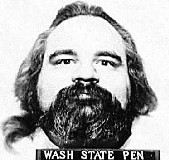
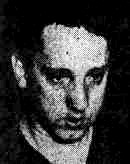
Mitchell Rupe
Murderer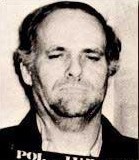 Ervil LeBaron
Murderer · USA · 1972
Ervil Morrell LeBaron (1925 to August 16, 1981) was the leader of a polygamous…
35 victims
Ervil LeBaron
Murderer · USA · 1972
Ervil Morrell LeBaron (1925 to August 16, 1981) was the leader of a polygamous…
35 victims
 Brian Kevin Rosenfeld
Murderer · USA · 1985
Brian Kevin Rosenfeld Brian Kevin Rosenfeld was sentenced to three concurrent l…
23 victims
Brian Kevin Rosenfeld
Murderer · USA · 1985
Brian Kevin Rosenfeld Brian Kevin Rosenfeld was sentenced to three concurrent l…
23 victims
 Marvin Gray
Murderer · USA · 1975
Marvin Gray was convicted killer who claimed responsibility for 23 slayings and…
23 victims
Marvin Gray
Murderer · USA · 1975
Marvin Gray was convicted killer who claimed responsibility for 23 slayings and…
23 victims
 Yahweh ben Yahweh
Murderer · USA · 1980
Yahweh ben Yahweh was born and legally named Hulon Mitchell Jr. (October 27, 19…
23 victims
Yahweh ben Yahweh
Murderer · USA · 1980
Yahweh ben Yahweh was born and legally named Hulon Mitchell Jr. (October 27, 19…
23 victims
 Russell Ellwood
Murderer · USA · 1991
Russell Ellwood was a former taxi driver. Authorities suspected him of killing…
20 victims
Russell Ellwood
Murderer · USA · 1991
Russell Ellwood was a former taxi driver. Authorities suspected him of killing…
20 victims
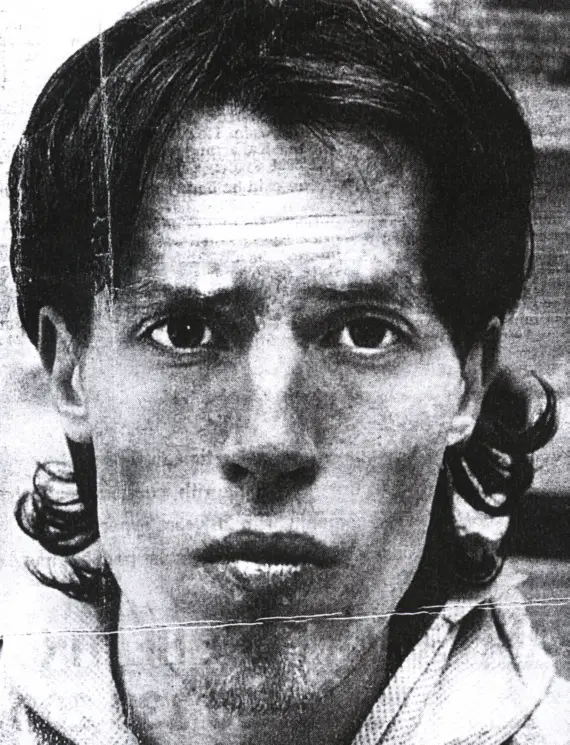 Lloyd Maurice Crosbie
Murderer · Australia · 2001
Lloyd Maurice Crosbie was convicted in Victoria. · March 11, 2003 — The Supreme…
2 victims
Lloyd Maurice Crosbie
Murderer · Australia · 2001
Lloyd Maurice Crosbie was convicted in Victoria. · March 11, 2003 — The Supreme…
2 victims
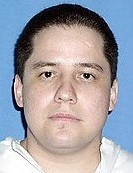 Timothy Titsworth
Murderer · USA · 1993
Timothy Titsworth was executed by lethal injection in Texas on June 6, 2006. ·…
1 victim
Timothy Titsworth
Murderer · USA · 1993
Timothy Titsworth was executed by lethal injection in Texas on June 6, 2006. ·…
1 victim
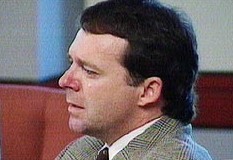 Royle Kipp
Murderer · USA · 2000
Royle Kipp joined the Collier County Sheriff's Office in 1981 when he was just…
2 victims
Royle Kipp
Murderer · USA · 2000
Royle Kipp joined the Collier County Sheriff's Office in 1981 when he was just…
2 victims
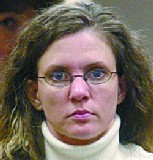 Michelle Reynolds
Murderer · USA · 2004
Michelle Reynolds — defendant; pleaded guilty to voluntary manslaughter and bur…
1 victim
Michelle Reynolds
Murderer · USA · 2004
Michelle Reynolds — defendant; pleaded guilty to voluntary manslaughter and bur…
1 victim
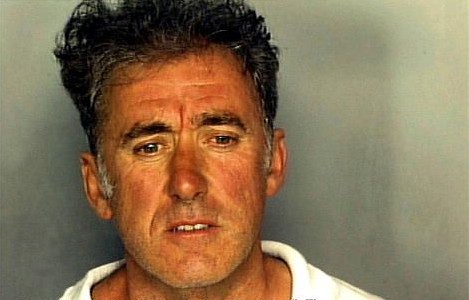 Francisco Arce Montes
Murderer · France · 1996
Francisco Arce Montes was a psychologically troubled loner who drifted around E…
1 victim
Francisco Arce Montes
Murderer · France · 1996
Francisco Arce Montes was a psychologically troubled loner who drifted around E…
1 victim
 Rebecca Emmanuel
Murderer · Nigeria · 2008
Rebecca Emmanuel Rebecca Emmanuel was a Nigerian woman who was sentenced to dea…
1 victim
Rebecca Emmanuel
Murderer · Nigeria · 2008
Rebecca Emmanuel Rebecca Emmanuel was a Nigerian woman who was sentenced to dea…
1 victim
- Gender
- male
- Country
- USA
- Location
- Olympia, Washington, USA
- Date of birth
- 1955
- Age at first offence
- 26
- Characteristics
- bank robbery, rape, convicted rapist
- Victim profile
- Twila Capron and Candace Hemmig ( bank tellers )
- Method of murder
- Shooting
- Date(s) of murder
- September 17, 1981
- Years active
- 1981
- Date of arrest
- Same day
- Status
-
Died in custody
Died in prison on February 8, 2006
Case overview
Mitchell Rupe (1955–February 8, 2006) was convicted of aggravated first degree murder and first degree robbery for killing two bank tellers and taking money from their tills. He was sentenced to death and served prison time, later died of liver disease in the Washington State Penitentiary in Walla Walla, Washington.
Timeline
- September 15, 1981 — Monte Yovetich testified that he accompanied Rupe to Olympia following a discussion about robbing the Tumwater State Bank, and later saw Rupe again on September 17 between 11 and noon.
- September 16, 1981 — A number of events described at trial were treated as occurring on the Tuesday of that week, two days before the murders.
- September 17, 1981 — A bank robbery at Tumwater State Bank’s trailer branch in West Olympia involved shooting and killing two bank tellers.
- May 3, 1982 — The sentencing phase began.
- April 29, 1982 — After 2 days’ deliberation, the jury returned a verdict of guilty on all counts.
- March 10, 1982 — Jury selection began.
- June 7, 1984 — The Supreme Court of Washington resolved multiple issues relating to conviction and sentence, affirmed convictions, and remanded for a new special sentencing proceeding.
- 1994 — A United States federal judge upheld Rupe’s conviction but agreed that, at more than 400 pounds, Rupe was too heavy to hang due to the risk of decapitation.
- 1996 — As a result of the Rupe case, the Legislature changed the state’s primary method of execution from hanging to lethal injection.
- 2000 — A resentencing trial resulted in a life sentence after the jury deadlocked 11-1 in favor of the death penalty, falling short of unanimous verdict requirements.
- February 8, 2006 — Rupe died in prison.
People
Defendant
- Mitchell Rupe — defendant; convicted; later died in prison of liver disease.
Victims
- Candace Hemmig — bank teller; killed during the September 17, 1981 robbery.
- Twila Capron — bank teller; killed during the September 17, 1981 robbery.
- Michael Capron — Twila Capron’s husband; arrived at the bank around 11 a.m.
Witnesses and other named individuals
- Ann Marie Gianoulakis — the person on the other line who yelled “Dial 911.”
- Officer Jim Partin — approached outside the bank; was posted outside during the investigation; later events included testimony and involvement in police interviews.
- Officer Midthun — informed Rupe after the polygraph that due to the “sensitivity of [his] voice, we have some very serious problems”; participated in advising Rupe of constitutional rights prior to the polygraph; later involved in taped interviews.
- Detective Shultz — took over after Officer Midthun asked Rupe if he would talk; Rupe gave a subsequent taped interview describing events leading to the deaths.
- Officer Dale W. Mattson — deputy sheriff for Mason County; told Rupe he resembled the police description of a suspect; testified Rupe stammered and reacted to being told.
- Monte Yovetich — Rupe’s friend and fellow student at the time of the murders; testified for the State and linked money and a gun to Rupe.
- Marlin Townsend — testified and generally confirmed events described by Monte Yovetich; involved in hiding and later retrieving a gun and money.
- Skip (Carl) Grosskopf — testified that Monte dropped the gun off around 6 p.m.; took it on assurance it wasn’t “hot.”
- Marlin Townsend and Monte Yovetich — both testified that they took money from the bag.
- David Schroeder — testified that Rupe discussed loaning the gun to Monte.
- George Fullerton — testified that Rupe discussed loaning the gun to Monte.
- Dr. Gerald McCarty — defense psychologist; diagnosed Rupe with schizotypal personality disorder and a secondary histrionic disorder; testified confessions were caused by these disorders.
- Michael J. Peck — Department of Game witness; testified about legality and design/usage of Rupe’s guns.
- Frank Brown — Walla Walla County coroner; estimated Rupe’s weight between 260 and 270 pounds at the time of his death; stated there were no immediate signs of foul play.
- Lori Scamahorn — prison spokeswoman; stated Rupe died shortly after noon at the prison hospital and had been there since Jan. 3 in final stages of liver disease.
- Lori Scamahorn is mentioned in connection with prison events.
- Karil Klingbeil — Candace Hemmig’s sister; described the death as closure for her family.
- Dorothy Payne — Capron’s mother-in-law; called news of Rupe’s death “wonderful,” and described weekly visits to Capron’s grave in nearby Tumwater.
- Attorney Roger Hunko — Port Orchard attorney who also represented Rupe.
- Todd Maybrown — former Rupe defense attorney; said in 1998 Rupe suffered from terminal liver disease, advanced cirrhosis, and hepatitis C, with life expectancy of 18 months.
- Hewitt A. Henry — judge; sentenced Rupe to death.
- Rosellini, J. — author of the majority opinion.
- Clifford F. Cordes III — counsel for appellant.
- Patrick D. Sutherland — prosecuting attorney.
- Gary R. Tabor — chief criminal deputy for respondent.
- Williams, C.J., Brachtenbach, J., Dolliver, Stafford, Pearson, Utter — judges identified with respect to concurrences/dissent and participation.
- Dore and Dimmick, JJ., and Cunningham, J. Pro Tem. — concurring judges named for the decision.
- Stafford and Pearson, JJ. — concurred with Dolliver, J. as to parts II and III in the concurring opinion.
- Donna Wright — referenced in connection with exculpatory evidence disclosure issues.
Background
The offence
Rupe was convicted of:
- two counts of aggravated first degree murder; and
- two counts of first degree robbery.
The victims, Candace Hemmig and Twila Capron, were employed by Tumwater State Bank to staff its trailer branch in West Olympia. The branch office consisted of a mobile home located in a remote area near the Thurston County Courthouse.
On the morning of September 17, 1981, customers transacted business with the bank between approximately 10:25 and 10:45. At 11 a.m., Michael Capron, Twila’s husband, arrived to take his wife to lunch. He entered the bank, looked for his wife and Candace, and then heard a rasping sound. He approached the counter, spotted his wife and Candace lying on the floor, and attempted to telephone for help by dialing zero, but nothing happened. Another line was lit from an incoming call and Capron punched into that line.
Capron testified that he did not remember exactly what he said but believes he said: “Help” or “Get help, this is Mike, the bank has been robbed, and Twila has been shot, and I think Candy is dead”. The person on the other line yelled back: “Dial 911”.
When medics and police arrived, Candace was already dead, and Twila could not survive the apparent massive injuries to her brain. The robbery netted about $4,000, and only slightly over $2,100 of the $4,382 missing from the bank was eventually recovered.
Rupe was sentenced to death for shooting and killing two bank tellers during the course of a robbery.
Investigation
Officer Jim Partin was posted outside the bank.
At approximately 11:40, Officer Partin was approached by Rupe, who advised the officer that he had been at the bank that morning. Police officers gathering evidence discovered Rupe’s bloodstained checkbook lying open on the customer’s side of the counter.
During the next 5 days, Rupe was interviewed several times. On the day of the crime, September 17, he talked to police officers once at the scene (approximately 11:40 a.m.) and four times at work (at 2 p.m., 3 p.m., 6 p.m., and 11 p.m.). During these discussions Rupe volunteered that he was overdrawn at the bank. He stated he went to the bank both on the 16th and 17th to take care of the overdraft but was unable to do so because each time he forgot materials needed to resolve the problem.
Rupe was interviewed on the 18th, and on the 20th he went to the police station and prepared an identi-kit sketch of an individual he claimed to have seen at the bank on the 17th.
On September 22, Rupe went to the police station to take a polygraph examination. After the polygraph, Officer Midthun informed Rupe that due to the “sensitivity of [his] voice, we have some very serious problems”. After discussing the matter, Rupe admitted he had committed the crimes. He subsequently gave three statements to police officers.
Searches of Rupe’s vehicle netted ammunition of the type used in the robbery/murders. Police also found a pair of white pants, wet and soiled, in a vehicle used by Rupe the weekend after the murders.
At trial, the State’s chief witness was Monte Yovetich, who testified that he accompanied Rupe on September 16, 1981 to Olympia after discussing robbing the Tumwater State Bank. Rupe attempted to rob the bank, was unable to do it, and later told Monte on the 17th that he had done it, robbed the bank, and put the gun, money, and green satchel in Monte’s garage. Monte and Marlin Townsend looked for the gun and a green satchel and put them in Marlin’s car, then hid the money and gun. They returned and retrieved the money and gun, dropped the gun off at Skip (Carl) Grosskopf’s home, went to dinner, and went to Marlin’s parents’ house. They learned from newspapers that two women had been shot during the robbery, retrieved the gun, took it to the Hartstene Island bridge, and threw it into the water, and hid the remaining money again.
Skip Grosskopf testified the gun appeared to have been fired recently but agreed to take it when Monte assured him it wasn’t “hot”. Monte returned an hour and 10 minutes later, appeared “nervous, jittery,” and Skip asked why he wanted to pick it up so soon; Monte stated Skip “didn't want to know.”
Arrest
Trial
Jury selection and voir dire
Rupe’s trial began with jury selection on March 10, 1982. During voir dire, the judge allowed counsel to question individual jurors apart from the pool concerning their views regarding the death penalty. As no jurors stated they would be unable to impose the death penalty regardless of the crime, none were excused because of their beliefs concerning the death penalty. The Supreme Court later described that death-qualification procedures included individual questioning while remaining panel members were secluded, and jurors were excused when they voiced opinions reflecting too great a willingness to impose death sentences.
Verdict
On April 29, 1982, after 2 days’ deliberation, the jury returned a verdict of guilty on all counts.
Rupe was convicted on:
- two counts of first degree robbery; and
- two counts of first degree aggravated murder.
Defense evidence and testimony
Rupe elected to testify and denied robbing the bank.
On direct examination by the State, Rupe admitted he discussed robbing the bank with Monte Yovetich and admitted he had gone to the bank on September 15 with an intention to rob it. Rupe testified he had Monte drop him off near the bank and carried a green satchel containing his gun, a .357 Colt Trooper. Rupe testified that while in the bank he decided he couldn’t rob it, inquired about his account, and left. He alleged Monte later borrowed the .357 Colt Trooper to go hunting.
Defense called a psychologist, Dr. Gerald McCarty, who diagnosed Rupe with schizotypal personality disorder and a secondary histrionic disorder. McCarty testified these personality disorders caused Rupe to confess even though he did not actually commit the crimes. McCarty testified he did not believe Rupe committed the crimes because the confessions were vague and inconsistent with physical evidence at the scene.
In rebuttal, the State called two medical witnesses who concluded Rupe did not have personality disorders.
Rupe denied personal involvement in the robberies or murders and tried to explain why he confessed. He testified he confessed because he felt responsible for Monte’s act, since Monte used Rupe’s gun to commit the crime.
Rupe described his whereabouts regarding the bank visits on September 16 and 17. He was employed as a security guard at OTCC and worked a double shift the evening of the 16th, getting off work at 7 a.m. Thursday the 17th. Between 7 and 10 a.m., he “hung around the school” waiting to get into the dental clinic. Around 10 o’clock he was too tired to go, left, and testified he wore white pants and a blue shirt when he left OTCC. Following breakfast at the Hungry Farmer, he went to the bank arriving around 10:30.
Rupe testified he saw a large motorcycle pull into the bank’s parking lot and claimed Monte Yovetich was on the motorcycle and the green satchel attached to the rear contained Rupe’s gun. Rupe testified he drove away because he thought Monte was going to rob the bank, and he claimed that both tellers were alive when he left.
Rupe testified he next went to Shelton and paid his storage bill with money from his pocket: the bill was for $280 and he paid $300, plus an additional $70, which he stated was from his paycheck cashed a few days before.
Two witnesses, David Schroeder and George Fullerton, testified that Rupe discussed loaning the gun to Monte.
Admissibility issues and evidence rulings in the guilt and sentencing phases
The Supreme Court described issues raised on appeal including:
- refusal to grant a change of venue;
- the admissibility of Rupe’s statements to police;
- technical violations of RCW 9.73.090;
- the admissibility of the 911 tape and predeath photos of the victims;
- exclusion of evidence regarding results of the State’s chief witness’ polygraph examination;
- separate convictions for robbery and double jeopardy; and
- jury instructions and death-qualifying procedures.
The Supreme Court resolved:
- the trial was fair and did not violate due process or double jeopardy guaranties;
- evidentiary rulings were at most harmless error in the guilt phase;
- the death penalty statute as applied was constitutional;
- instructions were proper; but
- admission of evidence of Rupe’s gun collection during the special sentencing proceeding was prejudicial error.
Sentencing phase
The sentencing phase began on May 3, 1982. During the proceeding, the defense moved to exclude evidence relating to various weapons found in Rupe’s home. The defense also moved to admit evidence that Monte Yovetich had failed his polygraph examination. Both motions were denied.
The jury received an instruction quoted in the Supreme Court opinion:
“Having in mind the crime of which the defendant has been found guilty, are you convinced beyond a reasonable doubt that there are not sufficient mitigating circumstances to merit leniency? Instruction 2. Report of Proceedings, at 2579.”
The jury concluded there were insufficient mitigating factors to justify leniency. After denying Rupe’s motion for a new trial, Judge Henry sentenced Rupe to death.
Appeals
Supreme Court of Washington (direct review)
The case came to the Supreme Court of Washington for direct review of Rupe’s death sentence.
The Supreme Court affirmed Rupe’s convictions of two counts of robbery and aggravated first degree murder but reversed the death sentence and remanded for a new special sentencing proceeding.
Key findings included:
- admission of Rupe’s statements: the Supreme Court found a statutory violation concerning an initial statement taken on September 17, 1981 that did not comply with requirements; it held admission of evidence obtained from that taped statement was error but not prejudicial because the statement did not contain directly incriminating evidence, among other reasons;
- statements made during and immediately following the polygraph examination: the Supreme Court held that the tape for the polygraph did contain the requisite advisement and that RCW 9.73.090 applied to a subsequent taped interview after Rupe confessed, but found the statement conformed after analyzing that the interrogations were one transaction;
- the Supreme Court upheld admission of the 911 tape during the guilt phase, emphasizing that the tape directed sympathy to the victims and did not implicate Rupe;
- the Supreme Court described that victims’ predeath photographs should not be admitted at a subsequent sentencing proceeding because identity was not in issue, while indicating any error was harmless;
- Monte Yovetich’s polygraph failure results were excluded, and the Supreme Court held excluding that evidence did not violate due process;
- the Supreme Court held that polygraph examinations would not be admitted in limited cases where trustworthiness was seriously in doubt;
- the Supreme Court reversed Rupe’s death sentence due to admission during sentencing of Rupe’s gun collection, holding it violated due process and was irrelevant and highly prejudicial, requiring a new sentencing proceeding.
Reason for reversal of the death sentence (gun collection evidence)
The Supreme Court held the admission of a gun collection during the sentencing phase was unconstitutional in effect, relying on due process analysis and the prohibition on drawing adverse inferences from constitutionally protected behavior.
The challenged evidence included:
- a CAR 15 semiautomatic rifle (civilian version of the military’s M-16);
- a 12-gauge shotgun with one shortened barrel;
- a .22 caliber rifle;
- a pistol with interchangeable barrels (belonging to Rupe’s landlord).
The Supreme Court recounted expert testimony and disputes about hunting legality and usage. Michael J. Peck of the Department of Game testified the CAR 15 was “designed as an antipersonnel rifle.” The Supreme Court quoted:
“designed as an antipersonnel rifle.”
Regarding the shortened-barrel shotgun, Peck claimed it was not legal for hunting birds in the state because it was not “plugged,” while another witness testified it was of a type used to hunt deer. Defense rebutted the inference by establishing it was plugged. Rupe testified he used the CAR 15 for hunting varmints and said he purchased it because it was very similar to the M-16 he carried during his 8½ years in the military. Rupe’s ex-girlfriend testified she had defendant’s second full-length barrel for the shotgun.
The Supreme Court also described the prosecution’s arguments portrayed Rupe as an extremely dangerous person and quoted the prosecutor’s statements:
- The prosecutor said the guns were good for only one purpose, “killing others in combat”.
“killing others in combat”
- The prosecution closing argument emphasized the CAR 15 was “an assault weapon to gun groups of people down in combat situations.”
“an assault weapon to gun groups of people down in combat situations.”
The Supreme Court concluded the guns had no connection with the crime and were legally owned, and that due process required reversal of the death sentence because of improper adverse inferences from constitutionally protected conduct (possession of legal weapons).
Instructional issue guidance on remand
The Supreme Court addressed sentencing instructions for the new proceeding.
It analyzed the instruction 2 quoted earlier, which also included a longer discussion about unanimous answers resulting in death if unanimously “yes,” otherwise life without possibility of parole. The Supreme Court quoted an extended instruction, including the statement: If you unanimously answer “yes” the sentence will be death. If you do not unanimously answer “yes,” or if you unanimously answer “no,” the sentence will be life imprisonment without the possibility of parole.
It also quoted the list of factors the jury could consider, including:
- prior criminal activity history;
- extreme mental disturbance;
- victim consent;
- minor accomplice participation;
- duress or domination;
- impaired capacity due to mental disease or defect;
- age at time of crime calls for leniency;
- likelihood of danger to others in future.
Outcome
- The Supreme Court affirmed Rupe’s convictions.
- The Supreme Court reversed the sentence of death and remanded for a new special sentencing proceeding.
After subsequent proceedings:
- In 1994, a federal judge upheld Rupe’s conviction but agreed with Rupe’s contention that at more than 400 pounds he was too heavy to hang because of the risk of decapitation, which would constitute cruel and unusual punishment.
- Rupe was resentenced to life in prison in 2000 after a third death penalty effort. The Thurston County jury deadlocked 11-1 in favor of the death penalty, falling short of the unanimous verdict required by Washington law for imposition of a death sentence. “He got a life sentence by default.”
- Rupe died in prison on February 8, 2006.
Aftermath
Weight, health, and death in prison
Rupe died in the Washington State Penitentiary in Walla Walla following a long illness described as liver disease. He was 51. The prison hospital had him since Jan. 3 in the final stages of liver disease. An autopsy by Frank Brown was planned and performed by Wednesday, and Brown estimated Rupe weighed between 260 and 270 pounds at the time of his death and found no immediate signs of foul play.
Former Rupe defense attorney Todd Maybrown had said in 1998 that Rupe suffered from terminal liver disease, advanced cirrhosis, and hepatitis C and had a life expectancy of 18 months.
Attorney Roger Hunko discussed Rupe’s weight history, stating that Rupe weighed more than 425 pounds at the time the federal judge ruled he was too heavy to hang, and that his normal weight was different. Hunko stated physical problems caused fluid to build up and increased his weight, and that doctors performed emergency surgery that allowed Rupe to shed 150 pounds of fluid within a few weeks. Hunko stated Rupe eventually weighed about 275 pounds, 25 less than when he entered prison.
Court impacts on execution methods
As a result of the Rupe case, the Legislature in 1996 changed the state’s primary method of execution from hanging to lethal injection, and a condemned inmate could opt for hanging.
Statements from relatives and representatives at the time of death
Karil Klingbeil, Candace Hemmig’s sister, said: “I think there's a certain amount of closure that it's over and that he's having to explain his behavior to a much higher court than he's ever appeared in,”
and further: "He's going to have some tough time explaining his deeds on this Earth."
Dorothy Payne of Olympia, Capron’s mother-in-law, called news of Rupe’s death “wonderful” and said: “Nobody's going to miss Mitchell Rupe,”
and: "He's going to finally meet his justice."
Payne also said family members visited Capron’s grave in nearby Tumwater every week and that news Rupe had died was “the best birthday present anyone could ever have given me.”
Payne also said: "I know it sounds horrible. But if he ever once said he was sorry or if he had ever shown any remorse instead of sitting there gloating, maybe I'd feel different,"
Attorney Roger Hunko said: "Mitch, when I represented him, was always a gentleman, a very intelligent man,"
and: "He regretted what he did that got him in trouble."
Spotted an error, or have more information about this case?