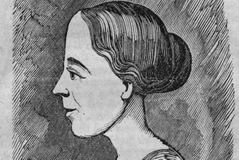
Mary Runkle
Murderer Herisch Ali Abdullah
Murderer · Germany · 2005
Defendant: Herisch Ali Abdullah, 25, Iraqi man and asylum seeker · Victim: Rudo…
1 victim
Herisch Ali Abdullah
Murderer · Germany · 2005
Defendant: Herisch Ali Abdullah, 25, Iraqi man and asylum seeker · Victim: Rudo…
1 victim
 James Ritchie
Serial killer · USA · 2016
James Dale Ritchie (November 4, 1976 – November 12, 2016) was known in the medi…
5 victims
James Ritchie
Serial killer · USA · 2016
James Dale Ritchie (November 4, 1976 – November 12, 2016) was known in the medi…
5 victims
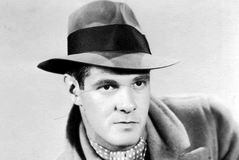 Paul Michael Kelly
Murderer · USA · 1927
Paul Michael Kelly (August 9, 1899 – November 6, 1956) was an American child ac…
1 victim
Paul Michael Kelly
Murderer · USA · 1927
Paul Michael Kelly (August 9, 1899 – November 6, 1956) was an American child ac…
1 victim
 Holly Harvey
Homicide · USA · 2004
Defendant: Holly Harvey (15) Country/State: Georgia, United States Holly Harvey…
2 victims
Holly Harvey
Homicide · USA · 2004
Defendant: Holly Harvey (15) Country/State: Georgia, United States Holly Harvey…
2 victims
 Robert Thompson
Homicide · United Kingdom · 1993
Robert Thompson (born 23 August 1982) abducted, tortured and murdered James Bul…
1 victim
Robert Thompson
Homicide · United Kingdom · 1993
Robert Thompson (born 23 August 1982) abducted, tortured and murdered James Bul…
1 victim
- Gender
- female
- Country
- USA
- Location
- Troy, Rensselaer County, New York, USA
- Date of birth
- 1797
- Age at first offence
- 50
- Characteristics
- parricide, abuse, domestic violence, attempt to collect insurance money
- Victim profile
- Her husband, John Runkle
- Method of murder
- Beating
- Date(s) of murder
- August 18, 1847
- Years active
- 1847
- Date of arrest
- Same day
- Status
-
Executed
Executed by hanging at Whitesboro on November 9, 1847
Overview
Mary Runkle was convicted of first-degree murder for the death of her husband, John Runkle. She was executed by hanging at Whitesboro on November 9, 1847.
Timeline
- August 1847 — John Runkle was found dead in his house in West Street in Troy, New York.
- September 21, 1847 — The case was given to the jury.
- November 9, 1847 — Mary Runkle was executed by hanging at Whitesboro.
Background
In late August 1847, John Runkle, who lived in West Street in Troy, New York, was found dead in his house. His wife was Mary Runkle. Mary Runkle also bore marks of violence on her body. A coroner’s inquest was held.
Accounts described the household as consisting of John Runkle, Mary Runkle, and their 12-year-old daughter Elizabeth. Those three were said to have lived in Troy for only a few months, after previously living for several years in Westmoreland. The family was said to have come from Montgomery County, where they were described as “respectably connected,” and a journalist described their character while they lived in Montgomery County as “an unenviable one.”
Reports connected the family with the disappearance of a peddler. Two children made suspicious remarks about the peddler; soon afterwards, the two children were found drowned under circumstances where a coroner’s jury in that case declared the children died by the agency of person or persons unknown.
During the latter part of their residence in Westmoreland, the family was engaged in litigation. All three surviving family members were under recognizance to appear at the next recorder’s court on a charge of larceny relating to allegedly stealing clothes from their neighbors.
John Runkle was described as feeble and in declining health for some time.
Mary was about 50 years old at the time of her execution and was born in Root, Montgomery County. She had been married to her husband in her native town.
After about a year of marriage, Mary was said to have become jealous of her husband, and “a continued series of difficulties has occurred between them,” according to a news account.
Mary acknowledged that she obtained goods by forgery about 10 years after her marriage, which she described as her first crime.
Some time later, a peddler passed through the area selling goods on credit of four to five weeks. When he failed to return at the expected time to make his collections, a search was launched. He was traced as far as the Runkle house, but no trace of him was found.
At school, their children spoke about their new dresses, stating their mother had “plenty of such cloth.” After repeating those remarks to the schoolteacher in their mother’s presence, the two children were soon found drowned in a tub that held only a few inches of water.
Rumors swept the area that Mary murdered all three, but Mary always denied the allegations.
Other crimes and charges were laid at her feet over the years. Some of those crimes were admitted by Mary, including “the robbing of a church.”
The offence
John Runkle died after being beaten, according to the coroner’s inquest and the coroner’s jury verdict.
Mary and her daughter Elizabeth were arrested in connection with John Runkle’s death.
Mary acknowledged that after about a year of marriage she became jealous of him and that difficulties arose between them.
Investigation
A coroner’s inquest was held after John Runkle was found dead. The body was found dead and cold, with traces of blood on the floor that had been mopped up. When the house was searched, a bundle was found concealed in the attic containing shirts of the three people, all soiled with blood.
Mary and Elizabeth gave accounts of John’s injuries that conflicted with the physical facts.
Mary and her daughter’s account was that John was taken by a fit in the night and that he got out of bed and fell down on the floor two or three times, sustaining the injuries that appeared on his person.
Mary claimed that the marks on her body were sustained while she tried to assist her flailing and thrashing husband during his fits.
In the morning of the day of John’s death, Elizabeth was sent to neighbors for help.
When neighbors arrived, they found Runkle laid out on the bed, dead and cold.
The coroner’s jury verdict stated:
“That the said John Runkle came to his death in consequence of violence occasioned to him by Mary Runkle, in the presence of Elizabeth Runkle, and with the assistence of the said Elizabeth”.
Arrest
After the coroner’s inquest, Mary Runkle and Elizabeth were arrested. Reports indicated that those three—Mary, John, and their daughter Elizabeth—were the entire surviving Runkle household at that time.
Trial
Mary Runkle stood trial before the Oneida Court of Oyer and Terminer. Observers described the trial as straightforward. The State outlined the facts and presented the conclusions of the coroner, and Mary Runkle told her version of the story.
The case was given to the jury on September 21. After deliberating for less than three hours, the jury returned a verdict.
While most observers felt Mary Runkle would, at worst, be found guilty of second-degree murder, the jury found her guilty of first-degree murder, which was a capital offense.
Mary Runkle was found guilty of first-degree murder.
Sentencing
Mary Runkle received a capital sentence following her conviction for first-degree murder.
Her attorneys petitioned the governor to commute her sentence, but the governor was not moved.
Appeals
No appeal information was included in the provided material.
Outcome
Mary Runkle was executed on November 9, 1847.
Aftermath
Between her conviction and her execution, Mary Runkle published her story in an eight-page pamphlet titled Life and Confession of Mary Runkle.
Mary Runkle wrote:
“My cup of affliction being full,” she wrote, “drugged with the bitterest draught of gall, has led me to reflect that I soon must die…I endeavored to breathe out my grief to the unheeded winds, and shed in silent the bitter tears that have been coursing each other from my streaming eyes.”
Anyone expecting to read her confession to the murder of her husband, or to any other suspected murders, would be disappointed; Mary Runkle stuck to her original stories. She said that her husband died as a result of fits, that her daughters died by accident when unsupervised, that her son died of the measles, and that she knew nothing of the peddler’s death.
She did confess to several petty thefts, which she said were committed unwillingly at the urging of her husband.
It was stated that she probably published the pamphlet in an attempt to engender popular sympathy.
Execution details
On the day of her execution, an estimated 1,000 people gathered in the streets of Whitesboro and around the courthouse, although the execution was private and limited to the number required by law to be present.
The gallows was erected in a room over the jailer’s office. It included a hole in the floor through which a rope with a noose was passed down to the victim seated in a chair in the jailer’s office.
The method was described as a mode of hanging “new at the time” and said to be used throughout New York State for most of the nineteenth century. Rather than falling through a trapdoor, the prisoner was yanked upward when a counterweight was dropped.
On November 9, 1847, Mary Runkle sat on a chair in a room inside the Whitesboro Jail, with the noose around her neck and the rope passed up through a hole in the ceiling.
A few minutes after noon, the sheriff asked Mary if she had anything to say. Mary made no reply.
A journalist described the moment:
“The bell rang! The cord was cut! And she was landed into eternity!”
Another description stated:
“she was taken into a room where some dozen people were present, and seated upon a chair, more dead than alive,” said journalist. “From a hole above her head came a cord, which was attached to a beam in a room above. She was oisted out of existence making no more resistance than would have been made by a sack of meal”.
A reporter observed:
“What a sight! A woman - a mother - a wife, charged with a number of murders, dressed in preparation for her execution, her arms bound down, seated under the instrument of death, silent and fixed, with but a few minutes of existence left. And no a motion visible... The bell rang - the cord was cut - and she was launched into eternity. Not a word -not a motion but a little heaving of the breast... Thus ended the earthly fate of Mary Runkle.”
Other details
Mary was described as having “a continued series of difficulties has occurred between them,” according to a news account.
During her execution, the gallows setup placed her in a chair in the jailer’s office area under a rope that passed through a ceiling hole. The description of the hanging emphasized the counterweight mechanism rather than trapdoor dropping.
Mary was said to have made a confession to the undersheriff and to a medical doctor sometime before her execution.

Spotted an error, or have more information about this case?