Jane Williams
Murderer Ann Bilansky
Murderer · USA · 1859
Ann Bilansky was executed by hanging in Minnesota on March 23, 1860 for the ars…
1 victim
Ann Bilansky
Murderer · USA · 1859
Ann Bilansky was executed by hanging in Minnesota on March 23, 1860 for the ars…
1 victim
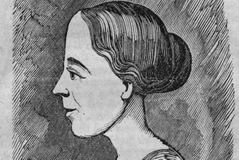 Mary Runkle
Murderer · USA · 1847
Mary Runkle was convicted of first-degree murder for the death of her husband,…
1 victim
Mary Runkle
Murderer · USA · 1847
Mary Runkle was convicted of first-degree murder for the death of her husband,…
1 victim
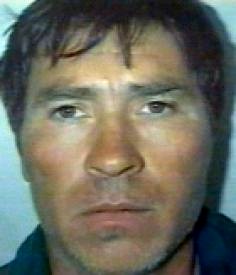 Julio Perez Silva
Serial killer · Chile · 1998
Julio Pérez Silva was sentenced to life imprisonment. He was transferred to jai…
14 victims
Julio Perez Silva
Serial killer · Chile · 1998
Julio Pérez Silva was sentenced to life imprisonment. He was transferred to jai…
14 victims
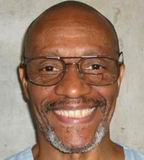 Anthony Banks
Murderer · USA · 1978
Anthony Banks was sentenced to death and later executed by lethal injection in…
2 victims
Anthony Banks
Murderer · USA · 1978
Anthony Banks was sentenced to death and later executed by lethal injection in…
2 victims
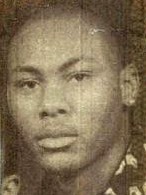 Regis Deon Thomas
Murderer · USA · 1992
Regis Deon Thomas was a member of a notorious Los Angeles gang known as "Bounty…
3 victims
Regis Deon Thomas
Murderer · USA · 1992
Regis Deon Thomas was a member of a notorious Los Angeles gang known as "Bounty…
3 victims
 Larry Eyler
Serial killer · USA · 1982
Larry Eyler was born December 21, 1952, in Crawfordsville, Indiana, and was the…
23 victims
Larry Eyler
Serial killer · USA · 1982
Larry Eyler was born December 21, 1952, in Crawfordsville, Indiana, and was the…
23 victims
 Andrew Kehoe
Mass murderer · USA · 1927
Andrew P. Kehoe committed suicide the same day by killing himself in the explos…
44 victims
Andrew Kehoe
Mass murderer · USA · 1927
Andrew P. Kehoe committed suicide the same day by killing himself in the explos…
44 victims
- Gender
- female
- Country
- USA
- Location
- Richmond, Virginia, USA
- Date of birth
- ???
- Characteristics
- —
- Victim profile
- Virginia Winston, 29 (her master's wife) and her nine-month-old daughter
- Method of murder
- S lashing to death with a hatchet
- Date(s) of murder
- July 18, 1852
- Years active
- 1852
- Date of arrest
- Next day
- Status
-
Executed
Executed by hanging on September 10, 1852
Case record: Jane Williams
Background
Jane Williams was a Black slave who lived in the Winston household in Richmond, Virginia. She was the wife of John Williams and had a “little daughter” who lived with the pair.
In mid-July of 1852, the Young Winston family’s home in Richmond included Mr. Joseph P. Winston (27), his wife Virginia Winston (29), and their “interesting little daughter about nine months old.” Other people in the household included enslaved carpenter John Williams, John’s wife Jane Williams (a housemaid and nurse), and Nelly (a cook described as a gift from the Winston Plantation when the couple married). A young woman of about 23 or 24 named Anna also lived in the household; her services were leased from a lady with surplus labor.
The description of Jane Williams at the time of the trial included that she was seen on the gallows as “a yellow woman of ordinary size, apparently 35 or 40 years of age, hair nearly strait, and with features indicative of great firmness,” and another description at her trial described her as “a mulatto” meat seller who “had but one eye.”
The record described that tensions had been brewing throughout the summer, with Virginia Winston becoming ill and with Anna having run away after being whipped by Mr. Winston. It also described Jane Williams as angry at the Winstons for threatening to sell her apart from her child, and that Jane had ceased sleeping in the same bed as her husband, instead sleeping with her daughter in the kitchen in a bed “about four feet long.” John Williams objected to Jane sleeping with the child, and John told Jane that “if she did not stop it, I would cut the bed up, so we could sleep together.”
On the night of July 18 (a Sunday), Jane returned to the marital bed.
The offence
On the morning of July 19, Jane opened the house and told Nelly, who was working in the kitchen, that “she believed the white folks were dead – she couldn’t wake ‘em.”
Nelly ran screaming through the streets until she reached the home of Anna’s owner, Mrs. Blair. Mrs. Blair and Orey Jones then went to the Winston house and discovered Mr. and Mrs. Winston in bed with their child in a cradle in the same room, described as “weltering in their blood and butchered in the most horrible means.”
The record described injuries to Mrs. Winston and the child, stating: “When discovered, Mrs. W. and her child were in the last struggles and agonies of death, and Mr. W. was writhing with pain of his wounds, insensible from their effects, and was also supposed to be dying. Their heads were literally cut and hacked to pieces. - Mrs. W. had as many as half a dozen deep cuts about her face and head, out of which her brains were oozing – gashes apparently made with an axe or heavy hatchet; and Mr. W. had three severe cuts on the top and back of his head and other injuries, apparently made with the same or a similar instrument. The child appeared to have been killed by dashing its head against a wall, or by having received blows with some heavy instrument, its head and breast exhibiting severe bruising.”
Joseph P. Winston would live but remained in a coma for several days and was described as remembering nothing of the attack. Virginia Winston and her infant daughter died.
Investigation
The authorities were immediately notified and Mr. Winston’s brother, Bickerton L. Winston, entered the room assigned to John and Jane Williams. In that room, Bickerton spotted a filthy bucket of standing water, rolled up his sleeves, and fished to the bottom of it, described as: “dragged up a bunch of hair belonging to a white female. Because of the Offensive nature of the water, I went to the spring and rinsed the hair. Afterward I drained the bucket and found other hair, apparently cut, and an eyebrow or lash.”
Further search found a hatchet hidden under a pile of scraps in the same room. The hatchet had been washed, but traces of blood remained. The remaining household was arrested and taken to jail.
A coroner’s jury was called that same day.
Joseph Scott, Nelly’s husband, testified that John ran to the doorway of the Winston’s bedroom, then stopped and uttered, “Lord have mercy.” Scott observed that John “seemed distressed and would not come in.”
John Williams testified that he “like[d] Mr. and Mrs. Very well,” but he did not “know whether my wife was satisfied with Mr. and Mrs. Winston’s treatment or not,” although he had heard her complain and request that Mr. Winston sell her. John also admitted that Jane told him she intended to kill Mr. & Mrs. Winston, but he did not believe it, stating that “he did not believe it any more than he could fly into the sky. He said he did not think any Woman would attempt such a thing, although they might be disposed to talk of it.” John testified that he first learned of the tragedy when Jane woke him, saying, “I believe everyone in the house is dead.” John said, “I ran to the window and haled my wife, but she would not stop.”
Jane denied knowledge of the crime. She claimed she had used the hatchet to cut up a joint of meat she had purchased from, “a yellow man at the New Market,” to make soup. This was contradicted by Nelly, who stated that the Winstons had eaten “bacon, cabbage and apple dumplings for dinner – no beef or soup.” John Williams also claimed that he did the marketing. Andrew Kinney, enslaved to Mr. Shedd the butcher, testified that he “did not think there was any other mullatto man selling meat in the market. His stand was at the entrance of the Market on Marshall Street. He did not recall seeing any woman on Sunday morning in the market with only one eye.”
Jane attempted to throw suspicion toward Anna, claiming that, “a gentleman friend of A. threatened to, “knock Winston in the head some of these times” because A. could not come out.” Nelly, who was raised with Anna, testified that “I have not seen Anna since Friday night. Anna used to see a young man, but afterward became so base that the young men all left her,” and also testified that, “Jane has said she did not like Mr. and Mrs. W.”
It was then announced that Anna had been found and she was brought before the jury. Anna testified that on Saturday she stayed with a White woman and that, “I slept in Mr. Branch’s factory Sunday night with a white man…Jane say she did not like Mrs. Winston and never would…Jane says she never forgets or forgives anything done to her. – Master Joe threatened to sell her without her child – I heard she was suspected of poisoning the other child of Mr. W. that died.”
John and Jane Williams were remanded to jail to await trial.
Cell visit and confession
A few days after the coroner’s jury, Jane “was visited in her cell by the Rev. Mr. Ryland, pastor of the African Baptist Church, of which Jane Williams was a member,” who exhorted her to make peace with God in anticipation of being hung. Jane replied that she intended to make peace and had something she wished to tell him. The minister insisted she repeat her story to her jailor, Mr. Starke, the following day.
Jane told Mr. Starke that she returned to her husband’s bed to establish an alibi. Jane stated she left her sleeping husband “a little before dawn,” procured the broad edged hatchet, entered the house, proceeded to Mr. Winston’s room, and began by “knocking Mr. Winston senseless.” She described that he “scarcely struggled.” She then described stepping around the bed and beginning cutting into Mrs. Winston’s head, stating: “Mrs. W’s struggles were so great that Jane said she inflicted stronger and more frequent blows upon her head than she did on Mr. W’s in order to silence her quickly.” Jane stated she then killed the infant, washed off the blood, and laid it in the cradle. She further stated that she washed the blood off the hatchet, hid it, and then gave the alarm. Jane further stated that she considered she had been ill-treated by Mr. and Mrs. Winston and had brooded over revenge for some time. She described that “The devil, she stated, had such possession of her that morning, that she believed she could have went further if necessary.”
The narrative included a parenthetical editorial statement from an anonymous pamphleteer: “It is notorious with all who were acquainted with Mr. Winston and his wife, that John and Jane Williams, and all the negroes of the family of the family of Mr. W., were the most indulged in the city of Richmond. To promote the happiness of John and his wife, he bought him in South Carolina, where he had been sold to traders, and brought him back to Virginia. How the kindness of Mr. W. was returned, the murderous conduct of Jane and John testifies, Inhumanly butchering those who had been kind and forgiving to them, and crushing the skull of their innocent child, so that the Physician said, that when he pressed the head to discover its injuries, he heard the broken pieces of bone grating against each other.”
Trial
At her trial, Jane Williams pleaded guilty and stated she had acted alone.
Sentencing
Jane Williams was sentenced to be hanged on Friday, September 12, 1852.
Arrest and execution
Jane was executed on September 10, 1852 by hanging.
The gallows was erected a short distance south east of the Poor House, on the side of the hill near the powder magazine, described as “appropriate to the purpose of a grave yard for blacks.”
Jane met Reverend Dr. Ryland, who “gave her some practical advice.”
At 10 o’clock, she was taken from jail in an open four-horse wagon, with her minister at her side. She was dressed entirely in white and guarded by the city Sergeant, Mr. Ferguson, his deputy, Mr. Starke, Constable, and a special detachment of the night police commanded by Mr. Jenkins. An immense number of people surrounded the procession.
At the ground, the wagon was halted under the common scaffold erected to hang Jordan Hatcher. Dr. Ryland addressed a multitude of upwards of six thousand persons of all sexes, colors, and ages, and stated that he would administer consolation of religion in Jane’s dying moments “although he must say that if she had three lives instead of one, they should all be taken to pay the penalty of her wicked and bloody deeds.” Dr. Ryland offered up a prayer to Deity on Jane’s behalf.
Dr. Ryland asked Jane whether anyone beside herself was cognizant of or accessory to the murder. Her calm reply was: “no one,” followed by denial that any person aided her in committing the murder.
The halter was adjusted to the crossbeam of the gallows about 18 feet high. Jane tied the hood under her neck and stepped upon the chair from whence she was to be launched into eternity. The word was given, the chair was pulled from under her, and the cart moved off, leaving her hanging in the air a few feet off the ground. The fall was about twenty inches. The narrative stated that the knot slipped so that she apparently died of strangulation, though Dr. Haskins, “we were informed by Mr. Starke,” stated that the fall broke her neck. She kicked convulsively for several minutes; at 14 minutes to 11, the drop fell; at 17 minutes after 11, Dr. H. pronounced she had been dead for some minutes and she was cut down. She was interred in a grave dug near the scaffold under the hill.
Outcome
Jane Williams’s execution concluded her case.
Aftermath
On the Sunday after Jane’s execution, two religious services were held. At the African Baptist Church, Reverend Dr. Ryland instructed the enslaved congregation to remain calm and do no harm to their Masters, and warned that if rumors of unrest persisted they would no longer be allowed to congregate and enjoy the solace of religion.
Across town, at the Church the Winston family attended, a memorial service was held for Virginia Winston and her infant daughter. At that service, Reverend Mr. Moore placed the blame on “the perceived breakdown of strong, traditional, family values.”
Jane’s husband, John Williams, was brought to trial for his life after Jane’s execution. Although Jane denied John’s involvement when she gave her confession, again at trial, and when she stood on the scaffold facing death, John Williams was found guilty based on testimony that he had words with Overseers who hired him from the Winstons and that he was sometimes seen lurking, though not on the day in question.
John Williams was hanged October 22, 1852.
The survivor, Joseph Winston, was awarded $500.00 by the Commonwealth of Virginia for his economic loss associated with Jane’s execution and an additional sum of $850.00 for her husband, John.
Other details
The narrative described that Jane Williams and John Williams died side by side for the slaying of their master’s wife and child at Richmond, Virginia. The execution drew a crowd of 6,000. The narrative stated that the state offered to pay Jane’s owner $500 compensation for taking away his property by executing them.


Spotted an error, or have more information about this case?