Charity Lamb
Murderer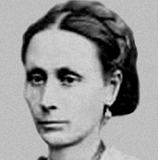 Lydia Sherman
Murderer · USA · 1864
Lydia Sherman was also known as “The Derby Poisoner.” She was born in 1824 in B…
10 victims
Lydia Sherman
Murderer · USA · 1864
Lydia Sherman was also known as “The Derby Poisoner.” She was born in 1824 in B…
10 victims
 Martha Grinder
Murderer · USA · 1864
Martha Grinder was convicted of murder in the first degree for poisoning Mary C…
2 victims
Martha Grinder
Murderer · USA · 1864
Martha Grinder was convicted of murder in the first degree for poisoning Mary C…
2 victims
 Ann Bilansky
Murderer · USA · 1859
Ann Bilansky was executed by hanging in Minnesota on March 23, 1860 for the ars…
1 victim
Ann Bilansky
Murderer · USA · 1859
Ann Bilansky was executed by hanging in Minnesota on March 23, 1860 for the ars…
1 victim
 Michael Zabawa
Murderer
Michael Zabawa was a Minnesota man who lived in Matawan, and he worked at a hog…
2007 victims
Michael Zabawa
Murderer
Michael Zabawa was a Minnesota man who lived in Matawan, and he worked at a hog…
2007 victims
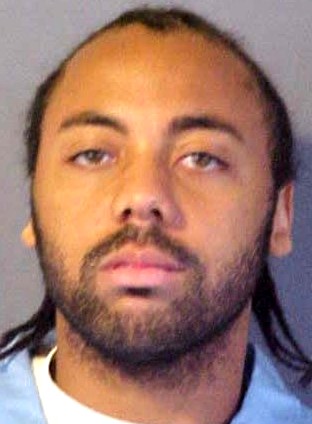 Darwin Demond Brown
Murderer · USA · 1995
Darwin Demond Brown (32 at execution) was convicted for his part in the bludgeo…
1 victim
Darwin Demond Brown
Murderer · USA · 1995
Darwin Demond Brown (32 at execution) was convicted for his part in the bludgeo…
1 victim
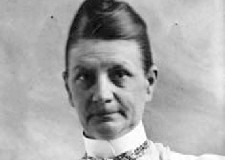 Martha Place
Murderer · USA · 1899
Martha Place was born in New Jersey. Her brother said she was struck in the hea…
1 victim
Martha Place
Murderer · USA · 1899
Martha Place was born in New Jersey. Her brother said she was struck in the hea…
1 victim
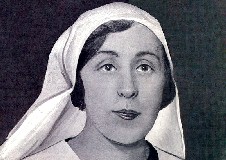 Dorothea Waddingham
Murderer · United Kingdom · 1935
Dorothea Waddingham (also referred to as Dorothea Nancy Waddingham) was born in…
2 victims
Dorothea Waddingham
Murderer · United Kingdom · 1935
Dorothea Waddingham (also referred to as Dorothea Nancy Waddingham) was born in…
2 victims
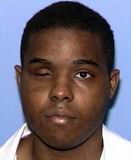 Andre Lee Thomas
Murderer · USA · 2004
Andre Lee Thomas (TDCJ Number 999493) was born on 03/17/1983. He was received o…
3 victims
Andre Lee Thomas
Murderer · USA · 2004
Andre Lee Thomas (TDCJ Number 999493) was born on 03/17/1983. He was received o…
3 victims
- Gender
- female
- Country
- USA
- Location
- Oregon City, Oregon, USA
- Date of birth
- ???
- Characteristics
- parricide, abuse, alcohol, torture
- Victim profile
- Nathaniel Lamb (her husband)
- Method of murder
- Beating with an axe
- Date(s) of murder
- May 13, 1854
- Years active
- 1854
- Date of arrest
- Same day
- Status
-
Died in custody
Sentenced to a lifetime of hard labor at the Oregon State Penitentiary on September 17, 1854; in 1862 she was moved to Hawthorne’s Insane Asylum in southeast Portland, where she died in 1879
Case record: Charity Lamb
Background
Charity Lamb (birth date unknown) was the first woman to be convicted of murder in Oregon Territory and was described as “Parricide - T he first woman to be convicted of murder in Oregon Territory.” She died in 1879 after being transferred to Hawthorne’s Insane Asylum.
The offence
On Saturday, May 13, 1854, Charity Lamb struck her husband Nathaniel in the back of the head with an axe while he was eating supper. The supper included their five children. The act involved two fatal wounds: a gash on the top of the head and a second gash lower down on the back of the skull. The wounds penetrated into the brain.
Investigation
Charity Lamb was identified as the culprit. After the killing, she fled the scene and implied her involvement. She told a doctor and a constable that she “did not mean to kill the critter, … only intended to stun him” and “she was sorry she had not struck him a little harder.”
Her dying husband asked his wife, “My dear, why did you kill me for?”
Arrest
On September 11, 1854, Lamb appeared in the U.S. District Court at Oregon City on a charge of murder.
Trial
The trial took place in the U.S. District Court for the Oregon Territory in Oregon City. Presiding Judge Cyrus Olney heard the case.
Charity Lamb stood before Judge Cyrus Olney while carrying an infant in her arms. James Kelly, her court-appointed attorney, pled her “not guilty.”
Lamb’s court-appointed attorney was James Kelly. The trial also involved other counsel named James K. Kelly and Milton Elliot, and the chief prosecutor was Noah Huber. The judge was Cyrus Olney. The place was Oregon City, Oregon Territory.
Evidence and testimony
The coroner established that the victim died in his bed one week after the infliction of two cuts that went through the top of the skull and into the brain.
Two of Lamb’s children testified about their father’s violence. Mary Ann (age nineteen) testified that their father often beat Charity with his fists and kicked her. Abram (age thirteen) testified similarly and also reported that he had struck her with a hammer. Abram also testified that their father had ordered Charity to get out of her sick bed and work.
Child testimony also described that the children saw Nathaniel fire a shot toward their mother.
Thomas testified that he saw Charity strike Nathaniel one blow on the head with the axe. Abram testified that his father “fell over and scrambled about a little.” Abram also testified about what he saw after the strike: Charity and Mary Ann ran out of the house leaving Nathaniel writhing in his pool of blood.
A motive connected to Nathaniel’s alleged conflict with Collins was presented through testimony. The doctor testified that there was “a love affair between Collins and Mary Ann [the daughter]; that she [Charity] favored the suit, and Lamb opposed it; that she was mortified and vexed about it, for Collins was so nice a man”
Defence
Lamb’s first line of defence was insanity. Her lawyers called her a “monomaniac.” The doctor described her as “very much excited … looked wild-like out of her eyes” while saying he “thought she was pretending.”
As a second defence, Lamb argued that she did not intend to kill her victim and that she “only meant to stun him until she could get away.” The evidence described a blow with an axe blade rather than its butt as undermining the idea of intending to stun.
Counsel also urged that she killed to save herself from being killed. Evidence of physical abuse by Nathaniel was presented through the children’s testimony and additional statements. The children testified that Nathaniel threw a hammer at her and put a gash in her forehead. They also testified that on several occasions when Lamb was sick in bed, Nathaniel threatened her with violence and ordered her to get up and work. One winter, it was said he “he knocked her down with his fists and kicked her over several times in the snow.”
Lamb told others that her husband tried to poison her. The children testified that their parents quarreled “lots of times.” The quarrels sometimes ended with Lamb fleeing the encounter but having to turn back when Nathaniel threatened to shoot her.
Threats of violence before the killing
One week before the killing, Nathaniel told Charity of plans to abandon the family, kill her, and head to California. The case record also stated that one week before the killing he told her: “would not live on his expense longer than a week; that he was going to kill her next Saturday night”—May 13. During that week he sold his mare to make ready for the trip.
Judge Cyrus Olney also stressed self-defence in his charge to the jury, instructing that Lamb must be found innocent if she “acted out of a genuine belief in self-preservation,” even if that “belief was a delusion of a disordered mind.”
Closing question from the jury
The jury returned with a question that related to “What was meant by imminent danger, such as would justify killing?” They also focused on whether Nathaniel’s threat was immediate at the moment she killed him.
Judge Olney instructed that a justifiable killing should be unavoidable at that instant and stated: “If she saw that danger, before he returned home, it was her duty to have gone away.”
Verdict
The twelve-man jury deliberated for more than half a day. The jury found: “Charity Lamb is guilty of the killing purposely and maliciously … but without… premeditation and do recommend her to the mercy of the Court.”
Sentencing
On September 17, 1854, Judge Cyrus Olney sentenced Lamb.
Before sentencing, Judge Olney asked Lamb if she had anything to say. Lamb, who had not testified at trial, said: “Well I don't know that I murdered him. He was alive when I saw him last… I knew he was going to kill me.”
In response to the judge’s remarks that the jury thought she “ought to have gone away, in his absence,” Lamb said: “Well. He told me not to go, and if I went that he would follow me, and find me somewhere, and he was a mighty good shot… I did it to save my life.”
Judge Olney sentenced her under the law as: “The jury … recommended you to mercy. But the law gives the court no discretion … The sentence therefore is, that you be conveyed to the penitentiary of this territory and there imprisoned, and kept at hard labor, so long as you shall live.”
Outcome
Charity Lamb was placed in the all-male territorial penitentiary in Portland after her sentence. Her baby was taken from her.
Five years after her conviction, she was still confined in Portland, doing the wash for the warden’s family. Missionaries inspected the prison and noted that “she is not of sound mind.”
In 1862, she was moved to Hawthorne’s Insane Asylum in southeast Portland. She died in 1879.
Her burial was at Lone Fir Cemetery, and the grave was one of many paved over in about 1930.
Other details
Newspapers branded Lamb “a monster” and characterized her act as “cold-blooded,” “inhuman,” and “revolting.”
Her first trial date was postponed, and some supporters of speedy justice labeled the delay a “farce.”
A neighbor of the Lambs named Philip Foster told a Portland newspaper that Collins surfaced in the Willamette Valley the previous summer and worked the neighborhood where the Lamb’s homestead was located. The newspaper story said that Lamb’s women became captivated by the stranger and “each had vowed to elope with Collins.” It also alleged that Collins seduced Charity Lamb and her oldest daughter, broke up the marriage of another couple, and then left for California.
A May 23, 1854 edition of the Portland Weekly Times chronicled the affairs. It said that when Collins packed up and left for California, Charity Lamb promised him in a letter that she would leave her husband and join him, and that she would bring Mary Ann with her. The newspaper story said Nathaniel Lamb found out about his wife’s affair and threatened to stop her.
During the trial, it was said the state’s first witness was Dr. Forbes Barclay, the Clackamas County coroner and personal physician to Dr. John McLoughlin. Dr. Barclay described the two fatal wounds to Nathaniel Lamb and testified that: “Either blow would have been fatal.”
A second physician witness named Dr. Welsh testified that Lamb admitted striking Nathaniel twice with the ax but said she told him she “only meant to stun the critter” so that she and Mary Ann could get away.
The record also discussed alleged intemperate use of alcohol by Nathaniel. After sentencing, Charity Lamb continued washing the warden’s family clothes, scrubbing floors, and knitting quietly in her cell. The record also stated that she was “kept behind walls so long as she lived.”
Lamb’s family was gone by the time of her death, and her gravesite was unattended, “forgiveness never given.”


Spotted an error, or have more information about this case?