Lavinia Burnett
Murderer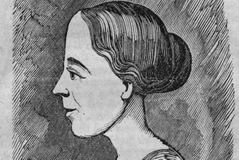 Mary Runkle
Murderer · USA · 1847
Mary Runkle was convicted of first-degree murder for the death of her husband,…
1 victim
Mary Runkle
Murderer · USA · 1847
Mary Runkle was convicted of first-degree murder for the death of her husband,…
1 victim
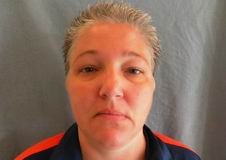 Diane Spencer
Murderer · USA
Diane Louise Spencer was sentenced to life in prison in Michigan on March 13, 1…
1990 victims
Diane Spencer
Murderer · USA
Diane Louise Spencer was sentenced to life in prison in Michigan on March 13, 1…
1990 victims
 Miranda Barbour
Murderer · USA · 2013
Miranda Barbour, 19, defendant. · Elytte Barbour, 22, defendant and husband of…
100 victims
Miranda Barbour
Murderer · USA · 2013
Miranda Barbour, 19, defendant. · Elytte Barbour, 22, defendant and husband of…
100 victims
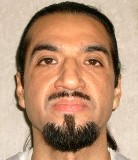 George Ochoa
Murderer · USA · 1993
Name: George Ochoa · Age: 38 (at execution) · Place: Oklahoma State Penitentiar…
2 victims
George Ochoa
Murderer · USA · 1993
Name: George Ochoa · Age: 38 (at execution) · Place: Oklahoma State Penitentiar…
2 victims
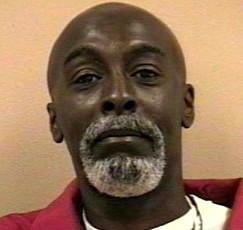 James Edward Thomas
Murderer · USA · 1986
James Edward Thomas moved into the Sir Walter Tourist Home in Raleigh, North Ca…
1 victim
James Edward Thomas
Murderer · USA · 1986
James Edward Thomas moved into the Sir Walter Tourist Home in Raleigh, North Ca…
1 victim
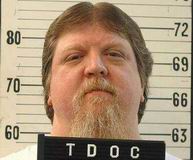 Jonathan Wesley Stephenson
Murderer · USA · 1989
Jonathan Wesley Stephenson was convicted of hiring a hit man to kill his wife,…
1 victim
Jonathan Wesley Stephenson
Murderer · USA · 1989
Jonathan Wesley Stephenson was convicted of hiring a hit man to kill his wife,…
1 victim
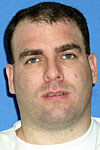 Larry Swearingen
Murderer · USA · 1998
Larry Ray Swearingen was convicted of capital murder for murdering Melissa Trot…
1 victim
Larry Swearingen
Murderer · USA · 1998
Larry Ray Swearingen was convicted of capital murder for murdering Melissa Trot…
1 victim
- Gender
- female
- Country
- USA
- Location
- Washington County, Arkansas, USA
- Date of birth
- 1790
- Age at first offence
- 55
- Characteristics
- kidnapping, rape
- Victim profile
- Jonathan Selby
- Method of murder
- Shooting
- Date(s) of murder
- September 9, 1845
- Years active
- 1845
- Date of arrest
- —
- Status
-
Executed
Executed by hanging on November 8, 1845
Case details
Lavinia Burnett (née Sharp) died November 8, 1845. She was executed by hanging on November 8, 1845. She was the first woman executed in the state of Arkansas.
Lavinia Burnett, her husband Crawford Burnett, and their son John Burnett were arrested, tried, and convicted of the murder of Jonathan Selby, who lived near Fayetteville, Arkansas. Selby was a bachelor and was murdered at his home several miles outside of Fayetteville.
The offence
Jonathan Selby was murdered, and the theory was that Selby had been killed for a large sum of money he supposedly kept hidden in his home. Suspicion fell on the Burnetts after Selby was killed.
A daughter, Minerva Burnett (about fifteen years of age), informed authorities that all three—Crawford, Lavinia, and John Burnett—were involved in a plan and were present when it was carried out. Minerva reported that her parents had planned the murder and that her brother John had executed it. In later accounts, it was stated that there was a consensus among well-known and influential attorneys after the death of the three Burnetts that Minerva lied about her parents and brother out of revenge.
Investigation
Suspicion fell upon Crawford Burnett, his wife Lavinia Burnett, and their son John after Jonathan Selby was murdered. The Burnetts were taken into custody, but John Burnett had left for Missouri before the arrests and could not be found at first.
Arrest
Crawford Burnett and Lavinia Burnett were taken into custody following the arrests, while John Burnett had gone to Missouri and was not taken into custody at the time. Soon after the execution of Lavinia and Crawford, John Burnett was arrested in Missouri and returned to the county.
Trial
Charges and trial structure
The defendants were tried at a special term in October 1845. Crawford and Lavinia Burnett were tried separately.
At the special term, the opening day was October 3, 1845, with Circuit Judge Gibson G. Sneed presiding. Sheriff Elijah O’Brian was ordered to summon 38 men for a grand jury. The grand jury was empaneled, instructed by the prosecuting attorney, A.H. Greenwood, and retired to deliberate.
Thomas Wilson, foreman of the grand jury, reported that the jurors indicted Crawford and Lavinia Burnett on a charge of murder in the death of Selby.
On Saturday, October 4, 1845, both defendants pleaded not guilty and asked for a trial by jury. Judge Sneed ordered the sheriff to secure a jury panel and released Minerva Burnett until Monday, October 6, 1845, under a $100 bond. A second witness, Hardin Sharp, was freed under a similar bond.
On Monday morning, October 6, 1845, the Burnetts’ attorney Charles G. Baylor asked to be relieved of his duties. Judge Sneed complied and appointed Isaac Strain and James P. Neal as defense attorneys. Isaac Murphy also volunteered his services for the defense.
Crawford Burnett trial (October 1845)
During the trial of Crawford Burnett, the principal witness was his daughter Minerva, who testified about the alleged plotting and involvement by her parents and her brother. The jury returned a guilty verdict of first degree murder.
Lavinia Burnett trial (October 1845)
During Lavinia Burnett’s trial, Minerva Burnett again testified that she had heard her parents plotting the death of Selby with her brother John. The jury returned a guilty verdict after brief deliberation.
Sentencing remarks and dates
Judge Sneed pronounced sentence on the two defendants on Tuesday, October 10, 1845. The sentence ordered them taken to the common gallows and hanged by the neck until dead. The sentencing required execution between 12 o’clock noon and 3 p.m.
Sentencing
Lavinia Burnett was sentenced to be hanged on November 8, 1845, less than thirty days after the trial.
Outcome
At the appointed time, a gallows was erected on the hill south of town, not far from the National Cemetery. Lavinia Burnett was hanged on November 8, 1845, in the presence of a large crowd.
The hanging was reportedly well attended, with almost the entire county who were able to reach Fayetteville on that day on hand by the time of the executions.
Aftermath
Soon after the execution of her parents, John Burnett was arrested in Missouri and returned to Fayetteville for trial. John Burnett was indicted by a grand jury on December 1, 1845, and efforts to select a jury began the following day.
John Burnett was tried promptly in circuit court before Judge Sneed, found guilty, and sentenced to death. His attorneys were Isaac Murphy and A. M. Wilson. John Burnett was hanged on December 26, 1845, on the same scaffold where his parents had met their deaths less than two months before.
Other details
- Lavinia Burnett was also referred to as “Mrs. Lavinia Burnett” in the accounts.
- The outcome that Lavinia Burnett was executed on November 8, 1845, made her the first recorded execution of a woman in Arkansas history, and it was also described as the only such execution until the year 2000.
- Isaac Murphy later served as governor of the state during Reconstruction.
Spotted an error, or have more information about this case?