
Yolanda Saldivar
Murderer Megan Huntsman
Murderer · USA · 1996
Megan Huntsman was 40 at sentencing. She was a mother of three children who wer…
6 victims
Megan Huntsman
Murderer · USA · 1996
Megan Huntsman was 40 at sentencing. She was a mother of three children who wer…
6 victims
 Angela Johnson
Murderer · USA · 1993
Angela Jane Johnson was convicted in federal court of aiding and abetting the m…
5 victims
Angela Johnson
Murderer · USA · 1993
Angela Jane Johnson was convicted in federal court of aiding and abetting the m…
5 victims
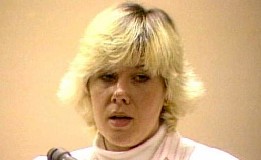 Catherine May Wood
Murderer · USA · 1987
Catherine May Wood was an American caregiver who worked at the Alpine Manor Nur…
5 victims
Catherine May Wood
Murderer · USA · 1987
Catherine May Wood was an American caregiver who worked at the Alpine Manor Nur…
5 victims
 Michele Kalina
Murderer · USA · 1996
Michele Kalina pleaded guilty to murder for one of five infants she initially w…
5 victims
Michele Kalina
Murderer · USA · 1996
Michele Kalina pleaded guilty to murder for one of five infants she initially w…
5 victims
 Amy Bishop
Murderer · USA · 1986
Amy Bishop — biology professor and perpetrator · James Anderson — Bishop’s husb…
4 victims
Amy Bishop
Murderer · USA · 1986
Amy Bishop — biology professor and perpetrator · James Anderson — Bishop’s husb…
4 victims
 Susan Eubanks
Murderer · USA · 1996
Susan Dianne Eubanks, also referred to as Susan Eubanks, was convicted by a jur…
4 victims
Susan Eubanks
Murderer · USA · 1996
Susan Dianne Eubanks, also referred to as Susan Eubanks, was convicted by a jur…
4 victims
 Larry C. Williams
Murderer · USA · 1979
Larry C. Williams and the other men drank beer, smoked pot, and watched TV for…
2 victims
Larry C. Williams
Murderer · USA · 1979
Larry C. Williams and the other men drank beer, smoked pot, and watched TV for…
2 victims
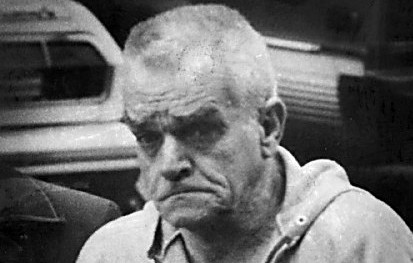 Charles Pierce
Child killer · USA · 1969
Charles E. Pierce was convicted of second-degree murder in the 1969 killing of…
3 victims
Charles Pierce
Child killer · USA · 1969
Charles E. Pierce was convicted of second-degree murder in the 1969 killing of…
3 victims
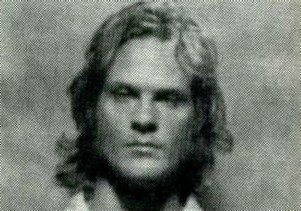 Michael Dee Mattson
Murderer · USA · 1978
Michael Dee Mattson was convicted of multiple offenses arising from the kidnapp…
3 victims
Michael Dee Mattson
Murderer · USA · 1978
Michael Dee Mattson was convicted of multiple offenses arising from the kidnapp…
3 victims
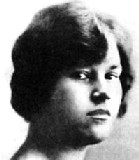 Edith Thompson
Murderer · United Kingdom · 1922
Edith Jessie Thompson (Edith Graydon; 25 December 1893 – 9 January 1923) was a…
1 victim
Edith Thompson
Murderer · United Kingdom · 1922
Edith Jessie Thompson (Edith Graydon; 25 December 1893 – 9 January 1923) was a…
1 victim
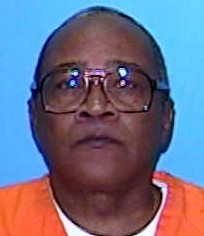 Norman Parker
Murderer · USA · 1966
Name: Norman Parker · Also known as: Nathen Parker; Shawn Vincent · Date of bir…
3 victims
Norman Parker
Murderer · USA · 1966
Name: Norman Parker · Also known as: Nathen Parker; Shawn Vincent · Date of bir…
3 victims
- Gender
- female
- Country
- USA
- Location
- Corpus Christi, Texas, USA
- Date of birth
- September 19, 1950
- Age at first offence
- 45
- Characteristics
- —
- Victim profile
- Famed Tejano singer Selena Quintanilla, 23
- Method of murder
- Shooting
- Date(s) of murder
- March 31, 1995
- Years active
- 1995
- Date of arrest
- Same day
- Status
-
Life imprisonment
Sentenced to life in prison in October 1995, with parole eligibility set for thirty years
Case record: Yolanda Saldívar
Other details
Yolanda Saldívar (born September 19, 1960) was convicted in 1995 for the murder of Tejano singer Selena Quintanilla-Perez. The killing occurred on March 31, 1995.
Saldívar was a registered nurse from San Antonio, Texas. She met with Selena after a concert in 1993, and they became friends. Selena offered Saldívar a job as her fan club president and in Selena’s boutique.
As time passed, Selena and Saldívar grew apart. The Quintanilla family uncovered evidence of embezzlement and fraud being perpetrated by Saldívar. Saldívar and Quintanilla met on March 31, 1995, at a Days Inn in Corpus Christi.
The accepted course of events was that Selena told Saldívar that she was being fired and Saldívar responded by grabbing a gun and shooting Selena as she was exiting the room. Selena managed to run into the motel lobby and state that Yolanda Saldívar shot her, before collapsing in front of motel staff members. She was taken to a local hospital and died one hour later.
Saldívar barricaded herself in her pickup truck in the motel’s parking lot. She held police at bay for several hours before surrendering. The dramatic image of Saldívar in the truck with her gun pointed to her head was broadcast live on television all throughout the United States.
Saldívar’s trial for the murder of Selena Quintanilla-Perez was followed closely by the Latino community in the United States. The trial venue was moved to Houston after Saldívar’s lawyers successfully argued that she could not receive a fair trial in Corpus Christi, Selena’s hometown. She was convicted and sentenced to life in prison in October 1995, with parole eligibility set for thirty years; this was described as the maximum prison term allowed in Texas.
Saldívar arrived at the Gatesville Unit (now Christina Crain Unit) on November 22, 1995, to be processed. She was described as being held at the Mountain View Unit in Gatesville, operated by the Texas Department of Criminal Justice. Her parole eligibility was described as March 30, 2025.
Because of multiple death threats against her by imprisoned fans of Selena, Saldívar was placed in isolation, spending 23 hours each day alone in her 9 by 6 feet (2.7 × 1.8 m) prison cell without contact from other inmates. She was allowed to purchase a radio from the commissionary and may have a two-hour visit with family or friends each week.
After the conviction, Saldívar insisted it was an accident and never offered a motive for murdering Selena. In later years, she began claiming she had been protecting Selena’s private life. She told journalist María Celeste Arrarás that she had a diary, a letter, and a video proving Selena’s infidelity to her husband, Chris Pérez. She also claimed to possess a suitcase of clothes Selena had asked her to keep, alleging Selena planned to abandon her career and run away with her “lover,” Ricardo Martínez.
Martínez, described as the chief financier of Selena’s clothing business, expressed outrage at Saldívar’s charges. "This woman continues doing harm," he said. "I don't know how they can continue to believe a murderer."
The revolver used to kill Selena was described as misplaced after the trial, but later found in a court reporter’s home. It was dismantled and the pieces thrown into Corpus Christi Bay.
Saldívar asked the Texas Court of Criminal Appeals to accept a petition challenging her conviction. She claimed the petition was filed in 2000 with the 214th District Court but was never sent to the higher court. Her request was received on March 31, 2008, the thirteenth anniversary of Selena’s death.
In popular culture, Saldívar was portrayed in the Selena movie by Lupe Ontiveros.
Timeline
- March 31, 1995 — Selena Quintanilla-Perez was shot at a Corpus Christi Days Inn motel; Saldívar barricaded herself in her pickup truck and held police at bay before surrendering.
- October 1995 — Saldívar was sentenced to life in prison with parole eligibility set for thirty years.
- October 23, 1995 — Saldívar was sentenced to life in prison; parole eligibility was set for thirty years.
- November 22, 1995 — Saldívar arrived at the Gatesville Unit (now Christina Crain Unit) in Gatesville, Texas, to be processed.
- October 1, 1998 — The Texas Court of Appeals affirmed Saldívar v. State, with the opinion delivered by Chief Justice Paul C. Murphy.
- March 31, 2008 — Saldívar’s request was received by the court for review of a petition challenging her conviction.
- March 30, 2025 — Parole eligibility date described for Saldívar.
The offence
Saldívar shot Selena Quintanilla Perez in the back as Selena walked toward the door of Saldívar’s room at the Corpus Christi Days Inn. Selena ran from the room toward the lobby of the motel, screaming, and collapsed.
Before passing out, Selena told motel employees that Saldívar shot her. After that, Selena followed by armed pursuit was described as occurring when Saldívar followed her into the lobby and returned to her room.
After the shooting, Saldívar went to her truck in the motel parking lot and was confronted by police officers. She sat in the truck and threatened to commit suicide for more than nine hours before surrendering.
Investigation
Saldívar surrendered after conversing for several hours with members of a special hostage negotiation team.
Sergeant Paul Rivera testified that he instructed "the personnel with the negotiating team to bring appellant to the police station so that we could talk to her." He stated that, upon her arrival, she was placed in an interview room and warned of her constitutional rights. He also stated that Saldívar voluntarily initialed the warnings read to her from a police form and indicated she understood the rights.
Arrest and standoff
After surrendering, Saldívar was taken within 20 minutes to the downtown police station and placed in an interrogation room with Paul and Ray Rivera.
Paul Rivera informed Saldívar of her right to a lawyer, and she waived that right.
When police investigators surrounded Saldívar’s truck, she cried out, "I can't believe I killed my best friend".
A SWAT presence and the FBI Crisis Negotiation Unit were described as being brought in during the standoff. A phone line was described as being run between negotiators and their base adjacent to Saldívar’s pickup truck.
Lead negotiator Larry Young tried to establish rapport with Saldívar and persuade her to give herself up. Another negotiator, Isaac Valencia, planted the idea with her that the shooting was accidental; Saldívar later changed her story claiming that the "gun went off" by itself.
During the standoff, an autopsy was performed due to overwhelming media interest. The autopsy described that the bullet entered Selena’s lower back, passed through the chest cavity, directly severing the right secluded carotid artery, and exited the right upper chest. It also described Selena’s heart as pumping her blood out of her circulatory system, and that if the bullet had been only one millimeter higher or lower, the wound would not have been as severe.
Trial
Charges and plea
Saldívar entered a plea of not guilty to the offense of murder. Tex. Penal Code Ann. § 19.02 (Vernon 1994) was cited.
Verdict
A jury found her guilty and assessed punishment at confinement for life in the Institutional Division of the Texas Department of Criminal Justice.
Jury deliberation
The jury deliberated for two hours before finding Saldívar guilty of murder.
Prosecutor and defense issues raised on appeal
In seventeen points of error, Saldívar contended the trial court erred in multiple areas, including: permitting the prosecutor to exclude venire persons solely on account of their race; sustaining the State’s challenge of a venire person; denying constitutional protections because the State did not disclose impeachment evidence; admitting her written statement; admitting evidence of extraneous misconduct; denying a requested jury instruction and a special issue; admitting irrelevant and prejudicial opinion evidence at the punishment phase; denying a motion for mistrial because of prosecutorial misconduct; and denying a motion for new trial because exhibits had been lost or destroyed.
Discriminatory exercise of peremptory strike
Saldívar argued that the trial court erred by permitting the State to exclude venire members solely due to race. The appellate analysis discussed Batson v. Kentucky and related Texas provisions, and found the Batson challenge was not preserved for appellate review.
Dismissal of venire person
Saldívar argued the trial court abused its discretion when excusing prospective juror Gwendolyn J. Harris.
The appellate analysis stated that the trial court relied on discretion to excuse venire person Harris for personal hardship under article 35.03. The appellate court found no abuse of discretion.
Failure to disclose impeachment evidence
Saldívar argued she was denied the right to confront and cross-examine witnesses due to the State’s alleged failure to disclose impeachment evidence about the criminal history of Norma Marie Martinez.
The appellate discussion concluded the State breached its duty to disclose impeachment evidence but held that the conviction evidence was not material for impeachment purposes because Martinez’s inconsistent statements allowed the same goal on cross-examination and because the State’s case was described as strong. The trial court’s denial of a motion for new trial was affirmed.
Admissibility of written statement
Saldívar challenged the admissibility of her written statement, arguing violations of the right to counsel and statutory requirements.
The appellate analysis included discussion of whether she clearly and unambiguously invoked her right to counsel during the parking lot standoff.
A quoted excerpt from the negotiations was included:
YOLANDA SALDIVAR: "Larry, I don't wanna live. I don't wanna live."
OFFICER YOUNG: "Do you wanna talk to your attorney?"
YOLANDA SALDIVAR: (Crying.)
OFFICER YOUNG: "You wanna get - do you want - When you come out of the truck, do you wanna call him, first? Richard? Richard Garza?"
OFFICER YOUNG: "Isn't that - isn't that what you said his name was?"
YOLANDA SALDIVAR: "Yes."
OFFICER YOUNG: "You wanna talk to him, first?"
YOLANDA SALDIVAR: "Yes." (Crying.)
The appellate analysis determined that the record supported findings that the negotiations did not constitute custodial interrogation and that Saldívar never clearly and unambiguously invoked her right to counsel during the standoff.
The appellate analysis also addressed a claim of statutory misstatement of warnings and found waiver based on failure to object at trial in the particular way asserted on appeal.
Extraneous misconduct evidence
Saldívar argued admission of extraneous misconduct and failure to give a limiting instruction. The appellate analysis discussed preservation of error for certain evidentiary complaints and addressed issues about hearsay testimony relating to fan club discrepancies and firing.
It held that the trial court did not err in overruling the relevant points of error regarding extraneous offense evidence and limiting instruction instructions, with the opinion concluding that any error regarding a second clause of Arriaga’s statement did not affect a substantial right.
Lost exhibits
Saldívar argued entitlement to a new trial because original documents related to the extraneous offense of embezzlement had been lost or destroyed. The appellate analysis concluded Saldívar was not entitled to new trial because the documents that formed the basis of the complaint were not admitted exhibits in the record.
Comments on failure to testify; other closing argument issues
Saldívar argued that the prosecutor impermissibly commented on her failure to testify and sought a mistrial. The appellate analysis concluded the arguments were not a comment on her failure to testify and that any possible error was cured by an instruction to disregard.
Opinion testimony during punishment
Saldívar argued the admission of Dr. Fastino Gomez’s opinion was irrelevant and prejudicial. The appellate analysis affirmed admission, concluding the trial court did not abuse its discretion.
Sudden passion with adequate cause
Saldívar argued she was entitled to an instruction and a special issue regarding sudden passion at punishment. The appellate analysis concluded her written statement did not raise the issue of sudden passion arising from adequate cause and affirmed the trial court’s denial of those requests.
Sentencing
Saldívar was sentenced to life in prison on October 23, 1995. Parole eligibility was set for thirty years.
Appeals
Case: Saldívar v. State
October 1, 1998 — The Texas Court of Appeals affirmed the judgment of the trial court. The opinion was delivered by Chief Justice Paul C. Murphy. The panel consisted of Chief Justice Murphy and Justices Hudson and Sears.
The appellate court stated: "Affirmed and Opinion filed October 1, 1998."
The appellate opinion addressed each of Saldívar’s points of error and overruled them, concluding no reversible error.

Spotted an error, or have more information about this case?