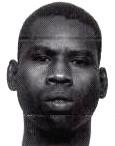
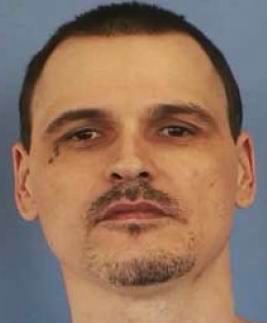
John Albert Burks
Murderer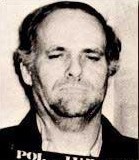 Ervil LeBaron
Murderer · USA · 1972
Ervil Morrell LeBaron (1925 to August 16, 1981) was the leader of a polygamous…
35 victims
Ervil LeBaron
Murderer · USA · 1972
Ervil Morrell LeBaron (1925 to August 16, 1981) was the leader of a polygamous…
35 victims
 Brian Kevin Rosenfeld
Murderer · USA · 1985
Brian Kevin Rosenfeld Brian Kevin Rosenfeld was sentenced to three concurrent l…
23 victims
Brian Kevin Rosenfeld
Murderer · USA · 1985
Brian Kevin Rosenfeld Brian Kevin Rosenfeld was sentenced to three concurrent l…
23 victims
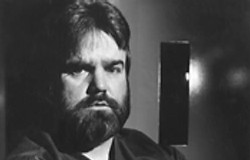 Marvin Gray
Murderer · USA · 1975
Marvin Gray was convicted killer who claimed responsibility for 23 slayings and…
23 victims
Marvin Gray
Murderer · USA · 1975
Marvin Gray was convicted killer who claimed responsibility for 23 slayings and…
23 victims
 Yahweh ben Yahweh
Murderer · USA · 1980
Yahweh ben Yahweh was born and legally named Hulon Mitchell Jr. (October 27, 19…
23 victims
Yahweh ben Yahweh
Murderer · USA · 1980
Yahweh ben Yahweh was born and legally named Hulon Mitchell Jr. (October 27, 19…
23 victims
 Russell Ellwood
Murderer · USA · 1991
Russell Ellwood was a former taxi driver. Authorities suspected him of killing…
20 victims
Russell Ellwood
Murderer · USA · 1991
Russell Ellwood was a former taxi driver. Authorities suspected him of killing…
20 victims
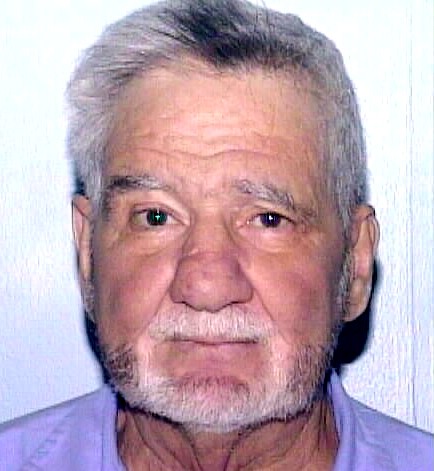 Edmund Lopes
Murderer · USA · 1966
Edmund Lopes was a Baptist minister. After being sentenced for murdering his wi…
2 victims
Edmund Lopes
Murderer · USA · 1966
Edmund Lopes was a Baptist minister. After being sentenced for murdering his wi…
2 victims
 Estelle Jones
Murderer · USA · 2012
Estelle Jones was a 72-year-old woman when she was sentenced. She was described…
2 victims
Estelle Jones
Murderer · USA · 2012
Estelle Jones was a 72-year-old woman when she was sentenced. She was described…
2 victims
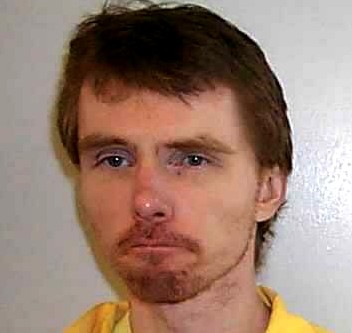 Timothy Alan Dunlap
Murderer · USA · 1991
Timothy Alan Dunlap was 35 and lived in Sellersburg, Indiana. He pleaded guilty…
2 victims
Timothy Alan Dunlap
Murderer · USA · 1991
Timothy Alan Dunlap was 35 and lived in Sellersburg, Indiana. He pleaded guilty…
2 victims
 Robert Paul Langley
Homicide · USA · 1987
Robert Paul Langley, Jr. was convicted and sentenced to death for the aggravate…
2 victims
Robert Paul Langley
Homicide · USA · 1987
Robert Paul Langley, Jr. was convicted and sentenced to death for the aggravate…
2 victims
 Allyson McConnell
Murderer · Canada · 2010
Allyson McConnell was convicted of manslaughter in the bathtub drowning of her…
2 victims
Allyson McConnell
Murderer · Canada · 2010
Allyson McConnell was convicted of manslaughter in the bathtub drowning of her…
2 victims
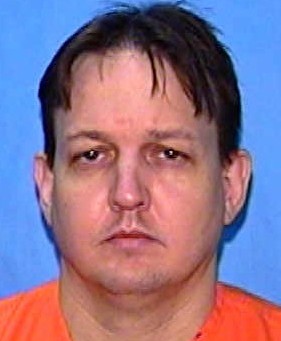 Ronald Wayne Clark
Murderer · 1990
Ronald Wayne Clark was sentenced to death on February 22, 1991. · 01/12/90 — Ro…
2 victims
Ronald Wayne Clark
Murderer · 1990
Ronald Wayne Clark was sentenced to death on February 22, 1991. · 01/12/90 — Ro…
2 victims
- Gender
- male
- Country
- USA
- Location
- McLennan County, Texas, USA
- Date of birth
- January 18, 1956
- Age at first offence
- 26
- Characteristics
- armed robbery, murder for hire, robbery
- Victim profile
- ??? / Jesse Contreras ( owner of Jesse's Tortilla Factory)
- Method of murder
- Shooting ( .25 caliber pistol)
- Date(s) of murder
- 1982 / 1989
- Years active
- 1982–1989
- Date of arrest
- February 23, 1989
- Status
-
Executed
Executed by lethal injection in Texas on June 14, 2000
Case record
Defendant: John Albert Burks
Status
John Albert Burks was executed by lethal injection in Texas on June 14, 2000.
Background
Jesse Contreras owned Jesse's Tortilla Factory in Waco, Texas. Contreras was 63 years old. His family said he was well-liked around the South Waco neighborhood, where he raised his five daughters and a son, sponsored Little League teams, built up his business that he started in 1960, and fed half of Waco.
Contreras had a wife, Esther Contreras, who had been married to him for 42 years. After Contreras’ death, a daughter, Alicia, and her family ran the tortilla factory.
John Albert Burks grew up on South 10th Street. He said he frequented a “boys' club” near the tortilla factory at 1226 Webster Ave. Burks told others he knew Jesse “way back when” from the neighborhood, but that he had not been around there for a long time. Burks claimed innocence and said, “I didn't kill Jesse.”
At the time of the Contreras shooting, Burks was on parole.
Burks’ victim’s family included Gloria Contreras Diaz (a daughter) and Gloria Contreras Torres (also a daughter). Esther Contreras was referenced as Contreras’ widow and was described as 72.
The offence
On January 20, 1989, Jesse Contreras was confronted inside Jesse's Tortilla Factory by a man wearing a dark ski mask and brandishing a .25-caliber pistol described as a “Saturday Night Special.” Contreras was confronted while he was alone in the store.
Contreras threw trash cans and other items at the gunman before being shot. He suffered multiple gunshot wounds. The gunman opened fire during the robbery attempt.
Gloria Contreras Diaz testified that her father told her and others that an African-American man with a mask had attempted to steal his money. She testified that he threw a trash can at the perpetrator who then shot him.
Contreras died 27 days later as a result of multiple gunshot wounds. One account said he died almost a month later, and another said he died about a month later.
Investigation
Eyewitness testimony and other evidence placed Burks and his associates at the factory.
A firearms expert testified that two .25 caliber bullets removed from Contreras’ body were fired from the same gun, “probably a .25 caliber semi- automatic Raven Arms pistol--a compact pistol easily carried in a pocket without notice or discomfort and sometimes referred to as a "Saturday Night Special."” The expert also testified about additional evidence at the scene: four other spent bullets found at the crime scene were .25 caliber but were not identifiable as fired from the same gun as the two bullets; and five spent .25 caliber shell casings were found. The expert testified that the shell casings were manufactured by three different manufacturers, which could mean they were obtained from different sources. The number of bullets contained in a .25 caliber semi-automatic Raven Arms pistol is six.
Louis McConnell testified that two weeks before the instant offense Burks asked whether he owned a gun or knew someone who did, and Louis responded negatively.
Louis McConnell testified that the following week he came home around 5 p.m. and saw a small caliber pistol and a dark navy or black stocking cap on a table. Burks, Bishop McConnell III, Carlton Johnson, and Victor Monroe were at the house. Louis McConnell testified that he saw Burks pick up the gun and walk toward the door. Louis McConnell testified that although he saw Burks leave with the stocking cap, he did not actually see Burks leave with the gun. After Burks left, Louis McConnell noticed the gun was no longer in his house.
Johnny Cruz, a local grocer, testified that one week before the offense Burks approached him looking for .25 caliber bullets for an automatic handgun. After the shooting, Cruz saw Mark McConnell driving a late sixties model green Chevrolet Impala.
Ike Weeks, a cousin of Burks, testified that in late December Burks asked him to participate in a robbery, but Weeks refused. Weeks testified that the day before the offense he saw Burks, Mark McConnell, and Aaron Bilton standing in an alley, and Weeks overheard Burks tell Mark he would call him the next day at 9:00 a.m. so Mark could pick him up. Weeks testified that Weeks heard Burks say Mark would receive “a $10 bag of marihuana and some money.” Weeks also testified that sometime in January, but before the offense, Burks asked whether Weeks had any bullets.
Victor Macias testified that around 11:00 a.m. on the day of the offense he drove to Jesse’s Tortilla Factory to cash a check. Macias observed an African-American man carrying a black object in his hand and walking towards a green late sixties model car parked near the factory. Macias testified that the man got into the backseat of the green car. When Macias arrived, he saw Contreras running towards the side of the building and he saw blood on the pavement leading to the front door. Macias testified that no one was inside the store, but there was blood on the floor. He testified he returned outside and saw the green car speeding away. Macias testified he saw the driver and another man seated in the backseat, and he did not see anyone else in the car. Macias testified that when he went back inside the building, he saw Contreras calling his daughter on the telephone and stayed until she arrived.
Gloria Contreras Diaz testified that when she arrived her mother was tending to her father who was spitting up blood and appeared to be in pain. She testified that her father told them an African-American man with a mask had attempted to steal his money, and that he threw a trash can at the perpetrator who then shot him.
Detective Price of the Waco Police Department obtained a description of the suspect as an African-American male possessing a black ski mask and being small build, “5'6" to 5'7'.” Price learned during separate conversations with Macias and Guillem that the vehicle involved was a green four-door mid- to-late sixties model Chevrolet with a specific license plate number.
Detective Price observed Mark McConnell driving a vehicle matching that description four days after the offense.
Louis McConnell lived with his father, Bishop McConnell, Jr., and his brother, Bishop McConnell III.
A mechanic, Vincent Guillem, testified that between 10:00 a.m. and 10:30 a.m. on the morning of the offense Mark McConnell drove up in his green Chevrolet. Guillem testified he saw four people in the car: Bishop McConnell III, Mark McConnell, Burks, and another person. Guillem testified Burks got out of the car and asked Guillem whether he had any .25 caliber bullets. After Guillem said no, Guillem testified Burks walked across the street to his house and returned to Mark’s car. Guillem testified Burks left with Mark McConnell driving the car, and that Mark McConnell was the only person Guillem said left with Burks. Guillem did not mention Bilton or Bishop McConnell being with Burks. Guillem testified that after ambulance sirens, “10 to 15 minutes after the sirens,” he saw Mark’s car drive by very fast.
An aunt of Burks testified that a few days after the offense she accused Burks of having been seen at Jesse’s Tortilla Factory when Contreras was shot. Burks denied this and threatened her when she said she would notify the police if she found out he had shot Contreras.
Another relative of Burks admitted during cross-examination that he had told his boss after the shooting that he had heard something about Burks planning to rob Jesse’s Tortilla Factory and that he had begged Burks not to do it because Jesse was a good man.
Arrest
Detective Price notified the police in Harlingen, Texas in February 1989 that a warrant had been issued for Burks’ arrest in connection with this offense. Burks sometimes resided in Harlingen.
During the first week of March 1989, two Harlingen police officers in a patrol car noticed Burks walking on a sidewalk in the west part of town and drove up behind him. When Detective Davilla called Burks’ name and identified himself as police, Burks ran. Davilla chased him on foot, but then lost him.
Detective Saldivar observed Burks hiding in someone’s garage. When Burks saw Saldivar, Burks began running again. Saldivar chased him on foot to a fenced enclosure where she drew her weapon and told him to stop as he attempted to climb over the fence. Davilla arrived shortly thereafter and Burks was taken into custody.
Trial
Burks was indicted in McLennan County, Texas on February 23, 1989 for the capital offense of murdering Jesse Contreras during the course of committing and attempting to commit robbery. Burks entered a plea of not guilty.
A jury found Burks guilty on July 11, 1989. Following a separate punishment hearing, the jury answered affirmatively the two special sentencing issues submitted pursuant to state law and the trial court assessed Burks’ punishment at death.
Procedural history and appeals
Appeal was automatic to the Texas Court of Criminal Appeals. The Texas Court of Criminal Appeals affirmed the conviction and sentence on March 9, 1994 and denied rehearing on May 25, 1994.
The United States Supreme Court denied Burks’ petition for writ of certiorari on Jan. 17, 1995.
Burks filed an application for state writ of habeas corpus with the convicting court on July 31, 1995. After an evidentiary hearing, the convicting court recommended that relief be denied. On Oct. 16, 1996, the Court of Criminal Appeals adopted the trial court’s findings and denied relief.
The United States Supreme Court denied Burks’ petition for writ of certiorari on March 17, 1997.
Burks then filed a federal habeas petition in the United States District Court for the Western District of Texas, Waco Division, on July 21, 1997. On March 4, 1998, the district court entered an order denying habeas relief and entered final judgment against Burks. The district court later granted Burks permission to appeal.
The United States Court of Appeals for the Fifth Circuit affirmed the district court’s denial of relief on Jan. 7, 2000, and denied Burks’ petition for rehearing on Feb. 9, 2000.
Burks then filed a petition for writ of certiorari to the United States Supreme Court that was pending before the Court.
06/14/00 UPDATE: A federal appeals court lifted a reprieve given to a condemned Texas inmate, moving the convicted killer closer to his scheduled evening execution. Acting on an appeal from the Texas attorney general’s office, the 5th U.S. Circuit Court of Appeals in New Orleans removed the stay of execution that could have blocked Burks from lethal injection. The update described that a U.S. District Judge Walter Smith had ordered the state to halt the punishment, saying a reprieve he issued more than 2 years ago remained in effect because Burks, with a petition before the U.S. Supreme Court, had not exhausted all his appeals. It also stated that Burks lost his final hope for a court-ordered reprieve when the U.S. Supreme Court refused to halt the punishment.
Sentencing
At the punishment phase of trial, the trial court assessed Burks’ punishment at death after the jury answered affirmatively the two special sentencing issues submitted pursuant to state law.
Prior criminal history
At the punishment phase of trial, the State presented evidence that Burks had been twice convicted of burglary of a building, in 1977 and 1986.
A tow truck driver testified that he was called by police to pick up and impound a car in 1981 and that Burks threatened and physically assaulted him after the police left, forcing him to unhook and leave the car.
Burks’ former spouse testified that Burks took her van without permission in November 1988 and returned it on Dec. 24, 1988. Upon returning it, Burks assaulted a man who attempted to intervene in the ensuing argument between Burks and his former spouse, broke out the windows of the man’s car, and fled from the police.
One of Burks’ aunts testified that Burks had threatened to kill a man who owed him money.
The State presented evidence that Burks admitted to committing a murder in Waco, Texas, in Aug. 1982 after breaking into a Texaco station.
Former prosecutors Ralph Strother and Paul Gartner introduced evidence showing Burks as the primary suspect in the 1982 stabbing death of Warner, a service station attendant who was sleeping at a Texaco station at Interstate 35 and South 17th Street when he was killed during a burglary at the station. It stated that Burks was arrested in Warner’s slaying, but authorities later dismissed the charges, saying they didn’t have the evidence for a conviction.
Other details
Victims and accomplices
The person murdered was Jesse Contreras, the owner of Jesse’s Tortilla Factory in Waco, Texas.
Burks was tried together with co-defendants Mark McConnell and Aaron Bilton in connection with capital murder charges in Contreras’ death. Mark McConnell was Burks’ half-brother. Aaron Bilton was described as a cousin; Burks’ half brother referenced him in testimony.
Aaron Bilton testified at trial and received immunity. Bilton walked away free after his testimony.
Mark McConnell rejected the immunity deal, did not testify, and was serving a 40-year prison term for robbery and burglary.
Planning and role testimony
Aaron Bilton testified that in January, but before the offense, Burks told him that he needed money. Bilton testified that the day before the offense Burks told him he was going to “knock off Jesse.” Burks wanted Bilton to go inside Jesse’s Tortilla Factory first to see who was there.
Bilton testified Burks planned the offense for noon the next day, but because Bilton needed to be at work at 11:00 a.m., Burks agreed to do it earlier. Bilton testified Burks planned the offense for Friday because he knew Jesse Contreras cashed checks on Friday.
Bilton testified that Burks had already discussed the matter with Mark McConnell, and that Mark was to receive $100 for his participation.
On the morning of the offense, Burks and Mark McConnell arrived at Bilton’s home in Mark’s green four-door Chevrolet between 10:15 a.m. and 10:30 a.m. Bilton testified the three men proceeded to Bilton’s uncle’s house. On the way, Burks told them he was going to “knock off Jesse today.” When they arrived, Bilton went into his uncle’s house and watched television while Mark drove Bilton’s aunt downtown. Burks did not go with Mark and did not go inside the house.
Bilton testified that when Mark returned five minutes later, the three men drove to Jesse’s Tortilla Factory in Mark’s car. Bilton testified that he entered the store and attempted to purchase some corn tortillas, but Contreras said that they did not have any. Bilton returned to the car and told Burks that they did not have corn tortillas and that Contreras was the only one inside.
Bilton testified Burks told him to go back and purchase flour tortillas and make certain that Contreras was alone. Bilton purchased the flour tortillas and reassured Burks that Contreras was alone.
Bilton testified Burks told Mark to let him out and then drive around the block and park at Twelfth Street. Wearing a blue or black stocking cap, Burks got out. About five minutes later, Burks walked towards the car holding his stocking cap in his hands. Bilton testified that the stocking cap appeared to have something in it. Bilton testified Burks laid down in the backseat, stated that he didn’t get anything, and told Mark to drive off.
Bilton testified that after they dropped him off at work that morning, he did not see Burks again until after Bilton’s arrest for the offense.
Witness statements and quoted material
Gloria Contreras Diaz testified about what Contreras told her regarding an African-American man with a mask attempting to steal money, and that he threw a trash can at the perpetrator who then shot him.
Quotes
Burks told the others, “Tell the Contreras family that I am sorry for their loss, but they are looking at somebody to be the scapegoat and I guess I'm the scapegoat. The person who killed Jesse is still out there. I didn't do it, but the courts said I did and I am ready to go.”
Gloria Contreras Torres pleaded with Burks: “I would like to know that he has made peace with the Lord and prepared himself for eternity,”
Gloria Contreras Torres also said: “That has been my whole family's sentiment, or most of them, anyway. It lifts my spirit that there is a chance that we snatched him out of the enemy's hands. In light of eternity, we are all going to die. He shortened my dad's life. There is no question about that. But as long as we are rescued from eternal torment, that is the bottom line.”
Gloria Contreras Torres told Burks: “You robbed them of joyous times that you would have had spent living among them,”
Gloria Contreras Torres quoted a gentleman pleading with her: “He is a good boy. He just messed up a little bit,”
Gloria Contreras Torres added: “Mr. Burks, your family is hurting for you. They don't want to see this happen to you. Believe it or not, there are even some people in my family that don't want to see you executed. But it is out of our hands. Your sentence comes from the state of Texas, not from the Contreras family,”
Gloria Contreras Torres said she told Burks: “I could have lived with that, to know that we didn't have to go through this trauma or his family had to. Yet, my father died. It just didn't seem fair that he should live.”
Esther Contreras said: “He was a provider. He was a hard-working fellow. He didn't need to be pushed to do anything. He was ambitious. He wanted to have something, and we sent our kids all through school just making tortillas and tamales,”
Esther Contreras said: “The first thing he told me was, 'I am dying and I want you to forgive me.' And I forgave him with all my heart,”
Esther Contreras continued: “I said, 'Honey, ask the Lord to forgive you.' I really didn't think that he was as bad off as he was because he was walking around and talking. I told him to sit down. He said he never thought that he would go this way.”
Burks said: “I knew Jesse way back when I was a kid ... I hadn't been back there for a long time. I didn't kill Jesse.”
Burks said in an interview: “The person who killed Jesse is still out there. I didn't do it, but the courts said I did and I am ready to go,”
Burks said about his co-defendants: “Mark is doing 40 years basically for having a green Chevrolet. ... I can't say I'm mad at Aaron. I think he was just doing what he thought he had to do to get out of that mess we was in.”
Burks’ final statement included: “The Raiders are going all the way, y'all.”
In the final moments, Burks told witnesses: “You pray for me, it's going to be all right.”
Burks told the warden: “It's going down, let's get it over with. Y'all take care.”
Aftermath
Burks was pronounced dead at 6:18 p.m. following the execution process described as lasting nine minutes after the injection began.
After the execution, an investigator hired by the defense told reporters that Burks all but confessed to Contreras’ murder to him, stating: “He told me he threw the gun in the Gulf of Mexico.” The investigator said he withheld that information from Burks’ lawyers until after the execution so as not to impair efforts to defend him.
Spotted an error, or have more information about this case?