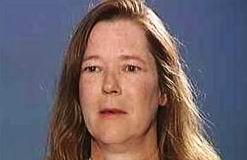
Paula Sims
Murderer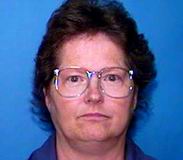 Bobbie Sue Terrell
Murderer · USA · 1984
Bobbie Sue Dudley Terrell was a Pinellas County nurse and worked as the night s…
12 victims
Bobbie Sue Terrell
Murderer · USA · 1984
Bobbie Sue Dudley Terrell was a Pinellas County nurse and worked as the night s…
12 victims
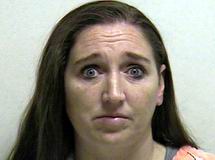 Megan Huntsman
Murderer · USA · 1996
Megan Huntsman was 40 at sentencing. She was a mother of three children who wer…
6 victims
Megan Huntsman
Murderer · USA · 1996
Megan Huntsman was 40 at sentencing. She was a mother of three children who wer…
6 victims
 Angela Johnson
Murderer · USA · 1993
Angela Jane Johnson was convicted in federal court of aiding and abetting the m…
5 victims
Angela Johnson
Murderer · USA · 1993
Angela Jane Johnson was convicted in federal court of aiding and abetting the m…
5 victims
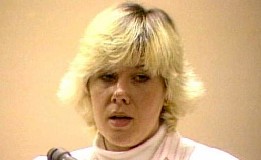 Catherine May Wood
Murderer · USA · 1987
Catherine May Wood was an American caregiver who worked at the Alpine Manor Nur…
5 victims
Catherine May Wood
Murderer · USA · 1987
Catherine May Wood was an American caregiver who worked at the Alpine Manor Nur…
5 victims
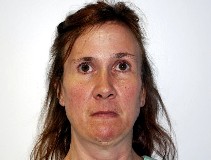 Michele Kalina
Murderer · USA · 1996
Michele Kalina pleaded guilty to murder for one of five infants she initially w…
5 victims
Michele Kalina
Murderer · USA · 1996
Michele Kalina pleaded guilty to murder for one of five infants she initially w…
5 victims
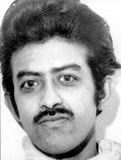 Arthur & Nizamodeen Hosein
Murderers · United Kingdom · 1969
Arthur Hosein and Nizamodeen Hosein were found guilty at the Old Bailey and wer…
1 victim
Arthur & Nizamodeen Hosein
Murderers · United Kingdom · 1969
Arthur Hosein and Nizamodeen Hosein were found guilty at the Old Bailey and wer…
1 victim
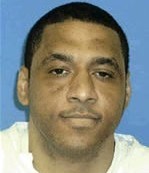 Kenneth Foster
Murderer · USA · 1996
Kenneth Foster, Jr. (born October 22, 1976) was a prisoner formerly on death ro…
1 victim
Kenneth Foster
Murderer · USA · 1996
Kenneth Foster, Jr. (born October 22, 1976) was a prisoner formerly on death ro…
1 victim
 Vickie Dawn Jackson
Serial killer · USA · 2000
Vickie Dawn Jackson was a former nurse who received a life sentence after plead…
10 victims
Vickie Dawn Jackson
Serial killer · USA · 2000
Vickie Dawn Jackson was a former nurse who received a life sentence after plead…
10 victims
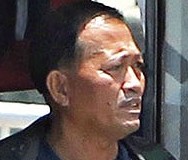 Rolando Mendoza
Murderer? · Philippines · 2010
Rolando Mendoza was a former police officer who hijacked a tourist bus carrying…
8 victims
Rolando Mendoza
Murderer? · Philippines · 2010
Rolando Mendoza was a former police officer who hijacked a tourist bus carrying…
8 victims
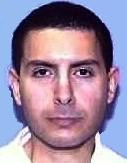 James Edward Martinez
Murderer · USA · 2000
James Edward Martinez was a Hispanic male. He was 34 at the time of execution.…
2 victims
James Edward Martinez
Murderer · USA · 2000
James Edward Martinez was a Hispanic male. He was 34 at the time of execution.…
2 victims
- Gender
- female
- Country
- USA
- Location
- Jersey/Madison Counties, Illinois, USA
- Date of birth
- May 21, 1 959
- Characteristics
- parricide, abduction
- Victim profile
- Her daughter Loralei, 13-day-old / Her daughter Heather, six-week-old
- Method of murder
- Suffocation caused most likely by placing a hand across her mouth
- Date(s) of murder
- June 17, 1986 / April 29, 1989
- Years active
- 1986–1989
- Date of arrest
- —
- Status
-
Life imprisonment
Sentenced to life in prison on February 2, 1990
Case record: Paula Sims
Background
Paula Sims gave birth to three children, but only one survived. A son was born in early 1988. Their two infant daughters, Loralei Marie and Heather Lee, disappeared.
The offence
Loralei Marie Sims
In June 1986, while Paula watched television, a masked gunman entered her home, made her lie on the floor, and fled with her 13-day-old daughter, Loralei Marie.
Authorities later found Loralei’s remains in a wooded ravine behind their rural home in Brighton, Jersey County. A pathologist reported that hand(s) were placed over Loralei’s nose and mouth and that she suffocated.
At the time, the investigation placed suspicion on the parents, but it did not produce sufficient evidence to charge them.
Heather Lee Sims
On April 29, 1989, Paula reported that while taking out the garbage, a masked gunman ordered her into the house and knocked her unconscious. When she awoke, her 6-week-old daughter, Heather Lee, was gone.
Initially, the incident was treated as a kidnapping. Paula had no injuries, and the crime scene did not validate her report. The narrative stated that Paula kept Heather in the freezer to obfuscate the time of death, before dumping her in the garbage.
Several days after the abduction was reported, Heather’s remains were found in a park trash receptacle. The garbage bag holding Heather’s body was described as manufactured within seconds of and by the same machine as the bags found in the Sims’ home.
Investigation
After Loralei’s death, the inquiry into her death became a cold crime.
The Sims moved from Jersey County to Madison County. The investigation continued without charging Robert Sims in the Loralei case.
The State removed the surviving son, Randall, from the home. Robert and Paula were suspects, and the State sought more evidence about Robert and Paula’s involvement.
Arrest
A grand jury indicted Paula on first-degree murder, obstructing justice, and concealing a homicide. The State intended to seek capital punishment.
Trial
Defense attorney Donald Groshong represented both Robert and Paula.
Groshong discussed an insanity plea with Paula, but it contradicted her claim of innocence. Paula maintained her innocence to the courts throughout trial, including recounting the abductions of Loralei and Heather.
The jury deliberated for two days. On February 2, 1990, jurors found Paula guilty of two counts of first-degree murder, two counts of obstructing justice, and one count of concealing homicide.
A quote attributed to Madison County prosecutor Donald Weber stated that jurors were influenced by evidence that the couple only wanted male children.
Before sentencing, Paula confided in Groshong that she killed both infants.
During the sentencing phase, a jury deadlocked. The trial judge spared Paula’s life by sentencing her to life imprisonment without parole.
A pathologist’s findings described in the narrative included:
- Loralei’s death was caused by suffocation, not drowning.
- Heather’s condition was not consistent with Paula’s report about the length of time she was in the trash.
The narrative also described that Paula eventually admitted, without Robert’s help, that she killed the babies by holding Loralei under water and throwing Heather in the park trash barrel four days before her body was found.
During the trial and related account, it was stated that the evidence presented about Loralei’s death was allowed to show Paula’s modus operandi, intent, knowledge, lack of accident or mistake, and identity in the death of Heather.
Sentencing
Paula received life imprisonment without parole after the jury deadlocked during the sentencing phase.
Appeals
Paula filed a pro se post-conviction petition on August 28, 1994. She alleged that Groshong provided ineffective assistance of counsel by dismissing the use of an insanity defense. She claimed Groshong was only dedicated to her ex-husband’s defense and alleged that she suffered from major depression and guilt because her husband did not want Heather and blamed her for having the child.
She alleged that the murders resulted from postpartum psychosis, accused Groshong of ignoring the postpartum psychosis insanity defense, and requested a new trial to determine whether postpartum disorders diminished her capacity to understand the criminality of her conduct.
An expert on postpartum disorders, Dr. Diane Sanford, was described as claiming Paula suffered from a postpartum-based mental illness when she killed Heather.
The narrative stated that Groshong explained that arguing that Robert’s behavior drove Paula to infanticide would contradict Paula’s own claims of innocence.
It was ruled that Groshong’s representation did not constitute a conflict.
On September 7, 1994, the trial court dismissed Paula’s pro se petition.
Robert Sims was not prosecuted.
A decision upholding Paula’s murder conviction was described as written by Illinois Supreme Court Justice Clyde Kuehn in 2001, stating: “Paula J. Sims gave birth to three children, but she was a mother to only one, wrote Illinois Supreme Court Justice Clyde Kuehn in 2001. “Rather than nurture her two baby girls, she killed them.”
Outcome
Paula was sentenced to life in prison on February 2, 1990.
Aftermath
The narrative described the couple eventually divorced.
In August 1990, Robert filed for divorce. As part of the divorce agreement, Robert was required to bring their son, Randy, to visit her once a month in prison. During one of those visits, Randy asked why she killed his sisters. Paula accused Robert of putting Randy up to asking the question.
More than two years after her conviction, Paula admitted to murdering her infant daughters and claimed she was trying to please Robert, who had been upset at the birth of daughters instead of sons.
By August 1994, Paula claimed in her pro se post-conviction relief petition that she had suffered from postpartum psychosis and did not understand that her actions were wrong. The narrative also stated that Paula admitted to almost killing Randy one night. The narrative quoted Paula:
“He was crying and I had tried everything I knew to comfort him, but nothing was working. Before I knew it I snapped and laid him down in the playpen and yelled at him to be quiet and then I threatened him, he quit crying immediately. His eyes got big and he just stared at me. I quickly picked him up, held him closer to me, and told him I was so sorry; I didn’t mean it. I believe it was this sudden adrenaline rush and Randy’s reaction, along with actually hearing me threaten him which brought me out of postpartum depression, psychosis. Just enough to save Randy from the terrible fate of his sister.”
A quote attributed to Paula stated:
“I promised my mother I would do everything I could to try to get some relief. When she was dying, she asked me not to give up, so that's why I filed the clemency. I went through all the legal process; I've got no relief, trying to find some justice trying to find some mercy,” said Sims.
“It’s up to him. A lot of my supporters believe I should be released. Of course my attorneys, my psychologist, the people who truly love me and who believe in me, and know that I was mentally ill and didn't mean to do this -- didn't want to do this. “So ultimately, it's up to the governor and the prisoner review board and God. I put this in his hands, I've placed it in his hands. He knows what's best. He knows everything. He knows I'm telling the truth."
“I just want to bring awareness (and) let people know this is real and I'm not some monster. I can't change that, if someone thinks I'm a monster. I know I'm not. I know I'm a good person and I know I'm being punished for being mentally ill,” said Sims.
The narrative stated that Paula petitioned for clemency in late July, and that the petition was presented to the Illinois Prisoner Review Board in mid-October. It also stated that the petition was to be presented to Governor Rod Blagojevich.
The narrative also stated that clemency was later denied.
The narrative described that USA Network produced “Precious Victims,” a 1993 made-for-television drama on the case, and that Park Overall and Robby Benson starred as The Sims.
Other details
The narrative included discussion of a former claim that Paula said she first heard of postpartum depression and postpartum psychosis during her trial and learned more while in prison.
The narrative described testimony at a postconviction hearing that Paula fit the mold of a postpartum baby killer and included discussion of delusions about a stranger committing the crime. It also included references to psychological tests given in 1992 asking her to answer as though it were still 1989.
The narrative included quotes attributed to Robert Sims after polygraph tests in 1986:
“It was it was a normal type of dealing with a crime of this fashion, and we passed it with flying colors that would absolutely clear any doubts in their minds of our character,” said Robert Sims following the tests in 1986.
A quote attributed to Jersey County Sheriff Frank Yocum stated:
“According to the polygraph examiner, all of those questions were answered by them not truthfully,” said Jersey County Sheriff Frank Yocum.
The narrative included a quote attributed to Paula after the alleged June 1986 abduction:
“He was going to kill me. I was just in such shock I didn't know he was going to take my baby from me. I didn't know what... when he said he was going to kill me, I just did what he said,” said Paula in the hours following the alleged abduction.
The narrative included a quote attributed to Paula during the June 18, 1986 search:
“No, no, I want to be here when they bring her body up.”
The narrative then included another quote from Paula:
“That is not what I mean. I mean my baby is alive and I want to be here when they bring her on the porch.”
The narrative included a quote attributed to Alton Police Sergeant Rick McCain:
“The cause of death was listed as asphyxiation. The focus of the investigation is now leaning towards the parents,” said Alton Police Sergeant Rick McCain.
The narrative included a quote attributed to Robert Sims when asked about “the best and longest-lasting sex we ever had”:
“Let me tell you something,” Robert Sims replied, “sex can be a stress reliever.”
The narrative included quotes attributed to Paula during later interviews about her thoughts and feelings after the births:
“I was afraid to say anything to anyone. I was ashamed when I started having bad thoughts and I was confused. It was difficult for me because I was such a private person to tell someone that I was having a bad thought about harming my baby,” said Sims.
“I was so weak,” said Sims.
The
Spotted an error, or have more information about this case?