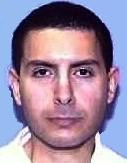
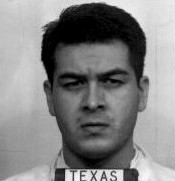
James Edward Martinez
Murderer Russell Ellwood
Murderer · USA · 1991
Russell Ellwood was a former taxi driver. Authorities suspected him of killing…
20 victims
Russell Ellwood
Murderer · USA · 1991
Russell Ellwood was a former taxi driver. Authorities suspected him of killing…
20 victims
 Robert Martines Perez
Murderer · USA · 1994
Name: Robert Martines Perez · Other name used in proceedings: Robert Martinez P…
15 victims
Robert Martines Perez
Murderer · USA · 1994
Name: Robert Martines Perez · Other name used in proceedings: Robert Martinez P…
15 victims
 Billy Frank Vickers
Murderer · USA · 1993
Billy Frank Vickers Vickers was executed by lethal injection in Texas on Januar…
14 victims
Billy Frank Vickers
Murderer · USA · 1993
Billy Frank Vickers Vickers was executed by lethal injection in Texas on Januar…
14 victims
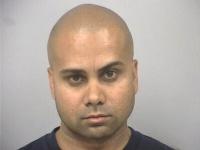 Rutendra Raghunandan
Murderer · USA · 2003
Thursday, September 11, 2003 (11:50 PM) — Rutendra Raghunandan went to his wife…
3 victims
Rutendra Raghunandan
Murderer · USA · 2003
Thursday, September 11, 2003 (11:50 PM) — Rutendra Raghunandan went to his wife…
3 victims
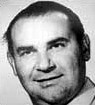 Stephen Leslie Bradley
Murderer · Australia · 1960
Stephen Leslie Bradley was convicted of the murder of eight-year-old Graeme Tho…
1 victim
Stephen Leslie Bradley
Murderer · Australia · 1960
Stephen Leslie Bradley was convicted of the murder of eight-year-old Graeme Tho…
1 victim
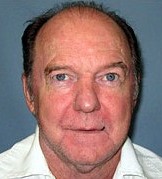 James Harvey Callahan
Murderer · USA · 1982
James Harvey Callahan was executed by lethal injection in Alabama on January 15…
1 victim
James Harvey Callahan
Murderer · USA · 1982
James Harvey Callahan was executed by lethal injection in Alabama on January 15…
1 victim
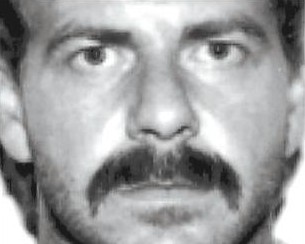 Tommy David Strickler
Murderer · USA · 1989
Tommy David Strickler was executed by lethal injection in Virginia on July 21,…
1 victim
Tommy David Strickler
Murderer · USA · 1989
Tommy David Strickler was executed by lethal injection in Virginia on July 21,…
1 victim
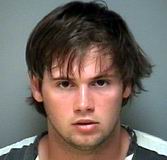 George Huguely
Murderer · USA · 2010
George Huguely was sentenced to 23 years in prison on August 30, 2012. · George…
1 victim
George Huguely
Murderer · USA · 2010
George Huguely was sentenced to 23 years in prison on August 30, 2012. · George…
1 victim
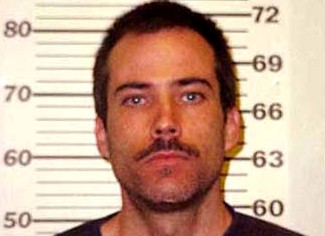 Eric Rudolph
Murderer · USA · 1996
Eric Robert Rudolph (born September 19, 1966), also known as the “Olympic Park…
2 victims
Eric Rudolph
Murderer · USA · 1996
Eric Robert Rudolph (born September 19, 1966), also known as the “Olympic Park…
2 victims
- Gender
- male
- Country
- USA
- Location
- Tarrant County, Texas, USA
- Date of birth
- J une 9, 1974
- Age at first offence
- 26
- Characteristics
- revenge, alcohol
- Victim profile
- Sandra Walton, 29, and Michael Humphreys, 20
- Method of murder
- Shooting ( Steyr/Aug .223 caliber rifle)
- Date(s) of murder
- September 21, 2000
- Years active
- 2000
- Date of arrest
- —
- Status
-
Executed
Executed by lethal injection in Texas on March 10, 2009
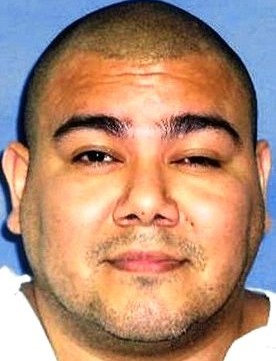
Case record: James Edward Martinez
James Edward Martinez was a Hispanic male. He was 34 at the time of execution. His education was 11 years (GED). His occupation was welder and laborer.
The victims
Sandra Walton, a white male was killed in the capital murders involving Sandra Walton and Michael Humphreys, with Sandra Walton described as 20 or 29 years old depending on the account. Michael Humphreys was described as a 19 or 20 year old white female depending on the account. Walton and Humphreys were shot outside Walton’s condominium in Fort Worth.
Background
Martinez briefly dated Sandra Walton and loaned or gave her $1,000 during their relationship. In May 2000, Walton made out a promissory note to Martinez in the amount of one-thousand dollars. After the relationship ended, Martinez demanded repayment from Walton.
The State presented evidence at trial that Martinez had a history of stalking, harassing, and threatening Sandra Walton, including claiming that she owed him money after their brief relationship. On the night of her murder, Martinez pounded on her door, stayed outside for 20 or 30 minutes, and told Ms. Walton, “Your time is almost up.”
The offence
In the early morning hours of Sept. 21, 2000, Martinez shot Sandra Walton and Michael Humphreys to death outside Walton’s condominium in Fort Worth. When police arrived, they found Walton’s body in the driver’s seat of her car and Humphreys lying face down on the ground 10 to 12 feet from the car. Walton had been shot nine or 10 times and Humphreys had been shot about eight times.
Police determined that the bullets had been fired from a rifle owned by Martinez, described as a Steyr/Aug .223 caliber rifle.
After the murders, Martinez met a friend and told the friend to keep a black canvas bag for him. Officers later found the Steyr/Aug assault rifle used in the murders, located through information the friend provided to police.
At his trial, Martinez contended a friend was responsible for the shootings and that the murder weapon was stored in a rental facility and another person had access to the store room. His defense was also that his guilt was not established and that the case was circumstantial.
The State presented evidence that Martinez pounded on the door shortly before the shooting and threatened to break it down. Witness accounts described a man dressed in black carrying an assault rifle and running away.
Investigation and evidence
Police found promissory note evidence and the weapon and related items connected to Martinez after the murders.
When police found the storage unit rented by Martinez, they recovered a Steyr/Aug assault rifle used in the murders. During the punishment phase, the State introduced testimony concerning what was recovered from the storage unit, including bomb-making components and thousands of rounds of ammunition, as well as multiple weapons and knives.
The State introduced:
- over three-thousand rounds of various types of ammunition
- two pistols
- several illegal knives
- an illegally modified Mossberg shotgun
- an illegally modified single-shot shotgun
- an illegally modified .22 rifle
- an HK-91 assault rifle
- an AK-47 assault rifle with bayonet
Four books were also recovered and introduced:
- Be Your Own Undertaker: How to Dispose of a Dead Body
- Death Touch: Unarmed Killing Techniques
- 21 Techniques of Silent Killing
- Dragon’s Touch: Weaknesses of the Human Anatomy
The books had been signed “completed reading by James Martinez.”
In addition, the trial evidence included a promissory note written and signed by Sandra Walton in a storage unit rented by Martinez.
In one account, after the shooting authorities said Martinez drove to a Parker County ranch and left a duffel bag containing the murder weapon and black clothing with longtime friend Casey Ashford, who buried it. Ashford later told detectives about the bag and cooperated with prosecutors in exchange for three years’ deferred adjudication probation.
When police opened the bag in the account describing the ranch, they found a Steyr/Aug .223-caliber rifle, ammunition, a bullet-proof vest, a double-edged knife, a pipe bomb, a ski mask, a bag of fertilizer, a fuse, dark clothing, combat boots, gloves, and a pipe bomb. DNA was said to have linked Martinez to the clothing.
Procedural history
December 20, 2000 — Martinez was indicted by a Tarrant County grand jury for the capital murders of Sandra Walton and Michael Humphreys. January 30, 2002 — Martinez was found guilty of capital murder. February 1, 2002 — Martinez was sentenced to death. November 5, 2003 — The Texas Court of Criminal Appeals affirmed Martinez’s conviction and sentence on direct appeal. October 4, 2004 — Martinez’s petition for writ of certiorari was denied by the U.S. Supreme Court. October 22, 2003 — Martinez filed an application for writ of habeas corpus with the state trial court. December 9, 2003 — Martinez filed a motion to supplement his state application attempting to add two more claims to his habeas application. June 2, 2004 — The state trial court entered findings of fact and conclusions of law recommending that relief be denied on Martinez’s original claims, and that his supplemental claims be dismissed as a subsequent application. September 22, 2004 — The Texas Court of Criminal Appeals adopted the trial court’s findings and conclusions, and denied Martinez’s state habeas application. January 10, 2005 — Martinez filed a federal petition for writ of habeas corpus in a Fort Worth U.S. district court. June 8, 2005 — The federal district court denied Martinez the relief requested in his federal habeas petition, and also denied a certificate of appealability (COA). August 9, 2005 — Martinez filed an application for COA with the Fifth U.S. Circuit Court of Appeals. March 31, 2006 — The Fifth Circuit affirmed the judgment of the district court and refused to grant Martinez the requested COA. May 19, 2006 — Martinez again petitioned the U. S. Supreme Court for a writ of certiorari. October 16, 2006 — The Supreme Court denied Martinez’s petition for certiorari. August 19, 2008 — The trial court issued an order setting Martinez’s execution date for Tuesday, March 10, 2009.
Trial
A jury convicted Martinez of capital murder and sentenced him to death.
During punishment phase testimony, the State offered victim impact testimony from:
- Mike Humphreys’ father
- Mike Humphreys’ mother
- Mike Humphreys’ stepmother
- Sandra Walton’s mother
Martinez called a number of people to testify that they had not known him to be a violent person and did not believe he would commit any more crimes in the future. The testimony described in the accounts stated that most witnesses did not know Martinez well.
Martinez also presented testimony of experts, including:
- a former custodian of records for the Texas Department of Criminal Justice, providing testimony about daily prison routines and classification of prisoners
- Dr. Mark Cunningham, a clinical and forensic psychologist, who testified about recidivism rates for capital murderers with Martinez’s characteristics, including that there was only a small chance that a person like Martinez would commit future acts of violence in prison
In rebuttal, the State offered the testimony of an investigator with the prison prosecution unit about violence within the prison population.
Appeals
Direct appeal (Texas)
The Texas Court of Criminal Appeals affirmed the conviction and sentence on direct appeal.
The opinion recounted multiple issues raised by appellant, including claims that:
- the indictment was fundamentally defective because it did not allege future dangerousness
- the Texas death penalty scheme was unconstitutional due to mitigation burden and discretion
- the trial court erred in excluding hearsay testimony described as excited utterances from an eyewitness context
- the trial court erred in excluding evidence about whether Casey Ashford knew how to make a pipe bomb
- the trial court erred by denying a mistrial where a police detective testified that appellant took a polygraph test
- the death penalty scheme was unconstitutional because it could lead to an unacceptable number of innocent defendants
- the death penalty scheme violated the Eighth Amendment because jurors had too much discretion
- the Texas death penalty scheme was unconstitutional under Penry
The Texas Court of Criminal Appeals held that it affirmed the judgment of the trial court.
Federal habeas (Texas and U.S. Supreme Court)
Martinez pursued state habeas corpus proceedings and filed motions to supplement claims. The trial court’s findings recommended denial of relief on original claims and dismissal of supplemental claims as a subsequent application, and the Texas Court of Criminal Appeals adopted those findings and conclusions and denied relief.
Martinez also pursued federal habeas corpus relief. The U.S. district court denied relief and denied a certificate of appealability.
The Fifth Circuit affirmed the denial of relief and refused to grant a certificate of appealability.
The U.S. Supreme Court denied petitions for certiorari in connection with these proceedings.
Execution
Martinez was executed by lethal injection in Texas on March 10, 2009.
Martinez told his mother and sister through a nearby window that he loved them and thanked them for everything they had done for him. He said: “I hope y’all can move on after this,” and “I’ll be fine. I’m fine.” He then told them again that he loved them and added, “take care, OK?” He told the warden he had nothing else to say.
One account stated that Martinez was pronounced dead at 6:17 p.m. CDT, nine minutes after the lethal drugs began.
His mother collapsed and had to be taken away in a wheelchair when she was overcome with emotion during the execution process.
Other details
Prior criminal history
According to the Texas Department of Criminal Justice, Martinez had one prior arrest for possessing prohibited weapons and served 180 days in the Tarrant County Jail before his current incarceration and death sentence for capital murder.
Storage unit and books
The punishment phase included items recovered from a storage unit Martinez had rented, including multiple weapons, ammunition, bomb-making components, and books bearing the notation “completed reading by James Martinez.”
Casey Ashford and the bag
In the accounts describing the bag, Casey Ashford testified that Martinez went to the ranch where Ashford lived and asked him to keep a black canvas bag for him. Ashford said he buried the bag and later disclosed its location to police. Police later opened the bag and found the items described above. Ashford pleaded guilty to tampering with evidence and received three years deferred adjudication probation.
Witnesses and victim families
Witnesses for Walton’s family included her mother, Dorinda March, and her sister, Sheila Lomprey. Witnesses from Humphreys’ family included his mother, Lois; brother, Brandon; stepmother, Carol; and father, Brad.
In one account, Humphreys’ father said, “It is a shame to think all of this could have been avoided.” and prosecutor Alan Levy said, “I’ve done a lot of murder scenes,” and “That crime scene was the worst I’ve ever seen.” Assistant district attorney Robert Foran said, “This was a calculated and premeditated act,” and “He destroyed two people in a matter of seconds. When he was arrested, he had an arsenal of weapons as well as literature. He was fascinated with the idea of death.”
In another account, Martinez told his mother and sister from the gurney: “I hope you can move on after this,” “I’ll be fine. I’ll be OK. I love you, too.” His mother said: “Don’t go James! You can’t die. I need you,” “You died for a lie. James, James come back!”
Background on Sandra Walton’s ability to obtain protective order
The accounts stated that Walton filed numerous police reports against Martinez but was unable to get a protective order because she had never married, lived with or had a baby with Martinez.
Spotted an error, or have more information about this case?