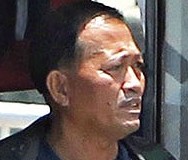
Rolando Mendoza
Murderer?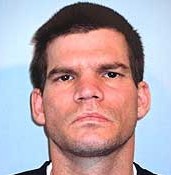 Jerry Hobbs
Murderer? · USA · 2005
Jerry Hobbs III was the father of Laura Hobbs, an 8-year-old girl. He was also…
2 victims
Jerry Hobbs
Murderer? · USA · 2005
Jerry Hobbs III was the father of Laura Hobbs, an 8-year-old girl. He was also…
2 victims
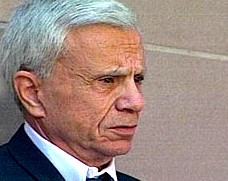 Robert Blake
Murderer? · USA · 2001
Robert Blake, an American actor most famous for starring in the U.S. television…
1 victim
Robert Blake
Murderer? · USA · 2001
Robert Blake, an American actor most famous for starring in the U.S. television…
1 victim
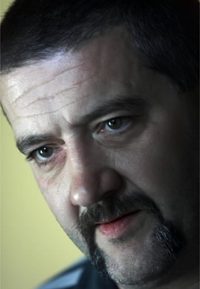 Mark Brandon Read
Murderer? · Australia · 1979
Mark Brandon “Chopper” Read (born 17 November 1954) was an Australian ex-convic…
19 victims
Mark Brandon Read
Murderer? · Australia · 1979
Mark Brandon “Chopper” Read (born 17 November 1954) was an Australian ex-convic…
19 victims
 Richard Allen Williams
Murderer? · USA · 1992
Boone County Prosecutor Kevin Crane dismissed the charges in August 2003 after…
10 victims
Richard Allen Williams
Murderer? · USA · 1992
Boone County Prosecutor Kevin Crane dismissed the charges in August 2003 after…
10 victims
 Dr. Teet Härm
Murderer? · S weden · 1984
The District Court jury returned a guilty verdict, but the High Court overturne…
9 victims
Dr. Teet Härm
Murderer? · S weden · 1984
The District Court jury returned a guilty verdict, but the High Court overturne…
9 victims
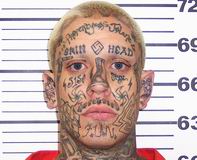 Curtis Allgier
Murderer · USA · 2007
Curtis Michael Allgier (born August 25, 1979) was a white supremacist skinhead…
1 victim
Curtis Allgier
Murderer · USA · 2007
Curtis Michael Allgier (born August 25, 1979) was a white supremacist skinhead…
1 victim
 Michael Carneal
Homicide · USA · 1997
Michael Carneal, aged 14, opened fire at Heath High School in West Paducah, Ken…
3 victims
Michael Carneal
Homicide · USA · 1997
Michael Carneal, aged 14, opened fire at Heath High School in West Paducah, Ken…
3 victims
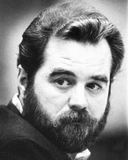 Dennis Duane Webb
Murderer · USA · 1973
Defendant: Dennis Duane Webb · Victims: John Rainwater and Lori Rainwater · Cou…
7 victims
Dennis Duane Webb
Murderer · USA · 1973
Defendant: Dennis Duane Webb · Victims: John Rainwater and Lori Rainwater · Cou…
7 victims
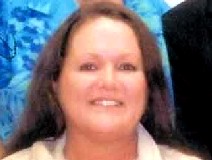 Anne Louise Gordon
Murderer · USA · 2002
Anne Louise Gordon was sentenced to life in prison without parole on July 17, 2…
2 victims
Anne Louise Gordon
Murderer · USA · 2002
Anne Louise Gordon was sentenced to life in prison without parole on July 17, 2…
2 victims
- Gender
- male
- Country
- Philippines
- Location
- Rizal Park, Manila, Philippines
- Date of birth
- 1955
- Age at first offence
- 55
- Characteristics
- robbery, police officer
- Victim profile
- Leung Chung See, Dori s (female) / Leung Song Yi, Jessi e (female) / Leung Kam Wing, Ke n (male) / Fu Cheuk Ya n (male) / Yeung Yee W a (female) / Yeung Yee Ka m (female) / Wong Tze La m (male) / Tse Ting Chunn, Mas a (male) (tourists, all from Hong Kong)
- Method of murder
- Shooting
- Date(s) of murder
- August 23, 2010
- Years active
- 2010
- Date of arrest
- —
- Status
-
Died in custody
Killed during a shoot-out with the police the same day
Background
Rolando Mendoza was a former police officer who hijacked a tourist bus carrying 25 people in downtown Manila.
He was described as a disgruntled former senior inspector of the Manila Police District. He attempted to get his job back.
Mendoza was identified as a former commissioned police officer who demanded to be reinstated with benefits to his previous post at the Manila Police District, from which he had been dismissed in 2009 amid allegations of extortion. He said that he had been summarily and unfairly dismissed and that he wanted a fair hearing and the opportunity to defend himself. He graduated from the Philippine College of Criminology with a degree in criminology, joined the police force as a patrolman, and rose to become senior inspector. He was decorated 17 times for bravery and honor. Colleagues at the Manila Police District said he was hard-working and kind.
There were indications that he was armed with an M-16 assault rifle. During the incident, he wrote demands for the return of his job and benefits on cardboard and pasted them on the windshield of the bus.
One message read, “Big mistake to correct a big wrong decision.” Another message read, “Media now,” apparently telling journalists to come to him. At around 2pm, he posted notes on the windows that read, “A big mistake to correct. A big wrong decision”, “Big deal will start after 3pm today” and “3pm deadlock”.
The offence
The incident occurred when Mendoza took over a tourist bus at Rizal Park, Manila, Philippines, during a hostage-taking.
Mendoza hijacked the Hong Thai Travel Services tour bus as it was taking on 25 Hong Kong tourists in front of Quirino Grandstand in Rizal Park. He attempted to follow the tourists onto the tour bus by requesting a free ride. When his request was declined by the driver, Mendoza brandished a weapon, handcuffed the driver to the steering wheel, and hijacked the bus.
Witnesses saw a man answering Mendoza’s description boarding the bus at Fort Santiago. Police were looking for accomplices who dropped him off at Fort Santiago. Driver Alberto Lubang also said Mendoza boarded there and subsequently announced his true intention at Rizal Park. Mendoza, armed with a handgun and an M16 rifle, commandeered the tour bus, demanding reinstatement to his previous post with benefits and claiming he was framed.
Initially police believed the hostages aboard the bus were mainly South Koreans, but they were later confirmed to be 21 Hong Kong holidaymakers, a bus driver, and two tour guides. Negotiations involved the release of hostages in stages.
Shortly after the standoff began, Masa Tse Ting-chunn, the tour guide from Hong Kong, alerted his employing agency in Hong Kong to the situation by telephone shortly after 10:30 am. During a two-minute conversation, Tse told the assistant customer services manager that his group was being held hostage.
Almost an hour later, six Hong Kong tourists were freed. An elderly woman, Li Tsui Fung-kwan, complained of stomach pains and was the first to be released. Her diabetic husband, Li Yick-biu, was released later. The 40-year-old mother Tsang Yee-lai was released along with her two children: 10-year-old son Fu Chak-yin and 4-year-old daughter Fu Chung-yin. As Tsang left, she lied to Mendoza that the 12-year-old boy Jason Wong Ching-yat was a relative of hers and convinced Mendoza to release Jason Wong along with her children. Two Filipino photographers, Danilo Nebril and Rigor Cruz, boarded the bus as volunteer hostages in exchange for the aforementioned releases.
By noon, three additional hostages were released, bringing the total to nine. The additional releases included Filipino tour guide Diana Chan and the two photographers who volunteered to be taken hostage. Seventeen people remained on the bus.
News5 news anchor Erwin Tulfo remained in permanent contact with Mendoza, while Superintendent Orlando Yebra and Chief Inspector Romeo Salvador led negotiations. Multiple television channels in Manila and Hong Kong broadcast non-stop live coverage of the hostage situation, and live footage became available worldwide.
During the later phase, Mendoza declared on a radio interview on DZXL that he would kill the passengers and wanted the SWAT team to leave the area. His brother, SPO2 Gregorio Mendoza, walked out after negotiating with his brother and urged him to surrender peacefully, telling his brother that “Nothing will happen here.”
President Benigno Aquino later said that the gunman’s brother contributed to the deterioration in the situation by fanning hatred against the negotiators.
Investigation and escalation during the standoff
Mendoza became agitated as he witnessed live coverage of the arrest of his brother from the on-board television. Reports indicate he fired warning shots as he saw his brother and son being carried away by police.
Mendoza demanded during a radio interview that police release his brother, or else he would start executing hostages. He later claimed on live radio just before the police assault began that he had indeed shot two hostages.
The first shots fired from within the bus were heard at about 7:21 pm. Snipers had shot the tires immobilizing the bus after it had attempted to move.
At around the same time it was reported that Alberto Lubang escaped the bus. Lubang thought that all remaining hostages had died and told policemen and media waiting near the bus, “Patay na lahat...!” (“Everyone is dead...!”). Lubang later admitted that his assumption was based on witnessing that Mendoza shot three hostages and then fired more shots in the bus.
Mendoza killed Masa Tse, the tour leader whom he had handcuffed to the door handrail earlier. According to survivor Joe Chan Kwok-chu, several hostages tried to rush Mendoza as he was preparing to shoot the other hostages, but he shot them down before they could reach him. Amy Leung Ng Yau-woon stated that her husband Ken Leung Kam-wing shielded her with his body and saved her from physical harm during the shootings, and Ken died from a gunshot.
It was also reported that the youngest daughter Jessie Leung Song-yi took two bullets while protecting her older brother Jason Leung Song-xue and died as a result. Joe Chan said he shielded himself from Mendoza’s gunfire with his backpack. Joe Chan survived the shootings, but both of his wrists were broken by bullets. Yik Siu-ling was seriously injured by a gunshot to her chin.
Arrest, assault, and shoot-out
The SWAT team started to surround the bus at 7:37 pm. Policemen attempted for many minutes to break windows of the bus with sledgehammers and tried to enter the bus, but were repelled by gunfire. The attempt to board the coach lasted for about an hour.
Thereafter, four tear gas canisters were thrown into the bus as police struggled to open the door. An attempt to break open the door by trying to tie a rope attached to a police vehicle resulted in the rope snapping. Police marksmen who had taken positions earlier in the day shot Mendoza in the head during the assault.
During the assault, gunfire broke out when police tried to break the windshield and glass windows with sledgehammers. Tear gas was thrown inside the bus, apparently forcing Mendoza to go near the bus’s main door, which police had torn down. A bystander was hit in the leg by one of the bullets.
The commandos struck after the bus driver jumped through a window and ran from the bus screaming, “Everybody is dead!” The cameras captured commandos armed with rifles surrounding the bus and opening an emergency exit. Shots were heard and, in a split second, the body of a man—presumably Mendoza—was seen slumped by the door.
Several unharmed hostages, visibly shaken and some crying, were taken off the bus through the emergency exit.
By that time, according to presidential spokesman Edwin Lacierda, four more hostages were confirmed dead while six hostages were confirmed alive and not seriously injured.
Two people outside the bus were wounded by stray bullets: 47-year-old TVB news crew engineer Wen Ming and bystanding child Mike Ladrillo y Campanero.
Mendoza gave an interview to Radio Mindanao Network, a Manila station. In Tagalog, he said, “I shot two Chinese,” and he stated, “I will finish them all if they do not stop.”
Sentencing
No sentencing information was stated.
Appeals
No appeal information was stated.
Outcome
Mendoza was killed during a shoot-out with the police the same day.
Eight tourists were killed, along with the hostage-taker. The hostages killed were eight tourists, all from Hong Kong. The standoff lasted about 12 hours.
Aftermath
Hospitalisation and fatalities
Six hostages were taken to the Ospital ng Maynila Medical Center, where two were declared dead while four were declared stable. Two were taken to the Philippine General Hospital, and the remaining seven hostages rescued were taken to Manila Doctors Hospital.
Another six hospitalised victims from the three hospitals, including the Hong Kong tour guide Masa Tse, were subsequently declared dead. This brought the total number of confirmed fatalities to eight, with at least one person remaining in critical condition and one in serious condition.
Specific victims and injuries
Among the eight fatalities were six individuals belonging to two families. While Amy Leung survived, her husband Ken Leung and two daughters—Doris Leung Chung-see, 21, and Jessie Leung, 14—died. Her son Jason Leung was seriously injured due to blunt force trauma to the head.
Siblings Tracey and Jason Wong survived the incident, and they were orphaned as their father Wong Tze-lam, mother Yeung Yee-wa, and aunt Yeung Yee-kam were all killed.
Fu Cheuk-yan was among the dead. His wife Tsang Yee-lai and children Chak-yin and Chung-yin were released soon after the bus was commandeered.
The media reported that three of the dead would not be autopsied in the Philippines due to opposition from family. Fu and the three members of the Wong family were buried at Tribute Garden.
Driver and dispute over responsibility
Tour bus driver Alberto Lubang, who claimed to have been handcuffed to the steering wheel, escaped the bus minutes before the situation deteriorated.
Later, Mayor Alfredo Lim said Lubang’s apparent friendliness toward the gunman and the ease with which he got out of handcuffs led to suspicions that he was in fact the gunman’s accomplice. Lubang denied this and said he still had the handcuffs in question. On August 27, it was reported that Lubang and his family had left their home and may have gone into hiding.
Hostage investigation in the Philippines
President Benigno Aquino ordered a thorough investigation with a report to be issued to him within three weeks. The investigation was held by the Post Critical Incident Management Committee (PCIMC), under the auspices of the Joint Incident Investigation and Review Committee (JIIRC), headed by Secretary of Justice Leila De Lima.
To support the Hong Kong government, the Aquino government invited the Hong Kong Police Force to send a team to participate in the investigation as observers. De Lima declared that her department would be the sole authorized source of information for the investigation for local media and directed Hong Kong media to request updates from the Government of Hong Kong instead. The gag order was to cover all parties and departments, including the Hong Kong team examining evidence.
Preliminary results were released on August 31. Ballistic tests by the Philippine National Police showed that the deceased hostages’ wounds were caused by a high-calibre weapon fired from within the coach. Of 65 recovered M16 rifle cartridges from the coach, 58 came from Mendoza’s gun. An investigation team spokesman said it was certain that the eight hostages who died in the incident were killed by Rolando Mendoza.
On September 3, De Lima admitted that the police might have accidentally shot some of the hostages. The investigation due to conclude on September 6 was extended to September 15.
After the initial inquiry, the JIIRC traveled to Hong Kong to interview survivors of the crisis. On September 6, chief negotiator Orlando Yebra said that the police did not have an official hostage negotiation team.
On September 7, Ombudsman Merceditas Gutierrez and her deputy Emilio Gonzales III rejected an invitation to attend a hearing. Police officers involved in the hostage crisis testified that Mendoza accused Gonzales of attempting to extort money from him.
The official investigation report was first delivered to the Chinese embassy in Manila on the morning of September 20, 2010, before being released to the general public later that day, to “repair the nation’s relations with China”.
Parts of the official report identified eight critical errors of the handling of the hostage crisis: Manila Mayor Alfredo Lim failed to properly activate the crisis management committee, depriving the chief negotiator and others of critical information and operational intelligence. Authorities were unable to appreciate Mendoza’s demands and there was a lack of communication with and involvement of the Department of Justice.
The report stated that Gregorio Mendoza’s side issue preoccupied Lim, Rodolfo Magtibay, and Chief negotiator Orlando Yebra at a critical moment, setting off a chain of events that led to Mendoza becoming “fatally hostile”. Lim decided to arrest Gregorio Mendoza. Lim and Magtibay were absent from command post at a crucial time because of a meal, creating a decision-making vacuum. The assault was described as “inefficient, disorganised and stalled” and took place without “vital information” about the bus.
The report stated that Magtibay rejected an order from the Philippine National Police director for Manila to use the national elite Special Action Force. It stated there was no plan for what to do after the assault and that the crime scene was not preserved.
The investigation report recommended administrative or criminal charges for 15 individuals and organisations, including Manila mayor Alfredo Lim; vice-mayor Isko Moreno; ombudsmen Merceditas Gutierrez and Emilio Gonzales III; government undersecretary Rico J. Puno; retired Philippine National Police chief director general Jesus Verzosa; National Capital Region Police Office director Leocadio Santiago Jr.; Manila Police District chief superintendent Rodolfo Magtibay; MPD hostage negotiator Orlando Yebra; SWAT commander Santiago Pascual; journalists Erwin Tulfo and Mike Rogas; and three broadcasting networks.
Dismissal of Emilio Gonzales
On March 31, 2011, ombudsman Emilio Gonzales was dismissed by President Aquino for his “inordinate and unjustified delay” in handling Mendoza’s appeal.
Gonzales appealed the decision, claiming he was “prejudged guilty before the investigation started”.
Hong Kong investigation and verdict
On August 25, 2010, the bodies of the deceased victims were brought back to Hong Kong on a government-chartered flight. The Coroner decided that an investigation into the death by the Police should be carried out and ordered autopsies on all eight deceased victims. Five bodies were autopsied, but autopsy was not done on the remaining three on requests of their families.
In January 2011, the Hong Kong Government invited 116 Philippine witnesses to participate in a probe that began on February 14, 2011. Participation was voluntary, and expenses would be covered by the Hong Kong Government for those who would need to travel to Hong Kong.
Among those invited included Gregorio Mendoza, brother of the hostage-taker; Alfredo Lim (mayor of Manila); Isko Moreno (vice-mayor of Manila); reporters who covered the incident; members of the SWAT team; and a number of forensic experts. Alfredo Lim and Isko Moreno rejected the invitation, claiming that Hong Kong should respect the results of the Philippine government investigation that concluded that Rolando Mendoza was responsible for the death of eight Hong Kong nationals, and that a further probe would encroach on Philippine sovereignty and independence.
Coroner Michael Chan Pik-kiu rejected an offer for four witnesses from Manila to testify through video because the offer was not promising and some other Filipino witnesses had already failed to testify through video as scheduled.
The investigation interviewed 31 witnesses from Hong Kong and 10 from the Philippines. The coroner’s five-member jury had to answer “yes”, “no”, or “uncertain” to a list of 44 statements describing the situation of the crisis. The narrative verdict found that all eight deceased hostages were “unlawfully killed” and blamed Philippine authorities’ incompetent handling of the crisis as a direct cause of their death, but did not attribute any criminal or civil liability to them.
Statements and reactions
President Benigno Aquino said during a news briefing around midnight that Mendoza might have gained some advantage from the coverage, stating: “To a certain extent, he may have had a bird’s eye view of the developments, which might not have helped.” Aquino defended the actions of authorities, saying: “The idea was to let the ground commanders who are the experts in this field handle the operation with minimal interference from people who are less expert."
Hong Kong Chief Executive Donald Tsang called the case a “major tragedy” and criticized Filipino authorities. Tsang said: “The way it was handled, particularly the outcome, I find is disappointing.”
Chinese Foreign Minister Yang Jiechi called Philippine Foreign Affairs Secretary Alberto Romulo and said he was “appalled” at the events and demanded an investigation. The Chinese government sent a team to deal with the situation.
The state-run Global Times called the Philippines “one of the most chaotic countries in Southeast Asia.”
Following the shootings, a Chinese consul asked for a written statement from the Philippine government and later rejected Aquino’s explanation given at a press conference held on the early morning of August 24, 2010.
Plans for a delegation led by Philippine vice-president Jejomar Binay to visit Beijing and Hong Kong between August 26 and 27 to “explain the hostage incident” were rejected by the Chinese government, citing that there was nothing to explain until the publication of a complete investigation report.
On August 27, the Chinese embassy in the Philippines expressed anger at the Mendoza family’s decision to cover Mendoza’s coffin with the Flag of the Philippines during his wake.
Travel alerts, flags, and memorials
In response to the hostage-taking, the Hong Kong government requested peaceful resolution. The Hong Kong Security Bureau formed a taskforce and sent officers to Manila to assist the rescue efforts.
On the day of the assault, the Security Bureau of Hong Kong announced a ‘black’ outbound travel alert for that country. Hong Kong residents were advised against traveling to the Philippines, and residents on location were advised to be alert and to return to Hong Kong as soon as possible.
Donald Tsang offered condolences and offered to do anything within its power to aid and rehabilitate survivors and their families. The government chartered two airplanes carrying doctors and counsellors to Manila and flew the Hong Kong victims back home. The bodies of all eight deceased victims and most survivors were flown to Hong Kong on the government-chartered flight on August 25.
All Hong Kong SAR flags at official locations were lowered to half-mast from August 24 to 26. The nightly multimedia display “A Symphony of Lights” was suspended during the same period. All Chinese national flags in Hong Kong were lowered to half-mast on August 26. The Hong Kong Stock Exchange held a minute’s silence before opening on August 24.
The government announced the opening of 18 locations around Hong Kong where citizens could pay their respects and sign condolence books. A memorial ceremony was held on the evening of August 25 at Hong Kong International Airport tarmac, attended by Chief Secretary Henry Tang and Secretary for Security Ambrose Lee.
In his proclamation 23, President Aquino declared August 25, 2010 a National Day of Mourning for those killed, and required all Philippine flags at all government institutions, including consulates and embassies worldwide, to be flown half-mast.
Other international statements
Canadian Foreign Minister Lawrence Cannon issued a statement on August 24 at 4:30 pm ET expressing Ottawa’s condolences. The Canadian government confirmed there were Canadians among the deceased and injured victims; the Leung family were later identified by the media as those victims.
The British Foreign and Commonwealth Office confirmed that hostages Yick Biu Li and Fung Kwan Li, both British nationals, were unharmed. The Union flag at the British Consulate-General Hong Kong and British Embassy Manila was lowered to half-mast on August 25, 2010.
The U.S. embassy in Manila condemned Mendoza for taking “innocent tourists hostages in an effort to redress a professional grievance.”
Media coverage and criticisms
After the hostage crisis, the aftermath was met with shock and dismay in the Philippines. Comments included anger at Rolando Mendoza, anger at the police force for apparent bungling, and anger at media for overzealous coverage, along with concern about damage to the tourist image.
Columnist Conrado De Quiros wrote that he felt “deeply, deeply ashamed” over the incident. In a follow-up column, he castigated Mendoza as a “traitor,” and wrote: “to bury him in a pauper's grave will insult paupers”.
Columnist Alex Magno wrote about “immaturity” in the diplomatic response of the Aquino administration and quoted that the Chinese were responding with “the penalty of death by a thousand cuts.”
John Nery wrote that it was appropriate for Aquino to have kept his distance from the crisis management but criticized unequal application of skepticism and referenced Tsang’s account of trying unsuccessfully to reach Aquino since 4 pm.
Hong Kong newspapers reported heavily on the incident. Google displayed a plain white Google Doodle on google.com.hk out of respect for the dead on August 24. Apple Daily criticized the competence of Philippine police and also criticized the Chinese central government for acting too slowly.
Pundits in Hong Kong criticised lack of planning and strategy in negotiation and described the hour-long assault as “extremely risky to the hostages”. Security analyst Charles Shoebridge praised SWAT courage but criticized police for lack of determination, equipment, training, and element of surprise, including not taking the opportunity to disarm or shoot Mendoza, not satisfying Mendoza’s demands, not blocking televised proceedings, not safeguarding the public, and using Gregorio Mendoza in negotiation. Romeo Acop criticized failure to establish an isolation line, slowness in addressing Mendoza’s demands, failure to deploy Special Action Force, poor negotiating team and skills, absence of an officer to control the media, and lack of experience.
In France, retired Colonel Frédéric Gallois was quoted by Agence France-Presse as saying: “one cannot understand what justified this badly prepared and risky assault,” and that the SWAT team lacked specialist training, equipment, and tactical competence.
Compensation issue
Two survivors, Chan Kwok-chu and Yik Siu-ling, and Tse Che-kin, brother of Masa Tse, were scheduled to meet Philippine government officials for compensation. They requested help from chief executive Donald Tsang, but Tsang’s office said it would not intervene because the case was a civil case. Democratic Party lawmaker James To attempted to help Chan and Yik apply for legal aid and request more help from the chief executive. A Philippine human rights lawyer stated that legal claims in Philippines were expensive and complicated.
Other details
Arrest and brother’s status
Mendoza’s brother, Gregorio Mendoza, was arrested after the standoff started and incited Mendoza to open fire by being arrested. Gregorio later complained to reporters that police were threatening him. Cameras showed him being detained by officers and shoved into a police car while his relatives wailed behind him.
Gregorio Mendoza was later arrested. The MPD stated he was not asked to assist in negotiations and that he breached the exclusion zone while carrying a gun.
Earlier allegations and proceedings mentioned
The incident narrative described earlier allegations involving Mendoza. The Office of the Ombudsman found Mendoza and four others guilty of misconduct and ordered Mendoza’s dismissal from the service and voiding of all his benefits.
Administrative charges against Mendoza were filed on April 25, 2008, after which he was relieved as Chief of the Mobile Patrol Unit. In August 2008, the Eighth Division of the Manila Prosecutors’ Office vacated the case after Hotel chef Christian Kalaw failed to attend dismissal proceedings. The PNP Internal Affairs Service recommended the case be dropped on October 17, 2008 for the same reason.
Hotel chef Christian Kalaw alleged he was accosted by Mendoza and several other officers over a parking violation on April 9, 2008. According to Kalaw, police planted sachets of methamphetamine in his car, forced him to take the drug, and accused him of being a drug addict. Officers allegedly demanded Kalaw access his bank account via ATM and hand over his money. Kalaw said the policemen released him after a friend raised 20,000 pesos.
There were later reports that Mendoza was also charged with gang rape in a 1996 incident, but the case was dismissed when complainants did not show up at court.
On February 1986, Mendoza led a group of policemen that flagged down a van carrying 13 crates full of money, which former Philippine president and dictator Ferdinand Marcos was apparently trying to take out of the country. That year, Jaycees International declared Mendoza one of the Ten Outstanding Policemen of the Philippines.
Mendoza’s brother Gregorio said Mendoza wanted a fair hearing by the Ombudsman, which “never even gave him a chance to defend himself; they immediately dismissed him.”
Statements about Mendoza’s job and dismissal
A New York Times report stated that Mendoza had been accused of robbery and extortion and was fired last year.
Quotations about “bird’s-eye view” and minimising interference
President Benigno Aquino said: “To a certain extent, he may have had a bird’s eye view of the developments, which might not have helped.” Aquino also said: “The idea was to let the ground commanders who are the experts in this field handle the operation with minimal interference from people who are less expert." Aquino declared that news media may have worsened the situation by giving the shooter “a bird’s-eye view of the entire situation”.
Additional reported comments and proceedings
A Senate committee on public order and illegal drugs held a hearing on August 26. During the hearing, police operatives revealed that Mendoza was reading the letter from the Office of the Ombudsman to an unknown person over the phone before the violence began. The Senate planned to subpoena records of the telephone conversation.
It was revealed that Rodolfo Magtibay had an elite team of Special Action Force of the Philippine National Police at his disposal, but chose to utilize the SWAT team because his team had successfully rehearsed the storming in the afternoon. The counter-terrorist unit was on standby behind the grandstand, and the Philippine Army Light Reaction Company had offered an elite squad, trained in hostage-taking scenarios and fighting Islamist militants in southern Philippines, but police told them it was not needed.
Magitbay said Lim ordered arrest of Gregorio Mendoza, which allegedly caused distress to the gunman and triggered him to shoot the hostages. Interior secretary Jessie Robredo admitted there were problems with how the crisis was handled.
The Manila Police District director Rodolfo Magtibay took leave, and four members of the SWAT team were suspended pending investigation.
A hearing into the crisis had been conducted by the Senate committee on public order and illegal drugs on August 26.
Memorial attendance and public vigils
On August 28, 2010 a candlelight vigil with a thousand participants was held in Hong Kong. Legislators organized a march on August 29 with organizers saying about 80,000 people attended and police giving a figure of 30,000. Four hundred Filipinos also held a vigil for the victims in Chater Gardens on August 29.
After the crisis, public support for Donald Tsang rose to a two-year high, and satisfaction in government rose 10.6 percentage points, according to a survey by the University of Hong Kong.
Rumours and related statements in Hong Kong
Claro Cristobal dismissed rumours and rumor-mongering. Cristobal said that two domestic helpers out of more than 100,000 were sacked but for reasons unrelated to the hostages incident. Jinggoy Estrada said an immigration officer rudely threw his passport at him after checking it when he passed through Hong Kong Immigration. Cameras showed Estrada entered Hong Kong through the privileged passage for diplomats, accompanied by staff from the Philippine Embassy, and that his passport was properly handed back.
Lee Ying-chuen wrote an open letter urging Hong Kong people to help Filipinos fight for a better society and justice and not to see Filipinos as scapegoats for the corrupt government.
Donald Tsang offered the families that the eight victims be buried in a special cemetery called the “Tribute garden” at the Wo Hop Shek Public Cemetery.
Spotted an error, or have more information about this case?