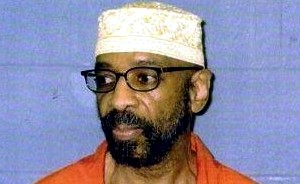
Russell Shoatz
Murderer Ervil LeBaron
Murderer · USA · 1972
Ervil Morrell LeBaron (1925 to August 16, 1981) was the leader of a polygamous…
35 victims
Ervil LeBaron
Murderer · USA · 1972
Ervil Morrell LeBaron (1925 to August 16, 1981) was the leader of a polygamous…
35 victims
 Marvin Gray
Murderer · USA · 1975
Marvin Gray was convicted killer who claimed responsibility for 23 slayings and…
23 victims
Marvin Gray
Murderer · USA · 1975
Marvin Gray was convicted killer who claimed responsibility for 23 slayings and…
23 victims
 Yahweh ben Yahweh
Murderer · USA · 1980
Yahweh ben Yahweh was born and legally named Hulon Mitchell Jr. (October 27, 19…
23 victims
Yahweh ben Yahweh
Murderer · USA · 1980
Yahweh ben Yahweh was born and legally named Hulon Mitchell Jr. (October 27, 19…
23 victims
 Charles Manson
Murderer · USA · 1969
Charles Milles Manson (born November 12, 1934) was an American criminal and mus…
9 victims
Charles Manson
Murderer · USA · 1969
Charles Milles Manson (born November 12, 1934) was an American criminal and mus…
9 victims
 John McGrady
Murderer · United Kingdom · 2005
John McGrady, aged 48, lived at Milford Towers, Catford, south London. Rochelle…
1 victim
John McGrady
Murderer · United Kingdom · 2005
John McGrady, aged 48, lived at Milford Towers, Catford, south London. Rochelle…
1 victim
 Randall Knese
Murderer · USA · 1996
State of Missouri v. Randall Knese, 985 S.W.2d 759 (Mo. banc 1999) The case was…
1 victim
Randall Knese
Murderer · USA · 1996
State of Missouri v. Randall Knese, 985 S.W.2d 759 (Mo. banc 1999) The case was…
1 victim
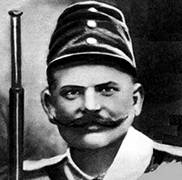 Bela Kiss
Serial killer · Hungary · 1900
Béla Kiss (1877 – ?) was a Hungarian serial killer. He murdered at least 24 you…
24 victims
Bela Kiss
Serial killer · Hungary · 1900
Béla Kiss (1877 – ?) was a Hungarian serial killer. He murdered at least 24 you…
24 victims
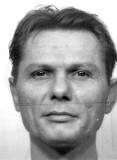 James Emery Paster
Murderer · USA · 1980
James Emery Paster (#752) was convicted of capital murder and sentenced to deat…
3 victims
James Emery Paster
Murderer · USA · 1980
James Emery Paster (#752) was convicted of capital murder and sentenced to deat…
3 victims
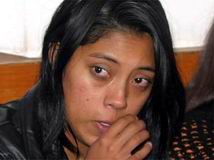 Romina Tejerina
Murderer · Argentina · 2003
Romina Tejerina was born in 1985 in San Pedro, Jujuy Province. She was sentence…
1 victim
Romina Tejerina
Murderer · Argentina · 2003
Romina Tejerina was born in 1985 in San Pedro, Jujuy Province. She was sentence…
1 victim
- Gender
- male
- Country
- USA
- Location
- Philadelphia, Pennsylvania, USA
- Date of birth
- 1943
- Age at first offence
- 27
- Characteristics
- armed robbery, history of mental illness, fugitive
- Victim profile
- P olice sergeant Francis Von Colln
- Method of murder
- Shooting
- Date(s) of murder
- August 29, 1970
- Years active
- 1970
- Date of arrest
- January 19, 1972
- Status
-
Life imprisonment
Sentenced to life in prison in 1973
Case record: Russell Shoatz
Background
Russell "Maroon" Shoatz (1943 - ) was a former Black Panther and Black Liberation Army member. His supporters argued that he was a political prisoner. As a young man he was described as a community activist and co-founder of the Black Unity Council. The Black Unity Council joined the Black Panther Party (BPP) in 1969.
From August 1970 to January 1972, Shoatz was described as active as an underground member of the Black Liberation Army, an armed group that splintered from the BPP.
The offence
Shoatz was convicted by a jury of murder of the first degree, assault and battery with intent to murder, aggravated robbery and conspiracy. The convictions stemmed from events surrounding the August 29, 1970, shootings of two Philadelphia police officers.
The dissent described that, on August 29, 1970, police sergeant Francis Von Colln was shot and killed while sitting at his desk in a guard house in Philadelphia's Cobb Creek Park.
Investigation
On January 19, 1972, at approximately 6:30 P.M., Officers Berry and King were in a radio patrol wagon when an unknown male approached them and stated: "There's three . . . dudes hanging around the dress shop across the street . . . I think they're going to hold the place up or either burglarize the place, because when they seen [sic] me they ran up the alley."
The officers went across the street and searched the alley but their search was fruitless. A woman from the dress shop stated that three men had been "hanging around" outside the store and had entered the adjacent alley. The police informed her of their search and assured her they would maintain surveillance of the premises.
As the officers proceeded toward their patrol wagon, three men, two of whom were carrying suitcases, appeared on the steps of the entrance to the alley. Officer King said: "Hold it gentlemen, I'd like to speak to you."
The two males with the suitcases dropped them and all three ran down the stairs and across the sidewalk to a car parked at the curb. With guns drawn the police ordered the men to halt and they complied. The three were then instructed to place their hands on the roof of the vehicle. Officer Berry proceeded to frisk Carter while King retrieved the suitcases. King opened the blue suitcase and discovered various automatic weapons, hand guns, explosives and ammunition. The three were placed under arrest.
Additional help was summoned and a third officer arrived who "frisked" Holder and retrieved a P-38 pistol and an ammunition clip. The suspects were placed in a police vehicle and taken to the police station.
The suppression court found sufficient basis for an investigative stop and frisk. It concluded that the arrests occurred only after the gun was taken from Mark Holder as a result of this frisk, and the subsequent search of the suitcases was permissible as incident to the lawful arrests. The notes of testimony from the suppression hearing contradicted these findings. The officers’ testimony indicated that the revolver was not recovered from Holder's waistband until after the officers opened the suitcases and discovered their contents.
After post-trial motions, the court en banc upheld the legality of the arrest on the theory that the suitcases were abandoned by the suspects and the contraband recovered therefrom provided probable cause for the arrests.
The opinion set out abandonment as predicated upon intent to relinquish control of property, and stated that police pursuit or the existence of a police investigation did not of itself render abandonment involuntary. It described the issue as whether the person prejudiced by the search had voluntarily discarded, left behind, or otherwise relinquished his interest in the property so that he could no longer retain a reasonable expectation of privacy at the time of the search.
The opinion concluded that the police activity prior to the abandonment of the suitcases was lawful and that the search of the suitcases was not violative of Shoatz’s Fourth Amendment protections.
Arrest
Shoatz was arrested at 6:45 P.M. on January 19, 1972, for illegal possession of weapons. At that time he identified himself as Augustus Van Horn. He was taken to the district police station and transported to the Police Administration Building.
Miranda warnings were given at 10:00 P.M., and he was questioned for the next 45 minutes. Immediately thereafter, he was photographed and fingerprinted whereupon his true identity was established. The questioning focused upon the Von Colln murder case, in which Shoatz was a prime suspect.
The dissent described that police officers investigating a possible robbery stopped Shoatz and two others at about 6:45 p.m., on January 19, 1972, and discovered weapons. It stated that police did not at that time recognize Shoatz as a suspect in the Von Colln slaying. It stated that Shoatz was arrested and transported to police headquarters, and that a detective identified Shoatz as a suspect in the Von Colln homicide about three hours later.
Trial
Post-trial motions for new trial and in arrest of judgment were denied by the court en banc.
The dissent described that, during the first 26 hours of incarceration, Shoatz denied any involvement in the Von Colln slaying, although he admitted membership in the Black Unity Council and that the Council discussed the use of violence against the police.
The dissent further described that interrogation continued for 15 of the next 21 1/2 hours after the detective identified Shoatz as a suspect, and that at about 8:30 p.m., January 20, nearly 26 hours after his arrest, Shoatz was asked: "Did you shoot and kill Sergeant Von Colln in the Park Guard Headquarters on August 29, 1970?"
Shoatz replied: "Fundamentally, I did"
The dissent described that after making the statement Shoatz refused to elaborate and that police summoned his parents by telephone and then permitted him to talk with them; he was arraigned some time after 11:00 p.m., January 20, at least 28 hours after his arrest.
Sentencing
After the denial of post-trial motions, Shoatz was sentenced to life imprisonment.
The dissent included that Shoatz received consecutive sentences of 10-20 years for aggravated robbery, 3 1/2 to 7 years for aggravated assault with intent to murder, and 1 to 2 years for conspiracy, which were to run concurrently with the life sentence for murder.
Appeals
The case was described as a direct appeal following conviction.
On November 24, 1976, the opinion of the court was issued. The case was identified as Supreme Court of Pennsylvania, COMMONWEALTH OF PENNSYLVANIA v. RUSSELL SHOATZ, APPELLANT (TWO CASES).
Counsel listed: Walter J. Collins, Jr., Philadelphia, for appellant. F. Emmett Fitzpatrick, Dist. Atty., Richard A. Sprague, 1st Asst. Dist. Atty., Steven H. Goldblatt, Asst. Dist. Atty., Chief, Appeals Div., James Garrett, Philadelphia, for appellee.
Judges listed: Jones, C. J., and Eagen, O'Brien, Roberts, Nix and Manderino, JJ. Roberts, J., filed a dissenting opinion in which Manderino, J., joined. Pomeroy, J., took no part in the consideration or decision of this case. Author: Nix [469 Pa. Page 550].
Shoatz initially raised several allegations of error by the suppression court. He attacked the legality of his arrest and search under the Fourth Amendment; the court disagreed.
He also contended that his oral statement made to police approximately 26 hours after his arrest should have been suppressed as the product of an unnecessary delay under Pennsylvania Rule of Criminal Procedure 118 (now 130) and Commonwealth v. Futch. The majority held the statement was not subject to suppression in the absence of prejudice and concluded the utterance merely reiterated adherence to revolutionary philosophy previously maintained.
He assigned error to the suppression court’s failure to suppress pre-trial photographic identifications by Pasqualle DiCamillo and Robert Grier; the court found the suppression rulings proper. It addressed arguments that eight photographs were unduly suggestive and that lineup participants’ dissimilarity was unduly suggestive, and it rejected those contentions. It also rejected the argument that counsel had not formally undertaken representation at the lineup, concluding that under the specific facts two Public Defenders were present, consulted with Shoatz, and played an active role.
Shoatz argued that the introduction into evidence of certain photographic color slides of the deceased required a new trial. The court found the trial judge's ruling proper, noting that in chambers 16 of 20 slides objected to were ruled inadmissible due to highly gruesome and inflammatory nature, while remaining four slides depicting points of entry and exit of the bullets were admitted. The court concluded the admitted slides were neither repugnant nor gruesome and did not outweigh evidentiary value.
He also argued that admission into evidence of items found in his possession and companions at arrest was error. The court described that at the time of arrest, about one and one-half years after the incident, Shoatz and companions were found to possess numerous advanced military weapons and munitions including two M-16 automatic rifles, plastic explosives manufactured solely for military use, and other military-type ammunition. The court found this evidence relevant as a circumstance to help identify Shoatz and connect him with the crime charged, considering the Commonwealth’s theory that Shoatz was an organizer of a militant revolutionary group and that possession of sophisticated weapons approximately 18 months after the events showed continuity of association.
He argued the court’s jury instructions were defective; the court held that the argument was not preserved for appellate review.
The appellate outcome stated: "Judgment of sentence affirmed."
The dissent rejected the majority’s treatment of the challenged statement and stated that the statement obtained after an unnecessary delay of at least 26 hours should have been suppressed and that reversible error required reversal and remand for a new trial.
Outcome
The judgment of sentence was affirmed.
Other details
Other people and identifiers in the record
The investigation described Officers Berry and King. It described suspects as Carter, Holder, and Charles Carter and Mark Holder. The dissent and majority described the homicide as involving Sergeant Francis Von Colln.
The suppression hearing and identifications involved Pasqualle DiCamillo and Robert Grier.
Photographic identifications
DiCamillo testified that while driving north along the Cobbs Creek parkway on the date and time of the shootings, he heard sounds like firecrackers and saw a man fire a gun in the direction of a parked police van. DiCamillo observed a second individual run across the street from the park and pass directly in front of his vehicle, requiring him to stop abruptly. The opinion stated the intersection was well lighted and afforded him a good opportunity to observe the individual for several seconds.
DiCamillo reported the incident to police and gave a brief description of the men involved.
Grier testified that on August 29, 1970, he was stopped for a traffic light one block north of the scene of the crime, when his truck was commandeered at gun-point by a young male who ordered him to drive to another section of the city. The episode consumed more than 30 minutes and Grier carefully studied the man's features. Later that night, Grier leafed through police photographs unsuccessfully for several hours, then was shown eight additional loose pictures of various members of the Black Unity Council and identified Shoatz immediately.
On November 24, 1970, the police showed DiCamillo the same loose photographs and he selected the photograph of appellant as the man who ran in front of his car. DiCamillo stated he could not be absolutely sure of the identification unless he saw the individual.
Additional historical case details included in the narrative
The case narrative included that, in 1972, Shoatz was apprehended and convicted of a 1970 attack on a Philadelphia police station in which a police officer was killed.
The narrative also stated that Shoatz escaped from a Huntington, PA prison in 1977 but was recaptured a month later. It stated that in 1980 he relocated to Fairview, a maximum security institution in Waymart, PA, and that he escaped again after another prisoner smuggled in a revolver and sub-machine gun; three days later, a shoot out with state authorities ended in his capture. It stated that since 1991, Shoatz had been on 23-hour lockdown.
The narrative also stated that in 2005, following a prison blood test, Shoatz was diagnosed with prostate cancer.
The narrative included that in May of that year, rap artist M1 of Dead Prez helped raise money for Shoatz as part of the "Free the Hood" Benefit/Tour.
The narrative named Shoatz’s son, Russell Shoatz III, as working to bring international attention to his father’s case. It stated he was active within the Human Rights Coalition, Families and Communities United, Black August and Griotis.
Dissenting opinion factual detail
The dissent described an earlier questioning period and described that, during the first 26 hours, Shoatz denied involvement in the slaying while admitting membership in the Black Unity Council and discussing use of violence against the police. It also described that after the delayed statement "Fundamentally, I did", Shoatz refused to elaborate and later spoke with his parents, and was arraigned after 11:00 p.m., January 20.
Appeal footnote material
A footnote stated: "Shoatz also received consecutive sentences of 10-20 years for aggravated robbery, 3 1/2 to 7 years for aggravated assault with intent to murder and 1 to 2 years for conspiracy which were to run concurrently with the life sentence for murder."
It also stated jurisdictional and certification details and that the non-homicide convictions were appealed to the Superior Court and certified for consolidation and consideration.
Another footnote stated: "Appellant was carrying a white suitcase and a blue bag was in the possession of one Charles Carter. The third man, Mark Holder, was not carrying luggage."
Another footnote addressed preservation of the Futch objection: "The record of the suppression hearing reflects that appellant's Futch objection at that time was directed solely to the response, "Fundamentally, I did", but not to the other information elicited during the course of the interrogations. In his brief to this Court, appellant has implicitly attempted to expand this objection to also embrace other damaging admissions made during the questioning. We must reject this attempt to place before us at this juncture that which was not properly preserved for appellate review. Commonwealth v. Clair, 458 Pa. 418, 326 A.2d 272 (1974)."
Another footnote addressed observation and identification: "Although DiCamillo was unswerving in his testimony, appellant implies that the limited opportunity for observation makes the identification unreliable. This argument however affects the weight to be accorded the testimony and not its admissibility. See Commonwealth v. Kloiber, 378 Pa. 412, 106 A.2d 820 (1954)."
Another footnote addressed Wade counsel requirement: "In analyzing the Wade requirement, it has been pertinently observed: [W]e think the important question is whether the representation provided the defendant at the lineup was adequate (a) to safeguard the defendant in an identification process attended with hazards of serious unfairness, to wit, the suggestive manner with which such line-up confrontations can be conducted, and (b) to preserve for the defendant the ability to effectively reconstruct at trial the manner and mode of the lineup. In our view, if these purposes are met then the requirements in Wade are satisfied, whether the representation at the lineup be handled by the accused's own counsel or substitute counsel. . . . . United States v. Sanders, 322 F.Supp. 947, 950 (E.D.Pa.1971). aff'd, 459 F.2d 86 (3rd Cir.), cert. denied, 409 U.S. 860, 93 S.Ct. 146, 34 L.Ed.2d 106 (1972)."
Another footnote stated: "We also note that the suppression court had the photographic slides of the lineup to aid its determination."
Additional dissenting footnotes
The dissent included that a more general formulation of the Futch inquiry involved nexus, and that prejudicial nature of challenged evidence was required to establish nexus.
It also included that the majority relied on cases inapposite to the situation and contrasted cases where statements after delay were reiterations of prior untainted admissions.
Spotted an error, or have more information about this case?