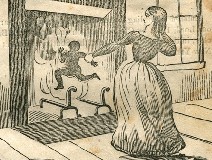
Patty Cannon
Murderer Delphine LaLaurie
Murderer · USA · 1831
Delphine LaLaurie fled before she could be bought to justice and was never caug…
Delphine LaLaurie
Murderer · USA · 1831
Delphine LaLaurie fled before she could be bought to justice and was never caug…
 Diane Spencer
Murderer · USA
Diane Louise Spencer was sentenced to life in prison in Michigan on March 13, 1…
1990 victims
Diane Spencer
Murderer · USA
Diane Louise Spencer was sentenced to life in prison in Michigan on March 13, 1…
1990 victims
 Kevin Kincy
Murderer · USA · 1993
March 26, 1993 — Jerome Harville was found fatally shot in the head and stabbed…
1 victim
Kevin Kincy
Murderer · USA · 1993
March 26, 1993 — Jerome Harville was found fatally shot in the head and stabbed…
1 victim
 Troy Leon Gregg
Murderer · USA · 1973
Troy Leon Gregg (age 25) was the appellant in Gregg v. Georgia and was also des…
2 victims
Troy Leon Gregg
Murderer · USA · 1973
Troy Leon Gregg (age 25) was the appellant in Gregg v. Georgia and was also des…
2 victims
 Alvin Wayne Crane
Murderer · USA · 1987
Alvin Wayne Crane was executed by lethal injection in Texas on October 12, 1999…
1 victim
Alvin Wayne Crane
Murderer · USA · 1987
Alvin Wayne Crane was executed by lethal injection in Texas on October 12, 1999…
1 victim
 Robert Kosilek
Murderer · USA · 1990
Robert Kosilek was convicted of first-degree murder for the death of his wife,…
1 victim
Robert Kosilek
Murderer · USA · 1990
Robert Kosilek was convicted of first-degree murder for the death of his wife,…
1 victim
 Michael James Perry
Murderer · USA · 2001
Name: Michael James Perry · TDCJ number: 999444 · Date of birth: 04/09/1982 · A…
3 victims
Michael James Perry
Murderer · USA · 2001
Name: Michael James Perry · TDCJ number: 999444 · Date of birth: 04/09/1982 · A…
3 victims
- Gender
- female
- Country
- USA
- Location
- Delaware, USA
- Date of birth
- 1760
- Age at first offence
- 61
- Characteristics
- cannibalism, child abuse, history of mental illness, kidnapping, murder for hire, torture
- Victim profile
- Men, women and children
- Method of murder
- Beating - Shooting
- Date(s) of murder
- 1821 - 1829
- Years active
- 1821–1829
- Date of arrest
- 1829
- Status
-
Died in custody
Died in prison while awaiting trial on May 11, 1829, purportedly a suicide via poison
Case overview
Martha “Patty” Cannon (circa 1760 – May 11, 1829) led a gang in the early 19th century that kidnapped slaves and free blacks from the Delmarva Peninsula and transported and sold them to plantation owners located further south.
Accounts of her criminal activity described her as a leader who used captives for sale and who used violence against people held by her gang.
Later accounts of her life referred to her as Lucretia P. Cannon, although the narrative stated there was no evidence indicating she used the Lucretia name in her lifetime.
She was indicted for four murders in 1829 and died in prison while awaiting trial, purportedly a suicide via poison.
Background
Family relationships and early life
Cannon was the wife of local farmer Jesse Cannon and was widowed at some point in 1826 or before.
She lived near the town of Reliance, Maryland, U.S., then called Johnson’s Corners, on the border at the convergence of Caroline County and Dorchester County, Maryland, and Sussex County, Delaware.
Cannon and her husband had at least one daughter. The daughter twice married men engaged in the criminal slave-stealing trade. The daughter’s own name was unknown.
The daughter’s first husband was Henry Brereton, a blacksmith who kidnapped black people for sale.
Brereton went to prison in 1811 for kidnapping, but escaped from the Georgetown, Delaware jail. Brereton was captured, convicted of murder, and hanged with one of his criminal associates, Joseph Griffith.
After this, Cannon’s daughter, now a widow, married Joe Johnson, who became Cannon’s most notorious partner in crime.
The gang’s membership included white criminals, black men used as decoys, and Cannon’s own husband before his death.
A relative of Cannon’s daughter’s first husband, Robert Brereton, continued to be involved with the gang as late as at least 1826.
Places connected to her life and crimes
Cannon lived near the town of Reliance, Maryland, then called Johnson’s Corners, at the border at the convergence of Caroline County and Dorchester County, Maryland, and Sussex County, Delaware.
The narrative connected her operations to Chesapeake Bay locations referenced as Tangier Island of Virginia, Cambridge, Maryland, and Georgetown, Delaware.
It also connected her to Cannon’s Ferry, now Woodland Ferry, described as a point where captives were transported.
The offence
Kidnapping and sale of captives
The gang kidnapped slaves and free blacks from the Delmarva Peninsula and transported and sold them to plantation owners located further south.
Victim accounts printed in the abolitionist journal the African Observer stated that captives were chained and hidden in the basement, the attic, and secret rooms in the house.
Captives were taken in covered wagons to Cannon’s Ferry (now Woodland Ferry).
At the ferry, the accounts stated the captives would sometimes meet a schooner traveling down the Nanticoke River to the Chesapeake Bay and on to Georgia slave markets.
The gang’s activities continued for many years.
Alleged violence by Joe Johnson and family members
According to depositions from victims who fought their way back to the north, Joe Johnson kept the captives in leg irons.
The depositions stated he “severely whipped” captives who insisted they were free.
The narrative stated that Patty’s daughter was overheard saying it “did [her] good to see him beat the boys.” (“Boy” was described as a degrading reference to a black man of any age; the narrative stated Mrs. Johnson was not referring to male children.)
Testimony of Lydia Smith
A 25-year-old free black woman named Lydia Smith testified that she was kept in Cannon’s home before being moved to Johnson’s tavern.
Smith was held for five months until she was shipped south with a large lot of people being sold into slavery.
Investigation
Indictment timeline for the gang
The gang was initially indicted in May 1822.
The narrative stated that Joe Johnson was sentenced to the pillory and 39 lashes, and that records showed the sentence was carried out.
Cannon and several other gang members, though charged with Johnson, apparently did not go to trial nor receive sentences.
Discovery of bodies in 1829
In 1829, bodies were discovered on the farm property Cannon owned in Delaware by a tenant farmer doing plowing there.
Arrest
Cannon was arrested in 1829 for the murder of four people, including a slave trader.
Trial
Grand jury murder indictments in April 1829
In April 1829, Cannon was indicted on four counts of murder by a grand jury of 24 white males.
The narrative listed the victims as:
- “an infant female” on April 26, 1822
- “a male child” on April 26, 1822
- “an adult male” on October 1, 1820
- “a ‘Negro boy’” on June 1, 1824
The indictments were signed by the Attorney General of Delaware, James Rogers.
Eyewitness testimony: Cyrus James
Witness Cyrus James stated he saw her take an injured “black child not yet dead out in her apron, but that it never returned.”
The narrative stated that Cyrus James had been purchased by Cannon when he was only seven years old, and had grown up in her household and participated in her crimes.
Sentencing
Cannon died in her cell on May 11, 1829, at an age estimated to be between sixty and seventy years old.
Sources differed on whether she was convicted and sentenced to hang before her death in the cell, and on whether she committed suicide or died of natural causes.
Appeals
No appeal information was provided.
Outcome
Cannon died in prison while awaiting trial on May 11, 1829, purportedly a suicide via poison.
Her body was initially buried in the jail’s graveyard.
When that land became a parking lot in the 20th century, her skeleton, along with those of two other women, was exhumed and reburied in a potter’s field near the new prison.
The narrative stated her skull was separated from the rest of her remains and put on display in various venues, and loaned to the Dover Public Library in 1961.
Aftermath
Scientific examination and skull custody history
A 2010 article described a scientific examination of Cannon’s remains more than 180 years after her death and stated that forensic examination of the skull would include CT scans, bone density measurements, a dental examination of the remaining teeth, and tests to determine concentrations of elements such as arsenic, lead and mercury.
It stated that the skull had resided in Dover’s public library since 1961, and described that the skull had come to Dover after Cannon’s remains were moved around 1907.
The article stated that James Marsh, then a Sussex deputy sheriff, obtained it and gave it to a relative, Charles Joseph, who hung it in his barn and later stored it in his home.
The article stated that Joseph’s son, Alfred, who moved to Dover, inherited it in 1946 and in 1961 loaned it to the Dover library.
It stated that Dr. Chuck Fithian, curator of archaeology for the state Division of Historical and Cultural Affairs, said Dr. Douglas Owsley, chief of the Division of Physical Anthropology at the Smithsonian, planned to examine and preserve the skull as part of a larger study of life in the Chesapeake from colonial times to the 19th century.
The article quoted Fithian: “The city library had the skull for a number of years and it had just sat there,” Fithian said. “It’s been attributed to [Cannon], and there’s no reason to question that, so we’re trying to use modern technology to look at it and try to figure it out.”
The article quoted Owsley: “We’re stepping back, tracking our ancestors, and seeing what their bones tell us about their lifestyles,” Owsley said. “We’re sweeping broadly across Maryland, Virginia and Delaware to study what life was like in the 17th, 18th and 19th centuries.”
It also quoted Owsley: “My focus is not really on Patty Cannon, it’s at looking at her as an individual in a specific time.”
The article quoted Cyr: “Patty Cannon was not a nice person in life, but she’s been quiet and respectful in my office,” Cyr said.
It stated that after the work was done, the skull would be returned to Dover “at some still to be determined point in the future,” where it most probably again would take up residence in Director Cyr’s office.
Historical marker and home
An historical marker was placed at the “Patty Cannon House.”
Research by a PBS history series was described as proving the marker was placed on land Joe Johnson bought in 1821 for $150, and that Patty Cannon bought from him in 1826—but that her actual home was several hundred yards away.
The narrative stated that Cannon’s house, built sometime in the 18th century, was torn down in 1948.
Burial and graveyard notes
The narrative stated her body was initially buried in the jail’s graveyard, and later described reburial after exhumation when the land became a parking lot in the 20th century.
Cultural portrayals
The narrative stated Cannon had mythic prominence since her death, beginning with the publication of a “female fiend” pamphlet in 1841 and followed by numerous works that combined fact and fiction.
It stated that it was difficult to extract facts except where authors were meticulous about noting their sources or flagging departures from fact.
It described a “female fiend” pamphlet in 1841 titled Narrative and Confessions of Lucretia P. Cannon, published anonymously in New York.
It stated that the pamphlet inspired many others, changing her name and altering the litany of her crimes.
It stated that Cannon was apparently renamed to taint her by association with Lucretia Borgia, a notorious poisoner.
It stated that a novel, The Entailed Hat, Or, Patty Cannon’s Times, by George Alfred Townsend, published in 1884, popularized and to an unknown extent fictionalized Cannon’s story.
The narrative stated hardback editions were published in at least 1890, 1912, 1955, and 1969, and that a paperback was issued in March 2007.
The narrative stated James McBride used Patty Cannon as a villain in his 2008 novel Song Yet Sung.
It stated that various modern collections of ghost stories include information on Patty Cannon.
It stated that in Monica S. Baker’s 2010 middle grade novel, Freestyle, Patty Cannon stalks 21st century Mitchell Burke in his dreams.
The narrative stated Cannon was the basis of the slave-stealing Patty Ridenour character in a sixth-season episode of Homicide: Life on the Street titled “Sins of the Father,” which originally aired in January 1998.
It stated that a novel by Clive Cussler entitled Spartan Gold is based in part upon Martha “Patty” Cannon and a modern day search for valuable stolen artifacts which she may have left behind.
Other details
Political and economic context described in the narrative
The narrative stated that the U.S. Congress banned the importation of slaves in 1808.
It stated that because of the restriction of supply, the cash value of slaves rose to over $1,000 in the South, creating incentive for kidnappers.
It stated that many free blacks lived in Cannon’s neighborhood near the Maryland-Delaware border, and were targets for kidnapping.
It stated that kidnapping enslaved blacks was riskier because their white owners would protest, and that the murder of white slave traders was taken seriously.
It stated that the kidnapping of free blacks left their land and other property behind, and therefore failed to outrage the white community the way theft of white-owned slaves did, or the murder of whites.
The Entailed Hat excerpt and quoted passages
The narrative included an excerpt from Chapter XXIV of The Entailed Hat by George Alfred Townsend (1884).
The excerpt stated:
“In them days they didn’t kidnap much; it was jest a-beginnin’.
The war of ’12 busted everything on the bay, burned half a dozen towns, kept the white men layin’ out an’ watchin’, and made loafers of half of ’em, an’ brought bad volunteers an’ militia yer to trifle with the porer gals, an’ some of them strangers stuck yer after the war was done. I don’t know whar ole Ebenezer come from; some says this, an’ some that. All we know is, that he an’ the Hanlen gals, one of ’em Patty Cannon, was the head devils in an’ after the war....
The British begun to run the black people off in the war. The black people wanted to go to ’em. The British filled the islands in Tangier yer with nigger camps; they was a goin’ to take this whole peninsuly, an’ collect an’ drill a nigger army on it to put down Amerikey.
When the war was done, the British sailed away from Chesapeake Bay with thousands of them colored folks, an’ then the people yer begun to hate the free niggers....
They hated free niggers as if they was all Tories an’ didn’t love Amerikey. So, seein’ the free niggers hadn’t no friends, these Johnsons an’ Patty Cannon begun to steal ’em, by smoke!
There was only a million niggers in the whole country; Louisiana was a-roarin’ for ’em; every nigger was wuth twenty horses or thirty yokes of oxen, or two good farms around yer, an’ these kidnappers made money like smoke, bought the lawyers, went into polytics, an’ got sech a high hand that they tried a murderin’ of the nigger traders from Georgey an’ down thar, comin’ yer full of gold to buy free people.
That give ’em a back-set, an’ they hung some of Patty’s band — some at Georgetown, some at Cambridge.”
Portrait descriptions included in the narrative
A 1907 newspaper article was quoted in the 2010 article as describing Cannon:
“massive of bosom, massive elsewhere,”
and as “Amazonian Paul Bunyan” who personally hogtied some of her kidnap victim.
The narrative also included an additional quote from the 1907 newspaper article:
“She was more or less robust, had a wealth of black hair, and her face, while showing the effects of her evil passions and dissipations, was more or less good to look upon,”
Additional narrative content included in the record
The record included long passages from nineteenth-century fictionalized material and folklore-like descriptions. It contained a section titled “The Death of Patty Cannon” and multiple extended fictional scenes involving characters and events, including quoted dialogue and narrative speech. These fictional passages were not separated from the historical narrative in the provided text and were included verbatim as part of the record content.
“Narratives & Confessions of Lucretia P. Cannon” passages included in the record
The record included narrative discussion asserting that “The Murders of Lucretia Cannon” was a sensationalist and unreliable account, and that Cannon’s first name was Patty, while the press nicknamed her Lucretia after Lucretia Borgia.
It also included a passage describing marriage to Alonzo Cannon, widowing, setting up a tavern in Maryland, heading up a gang, alleged beating of a crying infant and burning it alive, murdering tavern patrons for their money, killing a slaver by crushing his head, and discovering twenty-one black captives and many skeletons in the backyard.
It further described that at trial Cannon was sentenced to death, that she took poison to avoid hanging, and that she confessed to killing eleven people and acting as an accessory to twelve other deaths, poisoning her husband, and killing her three-day-old.
Confines and other physical remains handling
The narrative stated Cannon’s skull had been separated from the rest of her remains, put on display in various venues, and loaned to the Dover Public Library in 1961.
It also stated that her skeleton was exhumed and reburied in a potter’s field near the new prison when the jail graveyard land became a parking lot in the 20th century.


Spotted an error, or have more information about this case?