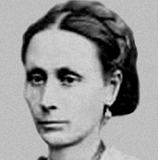
Lydia Sherman
Murderer Martha Grinder
Murderer · USA · 1864
Martha Grinder was convicted of murder in the first degree for poisoning Mary C…
2 victims
Martha Grinder
Murderer · USA · 1864
Martha Grinder was convicted of murder in the first degree for poisoning Mary C…
2 victims
 Ann Bilansky
Murderer · USA · 1859
Ann Bilansky was executed by hanging in Minnesota on March 23, 1860 for the ars…
1 victim
Ann Bilansky
Murderer · USA · 1859
Ann Bilansky was executed by hanging in Minnesota on March 23, 1860 for the ars…
1 victim
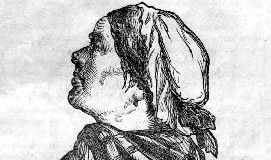 Bridget Durgan
Murderer · USA · 1867
Bridget Durgan was an Irish domestic who was hanged on August 30, 1867. She was…
1 victim
Bridget Durgan
Murderer · USA · 1867
Bridget Durgan was an Irish domestic who was hanged on August 30, 1867. She was…
1 victim
 Crystal Mangum
Murderer · USA · 2011
Crystal Gail Mangum (born July 18, 1978) was an African American woman known fo…
1 victim
Crystal Mangum
Murderer · USA · 2011
Crystal Gail Mangum (born July 18, 1978) was an African American woman known fo…
1 victim
 Sulejman Talovic
Mass murderer · USA · 2007
Sulejman Talović Sulejman Talović (October 6, 1988 – February 12, 2007) was a B…
5 victims
Sulejman Talovic
Mass murderer · USA · 2007
Sulejman Talović Sulejman Talović (October 6, 1988 – February 12, 2007) was a B…
5 victims
 George Emil Banks
Mass murderer · USA · 1982
George Emil Banks was an American mass murderer and a former Camp Hill prison g…
13 victims
George Emil Banks
Mass murderer · USA · 1982
George Emil Banks was an American mass murderer and a former Camp Hill prison g…
13 victims
 Frank Basil McFarland
Murderer · USA · 1988
Frank Basil McFarland was executed by lethal injection in Texas on April 29, 19…
1 victim
Frank Basil McFarland
Murderer · USA · 1988
Frank Basil McFarland was executed by lethal injection in Texas on April 29, 19…
1 victim
 Robert Leach
Murderer · USA · 1999
Robert L. Leach, Jr. was convicted in a capital case of two counts of first deg…
2 victims
Robert Leach
Murderer · USA · 1999
Robert L. Leach, Jr. was convicted in a capital case of two counts of first deg…
2 victims
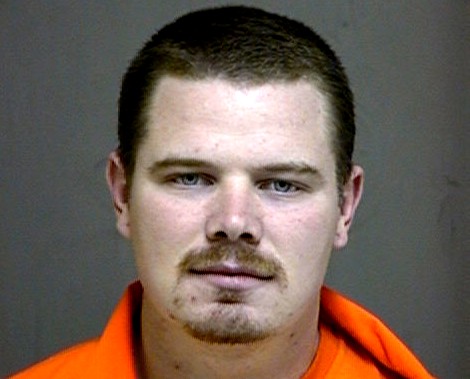 Patrick Wade Bearup
Murderer · USA · 2002
Patrick Wade Bearup — convicted of killing Mark Mathes. · Mark Mathes (40) — ki…
1 victim
Patrick Wade Bearup
Murderer · USA · 2002
Patrick Wade Bearup — convicted of killing Mark Mathes. · Mark Mathes (40) — ki…
1 victim
- Gender
- female
- Country
- USA
- Location
- New York/New Jersey/Connecticut, USA
- Date of birth
- 1824
- Age at first offence
- 40
- Characteristics
- poisoner
- Victim profile
- Edward Struck (first husband) / Martha Struck, 6 (her daughter) / Edward Struck Jr., almost 4 (her son) / William Struck, 9 months (her son) / Dennis Hurlburt (second husband) / Horatio N. Sherman (third husband) / Ada Sherman (her stepdaughter) / Frankie Sherman (her stepson)
- Method of murder
- Poisoning (arsenic)
- Date(s) of murder
- 1864 - 1871
- Years active
- 1864–1871
- Date of arrest
- June 1871
- Status
-
Died in custody
Sentenced to life in prison in 1872; died in prison on May 16, 1878
Background
Lydia Sherman was also known as “The Derby Poisoner.” She was born in 1824 in Burlington, New Jersey, United States, and died in prison on 16 May 1878.
She was described as a serial killer who poisoned several children in her care and her three husbands. She was convicted of second-degree murder in 1872.
She was first married when she was seventeen years old to a widower named Struck. The newly-married couple lived together for about seven years, during which they had six children.
In September, 1870, she married a third husband, who was a young mechanic of much promise and good reputation. He was a widower, and the father of five children, three sons and two daughters. The youngest child was hardly two years old.
After this, she is described as “escaped from the Connecticut State Prison.”
The offence
Lydia Sherman poisoned husbands and children.
After the birth of the youngest child, her husband Struck became sick in a mysterious and sudden manner. The widow explained his taking ill by stating he had taken a dose of medicine from the wrong bottle.
Within two years from the man’s death, her six children all died suddenly. No one was stated to have known or asked why the little ones should have been so mysteriously cut down. Even then, it was stated that the finger of public suspicion did not point at the wife and mother.
After spending two years of widowhood, Mrs. Struck married a second husband, described as a “well-to-do the farmer and fisherman” who had contrived to lay up property. Her second husband made a will in which all his estate, both real and personal, was conveyed to his young wife. Not long after the will was executed, he was suddenly attacked with painful and alarming symptoms. Medical aid was immediately summoned, but it was beyond their power to relieve him. Within a few hours Lydia was a widow for the second time.
After long descriptions of family deaths, chemistry was summoned to find out a clue to the mystery. “In the stomach of the corpse enough arsenic was found to have killed three men.” After this discovery, the graves of the children and of some of the woman’s other victims were opened. “In every instance where time had not obliterated all traces of guilt, poison was found.”
Lydia Sherman was described as not waiting for the law when it became necessary to put a husband away. She persuaded the man to return to her in the early part of last month. One of her first acts was to mix up a “glass of something nice” for her repentant husband to drink. In less than two hours after drinking it, he was in excruciating pain. For two days he suffered extremely and was only released by the hand of death after hours of constant agony, leaving her to mourn for a third husband.
Investigation
The grave of her last victim was opened. Chemistry was summoned to find out a clue to the dreadful mystery. Arsenic was found in the stomach of the corpse.
Her suspicions of poisoning by arsenic were proved correct when the bodies of the Sherman children were exhumed.
Dr Beardsly informed the police.
Arrest and extradition
Lydia Sherman fled to New York after the doctor became suspicious and exhumations proved arsenic poisoning. The police ordered Mrs Sherman's extradition back to Connecticut to face trial.
She was tracked to New Jersey and carried back to the little town in Connecticut where she had poisoned her last three victims.
In Hartford, it was stated that after escaping from Connecticut State Prison, she left Hartford only to be arrested in Providence and returned to her old quarters.
Trial
Lydia Sherman was convicted of second-degree murder. The conviction was described as being due to most of the evidence being circumstantial.
She was described as having stoical reserve and wonderful shrewdness, and as having nothing to say to interviewers and visitors, with no unguarded word escaping her lips.
Sentencing
She was sentenced to life imprisonment.
Appeals
No appeal information was present in the provided material.
Outcome
Lydia Sherman died in prison on 16 May 1878.
She was described as having been in prison for life and exhibiting “profound cunning” while incarcerated.
She was described as assuming the character of a confirmed invalid, exhibiting secretions such as “yellow crayons” which were said to have stained her countenance. She was also described as having frequent fainting fits when she appeared as if about to die.
She was described as making money by the manufacture and sale of fancy articles, with this sale being “very improperly allowed to retain by the Matron,” from whom it was said she also stole $50.
She was described as obtaining and secreting a white muslin dress, which, before escaping, she substituted for the prison costume of linsey-woolsey.
Aftermath
In June 7, 1877, she was described as “lately escaped from the Connecticut State Prison.” She was also compared in newspapers to Lucretia Borgia or Brinvilliers, and she was said to have poisoned three husbands and seven children.
It was also stated that she was confronted by “the immutable law of right,” and that “There is no such cheat in the world as a criminal’s own cunning.”
Other details
Lydia Sherman was described as “black widow poisoner of husbands and children for life insurance.”
In the account describing her early offences, her husband was named Edward Struck, and she was described as having six children with him.
It was stated that Lydia took a job as housekeeper to Nelson Sherman, who needed someone to look after his baby son and fourteen year old daughter. Lydia and Nelson grew close, and he agreed to marry her. Lydia was said to have poisoned, with arsenic, his son and daughter.
It was stated that Nelson Sherman succumbed to a poisoned hot chocolate drink on the 12 May 1871.
A later section described the same case as being on trial in Connecticut, with Lydia “in her 45th year.”
The Coshocton Democrat (Oh.) August 1, 1871 included the claim that “To-day she appears before the Court for a preliminary examination.”
Michael Newton—An Encyclopedia of Modern Serial Killers—Hunting Humans was included in the provided material.

Spotted an error, or have more information about this case?