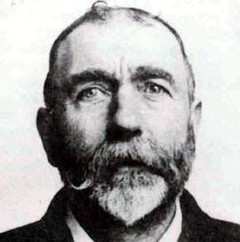
Samuel Herbert Dougal
Murderer William Henry Bury
Murderer · United Kingdom · 1888
William Henry Bury was executed by hanging in Dundee on April 24, 1889. He was…
2 victims
William Henry Bury
Murderer · United Kingdom · 1888
William Henry Bury was executed by hanging in Dundee on April 24, 1889. He was…
2 victims
 Albert Milsom
Murderer · United Kingdom · 1896
Albert Milsom (33) was executed by hanging at Newgate Prison on June 9, 1896. ·…
1 victim
Albert Milsom
Murderer · United Kingdom · 1896
Albert Milsom (33) was executed by hanging at Newgate Prison on June 9, 1896. ·…
1 victim
 Herbert John Bennett
Murderer · United Kingdom · 1900
Herbert John Bennett was convicted of murdering his wife, Mrs Bennett. · 22 Jul…
1 victim
Herbert John Bennett
Murderer · United Kingdom · 1900
Herbert John Bennett was convicted of murdering his wife, Mrs Bennett. · 22 Jul…
1 victim
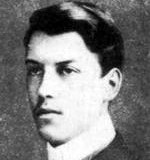 Horace Rayner
Murderer · United Kingdom · 1907
Horace Raynor was sentenced to death for the killing of William Whiteley. After…
1 victim
Horace Rayner
Murderer · United Kingdom · 1907
Horace Raynor was sentenced to death for the killing of William Whiteley. After…
1 victim
 Ruben Ramirez Cardenas
Murderer · 1997
Ruben Ramirez Cardenas (TDCJ Number 999275) was a Mexican national. He was Hisp…
1 victim
Ruben Ramirez Cardenas
Murderer · 1997
Ruben Ramirez Cardenas (TDCJ Number 999275) was a Mexican national. He was Hisp…
1 victim
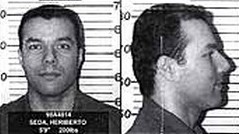 Heriberto Seda
Serial killer · USA · 1990
Heriberto Seda was sentenced to life in prison (83 1/2 years) on June 24, 1998.…
3 victims
Heriberto Seda
Serial killer · USA · 1990
Heriberto Seda was sentenced to life in prison (83 1/2 years) on June 24, 1998.…
3 victims
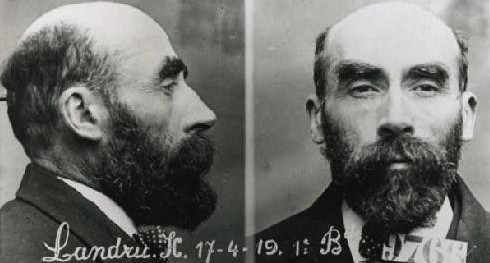 Henri Landru
Serial killer · France · 1915
Henri Désiré Landru (born April 12, 1869; died February 25, 1922) was a French…
11 victims
Henri Landru
Serial killer · France · 1915
Henri Désiré Landru (born April 12, 1869; died February 25, 1922) was a French…
11 victims
 Michael Slobodian
Homicide · Canada · 1975
Michael Slobodian committed suicide by shooting himself on the same day as the…
2 victims
Michael Slobodian
Homicide · Canada · 1975
Michael Slobodian committed suicide by shooting himself on the same day as the…
2 victims
 Christie Scott
Murderer · USA · 2008
Defendant: Christie Michelle Scott (also referred to as Christie Michelle Bray…
1 victim
Christie Scott
Murderer · USA · 2008
Defendant: Christie Michelle Scott (also referred to as Christie Michelle Bray…
1 victim
- Gender
- male
- Country
- United Kingdom
- Location
- Audley End, Essex, England, United Kingdom
- Date of birth
- May 1846
- Age at first offence
- 52
- Characteristics
- rape, rape?, serial rapist, murder for hire
- Victim profile
- Camille Cecile Holland, 55 (his lover)
- Method of murder
- Shooting
- Date(s) of murder
- May 19, 1898
- Years active
- 1898
- Date of arrest
- April 27, 1903
- Status
-
Executed
Executed by hanging at Chelmsford Prison on 8th July 1903 on July 14, 1903
Case record
Samuel Herbert Dougal was tried for the murder of Camille Cecile Holland, a quiet, moneyed spinster.
Background
Samuel Herbert Dougal was born in the East End of London in May 1846. He received an education and was apprenticed to a firm of civil engineers. When his debts became too much of a burden he enlisted in the Royal Engineers at Chatham in March 1866. In 1869 he married a Miss Griffiths at the age of 23. She already had four children. His wife suffered ill-treatment at the hands of Dougal, who was described as a heavy drinking man.
In June 1885, while Dougal was serving in Nova Scotia, his wife fell ill and died in agony within twelve hours. Dougal took leave back to England and, two months later, returned with a new wife. In October, she started vomiting and suddenly died.
Dougal returned to England with his regiment in 1887 and brought with him a young girl who he passed off as his current wife. She had his child and, when the beatings grew too severe, returned to her family in Halifax. After he left the Army, he tried several jobs including salesman, storekeeper, publican, surveyor and clerk, and he also tried his luck with a variety of women who found him attractive, but they did not stay with him for very long. This was often not before they had become pregnant by him.
In September 1895 (while he was working in the office of the Commander of the Forces in Dublin), he was found guilty of forgery and was sentenced to 12 months hard labour. Two months into the sentence, he tried to kill himself and he spent the remaining 10 months in an asylum.
Dougal was later described as a thrice married soldier and philanderer. He gained his reputation as a womaniser while serving in the Royal Engineers. While posted in Canada, his wife died, and after being allowed home on compassionate grounds he returned to camp with a wealthy new bride. The marriage was described as short lived because she died suddenly and without raising suspicion. In 1896, Dougal was cashiered from the service when he was convicted on a forgery charge. After serving a two-year sentence, he returned to England.
He met Camille Holland, a wealthy spinster who lived at Moat Farm, Essex. Dougal moved in with her. Soon after, she caught him frolicking with a servant girl and told him to pack his bags. Later that week, Miss Holland disappeared and Dougal told the locals she had gone on a yachting holiday and that he had been left in charge of the farm.
The offence
Camille Cecile Holland had been missing for four years before her body was discovered buried in a ditch at Moat Farm, Essex. Her body was laid out in the conservatory at Moat Farm. Since she had been in the ground for the past four years, identification was difficult, but vital clues helped.
It was found that Camille had been shot once in the head, at close range. Professor Pepper’s opinion was that the bullet “must have caused immediate insensibility, which would have continued until death.”
Investigation
In March 1903, Dougal was charged with, “forging and uttering a cheque value f28 15s. payable to J Heath, dated 28th August 1902, purporting to be drawn by Camille C Holland at Clavering.”
During the trial, which began in the spring of 1903, the prosecution produced evidence that showed Samuel had systematically moved money from Camille’s accounts into his own, sold her stocks and shares and transferred title of Moat Farm from her name to his. In his earlier forgery trial in 1895, he had been punished with 12 months hard labour, but this trial carried far heavier consequences. It rekindled interest in the whereabouts of Camille and prompted a police investigation into her disappearance.
On 19 March 1903, the police “took possession” of Moat Farm to see if they could find any clues about Camille’s disappearance. The officers moved into the farmhouse. The Essex County Chronicle reported:
“The police officers engaged in the searching at the Farm occupy the farmhouse, preparing their meals and making their beds for themselves. Detective-Sergeant Scott acts as chef.”
People from local and national newspapers and bystanders besieged the farm while it was searched. The Essex County Chronicle described the scene near the farm when the body was discovered on Monday 27 April 1903:
“Throughout the week, people have flocked to the Moat Farm in crowds, the majority of the visitors being ladies. Oranges and nuts were sold as at a village fair, and the raucous voices of the vendors were heard on every side. Souvenir postcards of the Moat House and of the grounds, showing many of the holes made by the police and the tent-like awning which conceals the grave, commanded an enormous sale. A number of the sightseers brought kodaks with them in search of effective snapshots and a still larger contingent were relic-hunters.”
Her former landlady, Mrs Wiskin, and her nephew, Ernest Legrand Holland, identified the garments and the jewellery on the body as those of Camille Holland. Mr. Mold, Camille’s shoemaker, identified the shoes on the body, which bore his name, as those he had made for Miss Holland. A few days later, the body was examined by Professor Pepper (an expert from the Home Office) and Doctors Storrs and Sprague (divisional police surgeons). The bullet was recovered and was later proved to come from Dougal’s revolver.
Timeline
- March 1903 — Dougal was charged with “forging and uttering a cheque value f28 15s.
- 19 March 1903 — Police “took possession” of Moat Farm and occupied the farmhouse while searching.
- 27 April 1903 — Camille’s body was discovered.
- 22 June 1903 — Dougal was indicted in Shire Hall, Chelmsford, for the murder of Camille Cecile Holland at Clavering.
- 22 June 1903 — Dougal’s trial began on 22nd June 1903 at Chelmsford.
- 8 July 1903 — Samuel Herbert Dougal was executed at Chelmsford Prison.
- 14 July 1903 — Execution date recorded as “on July 14, 1903.”
Arrest
After the visit from the police and investigation into cheque details, Dougal left for London. He returned to the farm later but stayed only one night before travelling back to London. He was staying at the Central Hotel and was joined by a pregnant Georgina Cranwell, who was Kate’s sister. Georgina returned to Essex. The next day Dougal tried to change some money at the Bank of England. The cashier recognised the numbers and refused to change them. DI Cox was on duty and Dougal admitted who he was. Dougal was asked to accompany Cox back to the station. On the way Dougal made a run for it but was soon caught and over-powered. He was charged with the forgery of one of the cheques. This led to a thorough search of Moat Farm, including draining the moat and digging everywhere. After five weeks, they found nothing suspicious. Inspector Bower later heard locally that, soon after Dougal had moved to the farm, he had filled in a drainage ditch. The police searched there, which led to discovery of remains.
Trial
The indictment in Shire Hall, Chelmsford, stated that Dougal:
“on the 19th May 1899, did feloniously, willfully, and of his malice aforethought, kill and murder Camille Cecile Holland at Clavering.”
In his opening speech, Mr. Gill KC, for the Crown, argued that on the evening of 19th May 1899, Samuel took Camille out for a ride in the pony and trap, proceeded to shoot her in the head and buried her body in a prepared grave in the grounds of the farm.
Mrs Wiskin, Florence Blackwell and many women who had had an association with Samuel or the farm over the past four years were called to give evidence. After the cases for both the prosecution and the defence had been heard, the jury retired to make their verdict. After an absence of 56 minutes, they returned their verdict: guilty.
After the verdict, the judge passed sentence. The judge said:
“… it is my duty to pass upon you the sentence of the law - that you be taken from hence to the place from when you came, and from there to a place of execution, and that you there be hanged by the neck until you be dead, and that your body be afterwards buried within the precinct of the prison in which you shall have been last confined after your conviction. And may the Lord have mercy on your soul. ”
At 3.55pm the following day, the jury retired to consider their verdict. It took them just 75 minutes to find him guilty.
Sentencing
The judge passed sentence of execution by hanging.
James Billington was the executioner who carried out the wishes of the court when he was hanged at Chelmsford Prison on 8th July 1903.
In addition, it was stated that he was hanged by William Billington and John Ellis.
Outcome
Samuel Herbert Dougal was executed at Chelmsford prison at 8am on Tuesday 14 July 1903. He was buried in the grounds of Chelmsford prison and only his initials and a number on the wall near by marked the grave of one of Essex’s most notorious murderers.
Other details
Relationship and life at Moat Farm
In January 1899, Samuel and Camille moved to Saffron Walden to take possession of Coldhams Farm near Clavering. Camille paid for the property, and insisted it remain in her name. While the property required attention, they lodged with Mrs Wisken in Market Row, Saffron Walden. It was noted that although Samuel and Camille were not married and Camille continued “to conduct her business affairs in her own name, they presented themselves to the world as 'Mr and Mrs Dougal'.”
On 22nd April 1899, “Mr and Mrs Dougal” moved into Coldhams Farm, which they renamed Moat Farm. On 13th May, Florence Havies was appointed as maid. Florence discovered that she was subject to Samuel’s attentions. On 14th May, Samuel made inappropriate advances to her in the kitchen, and on the night of the 16th he tried to enter her room. Florence resisted his advances on both occasions. On the night of the 16th, Florence held her door shut and screamed to alert Camille. Camille arrived, sent Samuel off to bed, and Camille and Florence slept in the same room for the rest of that night and the following two nights.
On the night of the 19th May, Florence found herself alone in the house with Samuel. Earlier that evening, at 6.30pm, Samuel and Camille had gone out in the pony and trap. At 8.30pm Samuel returned. When Florence asked after Camille, he told her that Camille had gone to London and would return later that night. For the rest of the evening, Samuel was in and out of the house. He finally returned at 12.45am and informed Florence that Camille had not returned and that she had better go to bed. When Florence came down to start her chores at 7am the next morning, Samuel was already up, dressed and eating breakfast. He told her that he had received a letter from Camille in which she said that she had gone on holiday. Florence arranged for her mother to collect her that morning and leave Moat Farm. Her mother arrived promptly, Florence collected her wages and left.
Samuel employed a new maid, Emma Burgess, and was joined by another “Mrs Dougal” who was his third wife in actuality. Over the next four years, Samuel continued to live at the farm and enjoyed liaisons with different women in the village. He was described as attending church regularly and giving generously to local causes such as enlargement of the churchyard and the interior redecoration of the church.
Forgery and bank transactions
It was stated that investigations into Camille’s bank transactions led police to arrest Dougal on a charge of forgery. Cheques signed supposedly by Miss Holland were inspected. The visit from the police alarmed Dougal, and he left for London.
He was later stopped when he tried to change money at the Bank of England and was charged with forgery of one of the cheques.
Additional persons named
- Florence Havies (maid) was appointed and later fled from Moat Farm after the events of 19th May and the following morning.
- Emma Burgess was employed as a new maid.
- Ernest Legrand Holland was Camille’s nephew and identified clothing and jewellery.
- Mrs Wiskin was Camille’s former landlady and identified garments and jewellery, and was also mentioned as lodging housing the couple prior to moving into Coldhams Farm.
- Mr. Mold was Camille’s shoemaker and identified shoes bearing his name.
- Professor Pepper was an expert from the Home Office who examined the body.
- Doctors Storrs and Sprague were divisional police surgeons who examined the body.
- DI Cox was on duty at the Bank of England.
- Inspector Bower heard locally about the drainage ditch filling-in and the police searched it later.
- Georgina Cranwell was pregnant and joined Dougal while he stayed at the Central Hotel.
- Kate Cranwell was a maid aged 18 whose paternity suit was mentioned.
Date and court details
On 22 June 1903, in Shire Hall, Chelmsford, Dougal was indicted for murder. It was also stated that his trial began on 22nd June 1903 at Chelmsford. The jury retired and returned their guilty verdict after brief deliberation periods described as both 56 minutes and 75 minutes.


Spotted an error, or have more information about this case?