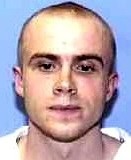
Robert Lynn Pruett
Murderer Brian Kevin Rosenfeld
Murderer · USA · 1985
Brian Kevin Rosenfeld Brian Kevin Rosenfeld was sentenced to three concurrent l…
23 victims
Brian Kevin Rosenfeld
Murderer · USA · 1985
Brian Kevin Rosenfeld Brian Kevin Rosenfeld was sentenced to three concurrent l…
23 victims
 Russell Ellwood
Murderer · USA · 1991
Russell Ellwood was a former taxi driver. Authorities suspected him of killing…
20 victims
Russell Ellwood
Murderer · USA · 1991
Russell Ellwood was a former taxi driver. Authorities suspected him of killing…
20 victims
 Robert Martines Perez
Murderer · USA · 1994
Name: Robert Martines Perez · Other name used in proceedings: Robert Martinez P…
15 victims
Robert Martines Perez
Murderer · USA · 1994
Name: Robert Martines Perez · Other name used in proceedings: Robert Martinez P…
15 victims
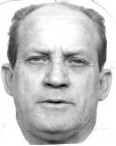 Billy Frank Vickers
Murderer · USA · 1993
Billy Frank Vickers Vickers was executed by lethal injection in Texas on Januar…
14 victims
Billy Frank Vickers
Murderer · USA · 1993
Billy Frank Vickers Vickers was executed by lethal injection in Texas on Januar…
14 victims
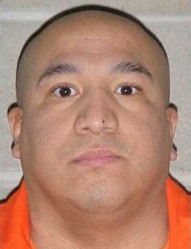 William Herrera
Murderer · USA · 1988
Defendant: William Herrera Victim: Caucasian (Deputy Sheriff Vernon Marconnet)…
1 victim
William Herrera
Murderer · USA · 1988
Defendant: William Herrera Victim: Caucasian (Deputy Sheriff Vernon Marconnet)…
1 victim
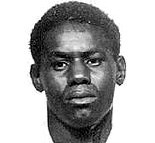 Sammie Felder
Murderer · USA · 1975
March 13, 1975 — Felder worked his usual day shift, 6:00 a.m. to 2:00 p.m., whi…
1 victim
Sammie Felder
Murderer · USA · 1975
March 13, 1975 — Felder worked his usual day shift, 6:00 a.m. to 2:00 p.m., whi…
1 victim
 Rekha Kumari-Baker
Murderer · United Kingdom · 2007
Davina and Jasmine Kumari-Baker were murdered by their mother, Rekha Kumari-Bak…
2 victims
Rekha Kumari-Baker
Murderer · United Kingdom · 2007
Davina and Jasmine Kumari-Baker were murdered by their mother, Rekha Kumari-Bak…
2 victims
- Gender
- male
- Country
- USA
- Location
- Bee County, Texas, USA
- Date of birth
- September 18, 1979
- Age at first offence
- 16
- Characteristics
- —
- Victim profile
- One man / Daniel Nagle, 37 ( prison guard )
- Method of murder
- ??? / St abbing with homemade knife
- Date(s) of murder
- 1995 / 1999
- Years active
- 1995–1999
- Date of arrest
- —
- Status
-
Sentenced to death
Sentenced to death on April 30, 2002
Name and identifiers
Robert Lynn Pruett (TDCJ Number 999411)
Background
Robert Lynn Pruett was born on 09/18/1979. He was received into custody at age 22. He had an education level of 8.
Pruett was serving a life sentence from Harris County for one count of murder with a deadly weapon when he committed this offense.
Pruett’s prior occupation was a Harris Texas laborer. He had prior prison record indicating he was serving a life sentence from Harris County for one count of murder with a deadly weapon.
The offence
On December 17, 1999, Pruett physically assaulted a male correctional officer at the McConnell Unit in Bee County, resulting in the death of the correctional officer.
A Bee County grand jury indicted inmate Robert Lynn Pruett on two counts of capital murder in the Dec. 17 stabbing death of Officer Daniel Nagle at the McConnell Unit near Beeville.
One count of the indictment charged him with capital murder of a prison guard; the other charged him with capital murder while incarcerated for murder.
The victim was Officer Daniel Nagle, age 37. Nagle was found in a pool of blood near a multipurpose room around 3:45 p.m. An 8-inch steel shank was found nearby.
TDCJ spokesman Larry Todd said: “We believe this is an isolated case whereby Pruett had planned the assault on Officer Nagle,” spokesman Larry Todd told the Huntsville Item. He said the attack may have been retaliation over a disciplinary issue. Todd told the newspaper the investigation continues and additional information could be presented to the grand jury.
Investigation
Anthony Casey, an inmate who was housed in the same unit as the appellant at the time of the offense, testified that on the day of the murder he heard the appellant talking to an inmate named Flash about a weapon. The appellant also told Casey that "something was going to happen."
Casey later saw that the appellant was inside the locked multipurpose room that was connected to Nagle's office. The appellant told Casey not to come into the multipurpose room. Casey went outside to the "rec yard" and through a glass window he saw the appellant standing near Nagle's desk. He then saw the appellant walking towards the "C-Pod" area of the prison. He later saw the appellant in a hallway. While in the hallway, the appellant took off his clothes, pushed them through a "gas port" onto the rec yard, and changed into another set of clothes provided by an inmate. Casey picked up the appellant's discarded clothes and placed them in a box in the rec yard. Casey observed blood on the appellant's discarded clothes.
Trial
Charges and court
Pruett was convicted by a Bee County jury of killing Correction Officer Daniel Nagle while the appellant was incarcerated at McConnell prison unit in Beeville, Texas.
Pruett was prosecuted by 156th Judicial District Attorney George Morill III, assisted by special prosecutors Herbert Hancock and Alfred Hernandez.
The case was appealed to the Court of Criminal Appeals of Texas in No. 74,370, styled: Robert Lynn Pruett, Appellant v. State of Texas
The opinion included the statement of the jury verdict and sentencing framework under Texas Code of Criminal Procedure Article 37.071, §§ 2(b) and 2(e).
Evidence and witnesses
The appellant raised four points of error challenging his conviction and sentence.
In three points of error, he claimed that the trial court erred by improperly denying him the fundamental constitutional right to present a meaningful defense by excluding the testimony of one witness and limiting the cross-examination of two other witnesses. He also claimed the trial court erred in admitting a "Case Summary" of his previous conviction during the punishment phase of his trial, which he claimed was prepared in anticipation of litigation.
The trial court rejected each of his contentions and the appellate court affirmed the trial court’s judgment.
Exclusion of witness testimony (Damont Jackson)
In his second point of error, the appellant challenged the trial court's refusal to allow witness Damont Jackson to testify during the guilt phase of the trial.
Defense counsel attempted to call witness Damont Jackson after the State rested. Defense counsel argued that Jackson's testimony was necessary to show that Casey made a prior inconsistent statement admissible under Texas Rule of Evidence 801(e).
Jackson initially testified outside the presence of the jury that he overheard Casey and inmates Bill Spaulding and Randy Burns say that the appellant did not murder Nagle, that "some Mexican dude" did it, and that they were going to testify because they had something to gain from the District Attorney.
Jackson later clarified what he heard, with the following exchange included verbatim: [JACKSON]: Spaulding - - Spaulding told me the most - - he's the one that told me the most stuff. THE COURT: Yeah, but Spaulding hasn't testified to the jury. Okay? [JACKSON]: Okay. THE COURT: I am allowing - - see, the jury has heard Casey but they haven't heard Spaulding. Now, if they bring Spaulding to testify and he testifies, I may let you come back and say if it's different than what he said in your presence, but right now we're only dealing with Casey. Okay? [JACKSON]: Well, Spaulding is the one who disclosed the most information, you know. THE COURT: Casey didn't say - - [JACKSON]: Casey didn't say all that Spaulding said, so - - [PROSECUTOR]: What did Casey say? THE COURT: He says - - what, if anything, did Casey say in your presence? [JACKSON]: I just heard him talking to Burns in a holdover cage, you know, on a block. And he said that he wished we would stay out of his business because we were going to end up making him get a murder case because we disclosed what he said; then, you know, he was going to have to ride his own heat.
Upon further questioning, Jackson stated that he never heard Casey say that the appellant did not murder Nagle. Instead, Casey told another inmate, Kevin Veschi, that "Pruett didn't stab the officer but he was going to testify anyway to get a case off of him," and Veschi relayed this information to Jackson.
After hearing Jackson’s testimony outside the presence of the jury, the trial court refused to permit him to testify in front of the jury, with the following included verbatim: THE COURT: . . . And if he is a witness to the incident, then, I'll let him testify. But he is here to tell people that he is not supposed to say something he never heard uttered in his presence. [DEFENSE COUNSEL]: He is here to tell people that a witness told him not to say something that he knew that he did. THE COURT: You have got it on the record. My ruling is that he doesn't get to testify since - - [DEFENSE COUNSEL]: Okay, Judge. THE COURT: - - that is all he is being offered for. You may step down.
The appellate court held the trial court did not abuse its discretion in deciding to exclude Jackson's testimony, because Jackson never personally heard Casey make a prior inconsistent statement, and there was no hearsay exception offered for Veschi's statement to Jackson. It also held Jackson's testimony was not admissible.
Speculative theory about smuggling contraband investigation
In his fourth point of error, the appellant again argued that the trial court denied him the fundamental constitutional right to present a meaningful defense.
He complained that the trial court erroneously excluded evidence that Nagle's death may have been related to an investigation involving correctional officers smuggling contraband into the prison.
Defense counsel informed the trial court outside the presence of the jury that he wanted to question Thomas J. Prasifka, the warden of the McConnell prison unit, about "the fact that there were 30 or more officers indicted for smuggling dope into the prison and that Officer Nagle may have actually ratted some of them out."
Defense counsel argued that this evidence was necessary to show that "[t]here was a motive for the gang members who were getting the drugs to kill Mr. Nagle, and there was a motive for corrupt guards to kill Mr. Nagle."
Defense counsel questioned Prasifka outside the jury's presence. Prasifka testified that Nagle did not act as an informant and had no involvement in the investigation of the indicted correctional officers.
The trial court refused to permit defense counsel to pursue this line of questioning with Prasifka in front of the jury. The appellate court noted that defense counsel failed to produce evidence in support of the speculative theory that Nagle was killed in retaliation for acting as an informant against fellow correctional officers.
The opinion quoted Wiley v State about confusion of issues and misleading the jury: “The danger of 'confusion of the issues' and 'misleading the jury' arises when circumstantial evidence tends to sidetrack the jury into consideration of factual disputes only tangentially related to facts at issue in the current case.”
It further stated that allowing the appellant to explore this issue without further evidence and in the face of Prasifka's denial of a link between Nagle and the investigation would serve no purpose but to "confus[e] the issues" and "mislead[] the jury."
Limitation of cross-examination of Dr. Lloyd White
In his third point of error, the appellant contended that the trial court improperly limited his cross-examination of Dr. Lloyd White, the medical examiner who performed the victim's autopsy.
At the time of the trial, Child Protective Services (“CPS”) was investigating White and his family regarding the welfare of his minor child. The State requested that “any testimony about White's difficulty with the Child Protective Services not be made a part of this testimony and before this jury.”
Defense counsel questioned White outside the presence of the jury to determine whether he had a bias or expected any favors from the State in return for his testimony. After that, the trial court ruled that White could not be asked about the CPS investigation.
White testified outside the presence of the jury that he believed that CPS was harassing him because they were dissatisfied with his expert testimony on sudden death syndrome in other, unrelated infant death cases. He stated that he was apprehensive about testifying in the instant case because during the course of their investigation CPS "listed the fact that [he] testified in court as evidence that [he] was incompetent and mentally unbalanced and not a fit parent because that testimony required [him] to miss some meetings that they had scheduled."
White clarified that he would "tell the truth and give a full objective answer in every case." He further testified that he did not have any deal with the State in exchange for his testimony and that "[t]here would be no bias that would cause [him] to lie."
The trial judge assessed whether there was potential for bias based upon White’s testimony and found that the appellant failed to demonstrate that White had any bias for or against the State of Texas stemming from the pending CPS investigation.
The appellate court concluded the trial court did not abuse its discretion in limiting the cross-examination of White.
Admission of Exhibit 62 during punishment phase
In his first point of error, the appellant asserted that the trial court erred in admitting State's Exhibit 62 during the punishment phase.
State's Exhibit 62 was described as a packet comprising numerous records from the Texas Department of Criminal Justice (TDCJ). A portion entitled "Case Summary" described the murder for which he was incarcerated when he committed the instant offense.
The appellant argued:
- The Case Summary did not purport to be a "Classification Record" as referred to in the affidavit.
- The prison employee who produced the Case Summary did not have knowledge of the events recorded.
- The documents in SX-62 were not generated by prison employees.
The appellate court stated the appellant failed to object on these bases at trial, so those complaints were not preserved for review.
The appellant also argued State's Exhibit 62 was inadmissible because the records contained therein "were compiled for the purpose of litigation." The appellate court treated this complaint as preserved because the appellant objected on that basis at trial.
Barbara Trevino, the chief of classification and the custodian of records at the John B. Connally Unit of TDCJ, initially testified that the records were compiled for the purpose of litigation when she was questioned by defense counsel. Upon further questioning by the prosecutor, Trevino testified as follows, verbatim: [PROSECUTOR]: You were asked if these were prepared for litigation. And I know that you put them together at our request for this case, but you didn't actually write out all these records so we could use them in court, did you? [TREVINO]: No, sir. [PROSECUTOR]: These records previously existed? [TREVINO]: Yes, sir. [PROSECUTOR]: Some of them are six years old; is that correct? [TREVINO]: Yes, sir. [PROSECUTOR]: So when you were asked if they were prepared for litigation, in one sense they were, you put them together. [TREVINO]: I compiled them for you, yes, sir. [PROSECUTOR]: To make a packet for us, but you didn't actually create the records? [TREVINO]: No, sir.
Trevino clarified that the records themselves were not actually created in anticipation of litigation. The appellate court held the appellant failed to establish that the trial court erroneously admitted State's Exhibit 62.
Sentencing
Pursuant to the jury's answers to the special issues set forth in Texas Code of Criminal Procedure Article 37.071, §§ 2(b) and 2(e), the trial judge sentenced the appellant to death.
Appeals
The direct appeal was automatic. The opinion was delivered September 22, 2004 and was designated “Do Not Publish.”
The appellate court affirmed the judgment of the trial court and overruled the appellant’s points of error.
Outcome
The trial court’s judgment was affirmed. The jury convicted Robert Lynn Pruett of killing Correction Officer Daniel Nagle while the appellant was incarcerated at McConnell prison unit in Beeville, Texas. The trial judge sentenced the appellant to death.
Other details
Victim details
The victim, Officer Daniel Nagle, was white and male, age 37.
The investigation described Nagle as found in a pool of blood near a multipurpose room around 3:45 p.m., and an 8-inch steel shank was found nearby.
Appellant details
Pruett was described as white male with blonde hair, height 5 ft 11 in, weight 160, and brown eyes.
Pruett’s native county and native state were listed but not filled with specific values in the provided material.
Indictment context
The provided material stated: “Inmate indicted in Nagle murder April 2000.” It also stated “Beeville — A Bee County grand jury on March 21 indicted inmate Robert Lynn Pruett on two counts of capital murder” in the Dec. 17 stabbing death.
Jury and legal standards referenced in the opinion
The opinion included discussion and references to the standards for excluding testimony, cross-examination limits, and admission of evidence, including citations to Texas authorities and cases such as Wiley v State, Carpenter v. State, Chambers v. State, Lagrone, Willingham v. State, and Cole v. State.

Spotted an error, or have more information about this case?