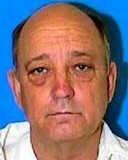
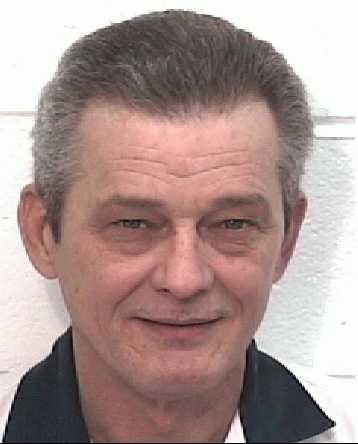
Hilton Lewis Crawford
Murderer Brian Kevin Rosenfeld
Murderer · USA · 1985
Brian Kevin Rosenfeld Brian Kevin Rosenfeld was sentenced to three concurrent l…
23 victims
Brian Kevin Rosenfeld
Murderer · USA · 1985
Brian Kevin Rosenfeld Brian Kevin Rosenfeld was sentenced to three concurrent l…
23 victims
 Russell Ellwood
Murderer · USA · 1991
Russell Ellwood was a former taxi driver. Authorities suspected him of killing…
20 victims
Russell Ellwood
Murderer · USA · 1991
Russell Ellwood was a former taxi driver. Authorities suspected him of killing…
20 victims
 Robert Martines Perez
Murderer · USA · 1994
Name: Robert Martines Perez · Other name used in proceedings: Robert Martinez P…
15 victims
Robert Martines Perez
Murderer · USA · 1994
Name: Robert Martines Perez · Other name used in proceedings: Robert Martinez P…
15 victims
 Billy Frank Vickers
Murderer · USA · 1993
Billy Frank Vickers Vickers was executed by lethal injection in Texas on Januar…
14 victims
Billy Frank Vickers
Murderer · USA · 1993
Billy Frank Vickers Vickers was executed by lethal injection in Texas on Januar…
14 victims
 Jonathon Edington
Murderer · USA · 2006
Jonathon Edington (born October 29, 1976) was a patent lawyer in Fairfield, Con…
1 victim
Jonathon Edington
Murderer · USA · 2006
Jonathon Edington (born October 29, 1976) was a patent lawyer in Fairfield, Con…
1 victim
 Jimmy Dale Bland
Murderer · USA · 1975
Jimmy Dale Bland was executed by lethal injection in Oklahoma on June 26, 2007.…
2 victims
Jimmy Dale Bland
Murderer · USA · 1975
Jimmy Dale Bland was executed by lethal injection in Oklahoma on June 26, 2007.…
2 victims
 Thomas Lee Dillon
Serial killer · USA · 1989
Defendant: Thomas Lee Dillon · Sex: M · Race: W · Type: N · Motive: PC-nonspeci…
11 victims
Thomas Lee Dillon
Serial killer · USA · 1989
Defendant: Thomas Lee Dillon · Sex: M · Race: W · Type: N · Motive: PC-nonspeci…
11 victims
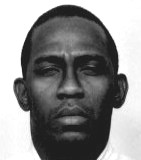 Gerald Cornelius Eldridge
Murderer · USA · 1993
Gerald Cornelius Eldridge (defendant) · Cynthia Bogany (former girlfriend; vict…
2 victims
Gerald Cornelius Eldridge
Murderer · USA · 1993
Gerald Cornelius Eldridge (defendant) · Cynthia Bogany (former girlfriend; vict…
2 victims
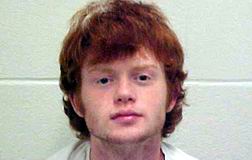 Andrew Conley
Homicide · USA · 2009
Andrew Conley was 17 years old when he strangled his little brother, Conner Con…
1 victim
Andrew Conley
Homicide · USA · 2009
Andrew Conley was 17 years old when he strangled his little brother, Conner Con…
1 victim
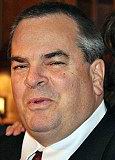 Albert Peterson
Murderer · USA · 2012
Albert Peterson shot dead his wife and two sons hours after going to church bec…
3 victims
Albert Peterson
Murderer · USA · 2012
Albert Peterson shot dead his wife and two sons hours after going to church bec…
3 victims
- Gender
- male
- Country
- USA
- Location
- Montgomery County, Texas, USA
- Date of birth
- March 14, 1939
- Age at first offence
- 56
- Characteristics
- kidnapping
- Victim profile
- McKay Everett, 12 (the son of a family friend)
- Method of murder
- Shooting (.45 caliber pistol)
- Date(s) of murder
- September 12, 1995
- Years active
- 1995
- Date of arrest
- 3 days after
- Status
-
Executed
Executed by lethal injection in Texas on July 2, 2003
Case details
Hilton Lewis Crawford was executed by lethal injection in Texas on July 2, 2003.
Timeline
- Sept. 12, 1995 — Twelve-year-old Samuel McKay Everett was home alone while his parents attended an Amway meeting; Crawford made calls and then abducted the boy.
- Sept. 15, 1995 — Crawford was arrested on the morning of Sept. 15, 1995.
- Sept. 17, 1995 — The victim’s body was discovered in Louisiana in weeds at Whiskey Bay; a version of the event described the body being found early Sept. 17.
- 11/08/95 — Crawford was re-indicted.
- 05/03/96 — The trial court transferred the case to Walker County.
- 07/19/96 — Crawford was found guilty of capital murder.
- 07/24/96 — Crawford was sentenced to death.
- 08/09/96 — Crawford moved for a new trial; following a hearing the request was denied on 09/13/96.
- 01/20/98 — Crawford filed his brief on direct appeal, raising 27 points of error.
- 06/22/98 — The State (through the Montgomery County District Attorney's Office) filed its reply brief on direct appeal.
- 07/17/98 — Crawford filed his state habeas application raising 13 claims.
- 08/12/98 — The State answered Crawford's habeas application.
- 09/09/98 — Oral argument was held on direct appeal before the Texas Court of Criminal Appeals.
- 11/20/98 — The trial court issued findings of fact and conclusions of law, recommending the denial of habeas relief.
- 12/15/98 — Attorney Roy Greenwood moved to intervene on the state writ and to supplement claims.
- 02/17/99 — The Court of Criminal Appeals affirmed Crawford's conviction and sentence on direct appeal.
- 03/10/99 — The Court of Criminal Appeals denied habeas relief.
- 05/17/99 — Crawford petitioned for writ of certiorari review off his direct appeal.
- 10/04/99 — The United States Supreme Court denied certiorari review.
- 10/25/99 — Attorney Roy Greenwood was appointed as federal habeas counsel.
- 12/07/99 — Attorney Ken McLean was appointed as co-counsel.
- 11/22/00 — Crawford filed his writ of habeas corpus raising 17 claims.
- 02/27/01 — The State answered and moved for summary judgment.
- 01/30/02 — The U.S. District Court for the Southern District of Texas, granted summary judgment and denied habeas relief.
- 02/19/02 — Crawford moved for the district court to reconsider its opinion.
- 02/28/02 — The district court denied Crawford's request.
- 02/28/02 — Crawford filed notice of appeal.
- 06/24/02 — Crawford filed for COA in the 5th Circuit Court of Appeals.
- 08/26/02 — The State filed a brief in opposition opposing any grant of COA.
- 12/17/02 — The 5th Circuit issued its opinion denying a COA.
- 01/14/03 — Crawford petitioned for rehearing.
- 01/28/03 — The 5th Circuit denied rehearing.
- 02/11/03 — The 9th Judicial District Court of Montgomery County set Crawford's execution for July 2, 2003.
- 02/21/02 — Crawford mailed a third state habeas application to the Montgomery County trial court.
- 03/26/03 — The Court of Criminal Appeals dismissed the writ application as an abuse of the writ.
- 04/01/03 — Crawford petitioned for writ of certiorari of the Fifth Circuit's opinion.
- 05/21/03 — The State (through TDCJ-ID Director Janie Cockrell) filed a brief in opposition.
- 06/03/03 — Crawford filed a reply to the Director's brief in opposition.
- 06/23/03 — The United States Supreme Court denied certiorari review.
Background
Samuel McKay Everett was born March 1, 1983, and was 12 years old at the time of his death. At the time of his death he was a seventh-grader at Peet Junior High. His parents were Carl Everett and Paulette Everett. Mrs. Everett later remarried as Paulette Norman and founded The McKay Foundation.
Crawford was a longtime friend of the Everett family and had prior experience in law enforcement. He was known to the victim as “Uncle Hilty.” He was described as a 56-year-old at the time of the murder, and as 64 at the time of execution. He was a practicing Christian. Crawford had been a member of the Beaumont police force from 1961 to 1966 and a Jefferson County sheriff’s deputy from 1966 to 1975. After an unsuccessful campaign for sheriff in 1975, Crawford moved to Conroe in Montgomery County and started his own private security business, which was unsuccessful. Prosecutors said he had gambling debts and tried to get $500,000 from the victim’s family.
The offence
On Sept. 12, 1995, 12-year-old Samuel McKay Everett was home alone while his parents attended an Amway meeting. Crawford made at least two calls to McKay’s mother, and a last call was at 5 p.m. Crawford advised the parents he would also be at the meeting that night. Crawford never arrived at the meeting. Police estimated the abduction occurred at approximately 8:30 p.m.
McKay was talking on the phone with his friend, Elizabeth Schaeffer, just moments before he was taken. Schaeffer heard him set the phone down, and through the receiver she heard a door open.
Bill Kahn, a neighbor across the street, placed his garbage cans at the end of his driveway and saw a car pull into the driveway of the Everett’s home. Kahn heard no sounds out of the ordinary and never saw any indications of a disturbance. Kahn walked back to the foot of his driveway with more trash and noticed the same car pull quickly out of the driveway and drive off. Kahn identified the color, make, and model of the car and noticed a sticker and emblem that read “Crown Motors” affixed to the car’s back end.
After the meeting, Carl Everett made several calls to his house that went unanswered. Everett left his wife at the restaurant and drove home in about 10 minutes. When he arrived, the phone rang and a woman’s voice told him, “We got your son.” The woman demanded $500,000, warned him not to call the police, and said he would receive another phone call in the morning, although no subsequent call was ever received. After the call ended, Everett dialed 9-1-1, then contacted his wife, and finally called Crawford.
Investigators said that although no significant physical evidence was found at the victim’s home, Crawford’s car was implicated. Crawford’s car had been thoroughly cleaned inside and out, the cloth lining in the trunk had been removed, and there were indications that part of a “Crown Motors” sticker had recently been removed.
Blood stains were discovered inside the trunk and on the back bumper. This blood was conclusively determined to belong to the victim. The pattern of blood spatters indicated the victim received at least two significant blows while inside the trunk of Crawford’s car.
Crawford later agreed to help authorities draw a map leading to the victim’s body in Louisiana. The body was found in an area known as Whiskey Bay, Louisiana. Experts consulted agreed that death resulted from either a gunshot wound to the head, blunt force trauma, or a combination of both. Some accounts described Crawford as having struck McKay with multiple crushing blows and later shot him in southern Louisiana; another account described McKay being beaten and shot at least twice with a .45-caliber pistol.
Investigation
Cellular phone records were traced from Crawford to Irene Flores on the night of the abduction. Flores’s information provided probable cause necessary to obtain a warrant for Crawford’s arrest.
Police and FBI agents tracked Crawford’s movements through cell phone records and gasoline and hotel receipts. Investigators determined Crawford had contacted several employees of the security company he helped manage and tried to enlist their cooperation to fabricate an alibi.
Investigators tracked Crawford’s movements the day after the abduction and found he visited a friend, Billy Allen. Through subterfuge, Crawford convinced Allen to help clean the blood from Crawford’s car, remove and dispose of the trunk’s lining, and hold onto various items, including a bloodstained .45-caliber handgun.
After Crawford’s arrest on the morning of Sept. 15, 1995, he drew a map that led authorities to the victim’s body four days later in Louisiana. Crawford admitted involvement in the boy’s abduction but denied killing McKay. Crawford said the murder was committed by a man he knew as “R.L. Remmington.” Crawford said searchers would be able to find two bullet casings, two slugs, and an unspent bullet at the body site.
Due to the extensive decomposition, some disagreement arose as to the exact cause of death. Experts consulted agreed that death resulted from either a gunshot wound to the head or blunt force trauma or a combination of both.
Arrest
Crawford was arrested on the morning of Sept. 15, 1995. In one account of the arrest, Crawford admitted involvement in the kidnapping but would not say where the boy was or whether he was alive.
Trial
Crawford was indicted for the capital murder of Samuel McKay Everett.
- 09/20/95 — Crawford was indicted for the capital murder of Samuel McKay Everett.
The case venue was transferred:
- 09/13/96 — Following a hearing, Crawford’s request for a new trial was denied.
Prosecutors presented the case to a Walker County jury and told jurors the killing occurred during the course of a kidnapping. Prosecutors described the kidnapping as intended to enable Crawford to pay off personal debts and they said the ransom demand was $500,000. The Everetts testified supporting the accusation that Crawford tried to cash in on the family’s trust in a kidnapping scheme.
Crawford denied killing McKay while admitting abduction. Crawford claimed “R.L. Remmington” was the killer and that searchers would find specified evidence at the body site. A composite drawing of Remington was made based on Crawford’s description. Remington was never found, and investigators decided he never existed.
A Man came forward during the investigation saying he met Crawford at a Houston horse racing track and that Crawford dropped hints to him that he needed help carrying out a plan involving a boy; the man refused.
Sentencing
On July 24, 1996, Crawford was sentenced to death.
A woman accused of helping in the abduction and murder was sentenced in a separate matter after pleading guilty/no contest to kidnapping:
- Irene V. Flores was originally charged with capital murder in the death of McKay Everett but prosecutors reduced the charge to kidnapping.
- Flores pled guilty to kidnapping and was sentenced to a 25 year term of imprisonment; she was described as not eligible for parole for at least 12 1/2 years in one account.
- Another account described Flores as pleading no contest to aggravated kidnapping and being sentenced to 25 years; she was described as eligible for parole in 2008. Flores was accused of placing the ransom call to the victim’s parents asking for $500,000 for McKay’s safe return and was said to have maintained since her arrest that Crawford duped her into making the call and that she thought McKay would not be harmed.
Appeals
Direct appeal and state habeas:
Federal proceedings:
- 01/30/02 — The U.S.
- 02/28/02 — The district court denied Crawford’s request to reconsider.
The state writ was dismissed:
Execution date was set:
Outcome
Crawford was executed in Texas by lethal injection on July 2, 2003.
Crawford’s last statement was delivered before execution. It included the following verbatim words:
“First of all, I would like to ask Sister Teresa to send Connie a yellow rose. I want to thank the Lord, Jesus Christ, for the years I have spent on death row. They have been a blessing in my life. I have had the opportunity to serve Jesus Christ and I am thankful for the opportunity. I would like to thank Father Walsh for having become a Franciscan, and all the people all over the world who have become my friends. It has been a wonderful experience in my life. I would like to thank Chaplain Lopez, and my witnesses for giving me their support and love. I would like to thank the Nuns in England for their support. I want to tell my sons I love them; I have always loved them - they were my greatest gift from God. I want to tell my witnesses, Tannie, Rebecca, Al, Leo, and Dr. Blackwell that I love all of you and I am thankful for your support. I want to ask Paulette for forgiveness from your heart. One day, I hope you will. It is a tragedy for my family and your family. I am sorry. My special angel, I love you. And I love you, Connie. May God pass me over to the Kindom's shore softly and gently. I am ready.”
After execution, he was pronounced dead at 6:19 p.m., eight minutes after the drugs began to flow.
Other details
Crawford’s indictment involved capital murder of Samuel McKay Everett, which occurred during the course of a kidnapping in Conroe, Texas on Sept. 12, 1995.
Crawford’s final meal consisted of:
- Twelve beef ribs, three enchiladas, chicken fried steak with cream gravy, crisp bacon sandwich, ketchup, a loaf of bread, cobbler, three Cokes, three root beer, French fries, and onion rings.
Crawford’s family relationships included his wife Connie and his sons; he addressed Paulette Everett/N or Norman in his final statement.
In one account, after the murder Paulette Everett suffered a stroke and she and her husband divorced. She remarried as Paulette Norman and underwent three years of physical therapy. Carl Everett kept a low public profile while Paulette started The McKay Foundation to raise awareness of child safety.
In one account of the death row period, fellow inmates called Crawford “Old Man” rather than “Uncle Hilty.”
Verbatim statements attributed to prosecutors included:
“This case is about the ultimate betrayal,” Nancy Neff said in the opening day of Crawford’s trial on capital murder charges. “Hilton killed McKay,” said Carl Everett.
Verbatim statements attributed to others included:
“I want to take this opportunity to talk to Hilton, who is someone that my family has loved dearly,” Carl Everett said. “I know where Remington is,” Crawford told a reporter. “He's in France. I've got an address,” Crawford added. “It will all be made clear in information to be released after I die,” Crawford said.
Co-defendant: Irene Flores
Irene V. Flores was implicated through cellular phone records traced from Crawford on the night of the abduction. Flores was described as placing the ransom call to the victim’s parents and as a mother of four. She was on parole after a drug conviction when she placed the ransom call in one account. Flores was sentenced to 25 years for kidnapping after pleading guilty to kidnapping in one account and after pleading no contest to kidnapping/aggravated kidnapping in another account.
Spotted an error, or have more information about this case?