
Tashia Stuart
Murderer Miranda Barbour
Murderer · USA · 2013
Miranda Barbour, 19, defendant. · Elytte Barbour, 22, defendant and husband of…
100 victims
Miranda Barbour
Murderer · USA · 2013
Miranda Barbour, 19, defendant. · Elytte Barbour, 22, defendant and husband of…
100 victims
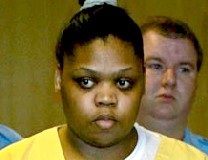 Tiffany Hall
Murderer · USA · 2006
Tiffany Hall was 24 when she was charged in September 2006. She later entered a…
5 victims
Tiffany Hall
Murderer · USA · 2006
Tiffany Hall was 24 when she was charged in September 2006. She later entered a…
5 victims
 Banita Jacks
Murderer · USA · 2007
Banita Jacks was a Washington, DC resident convicted of murdering her four daug…
4 victims
Banita Jacks
Murderer · USA · 2007
Banita Jacks was a Washington, DC resident convicted of murdering her four daug…
4 victims
 Holly Grigsby
Murderer · USA · 2011
Holly Grigsby was sentenced to life in prison without parole on July 15, 2014.…
4 victims
Holly Grigsby
Murderer · USA · 2011
Holly Grigsby was sentenced to life in prison without parole on July 15, 2014.…
4 victims
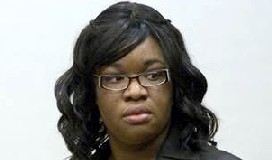 Jessica Tata
Murderer · USA · 2011
Jessica Tata was a Houston home day care owner who fled to Nigeria after a fire…
4 victims
Jessica Tata
Murderer · USA · 2011
Jessica Tata was a Houston home day care owner who fled to Nigeria after a fire…
4 victims
 Amanda Bennett
Murderer · USA · 2011
Amanda Bennett was an Indiana woman who shot her three children and set the fam…
3 victims
Amanda Bennett
Murderer · USA · 2011
Amanda Bennett was an Indiana woman who shot her three children and set the fam…
3 victims
 Eric Walter Running
Murderer · USA · 1998
Eric Walter Running was convicted of two counts of aggravated murder involving…
2 victims
Eric Walter Running
Murderer · USA · 1998
Eric Walter Running was convicted of two counts of aggravated murder involving…
2 victims
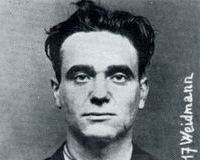 Eugen Weidmann
Serial killer · France · 1937
Eugen Weidmann was executed by guillotine in Versailles, outside the prison Sai…
6 victims
Eugen Weidmann
Serial killer · France · 1937
Eugen Weidmann was executed by guillotine in Versailles, outside the prison Sai…
6 victims
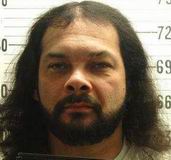 William Glenn Rogers
Murderer · USA · 1996
William Glenn Rogers was sentenced to death for the kidnapping, rape, and murde…
1 victim
William Glenn Rogers
Murderer · USA · 1996
William Glenn Rogers was sentenced to death for the kidnapping, rape, and murde…
1 victim
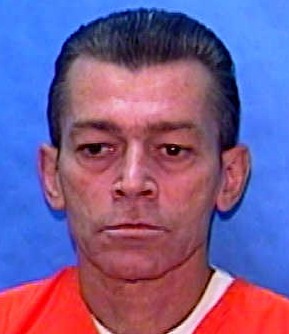 Lloyd Duest
Murderer · USA · 1982
Lloyd Duest was sentenced to death on April 14, 1983 and later was resentenced…
1 victim
Lloyd Duest
Murderer · USA · 1982
Lloyd Duest was sentenced to death on April 14, 1983 and later was resentenced…
1 victim
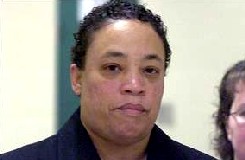 Daphne Wright
Murderer · USA · 2006
Daphne Wright was deaf and was described as lesbian. She lived with her girlfri…
1 victim
Daphne Wright
Murderer · USA · 2006
Daphne Wright was deaf and was described as lesbian. She lived with her girlfri…
1 victim
- Gender
- female
- Country
- USA
- Location
- Pasco, Franklin County, Washington, USA
- Date of birth
- March 6, 1973
- Age at first offence
- 38
- Characteristics
- argument, drugs
- Victim profile
- Judy Hebert, 58 (her mother)
- Method of murder
- Shooting (Smith & Wesson .357 revolver)
- Date(s) of murder
- March 3, 2011
- Years active
- 2011
- Date of arrest
- Same day
- Status
-
Imprisoned
Sentenced to 45 years in prison, with a 25-year mandatory minimum, on September 4, 2013
Case overview
Tashia Stuart was convicted in Franklin County Superior Court of first-degree murder and attempted first-degree murder in connection with the March 3, 2011 shooting death of her mother, Judy Hebert.
During the sentencing hearing, Stuart told Judge Cameron Mitchell that she did not “do anything wrong to deserve this fate worse than death,” and she accused her father of lying so she would be locked away possibly for the rest of her life. Stuart also said she missed her mother terribly and still loved her, and she blamed her mother’s drinking, medication use and mental health issues for the March 2011 shooting that ended Judy Hebert’s life.
Judge Cameron Mitchell ordered Stuart to spend 45 years in prison, with a 25-year mandatory minimum that had to be served before a state board would even consider her release. Mitchell said the court believed the crime was a “very heinous, permanent crime.”
Timeline
- March 3, 2011 — Judy Hebert was shot inside her Salmon Drive home; Stuart was arrested in connection with her death.
- February 20, 2011 — An incident occurred in which a heavy container of books was dropped on Judy Hebert’s head in her garage; the case included attempted murder allegations tied to this incident.
- May 28, 2013 — Stuart’s trial began in Franklin County Superior Court before Judge Cameron Mitchell.
- July 1, 2013 — Jurors began deliberating Stuart’s fate.
- July 3, 2013 — A Franklin County Superior Court jury returned guilty verdicts for first-degree murder and attempted first-degree murder.
- September 4, 2013 — Stuart was sentenced to 45 years in prison with a 25-year mandatory minimum.
Background
Tashia Stuart was the daughter of Judy Hebert and Rolfe Hebert. Stuart was adopted when she may have been 5. Rolfe Hebert never referred to her as adopted in his mind and considered her his daughter.
Rolfe Hebert and Judy Hebert were married when they adopted Tashia together. Judy Hebert was Rolfe Hebert’s former wife of 30 years; they divorced in 2007 but remained “best buddies.”
Judy Hebert was 58 when she was killed. She left everything to Rolfe Hebert in her will, and it was used to establish a trust fund for their granddaughter.
Stuart’s then-7-year-old daughter was in the home when Judy Hebert was killed. Stuart’s daughter was later held in protective custody, then lived with her father and had regular visits with her grandparents.
Stuart had no criminal history before this case.
Judy Hebert had a degree in horticulture from Spokane Community College and was involved with the Master Gardener programs in Spokane and the Tri-Cities. She had a flower garden in her backyard, and she shared her passion for planting flowers and vegetables with her granddaughter.
The offence
March 3, 2011 shooting
On March 3, 2011, Judy Hebert was found dead inside her Salmon Drive home after being fatally shot.
Stuart claimed self-defense. She said her mother came at her with a hatchet, and Stuart grabbed a .357 revolver from her mother’s open safe to defend herself.
In the trial, forensic testimony and argument addressed where the bullets were located, the blood splatter within the house, and whether testimony describing the victim’s position and the hatchet’s motion matched those physical facts. Prosecutors presented a Washington State Police crime scene video showing Judy Hebert’s body sprawled out on her bedroom floor with a hatchet near her head.
A medical expert and forensic pathologist testified about the cause of death and the injuries, including a chop wound to the back of Judy Hebert’s head believed to have been caused by a hatchet.
February 20, 2011 garage incident
The case also included allegations related to an incident two weeks before the shooting.
Stuart faced attempted murder allegations tied to claims that she set up her mother to be in the garage and that a 32-pound plastic bin fell from the rafters, hitting Hebert and causing injury. Stuart had denied being in the garage when the books fell.
Investigation and police response
After a 911 hang-up call from the house, Pasco police responded. Court documents indicated Stuart told a Pasco officer who had responded that there was no problem and told dispatchers she was just changing the smoke detector battery. Documents also indicated she told a neighbor that something had “blown up” on the stove and that “mom” would call him back.
When a police officer arrived, Stuart appeared distraught but told the officer there was no problem inside. She told the officer she needed to put her dog away so it would not bite, and she said something was burning on the stove.
The door was closed, leaving the officer outside. A neighbor reported hearing gunshots from the house. When the neighbor called again, the phone was answered by “Natasha,” who told him the sound was not gunshots but something on the stove that had “blown up.” After that, police called for back-up units.
Stuart later said “She came at me with an ax,” and after being told what the neighbor had said, she admitted she had fired shots and that she had hit the person she fired at. Officers then found Judy Hebert dead on the floor in the hallway. A gun was on the floor.
Arrest and pretrial
Stuart was arrested inside the home and taken to the Pasco police station for questioning. She was booked into jail at 11:36 p.m. Jail records reflected booking time.
In an initial court appearance, Judge Craig Matheson found cause to hold Stuart on suspicion of second-degree murder. The court set bail at $200,000, after prosecutors sought $500,000 bail and the defense argued for release on recognizance or lower bail.
Judge Matheson said Stuart could not have contact with her daughter, who prosecutors said was present at the time of the shooting and was in protective custody.
Defense attorney Matt Rutt stated Stuart had no known criminal history and that she was born and raised in Post Falls, Idaho, before moving to the Tri-Cities in January. Rutt also stated the shooting stemmed from an argument between mother and daughter and indicated the “alleged victim may have been armed” at the time.
Trial
Charges and issues at trial
Stuart was tried in Franklin County Superior Court before Judge Cameron Mitchell.
Prosecutors sought conviction on first-degree murder with aggravating circumstances and attempted first-degree murder. The jury also had options to convict her of lesser charges including second-degree murder, first-degree manslaughter, or second-degree manslaughter.
In the trial, the defense presented self-defense as the primary theory.
Prosecution arguments
Prosecutor Shawn Sant argued that Stuart was motivated by greed and that the killing was “pre-meditated” and planned. Sant told jurors, “Judy opened her home to her daughter,” and “She was killed for no other reason than greed.”
Sant also argued that the defense did not prove Stuart was in “reasonable fear” when she shot her mother. Sant described the killing as “This is a killing (that was) premeditated,” and said “She planned this.”
Sant described the verdicts as a victory.
Defense arguments
Defense attorney Bob Thompson argued that Stuart faced imminent danger when she shot her mother. Thompson said, “She had an absolute right to protect herself.”
Thompson also argued that the case hinged on the hatchet and questioned whether physical placement and blood/tissue evidence matched the forensic testimony about the hatchet being in motion and the victim’s position at the time of the fatal shot.
Thompson asked, “Was the hatchet there or not?,” and stated, “If that hatchet is there my client isn't guilty.”
Thompson also discussed the significance of forensic scientist Kay Sweeney’s testimony and argued that the jury should review the four-hour tape of Stuart’s interview.
At the conclusion of trial, Stuart had not testified.
Witnesses and evidence
- Firefighter and paramedic Jerry Anderson testified that electrodes were attached and that Judy Hebert was “flatline, meaning no activity to the heart.” Anderson said they did not disturb the body other than placing sensors and that they tried to leave a potential crime scene intact. Anderson testified the fire station was dispatched at 2:43 p.m. and arrived nine minutes later. Anderson said he stepped over a revolver while walking down the hallway.
- Franklin County deputy coroner Dana Crutchfield testified that she and colleague Mavis Williams waited outside while police secured the scene and then removed the body 24 hours later to take it across the river for autopsy.
- Crutchfield testified that blood analysis showed at least five medications in Judy Hebert’s system, as well as marijuana and possibly two byproducts of Valium, and that “all of them are very sedative.”
- Juror testimony and witness evidence addressed the victim’s injuries, including a gunshot wound to the chest and a chop wound.
- Forensic scientists and law enforcement witnesses testified about DNA evidence, including that there was very little DNA on cartridge cases and no DNA profile from them. DNA matched Hebert on blood stains on the face of the hammer and on parts of the hatchet.
- A toxicology expert, Dr. Robert M. Julien, testified about “serotonin syndrome,” and he addressed drug levels and correlations with behavior.
- A forensic pathologist, Dr. Daniel Selove, testified regarding cause of death and the trajectory of the bullet, and he testified regarding the chop wound and the indentation in the skull below it.
- Neighbor testimony from Ryan Rhodes described Hebert’s opinions about Stuart and Todd Stuart.
- Charles Adney testified about conversations with Stuart and described Stuart calling him a “liar” during his testimony.
Statements attributed to participants
The following quotations were recorded during the trial and proceedings:
- Thompson said: “I felt I got kicked in the gut.”
- Thompson said: “Frankly, I feel it was the wrong verdict. … I’m not going to fault them for it, but I think it was the wrong verdict.”
- Sant said: “Justice got served better than I had anticipated,” after the verdicts as quoted by the reporter in Rolfe Hebert’s reaction.
- Rolfe Hebert responded out loud with: “You're a liar,” during the sentencing hearing when Stuart turned on him.
- Rolfe Hebert said: “My baby is going to end up a sad, suicidal kid just like me. ... It's not fair what anyone is doing to me,” as reported in Stuart’s comments.
- Prosecutor Shawn Sant said in sentencing-related remarks: “The court believes that this is a very heinous, permanent crime,” as stated by Judge Mitchell.
Verdict
The jury rejected Stuart’s self-defense claims and convicted her of:
- first-degree murder; and
- attempted first-degree murder.
The main murder charge included allegations that Stuart used a firearm and that the crime was against a family member.
The verdicts also included aggravating factors that Stuart:
- acted with deliberate cruelty;
- committed the crime within sight and sound of a minor child; and
- involved a destructive and foreseeable impact on persons other than the victim.
The prosecution said the jury deliberated for 81⁄2 hours and considered 443 items of evidence.
Sentencing
On September 4, 2013, Judge Cameron Mitchell denied Stuart’s request for a new trial.
Stuart made a statement to the judge, including:
“do anything wrong to deserve this fate worse than death”
“without their lies and deceit, there is no case against me. I hope that I will get a new trial so that the truth really will come out.”
Judge Cameron Mitchell ordered Stuart to serve 45 years in prison with a 25-year mandatory minimum before a state board would even consider release.
Mitchell stated:
“The court believes that this is a very heinous, permanent crime,”
The sentencing structure included separate terms for the murder and attempted murder, plus additional gun-related terms. Judge Mitchell ordered Stuart to serve 20 years for the murder and 15 years for the attempted murder, with both terms “back-to-back.” Mitchell also ordered a mandatory five-year term for using a gun in the crime and another five years for shooting Hebert with a child nearby.
Stuart was also told she must pay $180,434 for her court-appointed attorneys and other defense costs, along with other fines and fees. Prosecutors were still working out reimbursement amounts for the state’s Crime Victims Compensation Program; an initial amount of $5,400 was crossed off on court documents and would be determined later.
Stuart also asked the judge not to place a restraining order on her for her daughter, who turned 10 at the end of the month. Stuart said:
“I would rather be dead than to never have my daughter or her love ever again,”
“She's the best thing that I have ever done or that has ever happened to me, and now my dad has taken her away from me. To me that is a fate worse than death.”
Stuart’s daughter was being raised by her father, Charles Adney, with regular visits with her grandfather and his wife, Rolfe and Nicola Hebert.
Aftermath and appeals
Stuart planned to appeal the convictions.
Rolfe Hebert said he wanted two things—“to have Judy back and for the nightmares to stop for his granddaughter”—and he discussed his continuing grief after the sentencing hearing.
Nicola Hebert described conversations with her husband’s granddaughter and stated:
“The girl "says she should have taken the bullet. What do I say to that?”
John Coffey, Stuart’s ex-fiance who first met Judy Hebert in 1994, spoke about Judy Hebert’s “unconditional love” and said:
“The loss of Judy was not necessary,”
“I hope and I know that Judy is in a better place today.”
Charles Adney wrote a letter to the court describing why he could not attend the hearing and stating that he believed Stuart used the girl as a tool to get money or something else she wanted. Adney asked:
“How do I help my 9-year-old daughter try to understand the pure evilness of this crime?”
“What do I say to (his daughter) when she asks why her mother had to kill Nana that loved her so much? How do I ease my daughter's mind that she was not responsible for Judy's murder?”


Spotted an error, or have more information about this case?