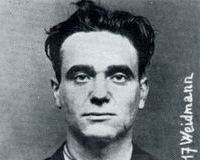
Eugen Weidmann
Serial killer Marcel Petiot
Serial killer · France · 1942
Marcel André Henri Félix Petiot was a French doctor. He was convicted of multip…
27 victims
Marcel Petiot
Serial killer · France · 1942
Marcel André Henri Félix Petiot was a French doctor. He was convicted of multip…
27 victims
 Thierry Paulin
Serial killer · France · 1984
Thierry Paulin was born in Fort-de-France, Martinique on November 28, 1963. His…
21 victims
Thierry Paulin
Serial killer · France · 1984
Thierry Paulin was born in Fort-de-France, Martinique on November 28, 1963. His…
21 victims
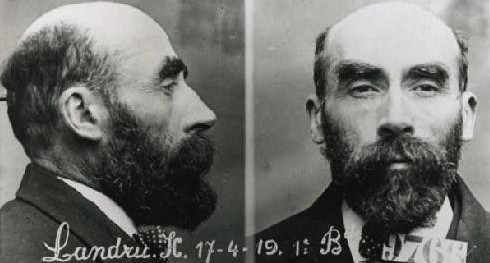 Henri Landru
Serial killer · France · 1915
Henri Désiré Landru (born April 12, 1869; died February 25, 1922) was a French…
11 victims
Henri Landru
Serial killer · France · 1915
Henri Désiré Landru (born April 12, 1869; died February 25, 1922) was a French…
11 victims
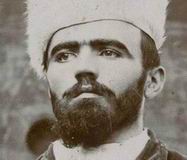 Joseph Vacher
Serial killer · France · 1894
Joseph Vacher (November 16, 1869 – December 31, 1898) was a French serial kille…
11 victims
Joseph Vacher
Serial killer · France · 1894
Joseph Vacher (November 16, 1869 – December 31, 1898) was a French serial kille…
11 victims
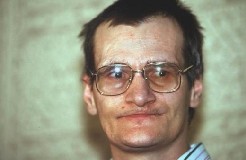 Francis Heaulme
Serial killer · France · 1984
Francis Heaulme was sentenced to several life sentences in different trials, 19…
9 victims
Francis Heaulme
Serial killer · France · 1984
Francis Heaulme was sentenced to several life sentences in different trials, 19…
9 victims
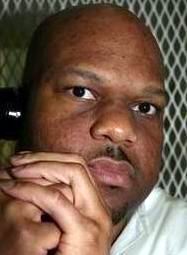 George Alarick Jones
Murderer · USA · 1992
April 13, 1993 — George Alarick Jones and three accomplices went to the Red Bir…
2 victims
George Alarick Jones
Murderer · USA · 1992
April 13, 1993 — George Alarick Jones and three accomplices went to the Red Bir…
2 victims
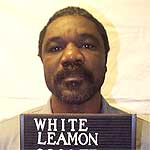 Leamon White
Murderer · USA · 1987
Leamon White was convicted of first-degree murder and sentenced to death by a M…
1 victim
Leamon White
Murderer · USA · 1987
Leamon White was convicted of first-degree murder and sentenced to death by a M…
1 victim
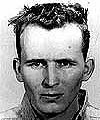 Joseph Francis Bryan
Homicide · USA · 1964
Joseph Francis Bryan was born in Camden, New Jersey. He first ran afoul of the…
3 victims
Joseph Francis Bryan
Homicide · USA · 1964
Joseph Francis Bryan was born in Camden, New Jersey. He first ran afoul of the…
3 victims
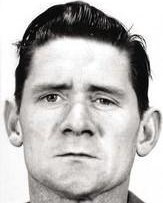 Ronald Joseph Ryan
Murderer · Australia · 1965
Ronald Joseph Ryan (c. 21 February 1925 - 3 February 1967) was executed by hang…
1 victim
Ronald Joseph Ryan
Murderer · Australia · 1965
Ronald Joseph Ryan (c. 21 February 1925 - 3 February 1967) was executed by hang…
1 victim
 Katherine Bunnell
Murderer · USA · 2004
Defendant: Katherine Bunnell (alias Jane Doe) Victim: Thomas “T.J.” Wright (3-y…
1 victim
Katherine Bunnell
Murderer · USA · 2004
Defendant: Katherine Bunnell (alias Jane Doe) Victim: Thomas “T.J.” Wright (3-y…
1 victim
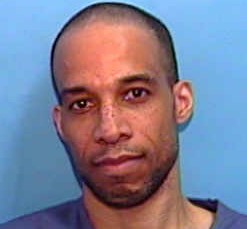 Vincent Rivera
Murderer · USA · 1990
Vincent Rivera was identified as the convicted killer who accused of killing se…
3 victims
Vincent Rivera
Murderer · USA · 1990
Vincent Rivera was identified as the convicted killer who accused of killing se…
3 victims
- Gender
- male
- Country
- France
- Location
- France
- Date of birth
- February 5, 1908
- Age at first offence
- 29
- Characteristics
- robbery, kidnapping, serial rapist
- Victim profile
- Jean de Koven, 22 ( ballet student) / Joseph Couffy (chauffeur) / Janine Keller (private nurse) / Roger LeBlond (theatrical producer) / Fritz Frommer ( a young German he had met in jail) / Raymond Lesobre (real estate agent)
- Method of murder
- Strangulation / Shooting
- Date(s) of murder
- July-November 1937
- Years active
- 1937
- Date of arrest
- December 8, 1937
- Status
-
Executed
Executed by guillotine in Versailles, outside the prison Saint-Pierre on June 17, 1939
Outcome
Eugen Weidmann was executed by guillotine in Versailles, outside the prison Saint-Pierre on June 17, 1939. He was the last person to be publicly executed in France. French President Albert Lebrun immediately banned all future public executions after the “hysterical behaviour” by spectators.
Timeline
- February 5, 1908 — Eugen Weidmann was born in Frankfurt am Main, Germany.
- World War I outbreak — Weidmann was sent to live with his grandparents.
- July 1937 — Jean De Koven was killed and buried in the villa's garden.
- September 1, 1937 — Weidmann hired Joseph Couffy to drive him to the French Riviera; Couffy was shot and robbed.
- September 3, 1937 — Weidmann lured Janine Keller into a cave; Keller was killed and robbed.
- October 17, 1937 — Million and Weidmann arranged a meeting with Roger LeBlond; LeBlond was shot and robbed.
- June 17, 1939 — Weidmann was beheaded by the guillotine in Versailles, outside the prison Saint-Pierre.
Background
Eugen Weidmann was born in Frankfurt am Main to the family of an export businessman and went to school there. He was sent to live with his grandparents at the outbreak of World War I, during which time he started stealing. In his twenties, he served five years in Saarbrücken jail for robbery.
During his time in jail, Weidmann met partners in crime who later included Roger Million and Jean Blanc (the material also names Fritz Frommer as a partner in crime in describing his earlier associations in jail). After their release from prison, the group decided to work together.
After the planned partnership began, they rented a villa in Saint-Cloud near Paris for the purpose of kidnapping wealthy tourists and stealing their money. Their first kidnap attempt ended in failure because the victim struggled too hard, forcing them to let him go. Their second attempt was more successful.
The offence
The offences included abduction and ransom kidnappings of wealthy tourists in France, followed by killings and theft.
Victim: Jean De Koven
Jean De Koven arrived in Paris and checked into the Hotel des Ambassadeurs. She made the acquaintance of a young man known only as Bobby who spoke with a thick German accent, and they arranged to go on a date a few days later. As Jean De Koven left the hotel lobby on July 26, 1937 with her new acquaintance, it was the last time her aunt saw her alive.
When Jean De Koven did not return, her aunt went to the police; the police laughed off suspicions and said she was probably enjoying a romantic interlude with her lover. Later, when the aunt returned to the police with a ransom demand note for $500, the police accused her of participating in a publicity stunt. Their opinion changed when 15 days later De Koven’s traveller’s cheques were cashed; the signatures on the backs of the cheques were proved to be obvious forgeries. Her body was not found for another four months.
The material states that Weidmann having made the acquaintance of Jean De Koven in July 1937 led to De Koven being killed and buried in the villa’s garden. It also describes a letter De Koven wrote to a friend:
"I have just met a charming German of keen intelligence who calls himself Siegfried. Perhaps I am going to another Wagnerian role - who knows? I am going to visit him tomorrow at his villa in a beautiful place near a famous mansion that Napoleon gave Josephine."
During the meeting, the material states that they smoked and “Siegfried” gave her a glass of milk. De Koven took photos of him with her new camera, which was later found beside her body, with developed snapshots showing her killer.
Victim: Joseph Couffy
Weidmann hired a chauffeur named Joseph Couffy to drive him to the French Riviera. The material places the incident on September 1, 1937 and says that Couffy was shot in the back of the head and that his car was stolen. Another account in the material says that he was shot in the nape of the neck and that his car and 2500 francs were stolen, and that on September 8, 1937 the body of Joseph Couffy was found on France’s Paris-Orleans Road.
Victim: Roger LeBlond
On October 17, 1937, Million and Weidmann arranged a meeting with a young theatrical producer named Roger LeBlond, promising to invest money in one of his shows. The material says Weidmann shot him in the back of the head and took his wallet.
Another part of the material states that on October 17, 1937, the naked body of theatrical producer Roger Le Blond was found in the back seat of his car at Neuilly-sur-Seine Cemetery, and that he had been shot in the back of his neck and his wallet was missing.
Victim: Raymond Lesobre
The material states that Weidmann shot Raymond Lesobre, a real estate agent, in the back of the head while showing him around a house in Saint-Cloud and stole his car and wallet (with a later version stating that five-thousand francs were taken from him).
It further states that on November 29, 1937, real estate agent Raymond Lesobre was found sprawled face down on the floor of a villa in Saint-Cloud, shot in the back of the neck with his wallet missing.
Victim: Janine Keller
Weidmann lured Janine Keller, described as a private nurse, into a cave with a job offer. The material places the killing on September 3, 1937 and says Weidmann killed her and stole her belongings. Another account adds that Weidmann strangled her while she was drinking tea, hid her body in a cave, and stole 1400 francs and her diamond ring.
The material states that Weidmann was confronted with a passport belonging to Jeannine Keller that had been found in his bedroom. It says he stated she had been lured to Paris with a job offer for a private nurse.
Victim: Fritz Frommer
The material states that Fritz Frommer, a young German who had recently gone missing, was found in the cellar after police searched the villa. It further states that he had been shot in the back of the neck.
It also says that Weidmann confessed to the murder of Fritz Frommer, who he was afraid was going to talk to the police.
Investigation and arrest
The police tracked Weidmann to the villa from a business card left at Lesobre’s office. Upon arriving at the villa, police officers found Weidmann’s place of residence and then arrested him after a shootout, with Weidmann firing at the officers.
The material includes details of an altercation at the villa involving two inspectors, Poignant and Bourguin. It states that as the inspectors approached the villa, a young man who introduced himself as M. Karrer invited them inside and, when Bourguin asked to see his papers, Karrer pulled out a gun and fired. The material states:
- The first shot hit Poignant in the shoulder.
- Bourguin grabbed Karrer’s wrist, but Karrer kept firing.
- Another shot grazed Bourguin’s forehead.
- Poignant noticed a small hammer on a table and hit Karrer full force on his skull.
- Karrer dropped to the floor, was hand-cuffed, and was taken into custody.
Police searched the villa and found the body of Fritz Frommer in the cellar. They also dug under the front steps after noticing they had recently been replaced and found the body of Jean De Koven. During interrogation, Karrer confessed that his real name was Eugen Weidmann and confessed to the murders of Jean De Koven, Fritz Frommer, Joseph Couffy, Roger Le Blond, and Raymond Lesobre. The motive given in the material was robbery.
In the same narrative of the arrest, the material also describes officers from the Sûreté being waiting for Weidmann at his home; when he invited them in, he fired three times at them with a pistol. It states that although they were unarmed, wounded Sûreté men managed to wrestle Weidmann down and knocked him unconscious with a hammer that happened to be nearby.
Trial
Weidmann, Million, Blanc, and Tricot were tried in March 1939. The material states that Weidmann and Million received the death sentence, Blanc received a jail sentence of 20 months, and Tricot was acquitted.
The material states that Million’s sentence was later changed to life imprisonment.
One of Weidmann’s lawyers named Vincent de Moro-Giafferi defended him. The material also states that the French novelist Colette was engaged by Paris-Soir to write an essay on Weidmann.
Sentencing
The material states that Weidmann and Million received the death sentence at trial in March 1939, and that Weidmann was later beheaded.
Appeals
The material states that Million’s death sentence was later changed to life imprisonment.
Aftermath
The crowd scandal associated with the beheading led French President Albert Lebrun to ban all future public executions. The material also states that film of the execution was shot from a private apartment adjacent to the prison, and that British actor Christopher Lee, who was 17 at the time, witnessed the event.
The material further states that executions by guillotine in France continued in private until September 10, 1977, when Hamida Djandoubi was the last person to be executed.
Other details
The material includes details about early acquaintances and partners in crime, describing Roger Million, Jean Blanc, Blanc, and Fritz Frommer in connection with Weidmann’s criminal partnership.
It also names Million’s mistress, Collette Tricot, as the person sent to cash De Koven’s traveller’s cheques, described as $430 and 300 francs in cash in one version. It also states that De Koven’s aunt was Ida Sackheim and that a letter demanded $500 for the return of De Koven, and that De Koven’s brother Henry came to France offering a 10,000 franc reward from his father Abraham for information about the young woman.
The material names a chauffeur Joseph Couffy, a theatrical producer Roger LeBlond/Le Blond, and a real estate agent Raymond Lesobre, all as victims. It also names the inspectors Poignant and Bourguin in the villa altercation narrative and mentions a young inspector named Primborgne leading the Sûreté when Weidmann was tracked.
The material states that Weidmann expressed regret only for the murder of De Koven, and includes a reported remark:
"She was gentle and unsuspecting ... When I reached for her throat, she went down like a doll."
Spotted an error, or have more information about this case?