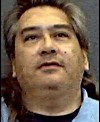
Eric Walter Running
Murderer Russell Ellwood
Murderer · USA · 1991
Russell Ellwood was a former taxi driver. Authorities suspected him of killing…
20 victims
Russell Ellwood
Murderer · USA · 1991
Russell Ellwood was a former taxi driver. Authorities suspected him of killing…
20 victims
 Robert Martines Perez
Murderer · USA · 1994
Name: Robert Martines Perez · Other name used in proceedings: Robert Martinez P…
15 victims
Robert Martines Perez
Murderer · USA · 1994
Name: Robert Martines Perez · Other name used in proceedings: Robert Martinez P…
15 victims
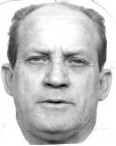 Billy Frank Vickers
Murderer · USA · 1993
Billy Frank Vickers Vickers was executed by lethal injection in Texas on Januar…
14 victims
Billy Frank Vickers
Murderer · USA · 1993
Billy Frank Vickers Vickers was executed by lethal injection in Texas on Januar…
14 victims
 Geoffrey Kent Ferguson
Mass murderer · USA · 1995
Geoffrey Kent Ferguson lived with his wife and 2-year-old daughter after moving…
5 victims
Geoffrey Kent Ferguson
Mass murderer · USA · 1995
Geoffrey Kent Ferguson lived with his wife and 2-year-old daughter after moving…
5 victims
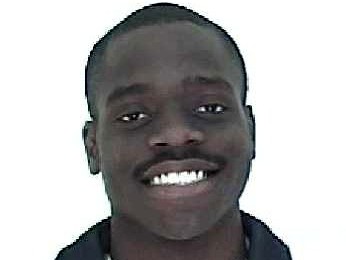 Mustafa Raheem
Murderer · USA · 1999
Mustafa Raheem was sentenced to death for the 1999 murders of a mother and her…
2 victims
Mustafa Raheem
Murderer · USA · 1999
Mustafa Raheem was sentenced to death for the 1999 murders of a mother and her…
2 victims
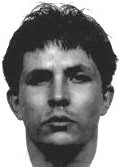 Cesar Roberto Fierro
Murderer · USA · 1979
Name: Cesar Roberto Fierro Court: United States Court of Appeals, Fifth Circuit…
1 victim
Cesar Roberto Fierro
Murderer · USA · 1979
Name: Cesar Roberto Fierro Court: United States Court of Appeals, Fifth Circuit…
1 victim
 Nicolas Gutierrez Mendoza
—
Nicolás Gutiérrez Mendoza was known as “La Bestia de Parcona” and as “El monstr…
Nicolas Gutierrez Mendoza
—
Nicolás Gutiérrez Mendoza was known as “La Bestia de Parcona” and as “El monstr…
 Omer Ninham
Homicide · USA · 1998
Omer Ninham was sentenced to life in prison without the possibility of parole o…
1 victim
Omer Ninham
Homicide · USA · 1998
Omer Ninham was sentenced to life in prison without the possibility of parole o…
1 victim
 Kenneth Manuel Stewart
Murderer · USA · 1991
Kenneth Manuel Stewart Jr. was sentenced to death and was executed by electrocu…
2 victims
Kenneth Manuel Stewart
Murderer · USA · 1991
Kenneth Manuel Stewart Jr. was sentenced to death and was executed by electrocu…
2 victims
- Gender
- male
- Country
- USA
- Location
- Multnomah County, Oregon, USA
- Date of birth
- January 3, 1951
- Age at first offence
- 47
- Characteristics
- love triangle, alcoholic, drug addict, drugs, domestic violence
- Victim profile
- Jacqueline J. Anderson and Barbara J. Gilpin
- Method of murder
- Shooting
- Date(s) of murder
- February 24, 1998
- Years active
- 1998
- Date of arrest
- Next day ( suicide attempt )
- Status
-
Life imprisonment
Sentenced to death on July 28, 2000; convictions for aggravated murder and felon in possession of a firearm were affirmed on automatic and direct review, with sentence of death and sentence of life imprisonment without the possibility of parole affirmed
Case information
Eric Walter Running was convicted of two counts of aggravated murder involving two victims and one count of being a felon in possession of a firearm. The jury determined that Running should be sentenced to death for the murder of Jacqueline Anderson and to life imprisonment without the possibility of parole for the murder of Gilpin. The court sentenced him in accordance with the jury's determinations.
The case was before the court on automatic and direct review of a judgment of conviction and sentence of death under ORS 138.012(1) and ORAP 12.10(1).
Timeline
- February 24, 1998 (about 11:20 p.m.) — Running entered the Ambassador Restaurant and Lounge on Sandy Boulevard in Northeast Portland armed with a short-barreled shotgun; he shot Gilpin on the right side of her abdomen as she walked toward the entrance, then shot Anderson in the left hip at close range, aimed at her left cheek and fired, killing her.
- February 24, 1998 (after the shootings) — Running returned toward the bar entrance where he encountered Gilpin's body; he kicked the body, placed the gun above Gilpin's left ear, and shot her again; he then left using the same door through which he had entered.
- February 24, 1998 (after leaving the Ambassador) — A witness overheard Running say to himself, "I got to get me the fuck out of here."; Running ran toward the back of the Ambassador's parking lot and hopped over a fence; as he ran, his gun again discharged.
- February 24, 1998 (approximately one block south of the Ambassador) — Running hid the shotgun between a metal storage shed and stacks of firewood along the fence to Clark's backyard.
- After February 24, 1998 (discovered later) — Clark discovered the gun approximately two months after the shootings.
- Next morning after the shootings — Running's landlord saw him leave his apartment with two large garbage bags.
- February 25, 1998 (about 10:00 a.m.) — Running sold the leather jacket that he was wearing when he committed the murders at the "All That Glitters" pawn shop in downtown Portland.
- February 25, 1998 (about 4:00 p.m.) — Running asked Campbell whether he could use Campbell's telephone because he needed a "callback" telephone; Running used Campbell's telephone to contact someone from whom he could purchase heroin.
- After the crimes (two occasions) — Inklebarger saw Running on two occasions after the shootings: on the first occasion, Running had cut his hair and wore glasses; on the second occasion, Inklebarger noticed Running's picture in the newspaper associated with a story regarding the murders and told Running that he had "screwed up."
- After February 25, 1998 (later that day while visiting Shade) — Running admitted to Shade that he had shot Anderson and Gilpin; he told Shade he had gotten scared and had thrown the shotgun away in some bushes.
- After the admissions (during the hours before intervention) — Shade told Running that, "the way [he] saw it, [defendant] had three options. He could get[] a lawyer and turn himself in, or he could go on the run for the rest of his life, or [] he [could] blow himself away."
- Afterward (same day, during television news story) — Shade asked Running what he had done during the hours before the killings; Running responded that he had tried to contact someone to discuss how he was feeling and who could talk him out of killing Anderson, but he had not been able to "get a hold of anybody."
- February 26, 1998 (about 7:30 p.m.) — A police officer responded to a report of an assault victim at a construction site on the corner of Southwest 15th Street and Alder Street in Portland; the victim had a severe cut on his throat; while being prepared for surgery, the victim identified himself as "Rick Jackson."
- After February 1998 (early hours after the shootings) — Police contacted Anderson's mother and obtained Running's address; later, police obtained a warrant to search Running's apartment.
- Automatic and direct review (submission) — The case was argued and submitted January 13, 2004.
Background
Running was born in 1951 in San Francisco, California. Until shortly before the murders of Anderson and Gilpin, Running believed that his biological parents were Lillian Fern Running and Harry Walter Running. Although their names were on his birth certificate, the Runnings were not his biological parents.
The couple had met a young, pregnant woman described as Spanish named Ford, who did not want to keep her child. The couple invited Ford to live with them and supported Ford during the pregnancy. When Ford gave birth, the couple paid her a sum of money and took the child as their own.
Later in his life, because he looked different from the rest of his family, Running began to suspect he had been adopted and periodically asked Harry Running whether he was adopted. Harry always responded that Running was not adopted. Running's biological status and the circumstances of his adoption were central to the relationships described in the opinion.
The Runnings were heavy drinkers, particularly Lillian Running, and they periodically engaged in oral altercations. When Running was 18 months old, Lillian Running left the family and did not have contact with Running after he was four years old. Harry's mother helped him care for Running before Harry married his second wife, Marion Running, in 1960. Marion also was a heavy drinker, and neither Harry's mother nor Marion were loving toward Running. Harry often would beat Running with straps, sticks, cords, belts, coat hangers, and by hand.
Running became an alcoholic and a drug addict. He began drinking alcohol at the age of 11 and became a heavy, daily drinker by the time of the shootings. He regularly used marijuana since the age of 13, LSD since the age of 15, methamphetamine since high school, and used cocaine intravenously since the age of 20. He experimented with heroin, crack cocaine, PCP, Dexedrine, and pain pills.
Running met Anderson in 1996 and fell "madly in love" with her. Though the date is unclear, the couple began living together soon thereafter.
Anderson previously had been involved in a 10-year romantic relationship with Gilpin and had lived with Gilpin near Seaside. Gilpin and Anderson maintained contact after their relationship ended, and it eventually appeared to Running that Anderson would end her relationship with him to return to her previous relationship with Gilpin. Anderson was aware of Running's concerns that he had been adopted and attempted to quell those fears by assuring him that he probably had not been adopted.
Anderson was with Running at Harry Running's home in February 1997 when, during a heated discussion, Harry admitted to Running, "You're damn right, you are adopted." Running was upset by the news. Later, he told Dr. Kirschner, a psychologist and defense witness, that he "felt devastated, angry, enraged in two places at the same time. My DNA was scattered. Scattered. I was viewing myself from another place. Split. Numb."
Running's relationship with Anderson began to deteriorate shortly after he learned that he had been adopted. He also began to drink more heavily and was admitted to the Hooper Detoxification Center in Portland at least five times between the time that he learned of the adoption and the day of the shootings.
The offence
Murder at the Ambassador Restaurant and Lounge
At approximately 11:20 p.m. on February 24, 1998, Running entered the Ambassador Restaurant and Lounge on Sandy Boulevard in Northeast Portland armed with a short-barreled shotgun. There were approximately 20 people in the restaurant.
When Running entered the restaurant, he encountered Gilpin as she walked toward the restaurant's entrance, and he shot her on the right side of her abdomen.
Running proceeded toward the back of the restaurant where there was a room with pool tables. Anderson was in that room. Running entered and shot Anderson in the left hip at close range. After Anderson fell to the floor, Running aimed the gun very closely to Anderson's left cheek and fired, killing her.
Running then left the pool room and walked toward the entrance of the bar. As he approached the entrance, he encountered Gilpin's body. Running stopped, kicked the body and, although it appeared that Gilpin already had died, Running placed the gun above Gilpin's left ear and shot her again.
Running hesitated before leaving the bar and made a gesture as if he intended to return to the pool room. He opted, however, to leave the bar using the same door through which he had entered.
After Running left the Ambassador, a witness overheard him say to himself, "I got to get me the fuck out of here." He then ran toward the back of the Ambassador's parking lot and hopped over a fence. As he ran, his gun again discharged.
Hiding the shotgun and later discovery
Approximately one block south of the Ambassador, Running hid the shotgun between a metal storage shed and stacks of firewood that lined the fence to Clark's backyard. Clark discovered the gun approximately two months after the shootings.
Investigation
After the shootings, police began investigating the Anderson and Gilpin murders immediately. In the early hours of the morning after the shootings, police contacted Anderson's mother, who told them that her daughter had been living with Running and gave them his address.
Later the same day, police obtained a warrant to search Running's apartment. Police seized many items including a book titled "Blue Book of Gun Values" and a box of .12 gauge shotgun shells.
Police also found a bundle of human hair in a wastebasket beneath the kitchen sink.
By conducting a trace on the murder weapon, police concluded that, at the time of the shootings, the shotgun belonged to Gilpin.
Arrest and injuries
At approximately 7:30 p.m. that evening, a police officer responded to the report of an assault victim at a construction site on the corner of Southwest 15th Street and Alder Street in Portland. The victim had a severe cut on his throat that looked as if it had been caused by a sharp instrument.
Upon arrival at the hospital, the victim stated that he wished that he had used the last shot in the shotgun on himself instead of throwing it into the bushes. Later, while being prepared for surgery, the victim identified himself as "Rick Jackson." The victim was Running.
Trial
Charges and jury findings
Running was charged with two counts of aggravated murder and one count of being a felon in possession of a firearm.
Running contended that he lacked the requisite mens rea—intent—to support the charge of aggravated murder and that he was under the influence of an extreme emotional disturbance at the time that he killed Anderson and Gilpin.
Kirschner testified that when Running committed the murders, he suffered from a disassociative disorder and was in a disassociative state. Kirschner explained that the disorder resulted from a "cumulative trauma of rejection" that began when Running was 18 months old when Lillian Running left the family. Kirschner testified that the trauma was compounded by negative experiences being raised by Harry Running's mother and Marion Running, leaving Running without a nurturing and loving mother-figure.
Kirschner opined that Anderson became for Running the "symbiotic partner/mother-figure" that he had been seeking since Lillian Running left the family. Kirschner theorized that on the night of the shootings, when Running sensed that Anderson planned to leave him to return to her previous relationship with Gilpin, it caused him to experience "an acute catathymic crisis" which caused him to go into a disassociative state or, in other words, to experience a "brief psychotic disorder."
Kirschner explained: "The trigger mechanism," in his explanation, "invariably ha[d] to do with rejection, abandonment."
Kirschner explained that disassociative disorder had "various major symptoms," and only one of which was necessary for a person to be diagnosed with the disorder. Kirschner theorized that Running likely suffered from disassociative amnesia which occurs when "a person might do something and totally be fogged out, amnesic for the event." Kirschner believed Running behaved consistently with two other major symptoms of disassociative disorder: identity confusion and identity alteration.
Kirschner supported his theory by quoting statements that Running made to the state's psychologist, Dr. Hulteng. Kirschner noted that Running told Hulteng that, when he realized Anderson planned to leave him, he "felt all of this going to end. I was actually madly in love with this woman and did not dismiss the idea that perhaps some day we could find happiness together or that we could remain happy in a way for as long as time would allow. Yet, all of this seemed to be suddenly destroyed."
Kirschner also theorized that Running "was most probably in a state of disinhibition and weakened ego controls * * * because of self-medication for an underlying depression, via excessive drug and/or alcohol abuse."
The jury convicted Running as charged of two counts of aggravated murder and one count of being a felon in possession of a firearm.
Guilt-phase jury instruction on extreme emotional disturbance
During the guilt phase, the trial court instructed the jury that it could consider the affirmative defense of extreme emotional disturbance (EED) only if the jury first concluded that Running was not guilty of committing aggravated murder. The instruction stated:
"Now, the next instruction deals with the affirmative defense of extreme emotional disturbance. Only if you find the defendant not guilty of Aggravated Murder may you consider the defense of extreme emotional disturbance, which is the defense which applies only to the charge of Intentional Murder. "An intentional homicide that would otherwise constitute murder is reduced to Manslaughter in the First Degree if, at the time of the homicide, the defendant was under the influence of extreme emotional disturbance."
Running acknowledged that the court had previously ruled that EED did not apply to aggravated murder as charged. He argued that, although EED did not apply to the murder charged as aggravated murder, it applied to the intentional murder the state would have to prove as an aggravating circumstance. He argued that if the jury believed he acted under EED when he killed Anderson, he would be culpable for manslaughter rather than murder, and that the jury would have acquitted him of both counts of aggravated murder. The court rejected the argument and found no error in the instruction.
Sentencing
At the conclusion of the penalty phase, the jury determined that Running should be sentenced to death for the murder of Anderson and to life imprisonment without the possibility of parole for the murder of Gilpin.
The court sentenced Running in accordance with the jury's determinations. Running raised an assignment of error arguing that the trial court erred by ordering his life sentence without the possibility of parole to be served consecutively to his death sentence. He did not challenge the imposition of consecutive sentences but argued about the meaning of ORS 163.105(1)(b) and whether the trial court improperly deferred his life sentence.
The court concluded that the trial court did not err by ordering the life sentence without the possibility of parole to be served consecutively to the death sentence.
Appeals
The case was before the court on automatic and direct review of a judgment of conviction and sentence of death.
Running raised 36 assignments of error. The court reviewed each of them and concluded that none was well taken.
Three assignments of error were discussed in specific detail:
- Pre-trial assignment of error (fourth assignment) — Running argued that the trial court erred when it granted a motion to quash subpoenas duces tecum that his defense counsel issued to the State Court Administrator (Click) and the Multnomah County Trial Court Administrator (Bray). The subpoenas required Click and Bray to produce information related to jury selection in Oregon. The trial court granted the motion, finding an inadequate showing that the materials were either material and/or favorable to the defense and that such material was otherwise available by statute. The appellate court concluded the trial court did not err in quashing the subpoenas duces tecum and held that ORS 136.580 did not allow a criminal defendant to use a subpoena as a discovery device for early production of materials.
- Guilt-phase assignment of error (eighteenth assignment) — Running argued the jury instruction improperly restricted consideration of EED until after a finding of not guilty of aggravated murder. The appellate court concluded it did not err.
- Penalty-phase assignment of error (thirty-sixth assignment) — Running argued the trial court violated ORS 163.105(1)(b) by ordering life imprisonment without parole consecutively to death. The appellate court concluded there was no violation and affirmed the consecutive order.
Outcome
The appellate court affirmed the judgments of conviction, the sentence of death, and the sentence of life imprisonment without the possibility of parole.
The judgments of conviction, the sentence of death and of the sentence life imprisonment without the possibility of parole are affirmed.
The court stated that none of the assignments of error were well taken.
Aftermath
Police obtained information and conducted searches connected to the shootings, including tracing the murder weapon and seizing items from Running's apartment. Clark later discovered the hidden shotgun approximately two months after the shootings. Running's picture appeared in a newspaper story about the murders, and Running was confronted with that information by Inklebarger. Running also told Shade that he shot Anderson and Gilpin and that he had thrown the shotgun away in some bushes.
Spotted an error, or have more information about this case?