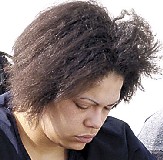
Shonda Walter
Murderer Miranda Barbour
Murderer · USA · 2013
Miranda Barbour, 19, defendant. · Elytte Barbour, 22, defendant and husband of…
100 victims
Miranda Barbour
Murderer · USA · 2013
Miranda Barbour, 19, defendant. · Elytte Barbour, 22, defendant and husband of…
100 victims
 Megan Huntsman
Murderer · USA · 1996
Megan Huntsman was 40 at sentencing. She was a mother of three children who wer…
6 victims
Megan Huntsman
Murderer · USA · 1996
Megan Huntsman was 40 at sentencing. She was a mother of three children who wer…
6 victims
 Angela Johnson
Murderer · USA · 1993
Angela Jane Johnson was convicted in federal court of aiding and abetting the m…
5 victims
Angela Johnson
Murderer · USA · 1993
Angela Jane Johnson was convicted in federal court of aiding and abetting the m…
5 victims
 Michele Kalina
Murderer · USA · 1996
Michele Kalina pleaded guilty to murder for one of five infants she initially w…
5 victims
Michele Kalina
Murderer · USA · 1996
Michele Kalina pleaded guilty to murder for one of five infants she initially w…
5 victims
 Tiffany Hall
Murderer · USA · 2006
Tiffany Hall was 24 when she was charged in September 2006. She later entered a…
5 victims
Tiffany Hall
Murderer · USA · 2006
Tiffany Hall was 24 when she was charged in September 2006. She later entered a…
5 victims
 Banita Jacks
Murderer · USA · 2007
Banita Jacks was a Washington, DC resident convicted of murdering her four daug…
4 victims
Banita Jacks
Murderer · USA · 2007
Banita Jacks was a Washington, DC resident convicted of murdering her four daug…
4 victims
 Jack Dempsey Ferrell
Murderer · USA · 1981
Defendant: Jack Dempsey Ferrell Date of birth: 08/05/40 District/County/Case nu…
2 victims
Jack Dempsey Ferrell
Murderer · USA · 1981
Defendant: Jack Dempsey Ferrell Date of birth: 08/05/40 District/County/Case nu…
2 victims
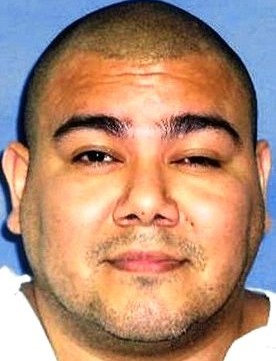 David Martinez
Murderer · USA · 1994
David Martinez was convicted and sentenced to death for the 1994 capital murder…
2 victims
David Martinez
Murderer · USA · 1994
David Martinez was convicted and sentenced to death for the 1994 capital murder…
2 victims
 George Waterfield Russell
Serial killer · USA · 1990
George Waterfield Russell (George Russell Jr.) was prosecuted in Washington. Ru…
3 victims
George Waterfield Russell
Serial killer · USA · 1990
George Waterfield Russell (George Russell Jr.) was prosecuted in Washington. Ru…
3 victims
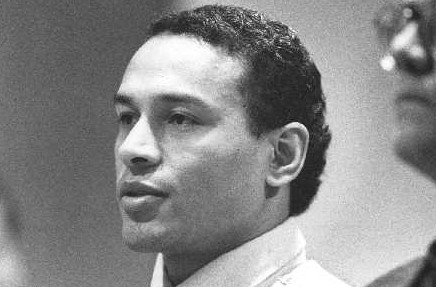 Richard Grissom
Homicide - Murderer · USA · 1966
Richard Grissom Jr. was sentenced to life in prison on November 20, 1990. In th…
4 victims
Richard Grissom
Homicide - Murderer · USA · 1966
Richard Grissom Jr. was sentenced to life in prison on November 20, 1990. In th…
4 victims
- Gender
- female
- Country
- USA
- Location
- Lock Haven, Clinton County, Pennsylvania, USA
- Date of birth
- July 16, 1979
- Age at first offence
- 24
- Characteristics
- robbery, gang
- Victim profile
- Her neighbor, 83-year-old James Sementelli
- Method of murder
- Beating 66 times with a 10-inch hatchet
- Date(s) of murder
- March 25, 2003
- Years active
- 2003
- Date of arrest
- —
- Status
-
Sentenced to death
Sentenced to death on April 19, 2005
Case details
Name: Shonda Walter Victim: James Sementelli (83-year-old)
STATUS and sentence
Shonda Walter was sentenced to death on April 19, 2005.
Charges and legal designation
Walter was charged with the murder of Mr. Sementelli and felony theft of his automobile. The Commonwealth gave notice of its intent to seek the death penalty, based on a single aggravating circumstance: murder committed while in the perpetration of a felony.
The offence
On March 25, 2003, Walter killed her neighbor, James Sementelli, 83, as part of a gang initiation and robbery. During the killing, she slashed Sementelli with a 10-inch hatchet as he begged for his life. Witnesses also said that during the killing, she stopped to say the Lord’s Prayer, carved a cross in the victim’s stomach as he was dying, watched television, and ate ice cream.
The Commonwealth presented that Walter killed Sementelli so she could steal and sell his car to pay off court debts and gain entry into the Bloods street gang in Lock Haven. After the attack, Walter took $510 and Sementelli’s car.
When Lock Haven police discovered the body of Sementelli inside his home, they determined that Sementelli had sustained over 60 wounds, 18 fractures, and 45 bruises to various parts of his body, many of them to his head, face, and neck. His left ear was nearly severed from his head. His nasal bone and skull were fractured and his right eye punctured. He had numerous defensive wounds on his arms and hands and multiple gaping chop wounds all over his body. Police said the killer used a hatchet.
Police determined that Sementelli had been murdered on Tuesday, March 25, 2003, based on factors including the last time the victim was seen alive, old newspapers found on his porch, and another paper found near his body.
Investigation
The investigation focused on Shonda Dee Walter, who lived with her mother in a house across the street from Sementelli. A neighbor, Monica Rupert, told police that she saw Walter pacing outside the Sementelli residence on the evening of March 25 while talking on a cordless telephone.
Walter’s mother, Judith Walter, told police that her daughter had been out of the house on that evening, only to return later and leave again, taking the telephone with her. Mrs. Walter never saw her daughter again that night, but when she awoke the next morning she noticed that the phone had been returned and Walter had left a note explaining that she was staying at her friend Michelle’s house.
The Commonwealth identified Shanee Gaines as its primary witness against Walter. Gaines lived in Williamsport and knew Walter through Michelle Mathis, who was allegedly a member of the Bloods street gang and lived on the same street as Gaines. Gaines testified that she was at Mathis’s home on the night of the murder, caring for Mathis’s child. Mathis had been involved in an altercation on the street earlier that evening and had been taken to the hospital for treatment. While Mathis was at the hospital, Walter appeared at Mathis’s Williamsport residence. Walter drove Sementelli’s white Toyota.
Gaines granted Walter entrance to Mathis’s home and noticed that Walter had blood on her forehead and was wearing rubber gloves that also had blood on them. Walter went upstairs to shower while Gaines waited downstairs. Mathis returned, and then the three women left the house and traveled in Sementelli’s car to his house in Lock Haven.
During the trip, Walter told Gaines and Mathis that she had killed the victim and described how she struck him repeatedly with the hatchet while ignoring his pleas that she call for help. When they arrived at Sementelli’s house, Walter used a key to enter and showed the other two women the victim’s body. Gaines testified that the purpose of the visit was to dispose of a cigarette that Walter had left at the scene and to remove the body from the house. Gaines refused to assist Walter and Mathis and returned quickly to the car. Walter and Mathis later joined her; Walter carried a large plastic tub of quarters.
Before leaving, Walter ran into her mother’s house to leave a note and get a change of clothes. The women drove to a grocery store and redeemed coins, receiving a receipt for $510.25 from a coin machine. The women were unable to receive cash because of the late hour; Gaines and Mathis returned to the market the following morning and redeemed the receipt. They split the money.
During the drive back to Williamsport, Walter flung the hatchet from the car into a wooded area. Gaines’s involvement continued after the murder; the three women purchased marijuana and watched movies together at Gaines’s house.
A few days later, Gaines accompanied Walter and others, including Walter’s good friend Aaron Jones, on a trip to Philadelphia where Walter attempted to sell Sementelli’s car. Walter told Jones and others that the car belonged to her father, who had died, and she wanted to sell it because she had “bad memories” about it. When the sale was unsuccessful, Jones drove the vehicle.
Police stopped Jones while he was driving the car. Gaines feared Jones would be implicated because he knew nothing about Sementelli’s death. Gaines contacted police and told them everything she knew.
Police recovered the hatchet after a Williamsport resident found it on his property days after the murder and turned it over to state police. Blood on the hatchet matched that of Sementelli. A friend of Walter’s told police that a similar hatchet had been stolen from his parents’ house years earlier during a party that Walter attended. The friend’s father confirmed that the murder weapon was the one he had owned. Another Williamsport resident told police that she had seen Walter wearing a hatchet on her belt in the weeks before the murder.
Walter’s mother explained that when Walter moved into her house with her young daughter in 2002, one of Walter’s possessions was a hatchet, which she placed in a kitchen drawer. When Walter was arrested, Mrs. Walter searched for the hatchet with police, but it was no longer in the drawer.
Walter was arrested after one of her friends told police that she had come to her house wearing gloves covered in blood and confessed.
Arrest
Trial
Guilt phase
On April 18, 2005, a jury found Walter guilty of first-degree murder. On the same date, Walter was convicted of felony theft.
During the trial, a prosecutor showed the jury the hatchet used to kill Sementelli, holding it up twice during opening statements. Prosecutors said Sementelli tried to defend himself from the blows and succumbed to “brutal injuries, many broken bones, skull injuries...and blood all over the place.”
Evidence showed that after Walter struck Sementelli with the hatchet, he asked her why she was doing that. The prosecutor quoted Walter as saying: “Because I can.” After Walter bludgeoned Sementelli 66 times with the hatchet, she used it to carve a cross in his stomach, watched television, and ate ice cream before driving away in Sementelli’s car.
Prosecutors said Walter returned to Sementelli’s house and stole $510 in quarters. During the attack Sementelli pleaded for Walter to call 911, hoping for some mercy, but she struck him again and again. The prosecutor quoted Walter as saying: “Just die.” The prosecutor also said that Walter took a break, smoked a cigarette while Sementelli remained alive, and she left. The prosecutor also said, “We don’t know if he was still alive when she left.”
A question posed to prospective jurors was whether they had negative feelings on the case because Shonda Walter, who is black, was accused of killing James Sementelli, who was white. Only one prospective juror in each session said they had an issue with race.
Penalty phase
A penalty hearing followed. The Commonwealth gave notice of its death penalty intent based on a single aggravating circumstance: murder committed while in the perpetration of a felony.
Walter asserted three mitigating circumstances. She identified mitigating circumstances as:
- the age of the defendant;
- the fact that the defendant had no significant history of prior criminal convictions;
- and any other evidence of mitigation concerning the character and record of the defendant and the circumstances of the offense, the “catchall mitigator.”
The jury found the single aggravating circumstance and no mitigating circumstances and returned a sentence of death. The trial court formally imposed the death sentence on April 19, 2005.
Additional trial evidence and statements
Testimony at the trial suggested Walter befriended Sementelli, then attacked him at his home before stealing a collection of coins and making her escape in his car, which she later tried to sell.
Testimony suggested Walter stopped to recite the Lord’s Prayer during the slaying. Witnesses also said she carved a cross in the victim’s stomach and ate ice cream after the attack.
In addition to Gaines and other witnesses, the Supreme Court opinion described testimony from two people Walter confided in while in prison:
- Amanda Horner testified that Walter admitted her guilt and described the manner in which she had committed the murder. Horner testified that Walter said she killed Mr. Sementelli because she wanted his car, intending to sell it for money to pay off fines that she owed.
- Inmate/witness Coran Freeland testified that Walter said she also killed the victim to gain entry into the Bloods street gang.
The Supreme Court opinion stated that the physical and testimonial evidence linking Walter to the murder weapon, Walter’s own statements regarding her intentions, and the brutal manner in which the victim was murdered established that Walter committed an intentional killing that was willful, deliberate, and premeditated.
Sentencing
The trial court imposed a death sentence on April 19, 2005.
Appeals
Pennsylvania Supreme Court
Walter’s conviction and sentence of death were affirmed by the Pennsylvania Supreme Court on March 20, 2009.
In the Pennsylvania Supreme Court opinion, the court concluded: “We affirm the verdict and the sentence of death. Starting with its mandatory, independent review of the sufficiency of the evidence to support the conviction for first-degree murder, the court concluded "the evidence in this case amply supported the jury's verdict."”
The court also stated: “the jury reasonably determined that all the elements of the offenses were established beyond a reasonable doubt ... Murder in the first-degree is an intentional killing, one that is willful, deliberate and premeditated. The evidence in this case amply supported the jury's verdict.”
The opinion stated that Walter was convicted of murder in the commission of a felony on April 18, 2005, and that the theft of Sementelli’s auto after the murder was used by the prosecution as an “aggravating factor” to justify the death penalty.
The Supreme Court stated it rejected Walter’s raised issues, and then performed statutorily mandated review of the death sentence. The court stated it was required to affirm the sentence of death unless it determined the sentence was “the product of passion, prejudice or any other arbitrary factor” or the evidence failed to support the finding of at least one aggravating circumstance. The opinion stated: “Accordingly, we affirm the verdict and the sentence of death - Judgment of sentence affirmed.”
Arguments raised on direct appeal (as described in the opinion)
Walter raised four issues on appeal; the court described them as “none of which are completely clear in their rationale and some of which are unintelligible.” The Supreme Court opinion further stated that Walter did not raise claims with respect to the guilt phase at the conclusion of her brief and asked the court to “consider vacating the death sentence imposed upon [her].”
The opinion described Walter’s arguments including:
- an assertion that the trial court erred in failing to dismiss the aggravating circumstance, wherein the Commonwealth failed to demonstrate intent to commit a felony during or prior to the course of the murder;
- a claim that the trial court erred in failing to sustain multiple challenges to capital proceedings because “the death penalty is constitutionally deficient on its face and as it applies to [her]”;
- a claim that the Commonwealth failed to allege the “criminal state of mind” sufficient to prove felony murder; and
- a claim that the jury failed to adequately consider mitigating evidence.
The opinion stated the jury found no mitigating circumstances and rejected Walter’s mitigation-based argument as seeking a substitution of judgment for the jury’s.
The opinion stated Walter was 23 years old at the time of the murder and that her record included convictions for theft and fraud, but revealed no prior violent criminal activity.
Post-conviction and stay of execution
On March 20, 2009, the Pennsylvania Supreme Court affirmed the conviction and death penalty.
Walter was granted a stay of execution by Clinton County President Judge J. Michael Williamson on April 1, 2010. Walter had originally been scheduled to die by lethal injection on April 22 for the March 2003 slaying.
Williamson noted that “no stay may be issued unless a petition for post-conviction relief ... meeting all the requirements, has been filed and is pending, and the Petitioner makes a strong showing of likelihood of success on the merits.” Williamson said the Walter petition could not meet the burden of those requirements “based upon the minimal allegations” in her previous post-conviction efforts. Williamson cited three specific Supreme Court comments for review before any penalty is applied:
- The earlier petition to the Pennsylvania Supreme Court “asserts one constitutional claim after the other with no legal rationale or authority for any of them.”
- “To the extent (Walter) attempts to make additional constitutional claims, we conclude that they are waived for failure to develop them in any meaningful fashion capable of review.”
- “As a result, we do not understand why (Walter) relied on these cases ... Appellant's argument is vague and confusing. The points she seeks to make are simply incomprehensible.”
In the same order, Williamson appointed attorney Tracy Ulstad to represent Walter in continuing efforts and granted 120 days to file an amended petition. Williamson granted Walter the right to proceed as a poor person without payment of costs. The stay was in place “until a resolution of this litigation under the Post-Conviction Relief Act or until further order of this court.”
Ulstad stated Walter had a pending and unresolved petition for post-conviction relief filed March 19 and that consideration could not be done “in the shadow of an active death warrant.” The petition concluded: “This court should not allow Ms. Walter to be executed without a meaningful opportunity to investigate and develop claims for relief, and for those claims to be fully and fairly heard,”
Walter was incarcerated at the State Correctional Institution at Muncy.
Timeline
- March 25, 2003 — Walter killed her neighbor, James Sementelli, 83, and stole $510 and Sementelli’s car.
- April 18, 2005 — A jury convicted Walter of first-degree murder and felony theft.
- April 19, 2005 — The trial court imposed a sentence of death.
- March 20, 2009 — The Pennsylvania Supreme Court affirmed the conviction and sentence of death.
- April 1, 2010 — A stay of execution was granted by Clinton County President Judge J. Michael Williamson.
Other details
- Walter was convicted of first-degree murder and sentenced to death for the 2003 hatchet attack on her 83-year-old neighbor, James Sementelli.
- The Supreme Court opinion described the matter as a direct capital appeal following her conviction for first-degree murder and imposition of the death sentence.
- The Supreme Court’s opinion referenced that Walter was sentenced to death and that the appeal followed the automatic review process.
- Walter was formally imposed a death sentence on April 19, 2005.
- Walter was held at the State Correctional Institution at Muncy.
- Walter granted a stay of execution was noted to be in place until resolution under the Post-Conviction Relief Act or until further order of the court.
- A quote attributed to Walter in the prosecution material was: “I'll solve my problems and debts...as well as getting in with the gang. I'll do that by taking a human life.”
- A quote attributed to Walter included: “She said, 'I'll solve my problems and debts...as well as getting in with the gang.
- Another quote attributed to Walter included: “Because I can.”
- Another quote attributed to Walter included: “Just die.”
- A quote attributed to Walter included: “bad memories” (about the car), as quoted in the narrative about her attempted sale of Sementelli’s car.
- A quote stated that Walter asked the jury to spare her life, and the Supreme Court noted the jury found no mitigating circumstances.

Spotted an error, or have more information about this case?