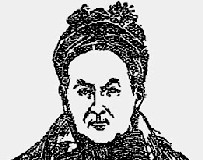
Annie Walters
Murderer Mary Pearcey
Murderer · United Kingdom · 1890
Mary Pearcey (Mary Eleanor Wheeler; also known as Mary Eleanor) was born in 186…
2 victims
Mary Pearcey
Murderer · United Kingdom · 1890
Mary Pearcey (Mary Eleanor Wheeler; also known as Mary Eleanor) was born in 186…
2 victims
 Ada Chard Williams
Murderer · United Kingdom · 1899
Ada Chard Williams (also referred to as Ada Chard-Williams and Mrs. Hewetson in…
1 victim
Ada Chard Williams
Murderer · United Kingdom · 1899
Ada Chard Williams (also referred to as Ada Chard-Williams and Mrs. Hewetson in…
1 victim
 Emily Swann
Murderer · United Kingdom · 1903
Emily Swann (42-year-old mother of 11 children; defendant; convicted of murderi…
1 victim
Emily Swann
Murderer · United Kingdom · 1903
Emily Swann (42-year-old mother of 11 children; defendant; convicted of murderi…
1 victim
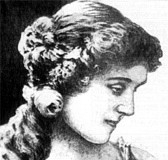 Louise Masset
Murderer · United Kingdom · 1899
Louise Masset was convicted of murdering her son, Manfred Louis Masset, and was…
1 victim
Louise Masset
Murderer · United Kingdom · 1899
Louise Masset was convicted of murdering her son, Manfred Louis Masset, and was…
1 victim
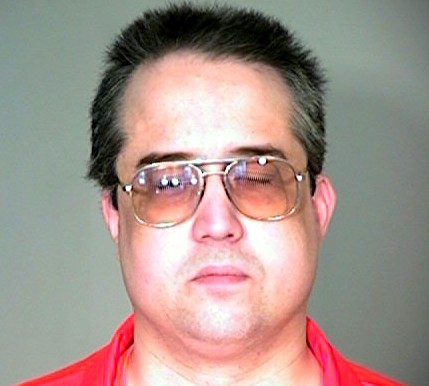 Ronald Schackart
Murderer · USA · 1984
Ronald Dwight Schackart and Charla Regan had known each other since high school…
1 victim
Ronald Schackart
Murderer · USA · 1984
Ronald Dwight Schackart and Charla Regan had known each other since high school…
1 victim
 Joseph Christopher Garcia
Murderer · USA · 2000
Joseph Christopher Garcia (TDCJ Number 999441) was convicted of capital murder…
2 victims
Joseph Christopher Garcia
Murderer · USA · 2000
Joseph Christopher Garcia (TDCJ Number 999441) was convicted of capital murder…
2 victims
 Billi Jo Smallwood
Murderer · USA · 2007
Billi Jo Smallwood was sentenced to 25 years in prison on December 12, 2012, af…
2 victims
Billi Jo Smallwood
Murderer · USA · 2007
Billi Jo Smallwood was sentenced to 25 years in prison on December 12, 2012, af…
2 victims
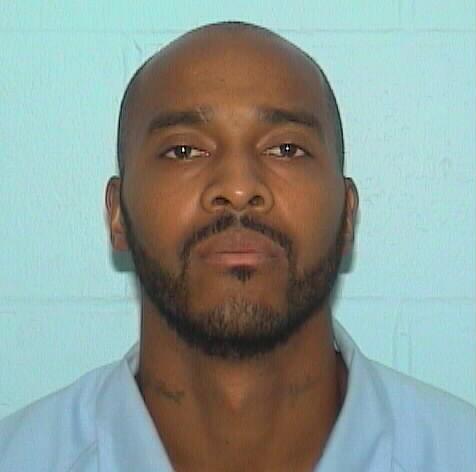 Anthony Townser
Murderer · USA · 1993
Anthony Townser Anthony Townser was sentenced to 75 years in prison in Illinois…
3 victims
Anthony Townser
Murderer · USA · 1993
Anthony Townser Anthony Townser was sentenced to 75 years in prison in Illinois…
3 victims
- Gender
- female
- Country
- United Kingdom
- Location
- London, England, United Kingdom
- Date of birth
- 1869
- Age at first offence
- 31
- Characteristics
- drugs
- Victim profile
- I nfants of unwed mothers
- Method of murder
- Poisoning ( chlorodyne, a medicine containing morphine)
- Date(s) of murder
- 1900 - 1902
- Years active
- 1900–1902
- Date of arrest
- November 18, 1902
- Status
-
Executed
Executed by hanging at Holloway Prison on February 3, 1903
Names and identifiers
Annie Walters (1869 - 3 February 1903) was a British serial killer known as a “Finchley baby farmer”.
Status and execution
Walters was executed by hanging at Holloway Prison on February 3, 1903.
Background
Little was known about Walters’ background. She had been married. She seemed to have had a drinking problem and she would periodically advertise herself as a sick nurse. On her arrest, she was determined to be “feeble”, that is to say, feeble-minded.
There was a small possibility that the pair may have been involved in an earlier homicide that resulted in another woman being executed. In 1899, Louise Masset was tried for the murder of her young son Manfred, whose body was found in the ladies’ lavatory at Dalston Junction railway station. Circumstantial evidence suggested that Louise was the murderer, and the killing was to be rid of a supposed encumbrance due to her wanting to marry a man named Lucas. However, in her claims of innocence, Louise said she had taken Manfred out of the care of one woman to give him to two ladies she met who had an establishment for the care of growing children. The police claimed they made some effort in looking for the two women, but the extent of their investigation is unknown. In any event, Louise Masset was tried and convicted of the murder and, despite a petition for mercy, was executed in early January 1900.
The offence
Walters operated in connection with the “lying-in” and adoption business run by Amelia Sach. Sach operated a “lying-in” home in Stanley Road and later at Claymore House in Hertford Road, both in East Finchley, London. Around 1900, she advertised that babies “could be left” and took money for adoptions. Clients were mostly servants from local houses who had become pregnant, with employers who wanted the matter resolved discreetly. There was a charge for lying-in, and another for adoption, a “present” to future parents of between £25 and £30.
Walters would collect the baby after it was born and dispose of it with poison—chlorodyne, described as a medicine containing morphine. The trial evidence and witness accounts indicated that an unknown number of babies were murdered this way, possibly dozens. The quantity of baby clothes found at Claymore House was used as evidence of the scale of crimes during the trial at the Old Bailey.
Investigation
The women were caught after Walters raised the suspicions of her landlord in Islington, who was a police officer.
Arrest, charging, and custody
Walters lodged at 11 Danbury street, Islington. At the inquest touching one of the cases, Mr. Bodkin, who represented the Treasury, described Claymore House as a “private nursing home,” where expectant mothers were taken in for £1 1s or 15s a week after a first payment of £3 3s.
The police case included that Walters took room at 11 Danbury street, a house occupied by a police officer named Seal. She said she was a widow, that she had just come out of the hospital, and that she worked for “Mrs Sach, a lady who got children from young women who could not afford to keep them, and employed her (Mrs. Walters) to take them to wealthy ladies who adopted them.”
Walters was charged with the wilful murder of some children. The other defendant, Amelia Sach (29), was charged with being accessory to murder.
Trial
Old Bailey proceedings
Walters and Amelia Sach were tried at the Old Bailey. The resumption of the trial for murder occurred before Mr. Justice Darling.
A new witness was called for the prosecution in the person of Conrad Lambert, a clerk in the office of the “People” newspaper, brought forward to prove the insertion of an advertisement of the “home” in the “People” by prisoner Sach.
A young woman, Teresa Edwards, who had been a domestic servant at Claymore House for some months, said she wrote the advertisement at the dictation of prisoner Sach “as follows”: “Doctor recommends comfortable home, skilled nurses, every care, comfortable home.—Nurse, 4, Stanley-road, East Finchley.”
Another witness then stepped forward in the witness-box; her name was not mentioned in the hearing of the Court.
Defending counsel opened discussion on the legality of evidence on a specific charge of murder. The judge over-turning the objection said the case for the prosecution was that the two prisoners were associates in a “business”. He said that Mrs. Sach set up a “home” for the convenience of ladies to be confined, and that Mrs. Sach was associated with Mrs. Walters in taking the money the ladies paid for the babies to be adopted and keeping it for herself and giving the babies to Walters.
When arrested, Mrs. Sach said she did not know Walters, and Mr. Mathews called evidence to show that she did know Walters.
Witness evidence about adoption arrangements
Teresa Edwards recalled that Mrs. Sach commenced a conversation with her regarding the adoption of her baby. Mrs. Sach afterwards told her she had arranged for “a lady in Kensington Gore” to adopt the baby for £30. Witness agreed to the arrangement and paid Mrs. Sach £30 on the night of August 29th, the day the baby was born and the baby was removed, the same day.
Teresa Edwards was questioned regarding her duties as domestic servant for Mrs. Sach. Edwards said she went to be confined at 4, Stanley-road, and on the suggestion of Mrs. Sach removed with the “home” to Claymore House. She was asked, “You had seen the prisoner Walters?” and answered, “I knew her then as Mrs. Laming.”
Continuing, she said that on the night of the day the child of the last witness was born, “Mrs. Laming” called at Claymore House. Edwards saw Mrs. Sach hand “Mrs. Laming” a baby wrapped in a shawl, and also some money, and afterwards Edwards accompanied “Mrs. Laming” and the baby to a bus. Edwards was asked, “You went to a place where ‘Mrs. Laming’ was living?” and answered, “Yes, in Glasgow-road. I took a parcel to her for Mrs. Sach.”
Mr. Mathews then proceeded to call medical evidence.
Medical evidence
Dr. Joseph Pepper, Divisional Police Surgeon, gave his opinion after a postmortem examination of the body of the child found dead in the arms of Mrs. Walters. Dr. Pepper gave it as his firm and emphatic opinion that the child had died from asphyxia—suffocation—and that that asphyxia had probably been caused by a narcotic poison.
Mr. Mathews asked: “Would the death be consistent with the administration of chlorodyne?” Dr. Pepper answered: “It would.”
The Judge said a witness (Mrs. Spencer) had stated that she heard the child making a peculiar noise. Dr. Pepper stated: “I was in Court and heard the witness imitate the noise.” The Judge then asked: “Can you account for the child making those noises?” Dr. Pepper answered: “I should say they were dying gasps.”
Dr. Pepper stated that in some cases a child given chlorodyne would pass quietly away, but in others it would produce convulsions before death, and a child in convulsions would make the choking noises that had been described by a previous witness. Dr. Pepper continued that the child had had no food whatever.
Dr. Pepper stated that, before leaving the witness-box, witness and that of course the asphyxia might have been caused by other means—by another drug, or by pressure on the air-passage leading to the lungs.
Another medical man, Dr. Coulter, agreed with Dr. Pepper in every particular except one. Dr. Coulter thought the mark on the back of the head of the child was not due to the process of birth, and not due to a direct blow, but was due to severe and steady pressure.
Statement by Walters
The statement written by Mrs. Walters during the Police Court proceedings, with desire that it should be put before the jury, was read by his lordship. The statement included:
Mrs. Walters said she received two telegrams from Mrs. Sach to fetch the babies. She wrote: “I had to meet a lady at Aldgate Station,”
The statement continued: “but was too soon, and went into Lockhart’s.”
It proceeded that the lady arrived at Aldgate Station in a brougham. Walters wrote: “I got into the brougham and gave her the baby. She said, ‘untie the parcel,’ and I untied it. Then she undressed the baby, gave me the clothes and dressed it in fine clothes and laces and a beautiful cloak.”
Continuing, Walters wrote: “the lady” said she was going to Ireland or Scotland, but not know which; that whilst in the conveyance “the lady” gave her a glass of champagne; and “dropping” her at St. James’s-street gave her 10s.
Speaking of this lady, Walters wrote: “I met the lady before, at Mrs. Sach’s, when I went there wee Mrs. Sach said, ‘This is Mrs. Rogers.’”
Regarding the other baby, Walters wrote that she received a telegram to take it to South Kensington Station to meet a lady she had previously met at the archway Tavern, Highgate. She wrote that the lady told her she was going to take the baby to a coast-guard’s wife at Eastbourne, and would give Mrs. Walters 10s. for her trouble.
Walters wrote: “I always thought Mrs. Sach’s name was Maude,” and that she signed her name Maude always to her, and that she told her she received no money for the babies, with the concluding sentiment that the mothers were heartless things, leaving them on her hands, and that she was greatly surprised to hear she received so much money from the mothers.
The concluding lines were: “I gave the baby two drops of chlorodyne, not intending to harm it, only to make it sleep. I had taken a bottleful, and it did not hurt me. I gave it nothing else at all. – “Yours obediently, ANNIE WALTERS.”
Defence addresses and court conduct
Mr. Mathews commended his address to the jury.
On demeanour in the dock, the report said that during the whole of yesterday, both prisoners followed with apparent keen interest the evidence adduced for the prosecution. Mrs. Sach was described as particularly curious not to miss a word, and when she missed words she placed her head on one side and wrinkled her brow as though greatly annoyed. Walters was described as sitting stolidly beside Mrs. Sach and not moving a muscle of her face, but then when Mr. Mathews opened his address she followed the example of her companion and gazed fixedly at counsel.
For Walters, Mr. Stephenson argued that the prosecution failed to bring forward sufficient evidence to disprove the statement Walters had written, read in Court immediately before the adjournment for luncheon. Stephenson said the prosecution failed to make out their case and that it had been unduly pressed against prisoner at the bar.
For Mrs. Sach, Mr. Leycester endorsed Stephenson’s arguments and said the prosecution had not proved their case. Leycester argued that it had not even been proved that there had been a murder. He argued that the babies left the custody of Mrs. Sach alive and well and that there was absolutely.
At 1.40 the Court adjourned for luncheon. The Court later became more crowded as the day progressed.
Coroner and witness narrative fragments connected to the charge
Police-constable Seal was described as Walters’ landlord of 11 Danbury street and became auspicious of Walters. Walters received two telegrams and sent off letters sealed with red wax, which prompted Seal to have his son Albert, a 14-year-old boy, watch her.
Albert gave testimony about watching Walters and described that he watched Walters on Saturday, November 15. He said she came out about 6.30 p.m. and got on a tramway car, ran from the Angel to Highbury, and then got on the car. At the Archway Tavern Walters met a young lady about 26 years old and stylishly dressed, entered the tavern with her, and afterwards drove off in a hansom towards Finchley. Albert later saw Mr. Walters return with a baby.
Albert said that on Tuesday, November 18, he watched again with Detective Wright beside him. Walters went out about 9 o’clock in the morning carrying what appeared to be a baby and frequently looked back to see if anyone was following. Little more than an hour later Walters was arrested with a dead infant in her arms.
A narrative fragment also described earlier events at Claymore House and the role of telegrams. It included that on November 21 Miss Pardoe’s child, a girl, was born and that the same morning Walters received a telegram: “Five o’clock to-night. Sach, Finchley.” Walters left the house and returned with a living child, which she said was a boy. The report said she gave Mrs Spencer a £1 for the purchase of a bottle of chlorodyne and some carbolic acid. The report then described that Mrs. Sach attended Miss Pardoe and an hour or so after the event presented the baby to its mother, saying: “Now kiss it good-bye.” The report stated that the mother never saw the child again, that the father paid Mrs. Sach £30 in bank notes, and that the bank notes had been traced. The report also stated that on Friday, November 14, Mrs. Walters left her lodgings carrying a bundle and the child was never seen at the house again. Another portion said that Walters’ movements that day were uncertain, but at 3 o’clock she was at one of Lockhart’s cocoa rooms at Whitechapel with a bundle, which an attendant, Miss Jones, noticed. The wrap fell off, and Miss Jones noticed something that looked like a doll—it was not moving and there was no sound. Mrs. Walters was spoken to about the bundle and told “a most extraordinary story.” Walters said: “a baby under chloroform,” that it had been in a hospital, that it was a boy about a week old, and that it had just undergone an operation. Miss Jones was of opinion that the child was then dead. The report included a claim that at 9 o’clock that morning the baby was strong and healthy.
The report also described that Walters returned home at 8 in the evening apparently worse for drink, threw some baby’s clothes across the table to Mrs. Seal, and said: “There you are; those are for you.” Mrs. Seal asked: “You have taken the poor little thing, then?” Walters responded: “Poor little thing, indeed,” and: “You should have seen it in its laces.”
The report stated that Mr. Bodkin then dealt with Miss Galley’s child, “a healthy, vigorous boy,” which was the subject of the present charge. It also stated that Sach received £25 for it and it was taken away by Mrs. Walter.
Sentencing
Walters and Amelia Sach were found guilty and sentenced to death at the Old Bailey.
Outcome and aftermath
Walters’ execution took place by hanging at Holloway Prison on February 3, 1903.
The bodies of Sach and Walters were buried in unmarked graves within the walls of Holloway Prison, as was customary. In 1971, the prison underwent an extensive programme of rebuilding, during which the bodies of all the executed women were exhumed. With the exception of Ruth Ellis, the remains of the four other women executed at Holloway, including Sach and Walters, were subsequently reburied in a single grave (plot 117) at Brookwood Cemetery. The grave was marked with a horizontally laid grey granite tombstone, and the names of all the occupants were engraved on it.
Claymore House, the semi-detached, red-brick villa where Sach had lived and worked in 1902, acquired a bad reputation due to the criminal activities which took place there. Some time after the trial of Sach and Walters, the building had its name chiselled off the stone plaque above the window and was now anonymous.
A local campaign to have their sentences commuted to life failed, and they became the first women to be hanged at Holloway on 3 February 1903, by Henry Pierrepoint.
Walters appeared in popular culture in Nicola Upson’s novel Two for Sorrow (2010), which was described as revolving around the aftermath of the Finchley Baby Farming affair. Both Sach and Walters appear as characters.
Spotted an error, or have more information about this case?