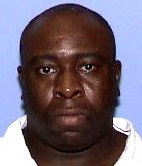
George Waterfield Russell
Serial killer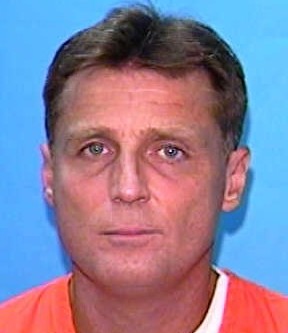 Glen Edward Rogers
Serial killer · USA · 1993
Glen Edward Rogers was a spree killer whose cross-country rampage in 1994-95 le…
70 victims
Glen Edward Rogers
Serial killer · USA · 1993
Glen Edward Rogers was a spree killer whose cross-country rampage in 1994-95 le…
70 victims
 Michael Swango
Serial killer · USA · 1981
Michael Swango (Joseph Michael Swango) was a physician and American serial kill…
60 victims
Michael Swango
Serial killer · USA · 1981
Michael Swango (Joseph Michael Swango) was a physician and American serial kill…
60 victims
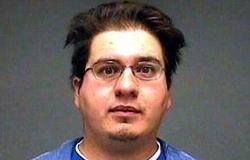 Efren Saldivar
Serial killer · USA · 1989
Efren Saldivar (born 30 September 1969) was an American serial killer who murde…
50 victims
Efren Saldivar
Serial killer · USA · 1989
Efren Saldivar (born 30 September 1969) was an American serial killer who murde…
50 victims
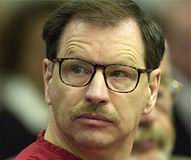 Gary Ridgway
Serial killer · USA · 1982
Gary Leon Ridgway Ridgway was born 18-February-1949 in Salt Lake City, UT. He w…
49 victims
Gary Ridgway
Serial killer · USA · 1982
Gary Leon Ridgway Ridgway was born 18-February-1949 in Salt Lake City, UT. He w…
49 victims
 Charles Cullen
Serial killer · USA · 1984
Charles Cullen (born February 22, 1960) was a former nurse and the most prolifi…
45 victims
Charles Cullen
Serial killer · USA · 1984
Charles Cullen (born February 22, 1960) was a former nurse and the most prolifi…
45 victims
 Anders Behring Breivik
Mass murderer · Norway · 2011
Anders Behring Breivik (born 13 February 1979) was the perpetrator of the 2011…
77 victims
Anders Behring Breivik
Mass murderer · Norway · 2011
Anders Behring Breivik (born 13 February 1979) was the perpetrator of the 2011…
77 victims
 Edward Charles Allaway
Homicide · USA · 1976
Edward Charles Allaway Edward Charles Allaway was found not guilty by reason of…
7 victims
Edward Charles Allaway
Homicide · USA · 1976
Edward Charles Allaway Edward Charles Allaway was found not guilty by reason of…
7 victims
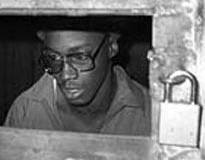 Edward Earl Johnson
Murderer · USA · 1979
Edward Earl Johnson (1961 – May 20, 1987) was an African American convicted mur…
1 victim
Edward Earl Johnson
Murderer · USA · 1979
Edward Earl Johnson (1961 – May 20, 1987) was an African American convicted mur…
1 victim
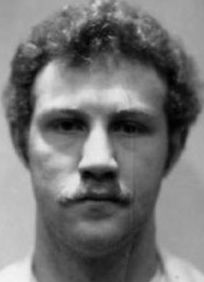 Ronnie Lee Gardner
Murderer · USA · 1984
Ronnie Lee Gardner was executed by shooting in Utah on June 18, 2010. Ronnie Le…
2 victims
Ronnie Lee Gardner
Murderer · USA · 1984
Ronnie Lee Gardner was executed by shooting in Utah on June 18, 2010. Ronnie Le…
2 victims
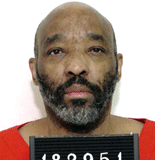 Sherman Noble
Murderer · USA · 1985
Sherman Noble was a death row inmate in Kentucky. He died in prison on October…
4 victims
Sherman Noble
Murderer · USA · 1985
Sherman Noble was a death row inmate in Kentucky. He died in prison on October…
4 victims
- Gender
- male
- Country
- USA
- Location
- Seattle, Washington, USA
- Date of birth
- April 1958
- Age at first offence
- 32
- Characteristics
- sadist, sexual abuse, serial rapist, rape, necrophilia
- Victim profile
- Mary Ann Pohlreich, 36 / Carol Marie Bleethe, 24 / Andrea "Randi" Levine, 27
- Method of murder
- Strangulation - Beating - St abbing with knife
- Date(s) of murder
- June 22/August 9/August 31, 1990
- Years active
- 1990
- Date of arrest
- September 12, 1990
- Status
-
Life imprisonment
Sentenced to two consecutive life terms + 28 years in prison in 1991
Case identification
George Waterfield Russell (George Russell Jr.) was prosecuted in Washington.
Status
Russell was sentenced to two consecutive life terms + 28 years in prison in 1991.
Timeline
- 1990 (summer) — Three murdered Bellevue nightclub habitues were discovered within two months.
- June 22, 1990 — Mary Ann Pohlreich was last seen at Papagayo's Cantina.
- June 23, 1990 — Mary Ann Pohlreich’s nude body was found beside a McDonald’s restaurant dumpster in the alley.
- August 9, 1990 — Carol Marie Bleethe returned home from the Keg Restaurant.
- Mid-September 1990 (seven weeks after June 23, 1990) — Carol Marie Bleethe’s battered body was found in the bed of her East Bellevue home.
- September 3, 1990 — Andrea “Randi” Levine’s body was found.
- August 30, 1990 — Andrea “Randi” Levine was last seen in the lounge of the Maple Gardens Restaurant.
- August 31, 1990 (about 5 a.m.) — Levine’s landlord, Bob Hayes, spotted a male silhouette near Levine’s rear window.
- August 31, 1990 (approx.) — Bob Hayes checked and later decided to check on Levine on September 3.
- September 12, 1990 — Police arrested Russell after a call about a night prowler.
- January 10, 1991 — Police arrested Russell.
- 1991 — Russell was sentenced.
Background
Russell had been born in 1958 in Florida. His parents separated when he was six months old. His mother was Joyce; she obtained a college degree goal. Russell’s father, George Russell Sr., turned the boy over to relatives to raise after Joyce left for remarriage.
Joyce later returned with a new husband, a dentist named Wonzel Mobley, when Russell was six years old. Russell and Mobley moved, eventually settling on Mercer Island, just east of Seattle. Russell’s mother left again in his early high school years, leaving him abandoned a second time before age sixteen.
Russell quit school and spent his days with friends lingering on the beach. Nights were spent breaking into houses in the upper-crust community and selling stolen merchandise at black market prices. Russell’s group built an operation and reputation. Mobley had to drive to the Mercer Island lockup to bail out Russell for breaking and entry, trespassing, or vandalism, except for an incident when he was pinned on suspicion of selling drugs.
When Mobley remarried, Russell’s stepmother was a white woman about a dozen years older than Russell. The relationship involved tensions that escalated to rages and an ultimatum: one of them goes, “me or the boy.” Russell, at 17 years old, found himself on the streets and left Mercer Island. He later crossed into Bellevue over the East Island Bridge over Lake Washington.
Russell continued running into trouble with law. He was characterized as able to beat the rap, often with pockets empty and an innocent expression. He drifted throughout Bellevue for about fifteen years, relying on friends who gave him room and board and on unlocked windows of people he did not know.
After turning 21, Russell became a familiar face in Bellevue bars including singles bars, piano bars, and other establishments. He was described as meeting women in those settings and as having no legitimate job, carrying possessions in a duffel bag and paper sacks.
Russell had brushes with law that included stealing from high school lockers, marijuana use, and truancy. He also had incarceration 24 times, mostly for minor offenses.
The offence
Russell murdered three women. The bodies were found posed in sexually degrading and unusual positions.
Mary Ann Pohlreich’s body was found beside a McDonald’s restaurant dumpster. She had been brutally beaten, choked, and kicked so hard that her liver had split against her spinal column. She had been raped after her death. Her body was described as posed: her left foot crossed over her right ankle, and her hands lay over her stomach clutching a Douglas fir cone.
Carol Marie Bleethe’s body was found in the bed of her East Bellevue home. She had been struck repeatedly in the head with a weapon that sliced her ear and left 13 distinctive Y shapes on her body. She had been bitten and kicked so ferociously that two broken ribs penetrated the chest cavity. Her head was bound in a plastic drycleaning bag. Her body was nude except for red high heels. Her crotch faced the bedroom door. A Savage 22 long rifle that she kept under the bed was inserted five and a half inches into her vagina. Friends later testified that Russell had cut pictures of the first two victims from the newspaper, taped them to a wall, and bragged that police would not find their killer.
Andrea “Randi” Levine’s body was found on September 3, 1990, in an apartment in Kirkland. She was described as having been blitzed in her sleep. She was beaten with an aluminum baseball bat, spraying the room with blood. She had 231 small knife wounds from scalp to bottom of her feet, in patterns, and investigators described them as occurring after death in an uncommon necrophilic perversion known as “picquerism.” A plastic vibrator was stuffed into her mouth. Levine held a copy of More Joy of Sex under her left arm. Her brains leaked out onto the bed. The killer wiped down the bat and taken every knife from the house. Police theorized a kitchen knife was used for an initial violation and that the real weapon used in the “picquerism” could not be identified.
In addition to the specific injuries and devices described in each case, evidence and testimony linked the three murders through DNA, blood type, hairs, semen, rings, and blood stains, along with behavioral profiling and the “signature” characteristics of the murders.
Investigation
Investigators called on a sexualized crime expert who said the murders were the work of one man. The expert stated that the serial killer would be a young, white male. Police zeroed in on Russell, who had grown up in a white, upper middle class neighborhood and “acted white.”
The investigation faced the challenge of connecting Russell to all three victims. Hair found on all three bodies proved to be “Negroid.” Semen found in Mary Ann Pohlreich matched Russell’s blood type. Small blood stains in a truck Russell borrowed on the night Pohlreich died matched her blood type. Semen analysis from Pohlreich’s body connected Russell through sperm analysis.
Russell was tied to missing rings from Carol Bleethe and Andrea Levine. Police theorized the killer had used a kitchen knife for violating Levine and then taken the knives so the real weapon used in the necrophilic “picquerism” could not be identified.
The prosecution introduced controversial DNA tests for hairs, semen, and blood stains. Both prosecution and defense brought experts in sexual homicide and behavioral profiling.
John Douglas, an FBI behaviorist, testified that he found a common denominator in the way the victims were “penetrated vaginally, anally or orally with some type of device, foreign object.” He also testified that the close timeframe of the murders pointed to one perpetrator.
Russell Vorpagel, a private investigator who had been a 20-year FBI veteran, disagreed. He said there were too many differences in the way the women were killed, degraded, and posed to be committed by one person. He said Pohlreich’s body was posed peacefully, that Bleethe’s body was not raped, and that a woman could have been the killer. He said the odd stab wounds on Levine’s body separated her murder from the others. Russell’s lawyers emphasized the possibility that the wrong man was accused and hinted that ex-husbands or ex-boyfriends were responsible, not the friendly man at the defense table.
Detective Peterson led the investigation on the Levine murder. Bellevue detectives Marv Skeen and Dale Foote headed up the Pohlreich and Beethe investigations. A task force formed to develop information as interviews repeated the name George W. Russell.
A patron of Papagayo’s Cantina remembered Pohlreich teasing Russell on the dance floor the night of her murder. A waitress at the Black Angus steakhouse, Gretchen Coffin, described Russell as using to dine there often and becoming angry after she refused his offer for a date. Coffin stated he glared at her and at Beethe right before Beethe died.
Friend Smitty McClain reported lending his pickup truck to Russell on the night Mary Ann Pohlreich was killed. When McClain got the truck back, he noticed a foul odor and unidentified stains. When police removed upholstery to cut samples of stains, the stains proved to be blood matching Pohlreich’s type.
Detectives collected pieces of jewelry bought at a discounted price from Russell by members of a nightclub clique. Investigators traced these items back to the victims. Detective Peterson tracked a ring purchased by a club-goer that made its way to Florida.
At the time of his arrest, Russell was staying with three college girls who knew nothing of his activities; when their apartment was raided, they led police to Russell’s trappings, where police found clusters of hair scientifically identified as Randi Levine’s.
Arrest
Police arrested Russell on January 10, 1991.
On September 12, 1990, a call came into the precinct dispatcher that a night prowler was lurking in someone’s backyard. Police cordoned off the area and found a young black man identified as George Walterfield Russell nonchalantly strolling without good reason. The woman who placed the call was a personal friend of Andrea Levine and a regular patron of the late night bar scene. She said she knew Russell as a constant customer at Papagayo’s Cantina, the Keg Restaurant, the Maple Gardens, and others.
Simultaneous to Russell’s September 12 arrest, a Seattle detective named Rick Burland was investigating Russell for suspicion of possessing stolen merchandise from a home robbery in the Kirkland area. Burlington contacted Bellevue detectives in the Homicide Department and stated Russell had recently been arrested on charges of impersonating a police officer. When frisked during that arrest, officers found a handgun on Russell’s person; Burland stated the gun’s serial number traced to a residence that had been recently robbed near where Andrea Levine lived.
Police arrested Russell initially on a misdemeanor for the September 12 incident. Evidence gathered afterward led to the homicide case.
Trial
During trial, the prosecution obtained guilty verdicts for first-degree murder of Pohlreich and aggravated first-degree murder in the cases of Bleethe and Levine. Russell did not take the stand.
After 22 hours of deliberation, the jury returned verdicts of guilty of first-degree murder of Pohlreich and aggravated first-degree murder in the cases of Bleethe and Levine.
Chief Criminal Investigator Robert Keppel presented a pattern-murder profile. Keppel testified:
"The killer's personal expression was etched on the bodies of Pohlreich, Beethe and Levine. When I analyzed the murders by type and frequency of injuries and other unique characteristics...I drew one conclusion: They were all committed by the same person."
Sentencing
Judge Patricia Aitken sentenced Russell to life imprisonment without possibility of parole.
Russell was also sentenced to two consecutive life terms + 28 years in prison, 1991.
In the description of Washington state’s sentencing context, it was stated that the death penalty did not exist in Washington State at the time of his trial.
Appeals
No appeal information was included.
Outcome
The jury returned verdicts of guilty of the first-degree murder of Pohlreich and aggravated first-degree murder in the cases of Bleethe and Levine.
Aftermath
After conviction, Russell was sent to Walla Walla Prison in the county of the same name. He remained alive because the death penalty did not exist in Washington State at the time of his trial.
Jurors later told reporters that there was little disagreement that Russell was the lone killer and that they took a long time to discuss the bizarre facts.
Other details
Russell Vorpagel and John Douglas both testified as part of expert evidence.
The expert profile and “signature” characteristics were described as follows: leaving victims in a place where they would be easily discovered to stun those who found them, posing victims in sexually degrading and vulnerable manners, placing sex toys and sexual propaganda on victims (including More Joy of Sex), committing crimes within a small geographic area familiar to the killer, killing within a steadily increasing ability to kill swiftly, displaying steadily increasing guile and confidence with more time spent with each victim, and unleashing steadily increasing ferocity as the spree progressed.
After the conviction, expert Robert Keppel described signature killing features and stated:
"They enjoy it. It's one of their favorite pastimes." and: and: "what their hangup is...what their sexual enhancement is."
A reporter Scott Sunde summarized concepts about what a serial killer leaves behind, stating:
"What the serial killer leaves behind may explain what gives him some perverse pleasure."
A character profile described Russell as a “violent necrophile” who justified his killings by convincing himself the women “deserved to die,” including descriptions of violence delivered with a baseball bat or an iron rod and prolonged slashing and punching after death.
The case description included background details about Mary Ann Pohlreich and her appearance: Mary Ann Pohlreich was 27 years old, stood 5'7", and had gray eyes and shoulder-length light brown hair. She was last seen on Friday evening, June 22, at Papagayo’s Cantina, a popular singles bar and “meet market.” Her 1984 Chevrolet Camaro was found parked in the adjoining lot.
The case description included background details about Carol Beethe: she was mother of two young daughters; friends testified her favorite diamond ring was missing. A neighbor saw her unlock the front door and enter around 2:30 with her alone. She was described as having a divorcee status and as tending bar at Cucina Cucina. The time of discovery by her oldest daughter Kelly was the following morning after the night of August 9. Her head was bound with a plastic drycleaning bag.
The case description included background details about Andrea “Randi” Levine: she was 24 years old, a redhead, last seen in the lounge of the Maple Gardens Restaurant on August 30, and known as “Randi.” Her landlord, Bob Hayes, saw a male silhouette near her rear window around 5 a.m. August 31 and later checked on her on September 3. Levine’s apartment was described as a small ground-floor apartment.
The case description included mention of defendant portrayal in court clothing and behavior: Russell appeared in a navy sports coat, gray slacks, white shirt, and tie, and appeared alternately bored and bemused.
The case included mention of a quote by Dr. Robert Keppel regarding the first victim’s body position:
"The victim was left lying on her back, with her left foot crossed over the instep of her right ankle." and: "Her head was turned to the left and a Frito-Lay dip container rested on top of her right eye...In one hand, detectives found a startling piece of evidence: a Douglas fir cone."
The case description quoted Dr. Keppel’s later diagnosis and the concept of posing:
"The killer had taken his/her time to perform a kind of ritual, enjoying the handiwork, climaxed with the act of posing the body into a specified contour."
The case description included quoted material attributed to Robert Keppel and others about “signature killers” and to Richard Seven about the murders. It also included a statement attributed to John Douglas about devices penetrating vaginally, anally or orally.
Bibliography was listed as:
- Douglas, John and Mark Olshaker, Journey Into Darkness. Pocket Books, 1997.
- Keppel, Ph.D., Robert D. with Birnes, William J., Signature Killers. Pocket Books, 1997.
- Newton, Michael, The Encyclopedia of Serial Killers. Checkmark Books, 2000.
- Schechter, Harold & Everitt, David, A to Z Encyclopedia of Serial Killers. Pocket Books, 1999.
Spotted an error, or have more information about this case?