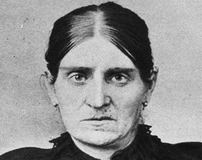
Elisabeth Wiese
Serial killer Karl Denke
Serial killer · Germany · 1909
Karl Denke (August 12, 1870 – December 20, 1924) was a serial killer from Germa…
30 victims
Karl Denke
Serial killer · Germany · 1909
Karl Denke (August 12, 1870 – December 20, 1924) was a serial killer from Germa…
30 victims
 Gesche Gottfried
Serial killer · Germany · 1813
Gesche Gottfried was born Gesche Margarethe Timm (6 March 1785 - 21 April 1831)…
15 victims
Gesche Gottfried
Serial killer · Germany · 1813
Gesche Gottfried was born Gesche Margarethe Timm (6 March 1785 - 21 April 1831)…
15 victims
 Adolf Gustav Seefeld
Serial killer · Germany · 1908
Adolf Gustav Seefeld (1871–1936) was a German tramp and religious fanatic who k…
12 victims
Adolf Gustav Seefeld
Serial killer · Germany · 1908
Adolf Gustav Seefeld (1871–1936) was a German tramp and religious fanatic who k…
12 victims
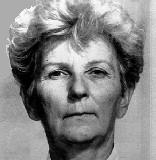 Marianne Nölle
Serial killer · Germany · 1984
Marianne Nölle was born in 1938. She was a German serial killer from Cologne. M…
7 victims
Marianne Nölle
Serial killer · Germany · 1984
Marianne Nölle was born in 1938. She was a German serial killer from Cologne. M…
7 victims
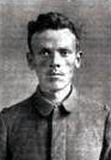 Friedrich Schumann
Serial killer · Germany · 1911
Friedrich Schumann (1 February 1893 – 27 August 1921) was a German serial kille…
6 victims
Friedrich Schumann
Serial killer · Germany · 1911
Friedrich Schumann (1 February 1893 – 27 August 1921) was a German serial kille…
6 victims
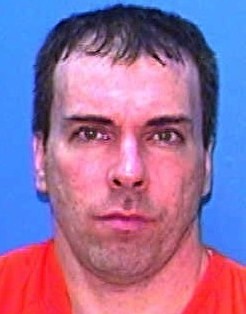 Michael Allen Griffin
Murderer · USA · 1990
Michael Allen Griffin was born on 03/27/70. He was tried in the Eleventh Judici…
1 victim
Michael Allen Griffin
Murderer · USA · 1990
Michael Allen Griffin was born on 03/27/70. He was tried in the Eleventh Judici…
1 victim
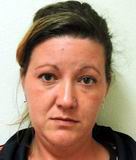 Donna Marie Freeman
Murderer · USA · 2011
Donna Marie Freeman was of the Helena community at sentencing. She was 36 at th…
1 victim
Donna Marie Freeman
Murderer · USA · 2011
Donna Marie Freeman was of the Helena community at sentencing. She was 36 at th…
1 victim
 Arthur Freeman
Murderer · Australia · 2009
Arthur Phillip Freeman was 37 at sentencing. He had been involved in an extende…
1 victim
Arthur Freeman
Murderer · Australia · 2009
Arthur Phillip Freeman was 37 at sentencing. He had been involved in an extende…
1 victim
 Mark Spotz
Spree killer · USA · 1995
Mark Newton Spotz was sentenced to death on April 24, 1996. Mark Newton Spotz w…
4 victims
Mark Spotz
Spree killer · USA · 1995
Mark Newton Spotz was sentenced to death on April 24, 1996. Mark Newton Spotz w…
4 victims
 Stephen Michael West
Murderer · USA · 1986
Stephen Michael West was sentenced to death in 1987. A jury in Union County fou…
2 victims
Stephen Michael West
Murderer · USA · 1986
Stephen Michael West was sentenced to death in 1987. A jury in Union County fou…
2 victims
 Wilbert Coffin
Murderer · Canada · 1953
Wilbert Coffin (1913 – February 10, 1956) was a Canadian prospector from York C…
3 victims
Wilbert Coffin
Murderer · Canada · 1953
Wilbert Coffin (1913 – February 10, 1956) was a Canadian prospector from York C…
3 victims
- Gender
- female
- Country
- Germany
- Location
- Hamburg, Germany
- Date of birth
- July 1, 1853
- Age at first offence
- 49
- Characteristics
- poisoner, child killer, child abuse
- Victim profile
- Peter Berkefeld / Wilhelm Karl Klotsche / Franz Sommer / Bertha Blanck / Peter Schultheiß (children)
- Method of murder
- Poisoning (morphine) / Drowning
- Date(s) of murder
- 1902 - 1903
- Years active
- 1902–1903
- Date of arrest
- September 1903
- Status
-
Executed
Executed by guillotine on February 2, 1905
Case record: Elisabeth Wiese
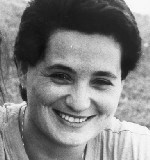
Elisabeth Wiese (1 July 1853 – 2 February 1905) was a German serial killer from Hamburg who was convicted and executed for the killing of five children.
Background
Elisabeth Wiese worked as a mid-wife as a young woman. She already had a daughter, Paula, when she married the tradesman Heinrich Wiese.
After being convicted of carrying out illegal abortions, Wiese was prevented from carrying out her profession, and money grew scarce. Tensions grew between Wiese and her husband.
Other details
Wiese became known as “the angel-maker of St. Pauli” after the police investigation began. She lived in St. Pauli, a suburb of Hamburg.
The offence
After being convicted of illegal abortions and imprisoned for several crimes, Wiese was released and offered her services as a child-carer to women who could not raise their children themselves or who had illegitimate children.
Wiese charged the mothers a one-time fee for handing the children over to adoptive parents, who in turn had to be paid. She did not always pay the adoptive parents, and in those cases the children were returned to her, so they had to be “gotten rid of.”
Wiese informed the mothers of babies left in her care that she had had the babies adopted by rich families in distant countries. What she actually did was poison the babies with morphine and burn their bodies in a stove in her apartment.
During the police investigation, Wiese was also connected to the drowning of Paula’s baby and the burning of the body in the stove immediately after the birth.
Investigation
When suspicions grew about the fate of the babies, investigations began. The police searched Wiese’s apartment and discovered her cache of morphine and poisons.
Arrest
When the police started investigating the case, they searched Wiese’s apartment.
Trial
On 10 October 1904, Wiese was convicted in court of fraud, living off immoral earnings, and the murder of five children. The crime of infanticide was brought home to her in five specific cases.
During the trial, the appearance of Wiese’s husband and daughter as witnesses against her was described as a dramatic feature.
A syndicated account described a reported claim about an English woman of title and a child adopted by Wiese, as well as advertisements used to arrange adoptions and the reported allegations about corrupted children and other methods.
A separate report about new evidence described Frau [Elizabeth] Wiese as having allegedly killed a child entrusted to her guardianship and later allegedly tried to poison her husband. It stated that, after a reward for proof of fresh crimes, it was asserted that she received thirty shillings for promising to place the child in London and that the trace of him soon after disappeared. It also described neighbors as stating they had observed the kitchen heated to an intense degree, horrible odours emanating from it, and that the stove plates burst; it described Wiese as protesting her innocence and saying the children were killed by others.
A London-Berlin reported account stated that she was sentenced five times to death, once for each murder. It also stated that, for perjury and forgery, she was sentenced to six years’ penal servitude and that there was a loss of honor for the remainder of her natural life.
In the London-Berlin account, it was alleged against her that she attempted to poison her husband, but it also stated that on this count she has been acquitted.
Sentencing
Wiese received five capital sentences for the murder of five infants. The London-Berlin account stated she was sentenced five times to death, once for each murder.
The London-Berlin account also stated that, for perjury and forgery, she was sentenced to six years’ penal servitude.
Outcome
Wiese was executed by guillotine in 1905.
Timeline
- 1 July 1853 — Elisabeth Wiese was born.
- 10 October 1904 — Wiese was convicted in court of fraud, living off immoral earnings, and the murder of five children.
- 2 February 1905 — Wiese was executed by guillotine.
- 1 November 1904 — A syndicated newspaper account reported she “has been found guilty of the murder of five infants and a long series of other grave crimes” and that she “has been sentenced five times to death, once for each murder.”
- 6 October 1903 — A Daily Mail (London) report dated October 6, 1903 referenced sensational new evidence supplied to Hamburg police on October 5.
- March 2010 — NDR filmed the story of Elisabeth Wiese in Germany.
Aftermath
Media coverage included filming by NDR in March 2010.
Bibliography and media references
- Hugo Friedländer: Ein entmenschtes Weib. Die Engelmacherin Wiese. (Friedländer: Kriminalprozesse, p. 250) ISBN 3-89853-151-1
- Michael Kirchschlager (Hrsg.): Historische Serienmörder. Menschliche Ungeheuer vom späten Mittelalter bis zum Ende des 19. Jahrhunderts. 2007 ISBN 978-3-934277-13-7
- Das freie Wort: Frankfurter Halbmonatsschrift für Fortschritt auf allen Gebieten des geistigen Lebens, vol. 7. Neuer Frankfurter Verlag, 1908, p. 194
- Baby Farmer must die. – Notorious German Woman Receives Five Capital Sentences. Syndicated (Bulletin Press Association), Oshkosh Daily Northwestern, Wisconsin (USA), 1 November 1904, p. 4
- Zeitschrift für experimentelle Pathologie und Therapie, vol. 2, A. Hirschwald 1906, p. 495
- Zeitschrift für Kinderforschung mit besonderer Berücksichtigung der pädagogischen Pathologie, vol. 17, edited by Johannes Trüper together with Dr. G. Anton, Dr. med. Martinak, Chr. Ufer, Dr. Karl Wilker, Langensalza 1908, p. 171
Verbatim quotations included in the material
Berlin, Nov. 1.—The Hamburg baby farmer, Elizabeth Wiese, has been found guilty of the murder of five infants and a long series of other grave crimes. In accordance with German law she has been sentenced five times to death, once for each murder. For perjury and forgery she was sentenced to six years’ penal servitude. Another curious pendant to her sentence was the loss of honor for the remainder of her natural life. The details of the trial were revolting in the extreme, proving the woman to be a monster of iniquity. The story of her career is one of the most revolting in the criminal annals of the empire. It appeared from the evidence given at the trial that she was born in Hanover, in 1859. her maiden name being Berkefeld. After a somewhat checkered career in her native province, where several prosecutions and imprisonments for illegal operations and imposture had rendered it impossible for her to carry on her calling of midwife, she moved to Hamburg, renting an expensive residence in one of the fashionable thoroughfares. Here she established herself; as a professional foster-mother. Her method of procedure was to insert in both German and foreign papers prominent advertisements, in which the adoption of children born out of wedlock was promised in return for a single monetary payment. These notices brought her many clients from the fashionable, as well as from the humble ranks of society. For instance, it is stated that for taking over a child whose parents belonged to the highest circles of the town of Hanover she received a fee of $1,000 in addition to $250 in hush money. At the same time she inserted in the papers other advertisements to the effect that a “young and beautiful girl” appealed to noble-minded gentlemen for temporary pecuniary assistance, and forced her own illegitimate daughter. Paula, into improper relationships with the men who replied to these thinly veiled enticements. She visited London and the names of persons said to be resident in the English metropolis were mentioned in the course of the trial just closed. It was further alleged against her, though on this count she has been acquitted, that, she attempted to poison her husband, who found her proceedings not to his liking. One of the children adopted by her is said to have been the child of an English woman of title. Of the children whom she was paid to take those whose age made the proceeding profitable were corrupted. Others she poisoned with morphine, throwing their bodies into the Elbe, or burning them in her kitchen fireplace. The crime of the infanticide was brought home to her in no fewer than five specific cases, and how far that number was from completing the gruesome tale of her iniquities there is no means of knowing. A dramatic feature of the trial was the appearance of the woman’s husband and daughter as witnesses against her. UnknownMisandry.blogspot.com Terrible Charges Against A Berlin Baby Farmer Daily Mail (London, England) October 6, 1903 Berlin, Monday, Oct. 5. – Sensational new evidence has been furnished to the Hamburg police against Frau [Elizabeth] Wiese, who is alleged to have killed a child entrusted to her guardianship, and later, it is further charged, tried to poison her husband. As a result of offering a reward for proof of fresh crimes it is asserted that the woman received for adoption in the family of a certain doctor in London the son of a Hamburg servant girl. The woman received thirty shillings for promising to place the child in London, but all trace of him soon after disappeared. There is no reason to believe that the woman not only deliberately made away with two children given her for adoption, but also the child of her daughter, who was employed in the London doctor's family, by burning them in her kitchen stove. She is said to have had the stove enlarged for the special purpose of carrying out her fiendish work. The neighbours state that they had often observed that the kitchen was heated to an intense degree and also that horrible odours used to emanate from it. The woman kept such a hot fire going that the stove plates burst. Frau Wiese protests her innocence and says that the children were killed by others. UnknownMisandry.blogspot.com
Spotted an error, or have more information about this case?