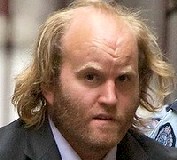
Arthur Freeman
Murderer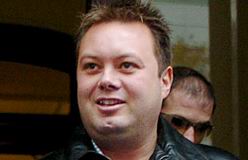 Carl Williams
Murderer · Australia · 2003
Carl Antony Williams (b. October 13, 1970) was an Australian convicted hitman a…
4 victims
Carl Williams
Murderer · Australia · 2003
Carl Antony Williams (b. October 13, 1970) was an Australian convicted hitman a…
4 victims
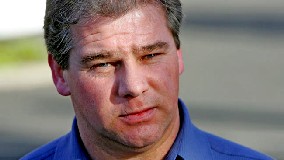 Robert Farquharson
Murderer · Australia · 2005
Robert Donald William Farquharson (born 1969) was an Australian father convicte…
3 victims
Robert Farquharson
Murderer · Australia · 2005
Robert Donald William Farquharson (born 1969) was an Australian father convicte…
3 victims
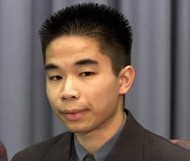 Sef Gonzales
Murderer · Australia · 2001
Sef Gonzales (born September 16, 1980) was an Australian man who was convicted…
3 victims
Sef Gonzales
Murderer · Australia · 2001
Sef Gonzales (born September 16, 1980) was an Australian man who was convicted…
3 victims
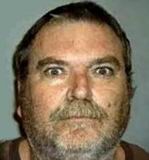 Francis Michael Fahey
Murderer · Australia · 2002
Francis Michael Fahey was sentenced to two life sentences with a minimum 25 yea…
2 victims
Francis Michael Fahey
Murderer · Australia · 2002
Francis Michael Fahey was sentenced to two life sentences with a minimum 25 yea…
2 victims
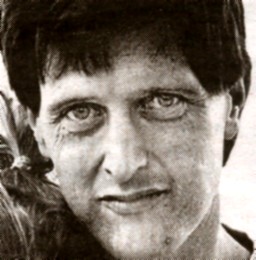 John Myles Sharpe
Murderer · Australia · 2004
John Myles Sharpe was born on 28 February 1967 in Mornington and grew up in tha…
2 victims
John Myles Sharpe
Murderer · Australia · 2004
John Myles Sharpe was born on 28 February 1967 in Mornington and grew up in tha…
2 victims
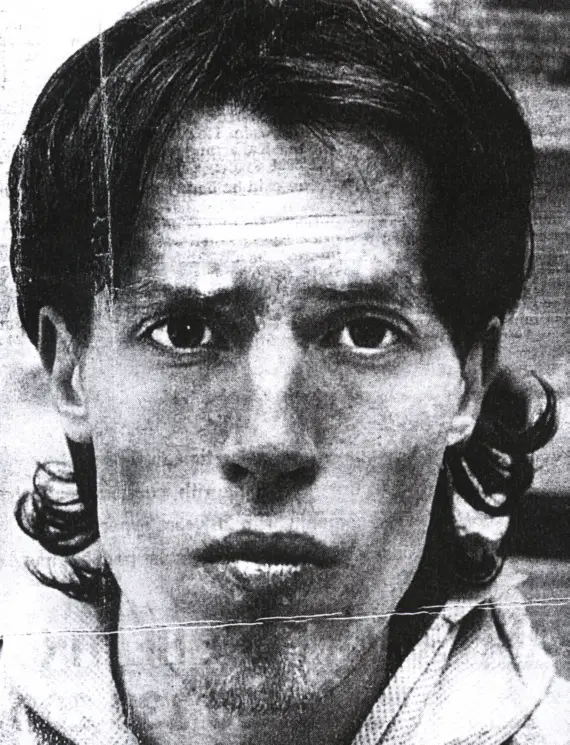 Lloyd Maurice Crosbie
Murderer · Australia · 2001
Lloyd Maurice Crosbie was convicted in Victoria. · March 11, 2003 — The Supreme…
2 victims
Lloyd Maurice Crosbie
Murderer · Australia · 2001
Lloyd Maurice Crosbie was convicted in Victoria. · March 11, 2003 — The Supreme…
2 victims
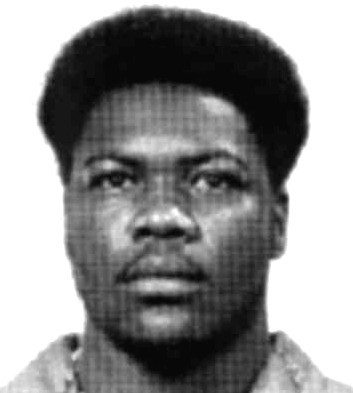 Edward Earl Williams
Murderer · USA · 1992
Edward Earl Williams was also identified as Akeem Aki-Khuam in the federal habe…
3 victims
Edward Earl Williams
Murderer · USA · 1992
Edward Earl Williams was also identified as Akeem Aki-Khuam in the federal habe…
3 victims
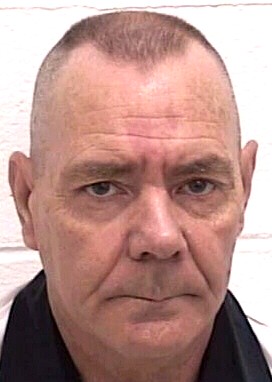 William Howard Putman
Murderer · USA · 1980
July 9, 1980 — William Putman purchased a .38 caliber revolver at a Talladega,…
3 victims
William Howard Putman
Murderer · USA · 1980
July 9, 1980 — William Putman purchased a .38 caliber revolver at a Talladega,…
3 victims
 Walter Sorto
Murderer · USA · 2002
Name: Walter Alexander Sorto TDCJ Number: 999465 Date of Birth: 08/10/1977 Gend…
2 victims
Walter Sorto
Murderer · USA · 2002
Name: Walter Alexander Sorto TDCJ Number: 999465 Date of Birth: 08/10/1977 Gend…
2 victims
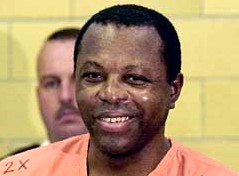 Amos Lee King
Murderer · USA · 1977
Name: Amos Lee King Jr. · Gender: Male · Race: Black · Hair color: Black · Eye…
2 victims
Amos Lee King
Murderer · USA · 1977
Name: Amos Lee King Jr. · Gender: Male · Race: Black · Hair color: Black · Eye…
2 victims
- Gender
- male
- Country
- Australia
- Location
- Melbourne, Victoria, Australia
- Date of birth
- 1972
- Age at first offence
- 37
- Characteristics
- revenge, domestic dispute
- Victim profile
- Darcey Freeman, 4 (her daughter)
- Method of murder
- By throwing her off bridge
- Date(s) of murder
- January 29, 2009
- Years active
- 2009
- Date of arrest
- Same day
- Status
-
Life imprisonment
Sentenced to life imprisonment with a non-parole period of 32 years on April 11, 2011
Case record: Arthur Freeman
Background
Arthur Phillip Freeman was 37 at sentencing. He had been involved in an extended custody battle with his former wife and ex-wife Peta Barnes over their children. The relationship between Freeman and Barnes had ended, with their divorce occurring in June 2008, and Freeman returned to Australia in December 2008 seeking legal advice.
Freeman had a history of mood issues and worked in information technology. He studied computer science at Deakin University in the 1990s and later worked an IT job at RMIT's aeronautics campus at Fishermans Bend. He met Peta Barnes in 1998, moved in together to north Richmond, and married on December 31, 1999. Freeman and Barnes moved to London on January 17, 2000 for Freeman to get a well-paid IT job. Their children were Benjamin Eric (born February 1, 2002), Darcey Iris (born February 11, 2004), and Jonathan Jackson William (born February 24, 2006). They moved back to Australia on June 24, 2006.
After Freeman and Barnes separated on March 23, 2007, they shared custody on a three-days-on, three-days-off arrangement. When Freeman announced he was returning to Britain after the divorce in June 2008 to obtain permanent residency, Barnes sought formal alteration of custody arrangements through the courts. Freeman returned home in December 2008 and sought legal advice.
A hearing was set at the Federal Magistrates Court for January 27-28, 2009, and the family first met with a psychologist to determine what was best for the children. Freeman met the psychologist on December 12, was late to the meeting and a subsequent meeting, and kept interrupting while others were interviewed. The psychologist recommended that the children reside with their mother and spend time with their father on alternate weekends. The report described Freeman as having “chronic personality and interpersonal problems that are caused by a tendency to irrationality, contradiction and denial of responsibility,” while also noting Freeman appeared to have a warm and loving relationship with all his children.
Barnes later told police that “Arthur appeared happy when I left the court.” Freeman expressed anger, disappointment and frustration at the outcome to friends. On January 28, Barnes phoned Freeman to speak to the children, and Freeman said he would get them to call her the following morning on their way to Darcey’s first day of school. Barnes never had the chance to speak to her daughter again.
The offence
Freeman murdered his four-year-old daughter Darcey by throwing her from the West Gate Bridge in Melbourne. Darcey died after being thrown 58m from the bridge, and later descriptions also stated 80m from the bridge. The incident occurred on January 29, 2009.
Before the killing, Freeman drove from his parents’ Aireys Inlet home with his three children, Ben (6), Darcey (4), and Jack (2). He stopped his car on the West Gate Bridge, put hazard lights on, walked to the railing, and tossed Darcey over the edge. Darcey fell to her death. It was said it was to have been her first day of school.
Minutes before the killing, Freeman telephoned Barnes and told her to “Say goodbye to your children.”
After throwing Darcey over the bridge, Freeman drove away and then tried to hand his sons Ben and Jack to security staff at the Commonwealth Law Courts complex in the CBD. Freeman became distressed, started crying and shaking, and was later arrested at the complex.
A witness statement quoted Freeman’s son Ben telling him to turn back, saying “Darcey can’t swim,” after Freeman drove away from the bridge. Another report said Ben said, “Darcey can’t swim,” and described Ben repeatedly urging Freeman to go back.
In a description by the sentencing judge, Freeman drove to his parents’ house in the seaside hamlet of Aireys Inlet where his three children had been staying. The next morning, Freeman’s father Peter noticed Freeman was distressed and appeared to be in a “trance.”
Investigation
The incident led to a police response and interviews with witnesses. Homicide squad Det-Insp Steve Clark said the sons may have been in the car with Freeman on the bridge. Clark also said Barnes had been informed and was with police and that “She’s currently assisting police the best she can in terrible, terrible circumstances.”
Police and court proceedings also involved CCTV footage. CCTV footage of Freeman minutes after throwing Darcey off the West Gate Bridge showed Freeman standing shaking, staring out a window of the Commonwealth Law Courts building, crying, and trembling. Court staff and counsellors tried to speak to Freeman.
Clinical forensic registrar Justin du Plessis assessed Freeman’s mental state and wrote that he was “clearly not fit for interview” in his notes. Du Plessis testified:
“He was hunched over in the chair… He was crying. He wasn’t speaking to me. He wasn’t replying, responding to any of my questions. Not even once, there wasn’t a single verbal response. And he was shaking or trembling.”
Du Plessis said acute psychiatric distress was observed and was asked whether the distress could have been “falling apart as a result of having thrown his child over the bridge,” stating that was a possibility.
Arrest
Freeman was arrested outside the Federal Court in Melbourne about 10.30am (AEDT) after allegedly throwing Darcey from the West Gate Bridge. He did not appear in court because he was deemed suicidal and was unfit to be interviewed by police due to an acute psychiatric state and concerns he may harm himself.
At the time of arrest, police were called after security staff noticed Freeman standing in the foyer with his two sons, aged seven and 23 months. Officers arrested Freeman, who offered no resistance. It was said Freeman asked security guards to look after his children just before he was taken away.
Trial
Freeman was tried before Justice Paul Coghlan. He pleaded not guilty to Darcey’s murder on the grounds of mental impairment and entered a not guilty plea based on mental impairment.
A jury convicted Freeman after five days of trial. The jury comprised seven women and five men.
Prosecution position
Chief Crown prosecutor Gavin Silbert SC argued against the mental impairment defence. Silbert said the case was “essentially about Prof Burrows and his evidence” and said:
“At the end of the day you should reject Prof Burrows entirely.”
Silbert characterised the case as “spousal revenge” by a man who feared he was about to lose joint custody of his children.
In closing, Silbert argued Freeman was mildly to moderately depressed due to his “situation in life” after a custody decision and that anger management problems bubbled over. Silbert also argued that Freeman was not mad and said the jury should put out of their minds the idea that only madness could have made a father do what he did.
In another part of the trial coverage, Silbert said the defence rested on the evidence of Professor Graham Burrows, describing Burrows as “the psychiatrist of last resort” and the only one of six psychiatrists to examine Freeman who thought Freeman did not know what he was doing when he flung his daughter from the bridge.
Defence position
Defence counsel David Brustman SC argued Freeman was mentally impaired at the time he killed his daughter and told the jury:
“In the dock sits a man who flung a four-year-old girl, his own daughter, to her death.
It is the easiest thing in the world simply to say that these events are nothing more than an evil man punishing his estranged wife in the worst possible way he could, by taking from her the most important thing in her life, which of course is her child.
Doesn’t his act, don’t all his actions, scream at us madness? What we say to you is, his impaired mind caused him to do this.”
Freeman’s trial included medical evidence and expert testimony regarding mental illness, depression, dissociation, and whether Freeman knew the nature and quality of his conduct and whether it was wrong.
A psychiatrist described as psychiatrist Graham Burrows testified for the defence. The court heard Freeman suffered from a “major depressive disorder” and was “very probably” in a dissociative state “like that of a sleep walker” at the time he killed Darcey. Burrows also said Freeman did not recall dropping Darcey to her death, adding:
“He still doesn’t believe it occurred. He still doesn’t believe he could have done it. But . . . people have told him he’s done it, so he accepts that.”
A defence rebuttal and counter evidence included testimony from forensic psychiatrist Douglas Bell, who said observations showed Freeman knew the nature of his conduct. Bell testified that the sequence of goal-directed behaviours was “not compatible with a state of mind in which behaviour is not conscious or voluntary,” and stated:
“Mr Freeman parks his car in the far left emergency lane, puts his hazard lights on, opens the door of his car, reaches in, pulls Darcey from her seat,”
“He . . . walks her to the bridge, then lifts her above the high side rail and throws her over. He then returns to the car, starts it, drives off into traffic. This is a complex . . . sequence of goal-directed behaviours not compatible with a state of mind in which behaviour is not conscious or voluntary.”
The jury heard from a psychiatrist Yvonne Skinner called by the prosecution as a rebuttal witness. Skinner testified Freeman’s actions indicated he was acting “consciously and voluntarily,” and answered “yes” when asked if actions were consistent with “spousal revenge” or “filicide.” Skinner said:
“There is no evidence that he had a mental illness or automatism and that he did not know what he was doing was wrong.”
Skinner also described Freeman’s day as “well organised and purposeful” and detailed actions such as getting the children ready, loading the car, making phone calls on the way to Melbourne, speaking to his children on the way, receiving phone calls from his wife during which he made threats against the children’s lives, parking on the bridge, putting car hazard lights on, asking his daughter to climb into the front of the vehicle, getting out, picking her up and tossing her over the railing, returning to his car, continuing driving, stopping further up the road so son Ben could get in the front seat, and parking his car at the Commonwealth Law Courts and going inside where he was arrested.
Evidence was also presented from a taped interview involving Ben Freeman. Ben Freeman said in the interview:
“My Dad went out with Darce and then he threw her over the bridge,”
“I didn't hear her scream on the way when she . . . nothing, nothing, nothing.”
“I said go back and get her,”
“And Dad keeps driving along. Then I said Darcey can't swim . . . and then Dad would just keep on driving, didn't go back to get her. I kept on saying it over and over again and he never did it.”
In another account of expert evidence, a psychiatrist described Freeman’s behaviour at the Commonwealth Law Courts where he handed himself in to security guards and where CCTV showed him trembling and crying, stating it indicated he was “catastrophically overwhelmed by the enormity of what he has done.”
During final directions, Justice Coghlan told the jury that to find Freeman not guilty they needed to accept that, on the balance of probabilities, he did not know the “nature and quality” of his conduct or did not know it was wrong when he threw his daughter to her death. He also instructed them not to “reason backwards” from the act.
Freeman did not deny killing Darcey during the trial. It was stated his barrister argued Freeman was “mad not bad” when he threw Darcey from the bridge.
Sentencing
Freeman was sentenced to life imprisonment with a non-parole period of 32 years on April 11, 2011. Supreme Court Justice Paul Coghlan sentenced Arthur Phillip Freeman, 37, to life in jail with a non-parole period of 32 years for the murder of Darcey, four-year-old daughter.
During sentencing, Freeman showed no reaction throughout the hearing. After the sentence was handed down, he had to be pulled from the courtroom by three guards following an outburst. Freeman backed into a corner of the dock to avoid guards as he accused an in-law of being implicated in the theft of diamonds from a West Australian mine and Federal Police phone taps. He also mentioned death threats to himself.
Justice Coghlan said Freeman had not shown remorse and had not begun to understand the enormity of his brutal crime, stating:
“You are yet to say sorry for what you have done,”
“Your attitude to these matters remain self-centred. I regard your prospects of rehabilitation as bleak.”
The prosecutors had called for Freeman to be jailed for life without parole, while his lawyers pleaded for a minimum term.
The judge addressed an argument that Freeman should be “locked away for ever,” explaining that sentencing required consideration of other factors. Justice Coghlan said:
“Whatever happens, you will spend what many consider will be the best years of your life in prison,”
The judge said he did not think Freeman was “beyond redemption” and took into account good behaviour, family support and references. The judge also said:
“One of the unfortunate features of this case is that others blame themselves”
and continued:
“You are responsible for it. And nobody else,”
The judge said the earliest date Freeman could be released was 29 January 2041, when Freeman would be 67 years old.
Judicial remarks on the killing and aggravating factors
Justice Coghlan described the killing as aggravated by breach of trust and the destruction of the lives of others. He said:
“This was a killing of an innocent child,”
“The circumstances of the killing were horrible. “The throwing of your four-year-old daughter from a bridge more than 80 metres above the ground could not be more horrible. “What Darcey’s last thoughts might have been does not bear thinking about, and her death must have been a painful and protracted one.”
He described Freeman’s actions as “a fundamental breach of trust” and an attack on the institution of family. He stated Freeman killed Darcey in the presence of his two young sons Ben, 6, and Jack, 2, and said:
“It can only be concluded that you used your daughter in an attempt to hurt your former wife as profoundly as possible.”
He also said Freeman could not have chosen a more public place for the murder act, saying it had offended the sensibility of the entire community and that the lives of Darcey’s mother and others would “never be the same.”
The judge said emergency services, witnesses and the community as a whole were affected by Darcey’s death by having the events “forced upon them.”
Mental impairment and depression
Justice Coghlan said the defence largely attempted to push for a non-parole period based on “impaired mental function” that would reduce moral culpability. He quoted expert advice from Dr Lester Walton and said:
“there is minimal evidence … that Freeman was suffering from mental illness that he would have realised his conduct was wrong”.
The judge said Dr Walton’s evidence included a likelihood of clinical depression at the time and possible need for close supervision because he was a suicide risk. Justice Coghlan accepted that the sentence would “weigh more heavily” on Freeman partly as a result of depression and also the nature of Darcey’s death.
The judge said:
“I understand that many will say that your crime is so serious in so many respects that I should not impose a non-parole period. That is, you deserve to be locked away for ever. I see the attractiveness of that argument, but the sentencing process is not as simple as that.”
He concluded:
“I do not regard you a being beyond redemption. You are only 37 years of age.”
He also said he had regard to Freeman’s mental illness and took it into account in deciding both whether to fix a non-parole period and the period length. He said earlier good behaviour, character references and family support were taken into account.
Scenes and events described by the judge
Justice Coghlan described moments before and after the death. He said Freeman drove to his parents’ house in Aireys Inlet where his three children had been staying. He said Freeman’s father Peter noticed Freeman distressed and appearing in a “trance.”
The day before the killing, it was said Freeman had the amount of custody time he had with his children reduced by a court. Justice Coghlan said the act appeared to have been triggered by his reaction to custody orders and desire to seek “spousal revenge.”
While heading back to Melbourne, the judge described a lengthy phone conversation with Elizabeth Lamb, who was in England at the time, in which Freeman told her he felt he had “lost” his children. Minutes before the murder, Freeman telephoned Ms Barnes and told her to “Say goodbye to your children.”
The judge described that Freeman parked his four-wheel drive in the left-hand emergency lane near the West Gate Bridge’s highest point, coaxed Darcey out of the car and picked her up, carried her to the edge of the bridge and threw her over.
After driving away, Justice Coghlan said Ben urged him to turn back and said “Darcey can’t swim,” and Freeman then tried to hand Jack to security staff at the Commonwealth Law Courts complex. Freeman became distressed, crying and shaking, before being arrested.
Appeals
No appeal information was included.
Outcome
Freeman was found guilty by a Supreme Court jury of murdering his four-year-old daughter Darcey after a trial that lasted five days.
Freeman then received a life sentence with a non-parole period of 32 years on April 11, 2011.
Darcey’s mother and Freeman’s ex-wife Peta Barnes showed no emotion at sentencing and left the court with supporters without making a statement. Several members of the jury that convicted Freeman were also in court to hear the verdict.
Other details
Freeman was described as having a “Rasputin-like appearance of a mad monk” by chief Crown prosecutor Gavin Silbert, SC. A journalist also described Freeman’s appearance as having long, unkempt hair and a face etched in permanent puzzlement, and that he could be mistaken for a homeless person aside from the suit and tie.
During the trial it was stated Freeman had long studied computer science and that he kept busy buying Ford Escorts and preparing them for racing with a group of friends.
Multiple descriptions of arrest and courtroom events included that Freeman had to be removed from the dock by security staff after the sentence.
Barnes told the jury that the man responsible for destroying her world had “The whole time I knew him he was always clean-shaven and professional in his dress, so his hair was short, professionally cut,” while the man in the dock barely resembled him.
At the time of the killing, it was said Freeman and Barnes were locked in a custody battle over their children and Freeman felt he was going to lose joint custody.
Spotted an error, or have more information about this case?