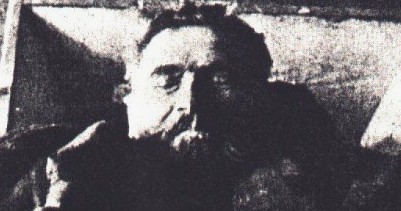
Karl Denke
Serial killer Georg Karl Grossmann
Serial killer · Germany · 1913
Georg Karl Grossmann, who commonly called himself just Karl Grossman (also give…
50 victims
Georg Karl Grossmann
Serial killer · Germany · 1913
Georg Karl Grossmann, who commonly called himself just Karl Grossman (also give…
50 victims
 Friedrich Haarmann
Serial killer · Germany · 1918
Friedrich "Fritz" Haarmann (October 25, 1879 – April 15, 1925) was a serial kil…
27 victims
Friedrich Haarmann
Serial killer · Germany · 1918
Friedrich "Fritz" Haarmann (October 25, 1879 – April 15, 1925) was a serial kil…
27 victims
 Adolf Gustav Seefeld
Serial killer · Germany · 1908
Adolf Gustav Seefeld (1871–1936) was a German tramp and religious fanatic who k…
12 victims
Adolf Gustav Seefeld
Serial killer · Germany · 1908
Adolf Gustav Seefeld (1871–1936) was a German tramp and religious fanatic who k…
12 victims
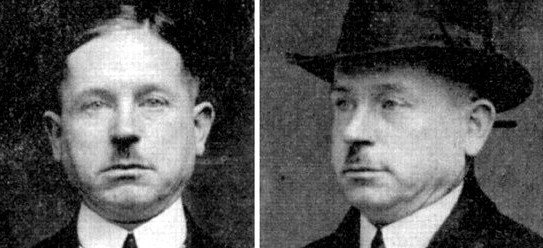 Peter Kürten
Serial killer · Germany · 1913
Peter Kürten Peter Kürten was convicted of nine murders and sentenced to death.…
9 victims
Peter Kürten
Serial killer · Germany · 1913
Peter Kürten Peter Kürten was convicted of nine murders and sentenced to death.…
9 victims
 Friedrich Schumann
Serial killer · Germany · 1911
Friedrich Schumann (1 February 1893 – 27 August 1921) was a German serial kille…
6 victims
Friedrich Schumann
Serial killer · Germany · 1911
Friedrich Schumann (1 February 1893 – 27 August 1921) was a German serial kille…
6 victims
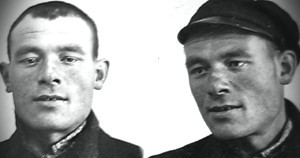 Bruno Lüdke
Serial killer · Germany · 1928
Bruno Lüdke (3 April 1908 – 26 April 1944) was an alleged German serial killer.…
84 victims
Bruno Lüdke
Serial killer · Germany · 1928
Bruno Lüdke (3 April 1908 – 26 April 1944) was an alleged German serial killer.…
84 victims
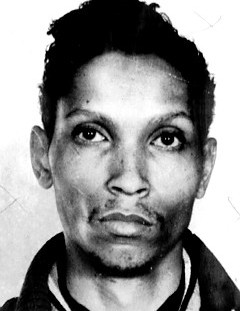 Winston Moseley
Murderer · USA · 1963
Winston Moseley was convicted in the murder of Catherine “Kitty” Genovese and w…
3 victims
Winston Moseley
Murderer · USA · 1963
Winston Moseley was convicted in the murder of Catherine “Kitty” Genovese and w…
3 victims
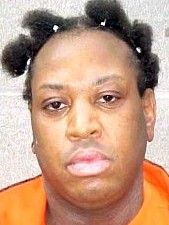 Sherman Rutledge
Murderer · USA · 1997
Sherman Rutledge was charged with armed robbery, first degree murder of Ryan Ha…
1 victim
Sherman Rutledge
Murderer · USA · 1997
Sherman Rutledge was charged with armed robbery, first degree murder of Ryan Ha…
1 victim
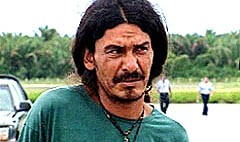 Jose Vicente Matias
—
Jose Vicente Matias fue descrito como un asesino en serie brasileño que se las…
Jose Vicente Matias
—
Jose Vicente Matias fue descrito como un asesino en serie brasileño que se las…
 Arthur Hans Halvorsen
Murderer · USA · 1985
March 31, 1985 — Arthur Hans Halvorsen drank at a bar during the afternoon; he…
2 victims
Arthur Hans Halvorsen
Murderer · USA · 1985
March 31, 1985 — Arthur Hans Halvorsen drank at a bar during the afternoon; he…
2 victims
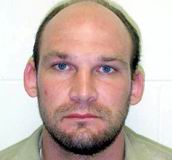 John Lotter
Murderer · USA · 1993
John L. Lotter was convicted in connection with the December 1993 deaths of Tee…
3 victims
John Lotter
Murderer · USA · 1993
John L. Lotter was convicted in connection with the December 1993 deaths of Tee…
3 victims
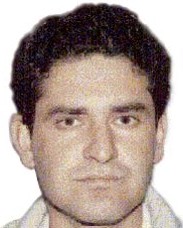 Mir Aimal Kasi
Murderer · USA · 1993
Mir Aimal Kasi was a Pakistani native who was also known as Mir Aimal Kansi and…
2 victims
Mir Aimal Kasi
Murderer · USA · 1993
Mir Aimal Kasi was a Pakistani native who was also known as Mir Aimal Kansi and…
2 victims
- Gender
- male
- Country
- Germany
- Location
- Munsterberg, Silesia, Germany
- Date of birth
- August 12, 1870
- Age at first offence
- 39
- Characteristics
- cannibalism, abuse, motive unclear
- Victim profile
- Men and women (primarily journeymen and homeless persons)
- Method of murder
- Beating with an axe
- Date(s) of murder
- 1909 - 1924
- Years active
- 1909–1924
- Date of arrest
- December 21, 1924
- Status
-
Died in custody
Committed suicide by hanging himself with his suspenders, in his cell, on December 22, 1924
Case overview
Karl Denke (August 12, 1870 – December 20, 1924) was a serial killer from Germany.
Background
Denke was born in Münsterberg/Silesia in Germany, which was later Ziębice in Poland. There was not a great deal of information about his early life. In adulthood, he was well liked in his community and worked as an organ player at the local church. He was also referred to as “Vater Denke” and “Papa Denke” by locals.
In adulthood, he operated a rooming house in his hometown between 1918 and 1924. His tenants affectionately called him “Papa.” He was described as helping beggars and people in need and carrying the cross at funerals of members of the Evangelist commune. He was also described as serving as the organ-blower for his local church and refraining from alcohol and not having relations with women.
Some childhood details were described as well: he was believed to be a dull child, and teachers declared him an idiot and often punished him. Teachers were said to have noted that he was “very obstinate and lacks respect for teachers.” It was also said he did not speak until age six. His family stated that he never showed signs of fear or disgust and that he had no violent temper, though he was described as “neither man nor woman.” He was treated with suspicion by some adults because of his solitary status and sexual indifference.
His family was described as saying he had accepted their invitation only once, which was memorable because he “had eaten 2 pounds of meat!” He was described as gluttonous, using the term “Vielfraß.”
Denke’s personality was described as far from established, with most information coming from documents or sparse remarks made by relatives and co-citizens after his death. His crimes were described as not motivated sexually and as seeming rather rational.
The offence
Denke was arrested after attacking a man at his house with an axe. Police found human flesh in huge jars of curing salts in his home. A ledger contained details of forty people Denke had murdered and cannibalized over the years. It was thought he even sold the flesh of his victims at the Breslau (today’s Wrocław) market.
Investigators were unable to explain his actions. The number of victims was described in multiple ways: it was said to be a minimum of thirty, and it was also reckoned as thirty more or less based on evidence found in his kitchen. Other descriptions stated he killed at least forty residents, and other estimates included a range of at least eight people based on bones, with dental analysis suggesting at least twenty people, and Professor Euler estimating cautiously that the teeth belonged to at least twenty-five individuals.
No evidence of sexual assault was ever publicized in Denke’s case. It was also described that there was no evidence that Denke had sold the meat of his victims, though investigators noted an assumption that his guests—the vagabonds—had been offered to eat it.
Investigation
A tenant, a coachman named Gabriel, heard cries for help which seemed to emanate from Denke’s flat downstairs. Gabriel rushed down to help and found a young man staggering along the corridor with blood streaming from his open scalp. Before the victim fell unconscious, the victim blurted out that “Papa” Denke had attacked him with an ax. Police were summoned and arrested Denke, scouring his flat for evidence.
Police searched Denke’s home and found identification papers for twelve traveling journeymen, plus assorted items of male clothing. In the kitchen, two large tubs held meat pickled in brine. With the assorted bones and pots of fat, detectives reckoned that it added up to thirty victims, more or less. In Denke’s ledger, they found listed names and dates with the respective weights of bodies he had pickled dating back to 1921. The record was described as listing that he had specialized in slaying beggars, tramps, and journeymen who seemed unlikely to be missed around the neighborhood.
A later forensic report quoted the first findings made during the search, including bones and pieces of meat in salt solution, multiple pieces with skin, a torso described as cut through the middle, missing parts including skin and muscles from the necks, and missing extremities (arms and legs), head and sexual organs. The report also described cooked meat found in pots filled with cream sauce and stated that livor mortis suggested that the disassembly took place several hours after death. It recorded that there was “no evidence of vital reaction of the bodies to the cuts made,” concluding that the cuts were not made while victims were still alive. The report also described missing tissues and described that lesions could not be determined, nor the nature of death or the tool of crime.
The report also described a bowl filled with amber colored fat, biological testing that gave a weak-positive result for the presence of human protein, a shed containing a barrel full of bones cleaned of tendons and muscles that most probably had been priorly cooked, and bones and skeletal pieces uncovered in a pond and local forest, with a full list of bones sent for examination. The report described that bones were “very light, porous and fatless,” that cutting surfaces were jagged as if blunt force had been applied such as the blunt end of an axe or a hammer, and that some bones were visibly sawed. It also described traces found suggesting cutting with a knife and declared that bones sent belonged to at least eight people.
The forensic report described that Denke’s dental collection was revealing, with a total of three hundred and fifty-one teeth found in a moneybag and in two tin boxes marked “Pepper” and “Salt,” plus in three paper bags. It recorded that teeth were partly sorted according to size, with molars in the moneybag and others in the boxes and in the paper bags. It described one bag likely belonging to a single person and another bag containing three lower incisors with strongly atrophic structure from an old individual. It recorded that all teeth except six were well preserved.
The forensic analysis concluded that remains of the bones were “definitely of a minimum of eight victims,” and dental evidence suggested at least twenty people, with Professor Euler noting that some teeth appeared more than twice as often as statistically expected, which suggested there might have been even more victims. It also noted the majority of victims suffered from caries and that people in old age lacked proper dental treatment. Professor Euler estimated cautiously that teeth belonged to at least twenty-five individuals, describing extraction methods and signs on some teeth including fractures in enamel that couldn’t have occurred during victims’ lifetime, and traces of claws with very sharp edges.
The report further described an analysis of victim age based on dental findings, stating that there were no young individuals among the known victims, that four wisdom teeth belonged to the same people (or individual), and that they had peculiarities usually found on the teeth of fifty-year-old individuals. Professor Euler summarized that one person was not older than sixteen years, while the majority were significantly older than forty years; two individuals were probably twenty to thirty years old and one between the thirtieth and fortieth year. The tests did not give satisfactory results concerning sex of individuals or their jobs.
The report also described other findings connected to Denke’s processing and experiments. It recorded that three pairs of suspenders were made of human skin, with cuts under the nipples still visible, and that four suspenders were patched with human skin taken from the pubic area. It also described traces of “louse nits” under a microscope, and that all suspenders showed traces of use and one was found on Denke himself. It recorded that Denke had leather straps cut from human skin treated with shoe polish, with parts sawn together with pieces and rags of cloth, and that many laces were made of human hair, including a sample described as one centimeter long, grey-white, and taken from the head. It described forty-one bundles of rags and described that the investigation led to no results concerning old worn-out clothes.
The report described Denke’s collection of coins as round flat unfired clay pieces with one side images of a real coin, and it described large numbers of ID cards and private papers of several persons. Account books were found relating to revenue from a garden and working hours. Loose sheets of paper recorded names of thirty men and women with a date before each name, likely the date of death, with notes for men including date of birth, place of stay and status. It included a slip listing terms and numbers next to a name, including “dead, 122, naked 107, disemboweled 83.” It described the record as chronological and numbered, with numbering starting at number eleven for some entries, and it described initials and a number most likely indicating weight. It described tools seized for killings and fragmentation, including three axes, a large wood saw, a tree saw, a pickaxe, and three knives. The saw was described as having also sawn wood and the detection of human blood succeeded, while it was supposed that finer tools such as the tree saw were used to cut heads and pelvic bones. The pickaxe was described as having blood and a length of forty centimeters and being pointed forward, and it said that blood on knives could not be clarified.
Arrest
Denke was arrested on December 20, 1924 after attacking a man at his house with an axe. Police searched his home and found human flesh in jars of curing salts, plus a ledger describing victims.
During interrogation, Denke explained that he had attacked the vagrant Olivier as he attempted to rob him after receiving a handout. Denke was locked up in a holding cell.
Denke was also described as having been arrested after police were summoned and he was scoured for evidence in his apartment.
People involved
A coachman named Gabriel heard cries for help from Denke’s flat and found a young man staggering with blood streaming from his open scalp.
The wounded victim was described as a young man who blurted out that “Papa” Denke had attacked him with an ax. In other passages, the victim was named Vincenz Olivier.
Trial
No trial information was provided.
Sentencing
No sentencing information was provided.
Appeals
No appeals information was provided.
Outcome
Denke hanged himself shortly after his arrest, by hanging himself with his suspenders in his cell, on December 22, 1924.
A narrative also described that Denke was found dead in the police station’s cell the same night at about 11:30, and that he had hanged himself using a handkerchief. Another narrative described that “The day after his arrest, Denke hanged himself in his cell,” indicating his motives could only be guessed at. Homicide investigators were unable to explain his actions.
Other details
Denke’s life and actions were investigated by Lucyna Biały (custodian of Silesian Library of Wrocław University) in the summer of 1999, based on German press from the twenties. Her work was published by editor Tadeusz Dudź in “Gazeta Wyborcza” and “Gazeta Wrocławska.”
An exhibition at the Household Equipment Museum in Ziębice ran from July to August 1999. The exhibit was titled “An ancient iconography of Ziębice” and featured tools used by Karl Denke in his crimes.
A later narrative described the story being resurrected and connected to a report titled “Casus Denke- The Ziębice Cannibal,” and it described first mention in the Ząbkowice-Ziębice Journal Frankestein–Murnsterberger Zeitung on December 25, 1924 and further accounts in the Munsterberger Zeitung on December 28 of that year.
A quotation from Dr. Friedrich Pietrusky’s report (as quoted after Mark Benecke) included the following verbatim passage:
“The first findings made in Denke’s house during the search were bones and pieces of meat. The latter were in a salt solution found in a wooden drum. There were altogether fifteen pieces with skin. Two parts of the breast, which is strongly hairy. The torso is cut through the middle, three fingers above the navel. Its lateral limit is the front shoulder blade. In the piece of the anterior abdominal wall, the middle of the navel is visible. The remaining pieces belong to the side and back parts. The largest is about forty by twenty centimeters large. Particularly striking was a very clean anus with hand large parts of both buttocks . The meat is brownish red and does not feel as if the body would have lost much blood. On the back some soft-bluish discoloration is visible as well as livor mortis, which leads to the conclusion that the disassembly of the body took place several hours after death. There is no evidence of vital reaction of the bodies to the cuts made, which means that the latter were not made while the victims were still alive. Nevertheless some skin and muscles from the necks were missing, as well as extremities [arms and legs], head and sexual organs. Lesions could not be determined, nor the nature of death or the tool of crime. In three medium-sized pots filled with cream sauce, some cooked meat, partially covered with skin and human hair was found. The meat was pink and soft. All pieces seemed cut from the gluteal area [buttocks]. One pot had only half a portion. Denke must have eaten the other piece short before being arrested”
The quoted report also included:
“I should like to mention here that there is no evidence that Denke has ever sold the meat of his victims [all evidence has obviously been eaten!]. However, it seems certain that his guests, that is the vagabonds, were offered to eat it”
The report also included a remark embedded in the quoted narrative:
“Nevertheless some skin and muscles from the necks were missing, as well as extremities [arms and legs], head and sexual organs.”
Disputed or uncertain points were described as assumptions rather than established facts, including the question of whether Denke had eaten meat, sold it, or given it to guests. Another statement described the assumption that the pulling out of teeth of young people must have taken place many weeks ago, and that study of teeth brought more information than could be learned from bones, with bones only partially recovered.
A narrative also recorded specific notes from Denke’s personal behavior and reputation, including that he carried the cross, helped beggars, and had a good reputation in his town before his arrest.
Spotted an error, or have more information about this case?