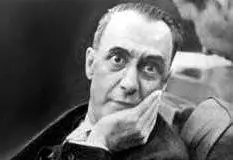
Pierre Jaccoud
Homicide ?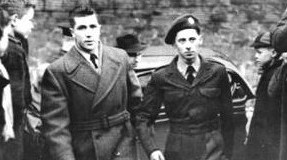 Iain Hay Gordon
Homicide ? · United Kingdom · 1952
Iain Hay Gordon was convicted of the killing of Patricia Curran and was found g…
1 victim
Iain Hay Gordon
Homicide ? · United Kingdom · 1952
Iain Hay Gordon was convicted of the killing of Patricia Curran and was found g…
1 victim
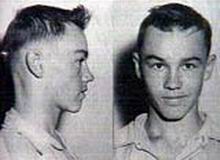 Steven Truscott
Homicide ? · Canada · 1959
Steven Murray Truscott (born January 1945) was a Canadian who was convicted of…
1 victim
Steven Truscott
Homicide ? · Canada · 1959
Steven Murray Truscott (born January 1945) was a Canadian who was convicted of…
1 victim
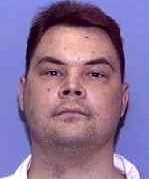 Robert Springsteen
Homicide ? · USA · 1991
Robert Springsteen IV (TDCJ number 999389) was the defendant. Springsteen was b…
4 victims
Robert Springsteen
Homicide ? · USA · 1991
Robert Springsteen IV (TDCJ number 999389) was the defendant. Springsteen was b…
4 victims
 Patrick Dils
Homicide ? · France · 1986
Patrick Dils was convicted and imprisoned for the murder of two children found…
2 victims
Patrick Dils
Homicide ? · France · 1986
Patrick Dils was convicted and imprisoned for the murder of two children found…
2 victims
 Roscoe Arbuckle
Homicide ? · USA · 1921
Roscoe Conkling Arbuckle, also known as Fatty Arbuckle (March 24, 1887 – June 2…
1 victim
Roscoe Arbuckle
Homicide ? · USA · 1921
Roscoe Conkling Arbuckle, also known as Fatty Arbuckle (March 24, 1887 – June 2…
1 victim
 Ryan Matthews
Homicide ? · USA · 1997
Ryan Matthews was an African American juvenile who was 17 years of age at the t…
1 victim
Ryan Matthews
Homicide ? · USA · 1997
Ryan Matthews was an African American juvenile who was 17 years of age at the t…
1 victim
 Adolph Luetgert
Murderer · USA · 1897
Adolph Louis Luetgert (also listed as Adolph Louis Luetgert; born December 27,…
1 victim
Adolph Luetgert
Murderer · USA · 1897
Adolph Louis Luetgert (also listed as Adolph Louis Luetgert; born December 27,…
1 victim
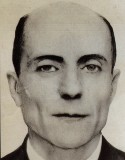 Gabriel Socley
Murderer · France · 1935
Gabriel Socley was sentenced to death for the rape, and the later status of the…
1 victim
Gabriel Socley
Murderer · France · 1935
Gabriel Socley was sentenced to death for the rape, and the later status of the…
1 victim
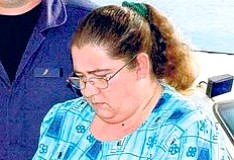 Francisca Ballesteros
Serial killer · Spain · 1990
Francisca Ballesteros was born in 1969 and was a Spanish serial killer. She was…
3 victims
Francisca Ballesteros
Serial killer · Spain · 1990
Francisca Ballesteros was born in 1969 and was a Spanish serial killer. She was…
3 victims
 William Boyd Tucker
Murderer · USA · 1977
William Boyd Tucker: defendant · August 20, 1977 — Tucker drank heavily during…
1 victim
William Boyd Tucker
Murderer · USA · 1977
William Boyd Tucker: defendant · August 20, 1977 — Tucker drank heavily during…
1 victim
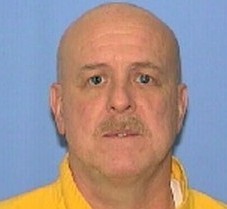 Mark Alan Smith
Serial killer · USA · 1966
Mark Alan Smith was involved in multiple killings and was sentenced to a total…
12 victims
Mark Alan Smith
Serial killer · USA · 1966
Mark Alan Smith was involved in multiple killings and was sentenced to a total…
12 victims
 Shaun Thrower
Murderer · United Kingdom · 1994
Shaun Thrower was convicted of the murder of 17-year-old Amanda Wagg and was se…
1 victim
Shaun Thrower
Murderer · United Kingdom · 1994
Shaun Thrower was convicted of the murder of 17-year-old Amanda Wagg and was se…
1 victim
- Gender
- male
- Country
- Switzerland
- Location
- Plan-les-Ouates, Geneva, Switzerland
- Date of birth
- 1905
- Age at first offence
- 53
- Characteristics
- —
- Victim profile
- Charles Zumbach, 62
- Method of murder
- St abbing with knife
- Date(s) of murder
- May 1, 1958
- Years active
- 1958
- Date of arrest
- June 1958
- Status
-
Died in custody
Sentenced to seven years in prison. Died on July 1996
Case record
Personal details
Pierre Jaccoud (born in 1905) was a Swiss lawyer and politician. He served as “cantonal boss” of the Radical Party in Geneva.
Jaccoud had been Aly Khan’s attorney during his divorce from Rita Hayworth, and he represented innumerable Swiss and foreign companies in Geneva’s tightly controlled banking community.
Jaccoud lived on the Rue de Monnetier. The case included references to his wife Erna Jaccoud and their children.
The case also included:
- Charles Zumbach (described as an agricultural machinery dealer)
- André Zumbach (Zumbach’s son)
- Linda Baud (called “Poupette” by Jaccoud), a chief secretary at a radio station
- Reymond, described as a former member of the French Foreign Legion leading an international gang of criminals and arms dealers
- Professor Erik Undritz from Basel (whose testimony was discussed in relation to blood-group evidence)
- René Floriot (Jaccoud’s attorney)
- Charles Cornu (the prosecutor / Attorney General referenced)
Timeline
- 1 May 1958 — Charles Zumbach was murdered at his home in Plan-les-Ouates.
- 1 May 1958 — When Charles Zumbach’s wife arrived at the scene, she heard four shots and cries for help; she was then shoved towards the garden by an unknown man who started shooting at her.
- 1 May 1958 — The perpetrator turned back to Charles Zumbach and stabbed him to death with a knife before escaping on a bicycle.
- 1 May 1958 — Charles Zumbach ran an agricultural machinery business in Plan-les-Ouates; it later became involved with claims about a gang of criminals and arms dealers using the store as a headquarters.
- October 1957 — André Zumbach had given up Linda Baud’s relationship and became engaged to another girl.
- June 1958 — Jaccoud was arrested upon his return to Geneva.
- 14 January 1960 — The trial began before a jury in Geneva.
- 15 February 1960 — The jury found Pierre Jaccoud guilty of “simple homicide” and sentenced him to seven years’ imprisonment.
- 1980 — The court rejected a final appeal of the case.
- July 1996 — Pierre Jaccoud died in July 1996.
- 1974 — The case was dramatized in 1974 by the German series Fernsehpitaval under the direction of Wolfgang Luderer with the title “The nude photographs”.
Background
Pierre Jaccoud had an eight-year relationship with Linda Baud, who worked at a radio station as chief secretary. Linda Baud had an affair with André Zumbach and wanted to separate herself from Jaccoud.
Jaccoud wrote Linda Baud many desperate letters to convince her to stay with him.
Eight months before the murder, faced with Baud’s continued resistance, Jaccoud sent nude photos of her to her new lover, André Zumbach.
The police began to suspect Jaccoud of the murder after the interrogation of Zumbach’s son André, who reported receiving two calls in his office (a radio station in Geneva) the night of the killing; the caller did not say anything. André suspected the caller wanted to ensure he was not at his parents’ house. At this point, Pierre Jaccoud came under suspicion as the caller.
It was also stated that Linda Baud claimed that, at the time of the act, she was no longer in a relationship with André Zumbach but instead with another man.
The offence
On 1 May 1958, Charles Zumbach, described as a seventy-year-old agricultural machinery dealer, was murdered at his home in Plan-les-Ouates, near Geneva.
Charles Zumbach’s wife heard four shots and cries for help when she arrived at the scene. Shortly after, an unknown man shoved her towards the garden and started shooting at her. She later could not recall the appearance of the offender.
The perpetrator—perhaps there were several—turned back to the injured Charles Zumbach, stabbed him to death with a knife, and escaped on a bicycle.
Investigation
The police interrogated André Zumbach, who said he had received two calls in his office the night of the killing, but the caller did not say anything. André suspected the caller wanted to make sure he was not at his parents’ house.
Police searched Jaccoud’s apartment while he was on a business trip to Sweden as part of his job as Vice President of the Geneva Chamber of Commerce. Blood was found on a jacket and a Moroccan knife. It was later revealed that both Jaccoud and the victim were from the same blood group, making Professor Erik Undritz’s testimony from Basel irrelevant.
Fresh liver cells of unknown, perhaps animal origin were found on the knife. Jaccoud owned two pistols, but not the murder weapon.
A button was found on the road near the Zumbach house that matched the buttons of one of Jaccoud’s coats. The coat was found in a box of used clothing and was missing exactly one button.
During the same period, it was described that the police laboratory reported traces of blood and human liver on the dagger and tiny bloodstains on Jaccoud’s raincoat and on his bicycle.
It was also stated that police took the view that there were traces of blood and human liver on the dagger, and tiny bloodstains on Jaccoud’s raincoat and on his bicycle.
Arrest and pre-trial detention
After his return to Geneva in June 1958, Jaccoud was arrested.
Jaccoud spent the next nineteen months in the prison hospital after his arrest; it was said that, due to the shock of incarceration, he suffered a nervous collapse and spent most of his time in the infirmary.
Trial
The trial took place before a jury in Geneva from 14 January 1960 onwards.
Defending Jaccoud was René Floriot, described as a famous Paris barrister. On the side of the indictment was the prosecutor Charles Cornu.
There were “many mix-ups.” For example, Zumbach’s wife did not pick Jaccoud out of a line-up; instead she identified a policeman.
Linda Baud avoided looking at Jaccoud during her four hours of testimony.
The judge studied nude photos that Linda said had been taken at gun point. The judge remarked that she seemed “perfectly tranquil and at ease.” Linda Baud conceded: “Well, I didn't react.” When asked whether Linda thought the defendant was capable of killing a human being, Linda said: “I don't think so.”
Jaccoud’s attorney Floriot wrung an admission from Linda that she had taken a new lover since André, described as a young Belgian who worked for the Palais des Nations.
Jaccoud’s wife Erna took the stand to insist that her husband was a “devoted, exemplary family man, who saw to it that our children and I lacked nothing.” She was quoted: “He did not spend his leisure time with his family.” Erna Jaccoud also insisted: “He was far too shy to be a killer.”
Under the stress of her testimony, Jaccoud fainted. After a 15-minute adjournment, the judge asked everyone to do his utmost to “get this painful part of the proceedings over with.” Jaccoud replied: “I am doing my best.”
The verdict and sentence were reported as follows:
- The jury deliberated for three hours.
- The jury found Pierre Jaccoud guilty of “simple homicide.”
- Jaccoud was sentenced to seven years’ imprisonment, less the nearly two years he had already been under arrest.
In final summation, Attorney General Charles Cornu rose for his summation against the defendant. Cornu was quoted (including the remarks about the relationship and characterizations of Jaccoud), with multiple quoted phrases:
- “this charming, intelligent, celebrated lawyer, this great man of politics, was an abject criminal who shot and stabbed a defenseless man.”
- Cornu first explained haltingly that he had not really been Jaccoud’s “friend,” and that their relationship had always been “professional.”
René Floriot delivered a marathon defense oration that ended with: “Mais non, all I am trying to say is that you cannot find a man guilty on this kind of evidence.”
The Time report also characterized the defense context and trial attention, stating the jury found guilt for “simple homicide” and sentenced him to seven years’ imprisonment. It also described reactions in France, including that students angrily burned copies of Paris-Match and that French lawyers later called the outcome a “typical Swiss compromise.”
Sentencing
Pierre Jaccoud was sentenced to seven years in prison for murder/s. The report also included the phrase that he was sentenced to seven years’ imprisonment, less the nearly two years he had already been under arrest.
A separate phrasing stated the sentence as: “seven years in prison for manslaughter.”
Appeals
In 1980, the court rejected a final appeal of the case.
Outcome
Later studies claimed that Jaccoud was wrongly convicted.
Aftermath and commentary on controversy
The case was described as “one of the most controversial Swiss judgments,” referred to as “un des dossiers” les plus troublants, énigmatiques qui les plus jamais aient défrayé judiciaire de la chronique [la Suisse]».
Gerhard Mauz considered the case as a second “Dreyfus Affair.”
Hans Martin Sutermeister said it was a judicial error caused by faulty forensic expertises. Sutermeister described Hegg as “an autodidact lacking in serious studies, who has made many mistakes”.
Sutermeister’s theory included that Zumbach was killed because he sold Algerian rebels non-working explosives to the tune of 12,000 dollars.
Following that theory, Sutermeister found an international band of crooks and arms dealers using Zumbach’s garage as the headquarters for their criminal activities. The band was led by the former legionnaire “Reymond,” described as once served in Indochina. The band kept a collection of knives and daggers in Zumbach’s garage, “surely with the homeowner's knowledge.” The argument was that among these weapons were the murder weapons. Sutermeister argued that the blood analysis was poorly done.
The case was dramatized in 1974 by the German series Fernsehpitaval under the direction of Wolfgang Luderer with the title “The nude photographs”.
Other details
- Jaccoud wrote nude/“nude photographs” material and the case included references to nude photos of Linda Baud.
- Linda Baud was described as supplying police with more details, including a claim that Jaccoud obtained nude photos by forcing her to undress at gun point.
- Linda Baud also claimed that another time he drove her to the country and threatened her with his revolver; Linda managed to get the gun away from him and throw it into a stream.
- To win Linda Baud back from André, it was described that Jaccoud kept writing tear-stained letters and finally offered to divorce his wife and marry his “Poupette” (little doll).
- Jaccoud’s bicycle and clothing were described as having been impounded during police searches.
- It was stated that Jaccoud was on a business trip to Sweden before his arrest.
- The trial included media attention, including that the case attracted attention far beyond the Swiss borders.
Spotted an error, or have more information about this case?