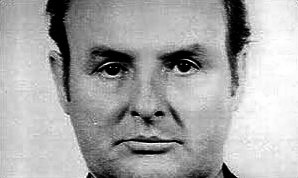
Roy Fontaine
Serial killer Bruce Lee
Serial killer · United Kingdom · 1973
Bruce Lee was born Peter George Dinsdale in 1960. He later changed his name to…
26 victims
Bruce Lee
Serial killer · United Kingdom · 1973
Bruce Lee was born Peter George Dinsdale in 1960. He later changed his name to…
26 victims
 Dennis Nilsen
Serial killer · United Kingdom · 1978
Dennis Andrew Nilsen was born on November 23, 1945. He lived in London. He was…
16 victims
Dennis Nilsen
Serial killer · United Kingdom · 1978
Dennis Andrew Nilsen was born on November 23, 1945. He lived in London. He was…
16 victims
 Dr. Harold Shipman
Serial killer · United Kingdom · 1974
Harold Fredrick Shipman was an English doctor who was convicted as a serial kil…
15 victims
Dr. Harold Shipman
Serial killer · United Kingdom · 1974
Harold Fredrick Shipman was an English doctor who was convicted as a serial kil…
15 victims
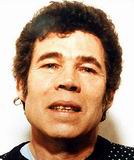 Frederick West
Serial killer · United Kingdom · 1967
Frederick West (29 September 1941 – 1 January 1995) was an English serial kille…
13 victims
Frederick West
Serial killer · United Kingdom · 1967
Frederick West (29 September 1941 – 1 January 1995) was an English serial kille…
13 victims
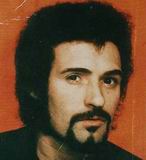 Peter Sutcliffe
Serial killer · United Kingdom · 1975
Peter William Sutcliffe (born 2 June 1946) was an English serial killer dubbed…
13 victims
Peter Sutcliffe
Serial killer · United Kingdom · 1975
Peter William Sutcliffe (born 2 June 1946) was an English serial killer dubbed…
13 victims
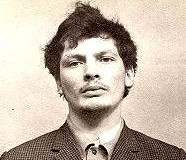 Patrick David Mackay
Serial killer · United Kingdom · 1973
Patrick David Mackay was born on September 25, 1952, in England. He was the son…
11 victims
Patrick David Mackay
Serial killer · United Kingdom · 1973
Patrick David Mackay was born on September 25, 1952, in England. He was the son…
11 victims
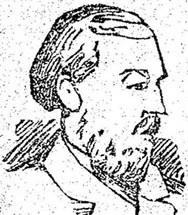 William Henry Bury
Murderer · United Kingdom · 1888
William Henry Bury was executed by hanging in Dundee on April 24, 1889. He was…
2 victims
William Henry Bury
Murderer · United Kingdom · 1888
William Henry Bury was executed by hanging in Dundee on April 24, 1889. He was…
2 victims
 James Ritchie
Serial killer · USA · 2016
James Dale Ritchie (November 4, 1976 – November 12, 2016) was known in the medi…
5 victims
James Ritchie
Serial killer · USA · 2016
James Dale Ritchie (November 4, 1976 – November 12, 2016) was known in the medi…
5 victims
- Gender
- male
- Country
- United Kingdom
- Location
- United Kingdom
- Date of birth
- J uly 17, 1924
- Age at first offence
- 53
- Characteristics
- rape, abduction
- Victim profile
- David Wright / Walter Scott-Elliot and his wife Dorothy / Mary Coggle / His half-brother Donald
- Method of murder
- Shooting / Suffocation / Beating with a spade / Beating with a poker
- Date(s) of murder
- 1977 - 1978
- Years active
- 1977–1978
- Date of arrest
- January 16, 1978
- Status
-
Died in custody
Sentenced to life imprisonment, 1978; died in Kingston Prison in Portsmouth aged 78 on September 16, 2002
Case record: Roy Fontaine (Archibald Thompson Hall; also known as Archibald Hall)
Timeline
- 17 June 1924 — Archibald Thompson Hall was born in Glasgow.
- 1941 — He received his first of many prison sentences for theft.
- 1964 — He received ten years’ in connection with jewel theft activities.
- Blundeston Prison (escape following short time incarcerated) — He escaped from Blundeston Prison in Suffolk.
- 1966 — After being recaptured, he received another five years’ on top of the ten years he was already supposed to be serving.
- 1972 — He was paroled.
- 1972 (during parole, while in Preston) — He met Mary Coggle, an Irishwoman, who became his mistress.
- End of 1973 — He was back in prison and stayed there until 1977.
- November 1977 — He moved down to London and obtained a position as a butler to Walter Travers Scott-Elliott and his wife Dorothy.
- 8 December (during the events at the Scott-Elliott residence) — During an attempt to burgle the Scott-Elliotts, he entered the Scott-Elliott bedroom unexpectedly and was confronted by Mrs Scott-Elliott.
- Next day after 8 December — The group buried Mrs Scott-Elliott’s body by a lonely roadside near Loch Earn.
- 14 December — Near Glen Affric, Hall and Kitto attempted to strangle Walter Scott-Elliott; he was then beaten to death with a spade and buried in a shallow grave.
- After the 14 December events (row in the cottage) — Hall struck Mary knocking her to the ground with a poker; a plastic bag was placed over her head and she was suffocated.
- Later that night after the violence with Mary — Archie and Kitto drove the Carlisle to Glasgow road and dumped her body in a stream under a bridge.
- Before Christmas (during the festive season) — The pair spent a quiet Christmas with Hall’s family.
- After Christmas (in the Cumberland hide-out) — Hall and Kitto returned to the hide-out with Hall’s brother, Donald.
- Three days earlier than the discovery of Donald’s presence — Donald was released from prison.
- When Donald asked too many questions — Hall was rendered unconscious with chloroformed and drowned in the bath.
- 15 January 1978 — They drove north again looking for somewhere suitable to dispose of the body; they spent the night at the Blenheim House Hotel, North Berwick.
- January 1978 (at North Berwick) — The hotel proprietor became suspicious and telephoned local police to check the car registration; the police found Donald’s body during checks.
- After police arrived at the hotel (escape) — Hall escaped out of the window.
- Later (after escape) — He was picked up later in a taxi on his way to Dunbar.
- 18 January 1978 — Following a failed suicide attempt, Fontaine helped the police search for Mr Scott-Elliot’s body on the Highlands.
- 16 September 2002 — He died in Kingston Prison, Portsmouth, aged 78.
Background
Roy Fontaine was born Archibald Hall (also described as Archibald Thompson Hall) in Glasgow in 1924. He later used the name Roy Fontaine.
He began stealing when he was 15 and received his first prison sentence at 17. In 1941 he received his first of many prison sentences for theft.
While in his teens, he pursued a petty crime scam involving two Red Cross collection tins, with one tin containing small change for the Red Cross and the other for paper money.
He progressed to confidence tricks and acted as though he was a member of the aristocracy or a wealthy American. He was also a jewel thief and received ten years’ in 1964 for his activities.
After incarceration, he escaped from Blundeston Prison in Suffolk. He was recaptured in 1966 and received another five years’ on top of the ten years he was already supposed to be serving.
In 1972 he was paroled. While in Preston during this period, he met Mary Coggle, an Irishwoman who became his mistress.
Between periodic spells inside prison, he worked as a butler to the rich and famous. By the end of 1973 he was back in prison and stayed there until 1977.
When released in 1977, he obtained a position in the household of Lady Margaret Hudson (described as the widow of an MP; also referred to as Lady Margaret Hudson). This employment was near Waterbeck in Dumfriesshire.
In London in November 1977, he worked as a butler to 82-year-old Walter Travers Scott-Elliott and his wife Dorothy.
He had a short-lived marriage and was openly bisexual, with a string of affairs with men. He claimed sexual relationships with Lord Boothby and playwright Terence Rattigan. In his memoirs, he stated that the great love of his life was David Barnard, a fellow con from Hull Prison who died in a car crash in 1974.
He studied social etiquette, eradicated trace of his Glasgow accent, and became a self-taught authority on antiques during a lengthy sentence for theft. When released from prison in 1977, he used the name Roy Fontaine.
The offence
Killing of David Wright
David Wright was a former lover and an acquaintance from Hall’s last prison term. He had been employed as a gamekeeper and gardener around the stately home on Lady Hudson’s estate.
After Wright stole some of Lady Hudson’s silver and threatened to tell her about Hall’s past, Hall took Wright on a rabbit hunting expedition.
On the rabbit hunt, Hall ensured Wright’s gun was empty and then shot Wright in the back of the head. Hall buried Wright’s body next to a stream on the estate.
Killing of Walter Travers Scott-Elliott and Dorothy Scott-Elliott
Mrs Scott-Elliott had to go into a nursing home for a few days. During the evening of 8 December, Hall took the opportunity to show Michael Kitto around the Scott-Elliott house when Mrs Scott-Elliott returned unexpectedly earlier in the day.
When he opened the door to the Scott-Elliott bedroom, he expected to see the old man fast asleep, but was confronted by Mrs Scott-Elliott. She wanted to know what he was doing there with a stranger. Panicking, Hall and Kitto grabbed her and, using a pillow, managed to suffocate her. They attempted to make it look like an accident by putting her into bed when her husband woke up. Hall told Mr Scott-Elliott that his wife had had a nightmare and that he should go back to sleep.
The next day, Mr Scott-Elliott went to his club for lunch, and Hall, Kitto, and Mary Coggle tried to decide what to do next. They considered keeping Mr Scott-Elliott sedated with pills so that Coggle could impersonate his wife for a while.
They put Mrs Scott-Elliott’s body into the boot of the car and, that evening, took Mr Scott-Elliott to a cottage in Cumberland that Hall had rented. Mary sat in the back with Mr Scott-Elliott, wearing a wig and Dorothy’s fur coat, and the group drove north.
The next day, they buried Mrs Scott-Elliott’s body by a lonely roadside near Loch Earn. After getting rid of the body, they drove back to the cottage and left Mr Scott-Elliott there with Mary Coggle posing as his wife while they returned to London and ransacked the house.
They returned and picked up Mr Scott-Elliott and Mary Coggle and continued their drive north. On the afternoon of 14 December, near Glen Affric, Hall and Kitto decided to get rid of the old man. They attempted to strangle him; perhaps fear gave him strength, and he fought back. They used a spade to beat him to death, then buried his body in a shallow grave.
Killing of Mary Coggle
After 14 December, tensions arose between Hall and Mary. Mary wanted to keep Dorothy’s mink coat, while Hall wanted to get rid of the evidence.
When they returned to the cottage, a row erupted into violence. Hall struck Mary, knocking her to the ground with a poker. Hall put a plastic bag over her head and suffocated her.
Later that night, Hall and Kitto drove the Carlisle to Glasgow road and dumped Mary’s body in a stream under a bridge.
Killing of Donald Hall
After disposing of the bodies, Hall and Kitto returned to the Cumberland hide-out with Hall’s brother Donald.
Donald had a criminal record for burglary and for child molesting. Hall hated him for being a pervert.
When Donald started to ask too many questions about their new wealth, Hall decided he would have to go. Hall rendered Donald unconscious with chloroformed rag and drowned him in a bath.
Investigation
An antiques dealer in Newcastle became suspicious after two men offered him china and silverware well below its worth. The antiques dealer noted the number plate of the car and alerted the police.
The police found the car had been rented out to a Scott-Elliot. When they visited the Chelsea flat, they found the walls spattered with blood and over £3,500 worth of valuables missing.
Mary Coggle’s body had been found a month earlier on Christmas Day by a shepherd. Detectives began to wonder if the two murders were connected because Coggle had once worked for Dorothy Scott-Elliott as a housekeeper and cook.
The police considered whether Coggle might have been the same woman wearing a mink coat they knew had stayed at a Tilt Hotel in Blair Atholl with three other men, one being very elderly.
Two days later, the two younger men returned to the hotel alone.
In January 1978, Fontaine and Kitto stopped at a hotel in North Berwick. The owner, Norman Wight, became suspicious of the two guests and called the police. During a routine check, police found Donald Hall’s body.
Arrest and custody
Hall fitted false plates to the Granada, and this was to be his downfall. When the police checked the licence number, it was found that it should belong to a Ford Escort. Two policemen appeared at the hotel to ask the men to explain the discrepancy.
The men were taken back to the police station. Hall asked to go to the toilet and escaped out of the window. His freedom was short-lived and he was picked up later in a taxi on his way to Dunbar.
Police searched the car and found Donald’s body in the boot. Mary Coggle’s body had also been found, and the disappearance of Mr and Mrs Scott-Elliott was under investigation.
Hall made a full confession during questioning and mentioned the earlier murder of David Wright.
He attempted suicide multiple times while in custody. Following a failed suicide attempt on 18 January 1978, he helped the police search for Mr Scott-Elliott’s body on the Highlands.
Trial
Hall and Kitto were tried in Edinburgh in November 1978.
In the trial in Edinburgh, in May 1978 Hall was described as a psychopath.
Hall made a full confession to five murders.
He was charged with four life sentences for four of the murders; the fifth case remained open. British and Scottish courts sentenced him to life imprisonment.
Sentencing
Hall received life imprisonment without parole.
Kitto received fifteen years’ and Hall received life imprisonment without parole at the Edinburgh trial in November 1978.
In separate description of imprisonment recommendations, in Scotland it was recommended that Hall serve a minimum of 15 years, and in England the judge handed down a recommendation that he never be released.
It was also stated that Hall was convicted at courts in London and Edinburgh of four murders, with the murder of Mrs Scott-Elliott ordered to lie on file, and he was sentenced to life imprisonment. In Scotland, it was recommended that he serve a minimum of 15 years, and in England the judge recommended he never be released.
Kitto was given life imprisonment for three murders, with no recommended minimum in Scotland and a 15-year minimum in England.
Appeals
No appeal outcome was provided.
Outcome
Hall was convicted of four murders (with the murder of Mrs Scott-Elliott ordered to lie on file in one description) and sentenced to life imprisonment. Kitto was convicted and sentenced to fifteen years (one description) and also had life imprisonment for three murders (another description).
Hall died in Kingston Prison in Portsmouth in 2002 at the age of 78.
Aftermath
Hall attempted suicide several times while in custody.
In 1999 he wrote his autobiography A Perfect Gentlemen.
In 1995, the Observer newspaper published a letter from Hall requesting the right to die.
In 2005, British actor Malcolm McDowell and Hollywood screenwriter Peter Bellwood announced that they were seeking a director and funding for a film based on Hall’s life.
Other details
- Hall was described in connection with the press as the Killer Butler and the Mad Butler.
- He was associated with the nickname Monster Butler.
- He was said to have worked in service to members of the British aristocracy.
- Hall was said to be openly bisexual.
- Mary Coggle was also known as “Belfast Mary”.
- Hall’s crimes included a jewel theft element; he was described as a “jewel thief”.
- Hall’s confession included the earlier murder of David Wright.
- Police said in evidence that Kitto was, in a perverted way, fortunate to be able to go on trial because Hall was planning to kill him too.
- It was stated that successive Home Secretaries put Hall on the list of dangerous prisoners who should serve a whole life tariff, and that this tariff did not alter Hall’s prison status.
- It was stated that when politically-set tariffs were declared illegal by the law lords and the European Court of Human Rights, Hall’s status as a prisoner unlikely to be released never changed.
Spotted an error, or have more information about this case?